Every industrial furnace, kiln, boiler, and thermal oxidizer sends a column of hot flue gas up the stack. That gas carries 10–30% of the total energy input, and in most plants it simply leaves the building. Flue gas waste heat recovery is the fastest payback available in energy efficiency — and the regenerative heat exchanger is the tool that makes it work at high temperatures, with dirty gas, at industrial scale.
This article covers how regenerative technology recovers flue gas heat, which applications pay back fastest, how to estimate your recoverable heat, and the design decisions that determine whether your project succeeds or stalls.
Why Flue Gas Heat Recovery Pays Back So Fast
The economics are simple. Recover 30% of a boiler’s stack losses and you cut fuel consumption by roughly the same share — permanently, for the 20–30 year life of the equipment. With current European and North American energy prices, most flue gas heat recovery projects pay back in 1–3 years. Unlike renewable projects, there’s no intermittency: the waste heat exists whenever your process runs, which is exactly when you need it.
The limiting factor has never been economics. It’s technology: conventional recuperative exchangers foul, corrode, and become impossibly large when faced with 500–1,000 °C dust-laden flue gas. That’s the gap regenerative systems fill.
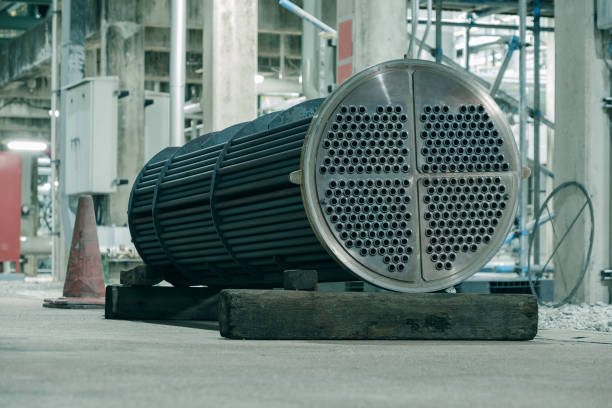
How a Regenerative System Recovers Flue Gas Heat
The principle is heat storage in a solid matrix. Instead of transferring heat wall-to-wall between two simultaneous flows, the regenerative system alternates:
Charging — hot flue gas passes through a packed bed of ceramic or steel media. The gas cools; the media heats up.
Switching — after 60–180 seconds, valves reverse the flows.
Discharging — cold process air or gas flows through the hot media in reverse, leaving the bed preheated to within 50–100 °C of the flue gas inlet temperature.
The cycle repeats continuously. Because the heat storage media handles the transfer, the system tolerates what kills other exchangers: high temperature, thermal shock, dust, and corrosive condensate (with proper material selection).
Where Regenerative Flue Gas Recovery Fits Best
Not every plant is a candidate. The strongest cases share three traits: high flue gas temperature, continuous operation, and an on-site use for the recovered heat. The classic fits:
RTOs and process exhaust (VOC abatement) — the largest modern market. Regenerative thermal oxidizers destroy solvents while recovering 95%+ of the heat, making destruction nearly self-sustaining at 2–12 g/Nm³ solvent loading.
Steel and non-ferrous metallurgy — reheating furnace exhaust at 600–900 °C, preheating combustion air back to 400–550 °C. Fuel savings of 20–35% are routine.
Glass and ceramics — regenerators preheat combustion air to 1,100–1,250 °C, the highest preheat temperatures in industry.
Cement and lime — preheater exhaust recovery and cooler vent heat reuse for raw material drying or power generation bottoming cycles.
Boiler and CHP upgrades — regenerative air preheaters retrofit ahead of the stack on biomass and coal boilers, recovering stack heat conventional economizers can’t reach.
Gas turbines and engines — recuperators on turbine exhaust push electrical efficiency up 3–5 points on small and mid-size units.
How to Estimate Your Recoverable Heat
Before calling anyone, you can size the opportunity yourself. The recoverable duty is:
Q = V × ρ × cp × ΔT × η
Where V is flue gas volume flow, ρ and cp the gas density and specific heat (≈1.1–1.3 kJ/Nm³·K for typical flue gas), ΔT the allowable temperature drop across the recovery stage, and η the system efficiency (0.85–0.95 for regenerative designs).
Practical example: a furnace exhausting 20,000 Nm³/h at 650 °C. Cooling that gas to 180 °C releases about 3.2 MW of recoverable heat. If you preheat combustion air with it and run 4,000 hours per year on natural gas, that’s roughly 250,000 EUR per year in fuel savings at current EU prices. A project of that size typically pays back in under two years — which is why this application rarely needs a subsidy to clear the investment hurdle.
Two caveats that honest engineering includes: keep the recovered heat matched to a real sink (air preheat, drying, boiler feedwater, or ORC generation), and check the acid dew point — gas-side outlet temperature must stay above it unless you design the cold end for condensation.
Design Decisions That Make or Break the Project
Media selection: ceramic vs. steel
Ceramic structured packing or honeycomb handles 1,000 °C+ and corrosive condensate; steel corrugated sheets work to 700 °C at lower cost and lower pressure drop. High-chlorine biomass or waste gas pushes you to enamel-coated cold ends regardless.
Temperature approach and dew point margin
Specifying gas outlet 20 °C above the acid dew point instead of 40 °C recovers meaningfully more heat — but only if cold-end materials and washing provisions match. Pin the dew point calculation to your actual fuel analysis, not a rule of thumb.
Pressure drop
The packed bed costs 800–2,000 Pa typically. On induced-draft systems already near fan limit, this can force a fan upgrade — a cost that belongs in the business case from day one, not a surprise at commissioning.
Duty matching
The most common failure mode of heat recovery projects isn’t mechanical — it’s recovered heat with nowhere to go during low-load operation. Size for your real load profile, or include a bypass and dump-heat provision.
Frequently Asked Questions
What is the best heat exchanger for flue gas heat recovery? For high-temperature, dusty flue gas, regenerative (heat-storage) systems are usually the answer — they tolerate fouling and thermal shock better than finned recuperative units and achieve 90–95% recovery. For clean, lower-temperature gas (<400 °C), economizers and condensing heat exchangers compete well.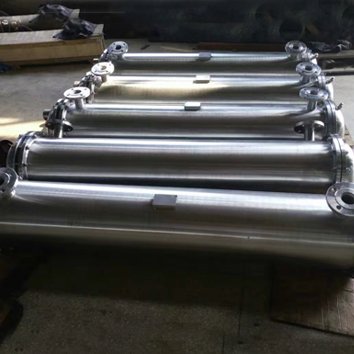
Can regenerative heat recovery work with corrosive flue gas? Yes. Ceramic media plus enamel-coated cold-end elements handle acidic condensate in biomass, sulfur-bearing, and waste-derived fuels. The design must keep metal surfaces above the dew point or protect them with coating.
What temperature flue gas is worth recovering? Economically, almost anything above 250 °C with continuous operation. Below 200 °C, condensation heat (latent recovery in condensing economizers) becomes the better tool. Above 700 °C, regenerative systems are effectively the only compact option.
How long does a flue gas heat recovery system last? Steel hot-end media: 10+ years. Ceramic media: 15–25 years. Wear parts are the switching valves (seals, 3–5 years) and cold-end baskets in dirty service. Properly designed systems run decades between major rebuilds.
The Bottom Line
Flue gas waste heat is the cheapest energy your plant will ever buy — you already paid for it once. Regenerative heat recovery converts stack losses into preheated combustion air, drying heat, or power generation at efficiencies no conventional exchanger can touch, with paybacks that embarrass most capital projects on your list.
The real work is in the details: matching the recovered heat to a real sink, respecting the dew point, and sizing for your actual duty profile. Send us your flue gas flow, temperature, composition, and fuel analysis — we’ll run the heat balance and give you the recovery potential, configuration, and payback in black and white before you spend anything.