Both transfer heat. That is where the similarity ends.
An indirect heat exchanger keeps the hot and cold fluids separated by a wall. A direct heat exchanger lets them touch and mix. Choose the wrong one, and you can contaminate a product, corrode a stack, plug a matrix, or pay for fan power that eats your energy savings.
The difference is not academic. It decides your maintenance plan, your water treatment, your pressure drop, and whether your project pays back in two years or never.
Quick comparison
| Indirect heat exchanger | Direct heat exchanger | |
|---|---|---|
| Also called | Recuperative, wall-type, non-contact | Direct contact, mixing |
| Fluids | Separated by a wall | Touch and mix |
| Heat transfer | Through tube, plate, or fin | Through direct contact |
| Mass transfer | Usually none | Often simultaneous |
| Best for | High pressure, clean fluids, no mixing allowed | Dirty gas, low pressure, mixing acceptable |
| Main risk | Fouling, corrosion, pressure drop | Streams cannot be separated, water treatment, downstream corrosion |
| Common examples | Shell-and-tube, plate, finned tube, tubular air preheater | Cooling tower, jet condenser, spray tower, quench cooler |
What is an indirect heat exchanger?
An indirect heat exchanger uses a solid wall to transfer heat. Hot fluid on one side. Cold fluid on the other. The wall does the work.
Common types:
Shell-and-tube heat exchangers
Plate heat exchangers
Finned-tube heat exchangers
Tubular air preheaters
Economizers
Double-pipe heat exchangers
Choose indirect when:
The fluids must not mix.
One side is at high pressure.
You need a code-friendly, inspectable design.
Contamination would ruin the product or create a safety risk.
You can clean the surface or the fluid is relatively clean.
Watch for:
Fouling on the wall. Dirty flue gas, slurry, and sticky process fluids cut performance fast.
Acid dew point corrosion in flue gas service. If the metal surface drops below the acid dew point, you get corrosion.
Pressure drop. More surface area often means more fan or pump power.
Thermal expansion. High temperature differences can crack tubes or plates if the design is too rigid.

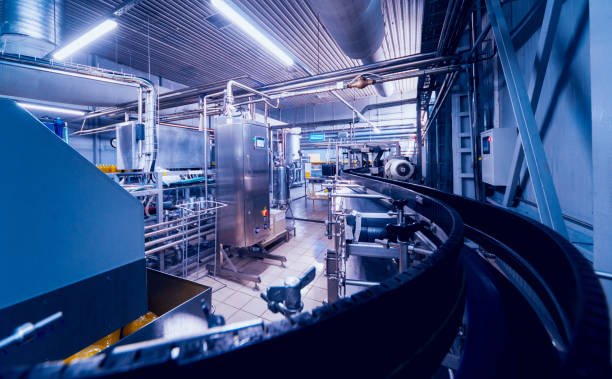
Indirect units are the default when separation is non-negotiable. They are not always the cheapest or most compact.
What is a direct heat exchanger?
A direct heat exchanger lets the fluids contact each other. Heat transfers by mixing. In many cases, mass transfer happens too — evaporation, condensation, or humidification.
Common types:
Cooling towers
Jet condensers
Spray towers
Quench coolers
Direct contact scrubbers
Choose direct when:
The fluids can mix, or they are the same fluid.
You have dirty gas that would foul a metal wall.
You want high heat transfer with low capital cost.
You can tolerate low pressure and a larger footprint.
You need to cool or condense gas quickly.
Watch for:
You cannot recover the two streams separately.
Water treatment and drift become part of the project.
The gas may become saturated with vapor.
Corrosion can move downstream into ducts and stacks.
Environmental rules may limit what can be mixed or discharged.
Direct contact is simple and effective. It is not a drop-in replacement for a shell-and-tube or plate unit. It changes the process.
What happens if you choose wrong?
1. Product contamination and loss
If the fluids cannot mix but you use a direct heat exchanger, you contaminate the product. In food, pharmaceutical, and chemical plants, that can mean a full batch lost, a shutdown, and a recall risk. In indirect units, a tube leak can still cross-contaminate. That is why double-wall plates or an intermediate loop are used when the risk is high.
2. Fouling and plugging
If you use an indirect unit on dirty flue gas or slurry, the wall fouls. Performance drops. Pressure drop rises. You clean more often or replace the unit. A direct contact unit handles solids better, but it may create wastewater and scaling problems elsewhere.
3. Corrosion and acid dew point
In flue gas waste heat recovery, the metal surface temperature matters. Drop below the acid dew point, and sulfuric acid condenses on the wall. Indirect units corrode from the metal side. Direct contact units can quench the gas, but the water becomes acidic. Both need material and temperature control.
4. Pressure drop and energy penalty
A high-efficiency indirect exchanger with high pressure drop can wipe out its own savings. The fan or pump runs harder. The boiler or process uses more power. Direct contact units often have lower gas-side pressure drop, but they can add water pumping and treatment costs.
5. Leakage and cross-contamination
Indirect units can leak internally if tubes or gaskets fail. Direct units always mix by design. If leakage is unacceptable, indirect with double-wall construction or an intermediate heat transfer loop is the safer route. Never assume a standard shell-and-tube will protect against every cross-contamination scenario.
6. Freezing, scaling, and water treatment
Direct contact cooling towers and spray chambers need water treatment, blowdown, and freeze protection. Indirect dry coolers avoid water but need more surface area and fan power. Choosing direct in a cold climate without freeze protection can crack pipes and stop production.
7. Poor turndown and control
Some direct contact units lose effectiveness at low load. Some indirect units cannot handle rapid temperature swings without thermal stress. If your plant runs between 30% and 100% load, check part-load performance before you buy.
8. Environmental compliance
Mixing contaminated gas with water can turn an air emission problem into a wastewater problem. That changes your permit, your treatment cost, and your discharge limits. Indirect units keep the streams separate, but they still produce a concentrated waste stream or a cleaning problem.
9. Maintenance and downtime
Indirect units need cleaning, inspection, and tube or plate replacement. Direct units need water treatment, drift control, and corrosion monitoring. The wrong choice can double your maintenance budget and add unplanned downtime.
10. Higher total cost, not lower
The cheapest unit at purchase is rarely the lowest-cost unit over ten years. Add fuel, water, chemicals, fan power, cleaning, downtime, and replacement. The wrong type can turn a two-year payback into a permanent loss.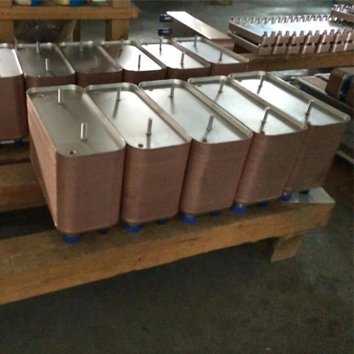
How to choose: 8 questions
Can the fluids mix?
If no, direct contact is out. Use indirect, or a regenerative design with proper sealing if gas-gas heat recovery is the duty.Are you recovering sensible heat only, or latent heat too?
Direct contact can condense vapor and recover latent heat. Indirect units usually recover sensible heat unless condensation is designed into the cold side.How dirty is the stream?
Dirty gas, dust, and sticky liquids favor direct contact or wide-gap indirect designs. Clean fluids favor compact plate or shell-and-tube units.What is the pressure?
High pressure favors indirect. Low pressure and dirty gas often favor direct.What is the temperature?
Very high gas temperatures need material selection. Acid dew point and salt formation matter in every type.What pressure drop can you afford?
A high-efficiency exchanger with high pressure drop can erase energy savings through fan or pump power.How much space do you have?
Direct contact units can be compact for gas cooling. Indirect units can be large and heavy. Regenerative units are compact for large gas flows but add leakage risk.What is the true payback?
Compare capital cost, installation, fan power, water treatment, cleaning, downtime, and fuel savings. The lowest purchase price is not the lowest total cost.
Real-world examples
Power plant air preheater
A tubular air preheater is indirect. Flue gas heats combustion air through a wall. No mixing. If you need no cross-contamination, this is the safe choice. A rotary regenerative air preheater is compact and common, but it has leakage and carryover that must be managed.
Power plant condenser
A surface condenser is indirect. Cooling water and steam condensate stay separate. A jet condenser is direct. Steam and cooling water mix. The jet condenser is simpler, but the condensate cannot be reused as boiler feedwater without treatment.
Cooling tower vs dry cooler
A cooling tower is a direct contact heat exchanger. Water and air mix. A dry cooler is indirect. Air cools a fluid through fins. The cooling tower is cheaper and more efficient in many climates, but it uses water and needs treatment. The dry cooler uses no water but needs more fan power and space.
Flue gas waste heat recovery
If the gas is dirty and hot, a direct contact spray tower or quench cooler can cool it and recover heat into water. If you need to preheat combustion air or boiler feedwater without mixing, use an indirect economizer or air preheater. Check acid dew point and material selection.
FAQ
Is a shell-and-tube heat exchanger direct or indirect?
Indirect. The fluids are separated by tubes.
Is a cooling tower a direct heat exchanger?
Yes. Air and water contact each other directly. Some water evaporates, and the rest is cooled.
Which is more efficient, direct or indirect?
Direct contact often has higher heat transfer rates and lower gas-side pressure drop. Indirect can be highly efficient when the fluids are clean and the design is optimized. Efficiency depends on the duty, not the category.
Can a direct heat exchanger recover waste heat?
Yes. A direct contact scrubber or quench cooler can recover heat into water. But the water and gas mix, so the recovered heat is in a different stream that may need treatment.
What if I need zero cross-contamination?
Use an indirect heat exchanger with double-wall construction, an intermediate heat transfer loop, or a validated leak-detection system. Do not rely on a standard single-wall unit for critical contamination control.
Can I switch from direct to indirect later?
It is possible, but rarely simple. Ductwork, foundations, fan pressure, water treatment, and controls usually change. Select the right type at the front end.