For craft and large-scale breweries alike, fermentation is the heart of the brewing process—and temperature control is the backbone of consistent beer quality, yeast health, and operational efficiency. Fermentation generates significant metabolic heat as yeast converts sugars to alcohol and carbon dioxide, and removing that heat with precision is non-negotiable for hitting target flavor profiles, controlling diacetyl levels, and avoiding batch spoilage. For most breweries, fermentation cooling accounts for 60–70% of total refrigeration load, which in turn makes up 30–40% of overall plant energy consumption. Many older facilities still rely on outdated jacketed tank cooling or shell-and-tube exchangers that deliver poor heat transfer, require excessively cold refrigerant, and drive unnecessary utility costs. Upgrading to purpose-built fermentation cooling heat exchangers is one of the highest-ROI energy efficiency upgrades a brewery can make, delivering measurable reductions in power and steam use while improving process control and product consistency. This guide breaks down how optimized cooling heat exchangers cut energy costs, which design features matter most for brewing applications, and actionable retrofit strategies breweries can implement with minimal production downtime.
Why Fermentation Cooling Defines Brewery Energy Use and Product Quality
During active primary fermentation, yeast produces approximately 230 kJ of heat per kilogram of sugar fermented. For a typical 200 hl cylindro-conical fermenter, this translates to 15–25 kW of heat load at peak fermentation, requiring continuous heat removal to maintain target temperatures. For lagers fermented at 8–15°C and ales at 18–24°C, even a ±1°C deviation can alter yeast metabolism, increase diacetyl production, or trigger premature yeast flocculation—resulting in off-flavors, inconsistent batch quality, or costly rework.
Beyond quality risks, inefficient fermentation cooling is a silent drain on brewery profitability:
- Excessive refrigeration demand: Jacketed tank cooling systems have low heat transfer coefficients (200–300 W/m²·K), forcing breweries to run glycol at -6 to -10°C to compensate. Every 1°C drop in evaporating temperature increases compressor energy use by 3–4%, adding tens of thousands of dollars in annual power costs for mid-sized facilities.
- Prolonged fermentation cycles: Slow, uneven cooling extends fermentation and conditioning time, reducing tank turnover and limiting overall plant capacity.
- Elevated cleaning costs: Narrow, hard-to-reach cooling jackets trap yeast sediment, hop resins, and calcium oxalate (beer stone), requiring longer CIP cycles, higher chemical concentrations, and occasional manual cleaning to avoid microbial contamination.
- Unplanned downtime: Fouled cooling surfaces gradually lose heat transfer capacity, leading to unexpected temperature spikes that can ruin entire batches and force emergency maintenance during peak production.
For breweries operating on thin margins and facing rising energy costs, addressing fermentation cooling inefficiency is not just a sustainability initiative—it is a direct way to protect product quality and boost operating income.
Plate Heat Exchangers vs. Traditional Fermentation Cooling Methods
Gasketed plate heat exchangers (PHEs) have become the industry standard for modern brewery fermentation cooling, largely replacing jacketed tanks and shell-and-tube exchangers for new installations and retrofits. Their design advantages directly solve the core efficiency and hygiene pain points of traditional systems.
Jacketed Tank Cooling (Conventional)
Jacketed cooling circulates glycol through an external jacket welded to the fermenter shell. While common in older breweries, it has fundamental efficiency limits:
- Low overall heat transfer coefficient due to slow, laminar flow on both the product and glycol sides
- Large temperature gradients between the top and bottom of tall fermenters, causing uneven fermentation
- Requires very low glycol temperatures to achieve adequate heat flux, driving high compressor energy use
- Impossible to fully inspect or mechanically clean without entering the vessel
Shell-and-Tube Heat Exchangers
Shell-and-tube units were once used for external fermentation cooling loops but have fallen out of favor for brewing use:
- Bulky footprint with high material waste relative to heat transfer area
- Dead zones in tube bundles trap product residue, creating microbial harborage points
- Low turbulence at typical fermentation flow rates, resulting in moderate heat transfer efficiency
- Difficult to fully clean via CIP, requiring periodic teardown for manual rodding
Gasketed Plate Heat Exchangers (Industry Standard)
External plate heat exchangers installed in closed loop fermentation cooling circuits deliver dramatic performance advantages:
- 3–10x higher heat transfer efficiency: Corrugated chevron plates create highly turbulent flow at low velocities, delivering U-values of 3,000–6,000 W/m²·K. This allows breweries to raise glycol supply temperatures from -8°C to -1 to -2°C while maintaining identical cooling capacity, cutting compressor energy use by 15–25% immediately.
- Precision temperature control: PHEs respond to load changes in seconds, maintaining fermentation temperature within ±0.2°C across all stages of fermentation. This eliminates hot spots, ensures uniform yeast activity, and reduces diacetyl rest time.
- Compact, scalable design: Plate packs deliver far more heat transfer area per square meter of floor space, making them ideal for retrofitting existing breweries with limited room. Plates can be added or removed to adjust capacity as production grows.
- Superior CIP compatibility: Smooth, crevice-free plate channels with uniform flow velocity ensure full CIP coverage, eliminating dead zones and reducing cleaning time and chemical use by 20–30% compared to shell-and-tube designs.
- Gentle yeast handling: Optimized wide-gap plate designs minimize shear stress on yeast cells during recirculation, preserving yeast viability and reducing autolysis that causes off-flavors.
For most breweries, retrofitting external plate heat exchangers into existing fermentation cooling loops delivers the fastest energy payback, requiring only minor piping modifications and no changes to tank structure.
Proven Energy-Saving Strategies for Fermentation Cooling Systems
Upgrading to plate heat exchangers is the foundation of fermentation cooling efficiency, but combining the right exchanger design with system-level optimization delivers maximum energy savings. Below are field-validated strategies used by leading breweries to cut cooling energy use by 25–40%.
1. Optimize Glycol Temperature with High-Efficiency PHEs
The single largest energy gain comes from raising glycol evaporating temperature, made possible by the high heat transfer coefficient of modern plate exchangers. Most breweries running jacketed cooling set glycol temperatures 5–8°C colder than necessary to compensate for poor heat transfer.
- Implementation: Replace jacketed or shell-and-tube cooling with properly sized plate heat exchangers, then incrementally raise glycol supply temperature while monitoring fermentation temperature stability.
- Results: For every 1°C increase in glycol evaporating temperature, compressor power consumption drops by 3–4%. A typical 50,000 hl/year brewery can expect 18–28% reduction in fermentation refrigeration energy use, translating to $20,000–$35,000 in annual electricity savings.
- Best practice: Install a separate high-temperature glycol loop for fermentation cooling (0 to -2°C) and reserve colder glycol (-6 to -8°C) only for cold lagering and bright beer storage, rather than running the entire system at the lowest required temperature.
2. Integrate Fermentation Heat Recovery
Fermentation generates consistent, low-grade heat that most breweries reject to atmosphere via cooling towers. With a properly configured heat recovery exchanger, this waste heat can be captured and repurposed to offset other plant energy demands.
- Common heat recovery applications: Preheating CIP make-up water (from 10°C to 35–40°C), heating boiler feedwater, warming wash-down water, or pre-heating incoming municipal water for brewhouse use.
- System design: Install a secondary heat recovery section in the fermentation cooling loop to transfer heat from warm glycol to process water. For breweries with multiple fermenters, a centralized heat recovery loop can capture waste heat across the entire tank farm.
- Results: A 100,000 hl/year brewery can recover 60–80 kW of waste heat during peak fermentation, reducing natural gas or steam consumption by 10–15% and cutting total plant energy costs by an additional 5–8%.
3. Variable Flow and Smart Load Matching
Most legacy fermentation cooling systems run fixed-speed glycol pumps at full flow 24/7, even during late fermentation when heat load drops to 20–30% of peak. This wastes significant pump energy and reduces compressor efficiency.
- Implementation: Pair plate heat exchangers with variable frequency drive (VFD) glycol pumps and a PLC-based temperature control system that modulates flow rate based on real-time fermentation heat load.
- Optimization logic: Run high flow during peak primary fermentation, then reduce flow as fermentation slows and heat load decreases. During diacetyl rest and conditioning, flow can be reduced to 30–40% of peak.
- Results: Pump energy use drops by 40–60%, and compressors run at more stable loads with fewer start-stop cycles, extending equipment life and reducing peak power demand charges.

4. Zoned Cooling for Multi-Tank Facilities
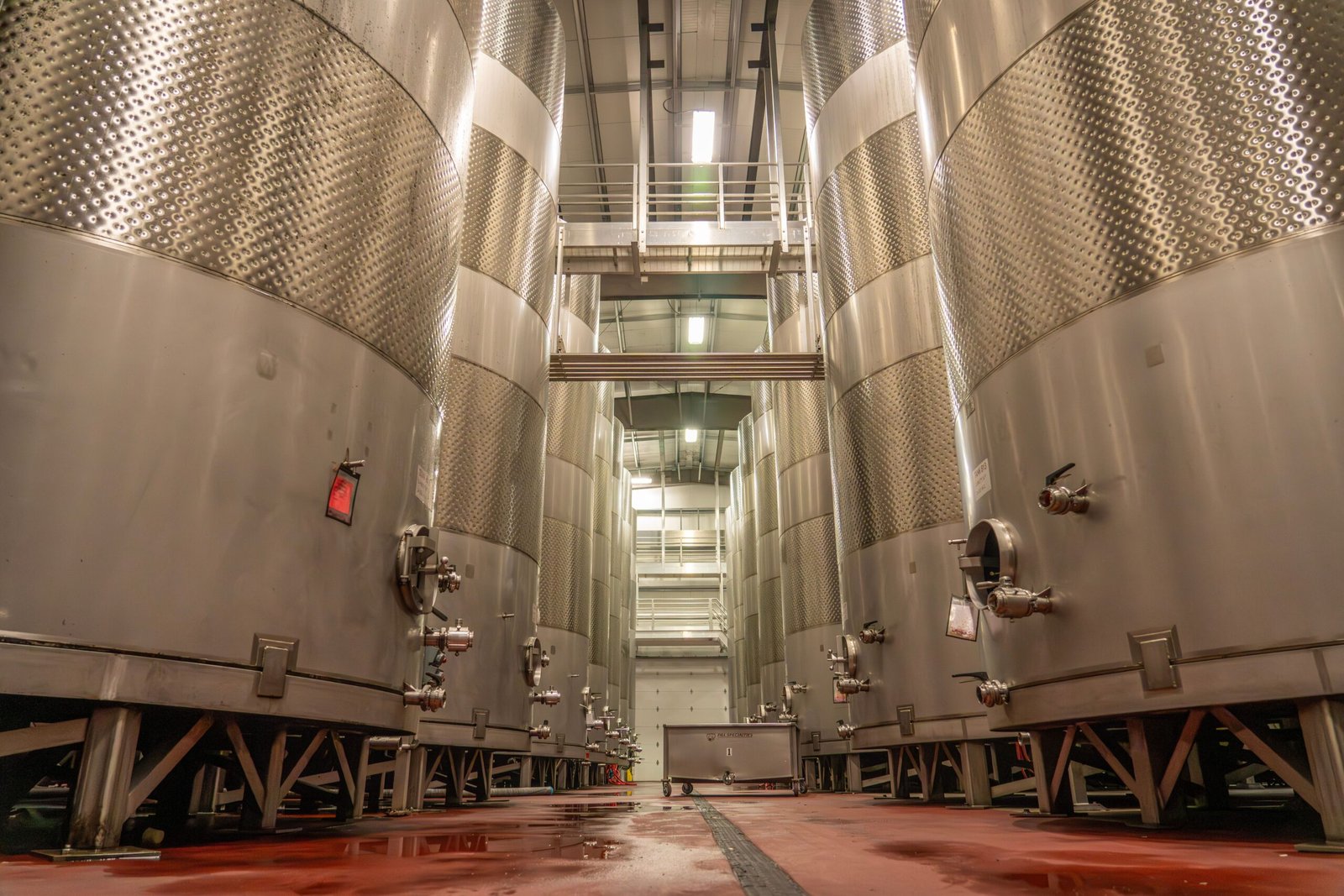
Breweries with 10+ fermenters often operate with a single glycol loop and oversized central chiller, leading to inefficient part-load operation. Zoned cooling systems match cooling supply to actual tank demand.
- Strategy: Group fermenters by fermentation stage (primary, diacetyl rest, lagering) and supply each zone with the appropriate glycol temperature and flow rate. Use automated valve manifolds to redirect cooling capacity as tanks move through the fermentation cycle.
- Benefits: Eliminates over-cooling of tanks in late-stage fermentation, improves chiller loading efficiency, and reduces overall system pumping losses. Zoned systems typically deliver 10–15% additional energy savings beyond basic PHE upgrades.
5. Proactive Maintenance to Preserve Thermal Efficiency
Fouling from beer stone, yeast residue, and glycol side mineral deposits can reduce PHE heat transfer efficiency by 15–30% over 6–12 months, eroding energy savings.
- CIP optimization: Maintain CIP flow velocity of 1.2–1.5 m/s through the exchanger, use formulated alkaline and acid cleaners matched to your water chemistry, and avoid excessive temperatures that degrade gaskets.
- Periodic inspection: Inspect plates every 6–12 months for fouling and gasket condition. For heavily fouled units, manual cleaning with soft brushes restores 100% heat transfer performance.
- Glycol side maintenance: Install proper filtration and corrosion inhibitors in the glycol loop to prevent scaling and corrosion on the refrigerant side of the plates.
Key Selection Criteria for Brewery Fermentation Cooling Heat Exchangers
Not all plate heat exchangers are suitable for brewery fermentation use. Selecting a unit designed specifically for brewing applications ensures food safety, long service life, and maximum energy savings. Prioritize these criteria:
Sanitary Construction and Compliance
All product-wetted components must meet global food safety standards for dairy and beverage processing:
- Material: 316L austenitic stainless steel for all product contact surfaces, with 304 stainless steel for the frame and glycol side components as standard.
- Surface finish: Electropolished product surfaces with Ra ≤ 0.8 μm for optimal cleanability and resistance to beer stone adhesion.
- Certifications: Verify 3-A Sanitary Standards, EHEDG Type EL approval, and FDA food contact compliance for export-focused breweries.
- Gaskets: Food-grade EPDM gaskets with mechanical clip retention (no adhesive) for clean removal and replacement. Gaskets must be resistant to CIP chemicals, low temperatures, and typical brewery pH ranges.
Plate and Flow Design
Plate geometry directly impacts heat transfer efficiency, pressure drop, and yeast health:
- Chevron angle: 45–60° chevron plates deliver the best balance of heat transfer and pressure drop for fermentation applications. Steeper angles increase turbulence but raise pumping costs; shallower angles reduce shear for yeast-sensitive applications.
- Wide-gap option: For high-solids fermentations or breweries prioritizing yeast viability, wide-gap plates (2.5–4 mm channel gap) reduce shear stress and lower risk of yeast cell damage while maintaining good turbulence.
- Flow distribution: Symmetric port design and uniform channel geometry ensure even flow across all plates, eliminating dead zones and ensuring consistent CIP coverage.
Sizing and Capacity
Oversizing is as problematic as undersizing for energy efficiency:
- Size the exchanger for peak fermentation heat load with a 10–15% safety margin to account for seasonal temperature variations and gradual fouling.
- Avoid excessive oversizing: units operating at less than 40% of design flow have reduced turbulence, lower heat transfer coefficients, and higher fouling rates.
- Choose an expandable frame that allows adding 15–25% more plates as production grows, avoiding full equipment replacement.
Pressure Drop Considerations
Excessive pressure drop increases pump energy use and can damage yeast cells:
- Target product-side pressure drop below 1.0–1.5 bar for fermentation loops to minimize shear and pumping costs.
- Work with suppliers to model pressure drop at both peak and minimum flow rates to ensure efficient operation across the full fermentation cycle.
Common Selection and Operation Mistakes to Avoid
Even experienced brewery engineering teams make predictable errors when specifying fermentation cooling exchangers. Avoid these costly pitfalls:
- Choosing on upfront price alone: Budget industrial PHEs often use 304 stainless steel instead of 316L, have poor surface finish, and use low-quality gaskets that fail in 12–18 months. The initial cost savings are erased within 1–2 years in higher energy use, replacement parts, and contamination risk.
- Oversizing “for future growth”: Excessively large exchangers operate at low velocity during late fermentation, reducing turbulence and increasing fouling. It is far more cost-effective to start with a properly sized unit and add plates later when needed.
- Ignoring glycol side fouling: Most breweries focus only on product-side cleaning but neglect glycol loop maintenance. Mineral scaling on the glycol side reduces heat transfer just as much as product-side fouling and often goes undetected.
- Skipping CIP flow validation: Poorly sized ports or mismatched piping can create uneven CIP flow through the exchanger, leaving residual product that leads to bacterial growth and batch spoilage. Always validate CIP coverage during commissioning.
ROI and Payback for Fermentation Cooling Upgrades
Fermentation cooling heat exchanger upgrades deliver some of the fastest paybacks of any brewery energy efficiency project. For a typical 50,000 hl/year regional brewery:
- Baseline costs: $85,000–$110,000 per year in electricity for fermentation refrigeration, plus $15,000–$25,000 in steam costs for CIP water heating.
- Upgrade scope: High-efficiency gasketed plate heat exchangers for 8 fermenters, glycol temperature optimization, VFD pump upgrades, and basic heat recovery for CIP water.
- Total installed cost: $90,000–$130,000, depending on system complexity and existing piping condition.
- Annual savings: $28,000–$42,000 from reduced refrigeration and pump energy, plus $8,000–$14,000 from heat recovery and reduced CIP chemical use.
- Simple payback period: 2.0–2.8 years, with ongoing annual operating savings for the 15–20 year service life of the equipment.
Additional indirect benefits include reduced batch variation, shorter fermentation cycles, lower maintenance labor, and reduced risk of product spoilage—all of which improve overall plant profitability.
Conclusion
Fermentation cooling heat exchangers are far more than auxiliary equipment—they are a critical lever for improving beer quality, reducing energy costs, and increasing production capacity. For breweries of all sizes, upgrading from outdated jacketed or shell-and-tube cooling to purpose-built plate heat exchangers delivers immediate, measurable energy savings with minimal production disruption. When combined with glycol temperature optimization, heat recovery, and smart flow control, breweries can cut fermentation cooling energy use by 25–40% while achieving tighter temperature control and more consistent batch quality.
The most successful brewery energy programs start with a detailed audit of existing fermentation cooling performance to identify high-impact upgrade opportunities. By selecting food-grade, brewery-specific heat exchangers and partnering with suppliers that understand brewing process requirements, breweries can achieve fast payback and long-term operational savings.