For biological fermentation operations—ranging from industrial enzyme production and antibiotic manufacturing to cell therapy development and food ingredient fermentation—precision temperature control is the foundation of consistent microbial viability, product yield, and batch reproducibility. Fermentation generates highly dynamic metabolic heat loads that shift rapidly across growth phases, and these systems operate under strict sanitary and regulatory requirements that rule out standard industrial heat exchanger designs. Poorly sized or specified units cause temperature deviations, batch failures, microbial contamination, excessive energy use, and regulatory non-compliance. This guide breaks down the sizing logic, critical selection criteria, equipment type matching, and compliance requirements for fermenter temperature control heat exchangers, delivering actionable, field-validated guidance to help engineering teams achieve stable, efficient, and compliant thermal control.
Why Fermenter Temperature Control Heat Exchangers Require Specialized Sizing
Unlike general process heating and cooling applications, biological fermentation imposes unique constraints that impact every aspect of heat exchanger design and sizing. One-size-fits-all industrial units consistently underperform in fermentation service for five core reasons:
- Highly dynamic heat loads: Metabolic heat output varies by 10–20x across fermentation phases. During exponential growth, microbial respiration generates peak thermal loads; during lag phase and stationary phase, heat generation drops to minimal levels. Units sized only for peak load operate inefficiently at low throughput, causing temperature oscillations and poor control.
- Tight temperature tolerances: Most microbial and cell culture processes require temperature control within ±0.2–0.5 °C. Even small deviations alter growth rates, metabolic pathways, and product expression profiles, reducing yield and increasing batch-to-batch variation.
- Zero contamination risk: Product-side wetted paths must remain fully sterile. Any cross-contamination between utility fluids (steam, cooling water, glycol) and fermentation broth can ruin entire batches and trigger full facility sanitization.
- Shear sensitivity: Mammalian cells, filamentous fungi, and fragile microbial strains are easily damaged by high turbulence and excessive shear forces. Heat exchanger channel geometry must balance heat transfer efficiency with gentle product handling.
- Rigorous cleaning and sterilization requirements: All product-wetted components must withstand repeated clean-in-place (CIP) and steam-in-place (SIP) cycles without degradation, crevice formation, or seal failure.
Core Sizing & Selection Criteria for Fermentation Heat Exchangers
Correct specification requires balancing thermal performance, sanitary design, process compatibility, and compliance. Below are the highest-priority factors to evaluate.
1. Dynamic Heat Load Calculation
Accurate thermal load calculation is the foundation of proper sizing. Many facilities over-size units “to be safe” or only calculate peak cooling load, both of which degrade control precision and waste energy.
Compute loads for all operating modes:
- Cooling duty: The largest load, consisting of metabolic heat of fermentation (typically 20–30 kJ per gram of glucose consumed for bacterial fermentation), heat generated by agitation and motor input, and environmental heat gain. Calculate peak load for exponential growth phase and partial loads for lag and stationary phases.
- Heating duty: Heat required to bring media from ambient to sterilization temperature (typically 121–134 °C), maintain SIP temperature, and pre-warm vessels prior to inoculation. For many facilities, sterilization heating duty equals or exceeds peak cooling load.
- Safety margin: Apply a 10–15% thermal margin to account for raw material variation, seasonal ambient temperature shifts, and gradual fouling over run time. Margins greater than 20% cause unstable low-load control and increase fouling risk from reduced flow velocity.
- Turn-down capability: Verify the unit can maintain stable temperature control at 10–15% of peak load, matching the full range of fermentation phase heat output.
2. Sanitary & Regulatory Compliance Requirements
Sanitary design is non-negotiable for biological fermentation. Requirements scale with process risk level, from industrial biochemical production to cGMP pharmaceutical and cell therapy manufacturing.
- Base material: All product-wetted surfaces must be 316L austenitic stainless steel as a minimum. For high-temperature SIP cycles or aggressive CIP chemistries, higher alloys such as 904L or 254 SMO provide extended corrosion resistance.
- Surface finish: Industrial and food-grade fermentation requires a roughness average (Ra) of ≤0.8 μm with electropolishing. For cGMP pharmaceutical and cell culture applications, specify Ra ≤0.4 μm electropolished surfaces to minimize biofilm adhesion and support cleanability validation.
- Seals and gaskets: Use only USP Class VI, ADI-free elastomers approved for bioprocess contact. EPDM is standard for most fermentation temperatures; FKM or PTFE are specified for high-temperature sterilization or chemical exposure. Gaskets must be mechanically retained, not glued, to eliminate adhesive extractables and crevices.
- Industry certifications: For food and industrial biotech, verify 3-A Sanitary Standards certification. For EU markets, require EHEDG Type EL approval. For pharmaceutical fermentation, specify ASME BPE compliant construction with full material traceability per EN 10204 3.1.B.
- Hygienic design features: Require crevice-free welds, fully drainable flow paths, no threaded connections on the product side, and flush tube-to-tube sheet joints to eliminate microbial harborage points.
3. Heat Exchanger Type Selection by Application
No single heat exchanger design works for all fermentation processes. Match the technology to your broth properties, compliance level, and shear sensitivity.
Sanitary Gasketed Plate Heat Exchangers (PHEs)
The industry standard for 70–80% of fermentation applications, including bacterial fermentation, yeast production, and industrial enzyme manufacturing.
- Advantages: 3–5x higher heat transfer coefficients than shell-and-tube designs, fast thermal response to load changes, compact footprint, easy disassembly for inspection, and excellent CIP compatibility. Wide-gap plate designs are available for high-viscosity broths, filamentous fungi, and fermentations with small particulate solids.
- Best for: Mid- to large-scale fermenters (1,000–100,000+ L), low- to medium-viscosity broths, processes requiring tight temperature control, and facilities prioritizing energy efficiency.
- Limitations: Not recommended for high solids content (>5%), high pressure, or applications requiring absolute cross-contamination prevention.
Double Tube Sheet (DTS) Heat Exchangers
The gold standard for high-risk biopharmaceutical and cell culture fermentation.
- Advantages: Dual tube sheets with an intermediate leak detection chamber create a physical barrier between product and utility fluids, eliminating cross-contamination risk. Leaks are detected immediately via pressure or conductivity monitoring before they can migrate between streams. Fully compliant with FDA and EMA cGMP requirements for sterile manufacturing.
- Best for: Vaccine production, monoclonal antibody fermentation, cell therapy bioreactors, and any process where product contamination would have patient safety or catastrophic financial consequences.
- Limitations: Lower heat transfer efficiency than plate designs, higher upfront cost, and larger footprint.

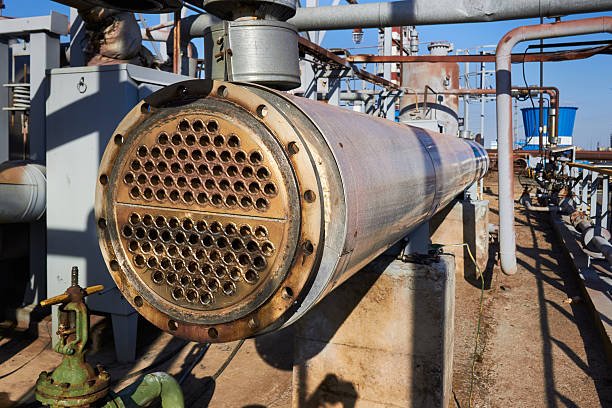
Sanitary Shell & Tube Heat Exchangers
The preferred choice for challenging broth properties.
- Advantages: Tolerates high solids content, high viscosity, and abrasive materials without plugging. Gentle flow geometry minimizes shear stress for fragile cell cultures. Withstands high pressure and high-temperature SIP cycles with excellent fatigue resistance.
- Best for: High-solids fermentation, mycelial cultures, viscous biopolymer production, and high-pressure fermentation systems.
- Limitations: Lower thermal efficiency, larger footprint, and higher cost per unit of heat transfer area compared to plate designs.
4. Pressure Drop & Shear Sensitivity
Optimizing heat transfer without damaging biological material is a core balancing act. Shear tolerance varies widely across organism types:
- Bacteria and yeast: tolerate higher turbulence and pressure drops up to 1.5–2.0 bar
- Filamentous fungi: limit pressure drop to 0.8–1.2 bar
- Mammalian cells and plant cell cultures: require gentle flow with pressure drops below 0.5–0.8 bar to prevent cell lysis
When sizing, calculate pressure drop at both peak flow and minimum process flow. Specify plate corrugation angle or tube diameter to match shear tolerance: steeper chevron angles deliver higher heat transfer but higher shear; shallow angles or wide channels reduce shear at the expense of thermal efficiency.
5. CIP/SIP Compatibility
Fermentation heat exchangers must support repeatable, validated cleaning and sterilization cycles.
- CIP flow velocity: Size product-side channels to achieve a minimum CIP velocity of 1.5 m/s across all flow paths to ensure turbulent cleaning. Dead zones and stagnant areas lead to biofilm formation and recurring contamination issues.
- Full drainability: The unit must drain 100% of product and CIP solution when positioned for use, with no pocketed areas that retain liquid between batches.
- SIP compatibility: Verify all wetted components and gaskets can withstand repeated saturated steam sterilization cycles at 121–134 °C without seal degradation, material fatigue, or dimensional distortion.
- Cleaning validation support: The design must allow for rinse sampling and swab testing at all critical locations to support CIP validation for regulated processes.
6. Temperature Control Response
Fermentation heat loads shift rapidly as cells enter exponential growth phase. The heat exchanger and control system must respond quickly to avoid temperature overshoot.
- Plate heat exchangers provide the fastest thermal response due to low fluid hold-up volume and high heat transfer coefficients, typically correcting temperature deviations in 30–60 seconds.
- Shell-and-tube and DTS units have larger hold-up volumes and slower response, requiring more conservative control tuning.
- For maximum precision, pair the exchanger with a modulating control valve and variable frequency drive (VFD) pump to match flow rate to real-time heat load.
Common Sizing Mistakes to Avoid
Even experienced bioprocess engineering teams make predictable specification errors that lead to performance problems. Avoid these costly pitfalls:
- Excessive oversizing: Adding 30%+ safety margin seems conservative, but it causes low flow velocity, laminar flow, poor temperature control, and accelerated fouling. A 10–15% margin is optimal for most fermentation applications.
- Ignoring sterilization duty: Sizing only for cooling load is a common error. SIP heating requirements often exceed peak cooling load, leaving facilities unable to reach sterilization temperature or extending heat-up times unnecessarily.
- Using industrial-grade exchangers in sanitary service: Budget industrial plate heat exchangers use lower-grade materials, glued gaskets, and poor surface finish. Initial cost savings are quickly erased by contamination events, failed audits, and premature equipment failure.
- Neglecting shear effects: Specifying high-turbulence plates for maximum efficiency can damage shear-sensitive cultures, reducing cell viability and product yield. Always align channel geometry with organism tolerance.
- Forgetting CIP flow requirements: A unit sized correctly for process flow may have insufficient CIP velocity, leading to incomplete cleaning and persistent biofilm buildup. Always verify both process and CIP flow conditions.
Step-by-Step Specification Process
Follow this structured approach to select the optimal heat exchanger for your fermenter:
- Define process parameters: Document fermenter working volume, target fermentation temperature, sterilization temperature, cycle duration, broth viscosity, solids content, and organism shear sensitivity.
- Calculate dynamic heat loads: Compute peak cooling load at exponential growth phase and heating load for sterilization. Map partial loads across all fermentation phases.
- Define compliance requirements: Specify material grade, surface finish, and certification requirements based on your industry and regulatory environment (industrial, food, cGMP pharmaceutical).
- Select exchanger type: Match technology to broth properties, compliance level, and performance priorities.
- Model hydraulic performance: Calculate pressure drop and flow velocity for both process operation and CIP conditions to confirm they fall within acceptable ranges.
- Evaluate total cost of ownership: Compare options based on 10-year lifecycle cost including energy use, gasket replacement, maintenance labor, and estimated downtime risk, not just upfront purchase price.
Conclusion
Specifying temperature control heat exchangers for biological fermentation is a multi-disciplinary exercise that balances thermal engineering, sanitary design, and biological process requirements. The right unit delivers tight, consistent temperature control across all fermentation phases, withstands repeated CIP/SIP cycles, minimizes contamination risk, and operates efficiently at both peak and partial loads.
For most industrial and food fermentation applications, sanitary gasketed plate heat exchangers deliver the best balance of performance, cost, and maintainability. For high-risk pharmaceutical and cell culture processes, double tube sheet designs provide the containment and auditability required by global regulators. In all cases, sizing based on dynamic load profiles and lifecycle performance—rather than upfront cost alone—delivers the most reliable long-term operation and lowest total cost of ownership.
For facilities designing new fermenter lines or retrofitting existing temperature control systems, starting with a detailed process thermal audit and compliance review is the first step to identifying the optimal heat exchanger configuration.