A heat exchanger rarely fails overnight. In most plants, the end of a unit’s life starts years earlier — with a missed cleaning cycle, a gasket left in service too long, or a gradual fouling buildup that nobody tracked until energy costs climbed and outlet temperatures drifted off spec.
The difference between a heat exchanger that lasts 8 years and one that lasts 20 usually isn’t the brand or the material. It’s the maintenance plan behind it.
This guide lays out a practical, field-proven maintenance framework used across food processing, chemical, HVAC, and marine applications — the same structure our engineers recommend when customers ask how to protect their investment and avoid unplanned shutdowns.
Why Most Heat Exchangers Fail Earlier Than They Should
Before building a plan, it helps to understand what actually kills heat exchangers in the field. Four mechanisms account for the vast majority of premature failures:
Fouling — Scale, biological growth, product deposits, and particulate buildup on heat transfer surfaces. Fouling is the single most common problem. Even a thin deposit layer acts as insulation: just 1 mm of scale can reduce heat transfer efficiency by 10–15%, forcing your system to burn more energy to hit the same duty.
Corrosion — Pitting, crevice corrosion, and stress corrosion cracking, usually driven by chloride content, oxygen ingress, or the wrong material selection for the media. Corrosion damage is often irreversible and expensive.
Gasket degradation — In plate heat exchangers, gaskets age from thermal cycling, chemical attack, and over-tightening. A failed gasket means cross-contamination risk and emergency downtime.
Mechanical and thermal stress — Rapid temperature swings, pressure spikes, and water hammer fatigue plates, tubes, and welds over time. Many “mystery leaks” trace back to operating practice, not equipment quality.
A good maintenance plan addresses all four — before they become failures.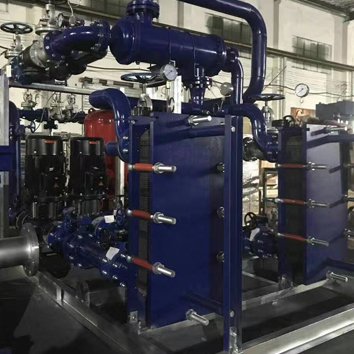
The Core of a Maintenance Plan: Monitor Performance, Not Just the Calendar
Many plants maintain heat exchangers on a fixed schedule: clean every six months, re-gasket every three years. Calendar-based maintenance is better than nothing, but it has a flaw — it ignores how the unit is actually performing.
The smarter approach is condition-based maintenance, built on three simple measurements you should log weekly or monthly:
- Outlet temperatures on both sides (are they drifting from design values?)
- Pressure drop across the unit (rising pressure drop = fouling building up)
- Approach temperature (the gap between the two outlet temperatures — widening gap = efficiency loss)
When pressure drop rises 20–30% above the clean baseline, or thermal performance drops 10% below design, it’s time to clean — regardless of what the calendar says. This data-driven trigger alone typically cuts cleaning costs and extends component life, because you clean when it’s needed rather than too early (wasted labor) or too late (energy waste and deposit hardening).
The Complete Heat Exchanger Maintenance Checklist
Daily / Weekly (Operator Level)
- Record inlet/outlet temperatures and pressures on both sides
- Check for visible leaks, drips, or wet insulation around the unit
- Listen for unusual vibration or flow noise (possible blockage or pump issue)
- Verify flow rates against design conditions
Monthly
- Compare logged performance data against the clean baseline trend
- Inspect gaskets and frame areas for weeping or crusty deposits (early leak signs)
- Check tightening bolts on plate units for correct compression dimension (the “A-measure”)
- Review water treatment records — chemistry drift shows up in the exchanger within weeks
Every 6–12 Months (or Performance-Triggered)
- Clean the heat transfer surfaces. For plate units, open the pack, inspect plates, and clean mechanically or chemically. For shell-and-tube units, brush or hydroblast tubes; consider chemical circulation for the shell side.
- Inspect plates or tubes for pitting, cracks, and erosion — dye penetrant testing catches cracks before they become leaks
- Check alignment, supports, and connections for stress or movement
Every 3–5 Years
- Replace gaskets on plate heat exchangers (sooner in high-temperature or aggressive chemical service)
- Full condition assessment: measure remaining plate/tube wall thickness if corrosion is suspected
- Re-verify unit performance against original design duty and adjust the maintenance triggers
Cleaning Methods: Choosing the Right One
CIP (Clean-in-Place): Circulating a cleaning solution through the unit without opening it. Fast, no disassembly labor, ideal for routine scale and biofilm removal. Match the chemistry to the deposit: acid-based for mineral scale, alkaline for organic and product fouling. Always confirm compatibility with your plate and gasket materials.
Manual cleaning (opened unit): Necessary for heavy fouling or inspection. Use soft brushes or low-pressure water — never abrasive tools or high-pressure jets on plates, which can deform thin plate material and create future leak paths.
Hydroblasting (shell-and-tube): Effective for hard tube-side deposits, but control the pressure to avoid tube wall damage.
One rule that saves money every time: clean early, clean gently. Deposits harden and bond over time. A unit cleaned at the first performance trigger needs mild chemistry and an hour of circulation; the same unit cleaned six months later may need aggressive acid and a full teardown — with permanent efficiency loss.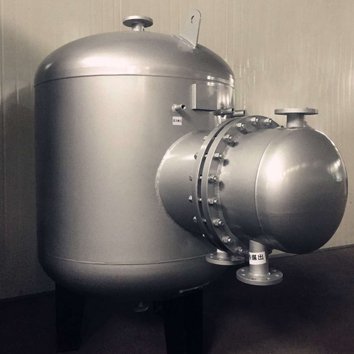
5 Operating Habits That Double Heat Exchanger Life
Maintenance isn’t only about cleaning schedules. How the unit is operated day-to-day matters just as much:
- Ramp temperatures gradually. Rapid startups and shutdowns cause thermal shock and fatigue. Controlled ramp rates protect plates, brazed joints, and welds.
- Stay within design pressure and temperature. Even occasional excursions accelerate gasket aging and mechanical fatigue. Log and investigate every excursion.
- Maintain water treatment. Cooling tower chemistry, filtration, and biocide programs are your first defense against both fouling and corrosion. Poor water quality voids most equipment life expectations.
- Never dead-head or dry-fire a unit. Ensure flow is established before introducing heating media.
- Store spare gaskets correctly. Cool, dark, flat, no ozone sources nearby (motors, UV light). Gaskets age on the shelf too — rotate stock and don’t overtighten a plate pack to compensate for worn gaskets.
Signs Your Heat Exchanger Needs Attention Now
If you see any of the following, don’t wait for the next scheduled interval:
- Outlet temperature can no longer reach setpoint at normal flow
- Pressure drop noticeably higher than the clean baseline
- External drips or staining around gaskets, nozzles, or the frame
- Product contamination indicators (unexpected fluid mixing between circuits)
- Rising energy consumption on the connected boiler or chiller with no process change
Repair or Replace? A Simple Decision Framework
When a unit develops problems, the economics usually decide:
- Repair/clean when fouling or gasket wear is the issue and heat transfer surfaces are intact — typically 5–15% of replacement cost
- Replace plates or retube when localized corrosion or cracking appears but the frame/shell is sound — typically 30–50% of new unit cost
- Replace the unit when corrosion is widespread, the frame is damaged, or the duty no longer matches the process — and take the opportunity to upgrade efficiency, which often pays back through energy savings alone
An honest supplier will tell you which option the numbers actually support. Be wary of anyone who only ever recommends the most expensive one.
Frequently Asked Questions
How often should a heat exchanger be serviced?
It depends on the media and duty, but a solid baseline is: performance monitoring weekly, inspection every 6–12 months, and gasket replacement every 3–5 years for plate units. Condition-based triggers (pressure drop, thermal performance) should override fixed schedules.
What is the average lifespan of an industrial heat exchanger?
With proper maintenance, plate heat exchangers commonly last 15–20+ years (with periodic plate and gasket replacement), and shell-and-tube units 20–30 years. Without maintenance, fouling and corrosion can cut that to under 10.
Can I clean a plate heat exchanger without opening it?
Yes — CIP circulation handles most routine fouling. Opening is only needed for heavy deposits, inspection, or gasket replacement.
What’s the biggest mistake in heat exchanger maintenance?
Waiting too long to clean. Hardened deposits require aggressive treatment that shortens plate and tube life, and the energy wasted in the meantime usually costs more than the cleaning would have.
The Bottom Line
Extending heat exchanger life isn’t complicated: measure performance consistently, clean early and gently, protect the unit from thermal and pressure shock, and replace wear components before they fail. Plants that follow this discipline routinely double equipment life while cutting energy costs and unplanned downtime.