When a heat exchanger goes down, production stops. The replacement part is rarely the biggest cost — the downtime is. Yet many plants still order spare parts reactively, from whoever answers the phone fastest, without checking compatibility or quality.
This guide covers how to buy the three most common heat exchanger spare parts: plates, gaskets, and tube bundles. It explains what to specify, how to verify quality, and how to avoid the mistakes that cause repeat failures.
Why spare parts sourcing matters
A plate heat exchanger (PHE) can have 50–200 plates. A shell-and-tube unit can have hundreds of tubes. When one component fails, the whole unit is offline.
Common failure points:
Gaskets harden, crack, or leak
Plates crack or corrode through
Tubes develop pinholes or stress corrosion cracks
Tube-to-tubesheet joints leak
The right spare part restores performance. The wrong one fails early, voids warranties, or damages adjacent components. Sourcing is an engineering decision, not a purchasing formality.
1. Buying plate heat exchanger plates
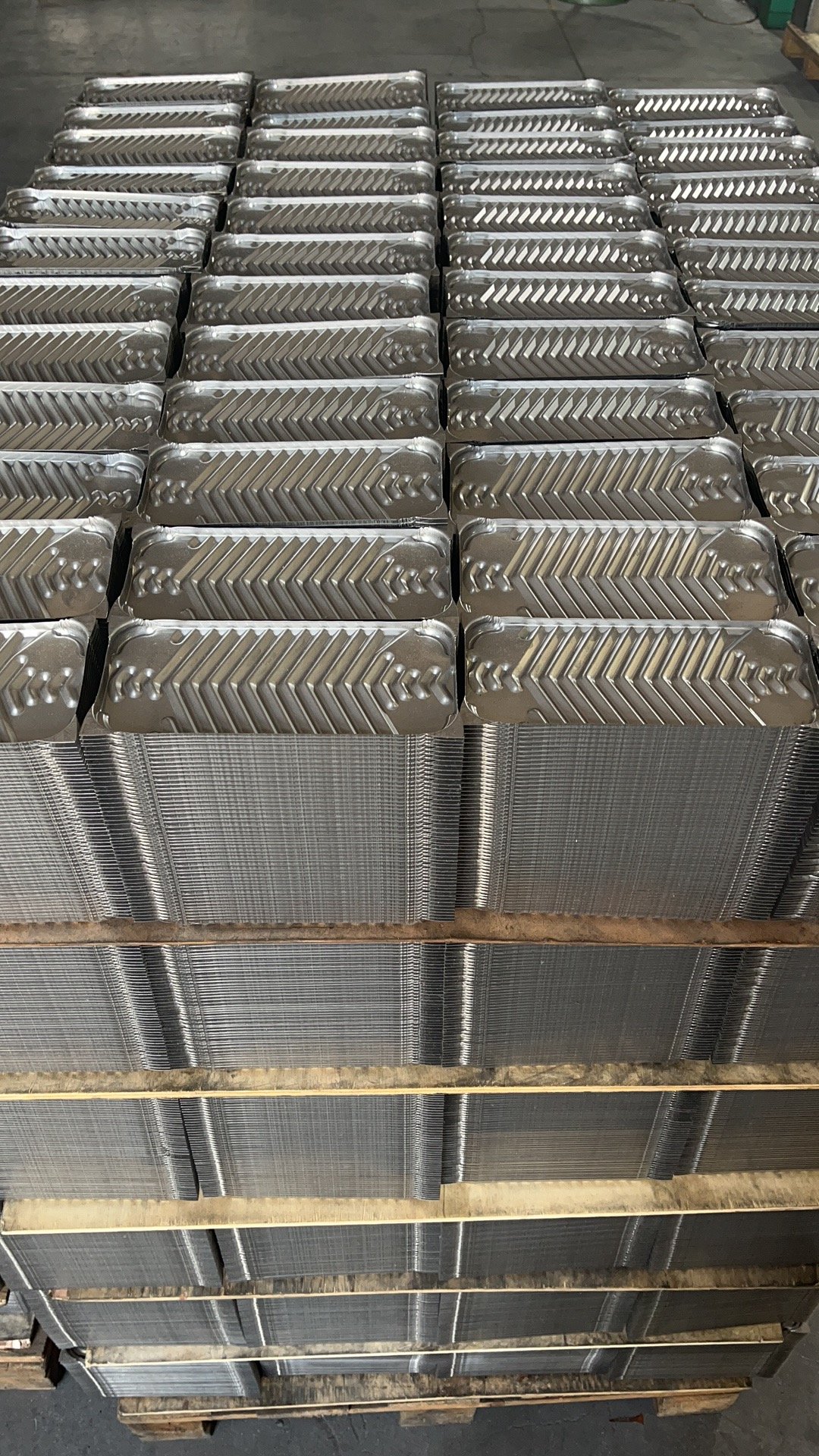
Plates are the heart of a PHE. They are thin (usually 0.4–0.8 mm), corrugated, and precision-formed. A wrong plate can leak, reduce duty, or damage gaskets.
How to identify the correct plate
You need five pieces of information:
Heat exchanger model and manufacturer — Alfa Laval, SWEP, Tranter, GEA, Sonder, etc.
Plate pattern or model number — stamped on the plate, often on the edge or corner
Plate material — 316L stainless steel, titanium, SMO 254, Hastelloy, etc.
Plate thickness — measured in mm; affects pressure rating and heat transfer
Gasket type and material — determines plate compatibility
If the nameplate is missing, measure:
Overall plate dimensions (width, height)
Port center distance
Port diameter
Corrugation depth and angle
OEM vs aftermarket plates
OEM plates come from the original manufacturer. They guarantee fit and performance but cost more and can have long lead times.
Aftermarket plates are made by third-party suppliers. Quality varies widely. Good aftermarket plates are reverse-engineered to match OEM dimensions and performance. Poor ones have wrong corrugation angles, thinner material, or bad port alignment.
How to verify aftermarket quality:
Ask for material certificates (EN 10204 3.1)
Check dimensional tolerances against OEM specs
Request a performance guarantee
Start with a small trial order
What to specify when ordering
Model and serial number
Plate pattern number
Material and thickness
Quantity
Gasket type (if plates come with gaskets)
Required pressure and temperature rating
Any special requirements (food-grade, ASME, PED)
Lead times and cost
Standard 316L plates: 1–3 weeks. Titanium or exotic alloys: 4–8 weeks. Aftermarket plates typically cost 20–40% less than OEM. But if quality is poor, the savings disappear on the first failure.
2. Buying plate heat exchanger gaskets
Gaskets seal the plates. They are the most frequently replaced PHE component. A failed gasket causes cross-contamination or external leaks.
Gasket types
Clip-on (snap-in) — no adhesive, easy to replace, common in food and pharma
Glued — bonded to the plate, better for high pressure and temperature
Vulcanized — gasket bonded directly to plate, used in harsh service
Double gasket — with leak detection port, prevents cross-contamination
Gasket materials and temperature limits
| Material | Temp range | Best for |
|---|---|---|
| NBR | -20 to 110 °C | Water, oils, general service |
| EPDM | -40 to 150 °C | Hot water, steam, food |
| FKM (Viton) | -20 to 200 °C | Acids, hydrocarbons, high temp |
| PTFE | -100 to 260 °C | Aggressive chemicals |
| Silicone | -60 to 200 °C | Food, pharma, high temp |
Always confirm compatibility with both fluids and the cleaning chemicals.
How to specify gaskets
Heat exchanger model and plate pattern
Gasket material and hardness
Attachment type (clip-on, glued, vulcanized)
Quantity
Certification required (FDA, 3A, EHEDG, WRAS)

Common gasket mistakes
Using NBR where EPDM is needed (or vice versa)
Mixing gasket brands on the same plate pack
Reusing gaskets after opening the unit
Not checking plate groove condition before installing new gaskets
Cost and lead time
Standard gaskets: 1–2 weeks. Specialty materials: 3–6 weeks. Cost per gasket ranges from $5 to $50 depending on material and size.
3. Buying shell-and-tube tube bundles
Tube bundles are the most expensive spare part. A new bundle can cost 30–60% of a new heat exchanger. Re-tubing an existing bundle is often cheaper but requires careful assessment.
When to replace vs re-tube
Re-tube if:
Tubesheet and shell are in good condition
Less than 20% of tubes are failed
Bundle can be removed and reinstalled
Cost is less than 50% of a new bundle
Replace the bundle if:
Tubesheet is corroded or cracked
Shell is warped or damaged
More than 30% of tubes have failed
Bundle is fixed (welded) and cannot be re-tubed economically
How to specify a tube bundle
You need:
Shell diameter and length
Tube count, diameter, wall thickness, and length
Tube pitch and layout (triangular, square)
Tube material (carbon steel, stainless, copper, titanium, etc.)
Tubesheet material and thickness
Baffle spacing, cut, and type
Connection sizes and orientations
Design pressure and temperature
Code requirements (ASME, TEMA, PED)
If drawings are missing, a reverse-engineered bundle can be made from field measurements.
Materials
Carbon steel — general service, low cost
304/316 stainless — corrosive fluids, food service
Copper alloys — seawater, cooling water
Titanium — seawater, chlorides
Duplex and super duplex — high chloride, high strength
Hastelloy, Inconel — extreme corrosion
Lead times and cost
Carbon steel bundle: 4–8 weeks. Stainless: 6–12 weeks. Exotic alloys: 10–16 weeks. Cost ranges from $5,000 to $100,000+ depending on size and material.
OEM vs aftermarket vs custom
| OEM | Aftermarket | Custom | |
|---|---|---|---|
| Fit | Guaranteed | Usually good | Exact |
| Cost | Highest | 20–40% lower | Varies |
| Lead time | Long | Short | Medium |
| Warranty | Full | Limited | Negotiable |
| Best for | Critical, warranty-sensitive | Standard, budget-driven | Obsolete or unique |
For obsolete models, custom manufacturing is often the only option. A good supplier can reverse-engineer from a sample or drawing.
How to source spare parts reliably
Identify the part correctly. Model, pattern, material, dimensions.
Get multiple quotes. Compare price, lead time, and warranty.
Ask for documentation. Material certs, dimensional reports, test certificates.
Check references. Ask for other customers using the same part.
Start with a trial order. Test quality before committing to a full set.
Keep a critical spares inventory. Gaskets, plates, and one spare bundle for critical units.
Installation tips to avoid repeat failures
Clean plate grooves before installing new gaskets
Torque bolts evenly and in the correct sequence
Do not mix old and new plates in the same pack
Check plate alignment before tightening
Pressure test after reassembly
For tube bundles, verify baffle orientation and tube-to-tubesheet expansion

FAQ
How do I identify my plate heat exchanger model?
Check the nameplate on the frame. If missing, measure plate dimensions, port sizes, and count plates. A supplier can identify it from photos and measurements.
Can I use aftermarket gaskets on an OEM plate?
Yes, if the gasket is designed for that plate pattern. Poor-quality gaskets can leak or fail early. Always verify material and dimensions.
How often should gaskets be replaced?
When they leak, harden, or crack. In critical service, replace them every time the unit is opened. Typical life is 3–8 years depending on temperature and chemistry.
What is the lead time for a new tube bundle?
4–16 weeks depending on material and size. Emergency manufacturing can be faster but costs more.
Can I re-tube a shell-and-tube heat exchanger?
Yes, if the tubesheet and shell are in good condition. Re-tubing costs 40–60% of a new bundle and takes 2–6 weeks.
Do I need FDA or 3A gaskets for food service?
Yes. Food, dairy, and pharma applications require FDA-compliant materials. 3A or EHEDG certification may also be required.
How do I avoid cross-contamination in a PHE?
Use double-gasket plates with a leak detection port. This prevents mixing of the two fluids even if a gasket fails.