The most common heat exchanger problems are fouling, leaks, pressure drop, corrosion, gasket failure, tube failure, and vibration. These issues reduce thermal performance, increase energy costs, and cause unplanned downtime. This guide explains how to diagnose each problem, identify root causes, and apply practical solutions for plate heat exchangers (PHE) and shell and tube heat exchangers (STHE).
You will learn:
The symptoms and root causes of the most frequent heat exchanger failures
How to calculate and interpret performance loss using U-value, LMTD, and pressure drop
Step-by-step troubleshooting procedures for both PHE and STHE
Material, gasket, and maintenance decisions that prevent recurring problems
Cost, lead time, and certification factors when repair or replacement is needed
Quick Answer
| Problem | Symptom | Likely Cause | Immediate Solution |
|---|---|---|---|
| Fouling | Reduced U, higher ΔP | Scaling, particles, biological growth | Clean or CIP; review water treatment |
| Leak | Fluid mixing or external drip | Gasket failure, tube rupture, corrosion | Replace gasket or tube; inspect material |
| High pressure drop | Pump overload, low flow | Fouling, blockage, wrong plate/tube geometry | Clean; verify flow velocity and design |
| Corrosion | Pitting, rust, wall thinning | Wrong material, aggressive fluid, galvanic couple | Change material; add inhibitors |
| Gasket failure | Leak at plate edges | Wrong gasket, over-torque, thermal cycling | Replace with correct gasket; check torque |
| Tube failure | Cross-contamination, pressure loss | Vibration, erosion, corrosion, thermal stress | Plug or replace tube; check baffles |
| Poor temperature approach | Outlet temperature off-target | Fouling, undersized area, low U | Clean; recalculate area; add plates |
Table of Contents
What Are the Most Common Heat Exchanger Problems?
How to Diagnose and Fix Fouling and Scaling
How to Solve Leaks and Gasket Failures
How to Fix Pressure Drop and Flow Problems
How to Address Corrosion and Material Degradation
How to Prevent Tube Failures and Vibration in Shell and Tube
How to Improve Temperature Approach and Thermal Performance
Step-by-Step Troubleshooting Guide
Comparison Tables
Heat Exchanger Maintenance Checklist
Common Mistakes and How to Avoid Them
FAQ
Key Takeaways
What Are the Most Common Heat Exchanger Problems?
The most common heat exchanger problems are fouling, leaks, pressure drop, corrosion, gasket failure, tube failure, and vibration. These problems rarely occur in isolation; one often leads to another. For example, fouling increases pressure drop, which reduces flow and accelerates further deposit growth.
H3: Why These Problems Matter
Energy cost: A fouled or leaking exchanger consumes more pumping and heating/cooling energy.
Production loss: Reduced capacity can force derating or shutdown.
Safety: Cross-contamination between fluids can be hazardous.
Equipment life: Corrosion and vibration shorten service life.
Maintenance cost: Frequent cleaning and repairs increase operating expense.
H3: How to Prioritize
Focus first on problems that affect safety and product quality (leaks, cross-contamination). Then address performance issues (fouling, pressure drop). Finally, optimize for energy and maintenance cost.
How to Diagnose and Fix Fouling and Scaling
Fouling is diagnosed by tracking U-value decline and pressure drop increase over time. When U drops by more than 15% or ΔP rises by more than 30% from the clean baseline, fouling is the likely cause.
H3: Symptoms of Fouling
Outlet temperatures drift from setpoint
Pressure drop across the exchanger increases
Pump power rises
Cleaning intervals become shorter
Visible deposits on plates or tubes
H3: Root Causes
| Cause | Mechanism | Typical Fluids |
|---|---|---|
| Scaling | Salt precipitation | Cooling water, boiler water |
| Particulate | Solids settling | River water, process streams |
| Biological | Biofilm growth | Cooling towers, food processing |
| Corrosion | Metal oxide deposits | Mixed-metal systems |
| Chemical reaction | Polymerization, coking | Refinery, high-temperature oils |
| Solidification | Freezing, wax | Chillers, crude oil |
H3: Solutions
Chemical cleaning (CIP): Circulate acid for scale, caustic for organics, biocide for biological. Verify compatibility with plates, gaskets, and tubes.
Mechanical cleaning: Hydrojetting or brushing for heavy deposits. For PHE, open the frame and clean plates individually.
Water treatment: Softening, pH control, filtration, biocide dosing, and scale inhibitors.
Velocity control: Maintain flow above settling threshold (typically > 0.5 m/s in tubes, > 0.3 m/s in plates).
Design change: Use wide-gap plates for dirty fluids or switch to STHE with removable bundle.
H3: How to Calculate Fouling Impact
Use the fouling factor Rf in the U calculation:
1/Udirty = 1/Uclean + Rf
For example, if Uclean = 4,500 W/m²·K and Rf = 0.0002 m²·K/W per side, Udirty drops to about 2,370 W/m²·K. Required area nearly doubles.
How to Solve Leaks and Gasket Failures
Leaks in heat exchangers are caused by gasket failure, tube rupture, corrosion, or thermal stress. The solution depends on the type of exchanger and the leak location.
H3: Plate Heat Exchanger Gasket Leaks
Symptoms:
External drip at plate edges
Fluid mixing between channels
Pressure loss on one side
Causes:
Wrong gasket material for fluid or temperature
Over-torque or under-torque during assembly
Thermal cycling causing gasket relaxation
Age-related hardening or cracking
Solutions:
Replace gaskets with correct material (NBR, EPDM, HNBR, FKM, PTFE-encapsulated)
Follow manufacturer torque specifications
Allow for thermal expansion in frame design
Keep spare gaskets on site
H3: Shell and Tube Tube Leaks
Symptoms:
Cross-contamination between shell and tube sides
Pressure drop on one side
Visible tube sheet wetness
Causes:
Tube vibration causing fatigue
Erosion from high-velocity particles
Corrosion pitting
Thermal stress at tube sheet
Solutions:
Plug defective tubes (if allowed by design)
Replace tube bundle
Install impingement plates to reduce erosion
Change material to resist corrosion
H3: Flange and Connection Leaks
Check gasket condition and bolt torque
Verify flange alignment
Use correct gasket material for fluid and temperature
Inspect for corrosion or pitting on flange faces
How to Fix Pressure Drop and Flow Problems
High pressure drop is usually caused by fouling, blockage, or incorrect plate/tube geometry. Low flow is often a result of high ΔP or pump issues.
H3: Symptoms
Pump overload or tripping
Reduced flow rate
Higher energy consumption
Cavitation noise
H3: Root Causes
| Cause | Effect | Solution |
|---|---|---|
| Fouling | Narrowed channels | Clean exchanger |
| Blockage | Flow restriction | Remove debris; install filtration |
| Wrong plate angle | High ΔP for given flow | Change to wider angle or add passes |
| Too many passes | High velocity, high ΔP | Reduce passes or increase flow area |
| Air entrainment | Reduced heat transfer | Install air vents |
| Pump wear | Low flow | Service or replace pump |
H3: How to Calculate Pressure Drop
For tube side:
ΔP = (4 × f × L × n / d) × (ρ × v² / 2)
Where:
f = friction factor
L = tube length
n = number of passes
d = tube inner diameter
ρ = fluid density
v = fluid velocity
For plate heat exchangers, use vendor correlations based on chevron angle and Reynolds number.
H3: Solutions
Clean the exchanger to restore original ΔP.
Install upstream filtration (50–200 micron) to prevent blockage.
Adjust plate configuration (change chevron angle) or reduce number of passes.
Verify pump curve matches system resistance.
Remove air from the system.
How to Address Corrosion and Material Degradation
Corrosion is caused by chemical attack, galvanic coupling, or erosion-corrosion. It leads to wall thinning, pitting, and eventual failure.
H3: Types of Corrosion
| Type | Cause | Prevention |
|---|---|---|
| Uniform | Acid or caustic attack | Material upgrade, inhibitors |
| Pitting | Chlorides, oxygen | Titanium, SMO 254, duplex |
| Galvanic | Dissimilar metals | Isolation, compatible materials |
| Erosion-corrosion | High velocity, particles | Reduce velocity, filter, harden surface |
| Stress corrosion cracking | Chlorides + stress | Stress relief, material selection |
H3: Material Selection Guidelines
| Fluid | Recommended Material |
|---|---|
| Clean water, HVAC | 316L stainless steel |
| Cooling tower water | 316L, titanium |
| Seawater, chloride-rich | Titanium, SMO 254, duplex |
| Acids, aggressive chemicals | Nickel alloys, PTFE-lined |
| High-temperature steam | Carbon steel, chrome-moly |
| Food and beverage | 316L, FDA-compliant |
H3: Solutions
Upgrade to corrosion-resistant material (titanium, SMO 254, duplex)
Add corrosion inhibitors
Control pH, oxygen, and chloride levels
Avoid dissimilar metal couples or use isolation gaskets
Apply protective coatings where compatible
How to Prevent Tube Failures and Vibration in Shell and Tube
Tube failures in shell and tube heat exchangers are most often caused by vibration, erosion, corrosion, or thermal stress. Vibration is the leading cause of fatigue failure.
H3: Tube Vibration
Causes:
High shell-side flow velocity
Insufficient baffle support
Resonant frequency match
Symptoms:
Noise or humming
Tube thinning at baffle locations
Unexplained pressure loss
Solutions:
Reduce shell-side velocity
Add or reposition baffles
Use thicker tubes or different material
Install vibration dampers
H3: Erosion
Causes:
High-velocity particles in tube side
Impingement at inlet
Solutions:
Install impingement plates
Reduce velocity
Filter particles upstream
Use harder tube material
H3: Thermal Stress
Causes:
Rapid temperature changes
Differential expansion between shell and tubes
Solutions:
Use U-tube or floating head design
Limit heating/cooling rates
Ensure proper expansion joints
How to Improve Temperature Approach and Thermal Performance
Poor temperature approach means the exchanger cannot bring the cold fluid close enough to the hot fluid outlet temperature. It is usually caused by fouling, undersized area, or low U-value.
H3: Symptoms
Outlet temperature below setpoint
Process cannot reach required conditions
Higher utility consumption
H3: Root Causes
| Cause | Effect | Solution |
|---|---|---|
| Fouling | Reduced U | Clean exchanger |
| Undersized area | Insufficient heat transfer | Add plates or replace with larger unit |
| Low U | Poor heat transfer | Increase velocity, change plate pattern |
| Air in system | Reduced effective area | Vent air |
| Wrong flow arrangement | Poor LMTD | Change to counter-current |
H3: How to Calculate Required Area
A = Q / (U × LMTD × F)
If calculated area exceeds installed area, the exchanger is undersized. Add plates (PHE) or replace with larger unit.
H3: Solutions
Clean the exchanger to restore U.
Add plates to a PHE if frame allows.
Increase flow velocity within ΔP limits.
Change to a more efficient plate pattern.
Replace with a larger exchanger if necessary.
 Step-by-Step Troubleshooting Guide
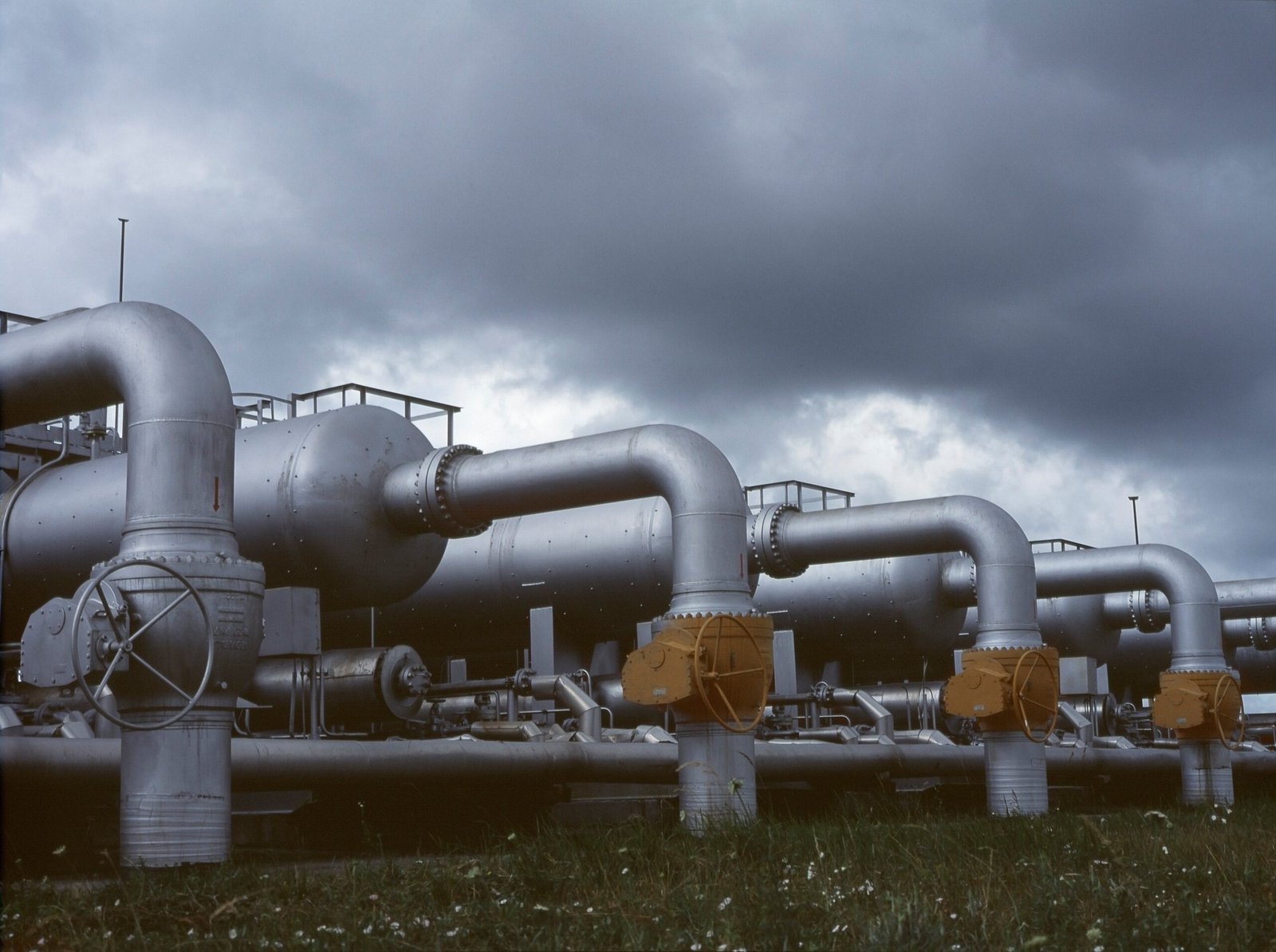 Step-by-Step Troubleshooting Guide
Follow these steps when a heat exchanger underperforms.
Step 1 — Record baseline data.
Note flow rates, inlet/outlet temperatures, and pressure drops at clean condition.
Step 2 — Measure current performance.
Compare current temperatures and ΔP with baseline.
Step 3 — Calculate U-value.
Use Q = ṁ × cp × ΔT and A = Q / (U × LMTD × F) to back-calculate U.
Step 4 — Identify the problem.
U decreased, ΔP increased → fouling
U decreased, ΔP normal → air, low flow, or wrong flow arrangement
ΔP increased, U normal → blockage or wrong plate/tube geometry
Leak or cross-contamination → gasket or tube failure
Step 5 — Inspect the exchanger.
Open PHE to check plates and gaskets. Remove STHE bundle to inspect tubes.
Step 6 — Clean or repair.
Use appropriate cleaning method. Replace failed gaskets or tubes.
Step 7 — Verify performance after repair.
Recalculate U and ΔP. Compare with baseline.
Step 8 — Adjust operation or design.
If problem recurs, change water treatment, velocity, or exchanger type.
Comparison Tables
Table 1: Common Problems in PHE vs STHE
| Problem | Plate Heat Exchanger | Shell and Tube |
|---|---|---|
| Fouling | Blocks narrow channels quickly | Tolerates fouling better |
| Leaks | Gasket leaks common | Tube or tube sheet leaks |
| Pressure drop | High per pass; adjustable by plate pattern | Lower; adjustable by baffles |
| Corrosion | Plates thin, sensitive to chlorides | Tubes thicker, more tolerant |
| Cleaning | Easy CIP or manual plate opening | Requires bundle removal |
| Expansion | Add plates | Fixed |
| Vibration | Not a major issue | Major cause of tube failure |
Table 2: Cleaning Method Selection
| Fouling Type | PHE Cleaning | STHE Cleaning |
|---|---|---|
| Scaling | CIP with acid | CIP or hydrojetting |
| Particulate | CIP or manual plate cleaning | Hydrojetting or bundle removal |
| Biological | CIP with biocide | CIP with biocide |
| Corrosion products | CIP with chelating agent | Hydrojetting |
| Chemical reaction | Manual plate cleaning | Bundle removal + mechanical |
| Solidification | Hot water or steam melt-out | Hot oil or steam melt-out |
Heat Exchanger Maintenance Checklist
- □
Record baseline U and ΔP at clean condition
- □
Monitor U and ΔP weekly or monthly
- □
Clean when U drops 15% or ΔP rises 30%
- □
Inspect gaskets for hardening, cracking, or leakage
- □
Check plate surfaces for pitting or corrosion
- □
Verify torque on frame bolts (PHE)
- □
Inspect tube bundle for vibration damage, erosion, or corrosion
- □
Check baffle condition and spacing
- □
Verify water treatment chemistry and dosing
- □
Replace filters as needed
- □
Keep spare gaskets, plates, or tubes on site
- □
Train operators on cleaning and safety procedures
- □
Review fouling history annually
Common Mistakes and How to Avoid Them
1. Ignoring early warning signs.
Small changes in U or ΔP are early indicators. Monitor trends, not just absolute values.
2. Using wrong cleaning chemicals.
Incompatible chemicals damage plates, gaskets, or tubes. Verify compatibility before cleaning.
3. Over-torquing gaskets.
Excessive torque deforms gaskets and causes leaks. Follow manufacturer specifications.
4. Skipping water treatment.
Untreated water causes scaling, corrosion, and biological growth. Treatment is cheaper than repair.
5. Operating at low velocity.
Low velocity allows deposits to settle. Maintain velocity above settling threshold.
6. Mixing dissimilar metals.
Galvanic corrosion accelerates failure. Use compatible materials or isolation.
7. Not keeping spare parts.
Without spare gaskets or plates, a leak becomes a long shutdown.
8. Choosing PHE for dirty fluids.
Narrow channels block easily. Use STHE or wide-gap PHE for solids-laden fluids.
9. Ignoring vibration in STHE.
Tube vibration causes fatigue failure. Check baffle spacing and flow velocity.
10. Delaying replacement.
Repeated repairs may cost more than a new unit. Evaluate total cost of ownership.
FAQ
1. What is the most common heat exchanger problem?
Fouling is the most common problem. It reduces heat transfer, increases pressure drop, and raises energy costs. Regular cleaning and water treatment prevent most fouling.
2. How do I know if my heat exchanger is fouled?
Track U-value and pressure drop. If U drops by 15% or ΔP rises by 30% from clean baseline, fouling is likely. Visible deposits confirm.
3. Why does my plate heat exchanger leak?
Gasket failure is the most common cause. Wrong gasket material, over-torque, thermal cycling, or age can cause leaks. Replace with correct gasket and torque.
4. How do I fix high pressure drop in a heat exchanger?
Clean the exchanger first. If ΔP remains high, check for blockage, reduce number of passes, or change plate pattern. Verify pump performance.
5. What causes tube failure in shell and tube exchangers?
Vibration, erosion, corrosion, and thermal stress are the main causes. Improve baffle support, reduce velocity, filter particles, or change material.
6. How can I prevent corrosion in heat exchangers?
Select compatible materials, add inhibitors, control pH and chlorides, and avoid dissimilar metal couples. Titanium and SMO 254 resist chlorides.
7. Why is my heat exchanger not reaching the required temperature?
Fouling, undersized area, low U, air in system, or wrong flow arrangement. Clean, add plates, increase velocity, vent air, or change to counter-current.
8. How often should I clean my heat exchanger?
Depends on fouling rate. Monitor U and ΔP and clean when performance drops. Typical industrial exchangers need cleaning every 6–24 months.
9. Can I add plates to my plate heat exchanger?
Yes, if the frame has spare capacity. Adding plates increases area and capacity. Check frame dimensions and gasket compatibility.
10. What is the best material for seawater heat exchangers?
Titanium, SMO 254, or duplex stainless steel. These resist chloride pitting and crevice corrosion. Carbon steel and 316L are not suitable.
11. How do I stop tube vibration?
Reduce shell-side velocity, add baffles, increase tube thickness, or use vibration dampers. Check baffle spacing and flow distribution.
12. When should I replace instead of repair?
If repairs are frequent, efficiency remains low, or corrosion is widespread, replacement is more economical. Evaluate total cost of ownership over 5–10 years.
Key Takeaways
The most common heat exchanger problems are fouling, leaks, pressure drop, corrosion, gasket failure, tube failure, and vibration.
Fouling is the leading cause of performance loss; monitor U and ΔP to detect it early.
Gasket leaks in PHE are usually solved by correct gasket material and proper torque.
Tube failures in STHE are often caused by vibration; improve baffle support and reduce velocity.
Corrosion is prevented by selecting compatible materials and controlling water chemistry.
A step-by-step troubleshooting approach saves time and avoids unnecessary repairs.
Regular maintenance, water treatment, and spare parts inventory reduce downtime.
When repair cost approaches replacement cost, choose a new unit with better materials and design.