Waste heat recovery is one of the most practical ways to reduce industrial energy consumption by capturing heat that would otherwise be discharged and transferring it to a useful process. A properly designed heat exchanger can recover heat from exhaust gas, hot water, steam condensate, process fluids, or other waste streams and reuse it for heating, preheating, or hot-water production.
The key is not simply to recover as much heat as possible. A successful system must balance recoverable heat, temperature level, flow rate, heat exchanger efficiency, pressure drop, fouling, material compatibility, investment cost, and operating hours.
This guide explains how to evaluate a waste heat recovery project, calculate potential energy savings, select the right heat exchanger, estimate economics, and avoid common design mistakes.
Table of Contents
- Quick Answer: What Is Waste Heat Recovery for Energy Saving?
- Where Does Recoverable Waste Heat Come From?
- How Does a Waste Heat Recovery System Work?
- How Much Energy Can Waste Heat Recovery Save?
- Which Heat Exchanger Is Best for Waste Heat Recovery?
- How Do Temperature Approach, Pressure Drop, and Fouling Affect Performance?
- How to Design and Select a Waste Heat Recovery System
- How Much Does Waste Heat Recovery Cost and When Does It Pay Back?
- Common Mistakes in Waste Heat Recovery Projects
- Waste Heat Recovery Project Checklist
- FAQ
- Key Takeaways
Quick Answer: What Is Waste Heat Recovery for Energy Saving?
Waste heat recovery captures thermal energy from a hot waste stream and transfers it to another process that needs heat, reducing the amount of new fuel or electricity required.
Typical examples include:
- Using hot process water to preheat cold process water
- Recovering heat from boiler blowdown
- Using exhaust gas to preheat combustion air
- Recovering heat from compressor discharge
- Using hot wastewater to preheat clean water
- Recovering heat from steam condensate
- Recovering heat from refrigeration or HVAC systems
- Using industrial cooling-water heat for building heating
The basic energy relationship is:
Q = ṁ × Cp × ΔT
Where:
- Q = recoverable heat
- ṁ = mass flow rate
- Cp = specific heat capacity
- ΔT = temperature difference
The practical savings depend on how much of this heat can be transferred at a useful temperature.
Where Does Recoverable Waste Heat Come From?
The best waste heat sources are streams with sufficient temperature, stable flow, high operating hours, and a nearby heat demand.
Common Industrial Waste Heat Sources
| Waste Heat Source | Typical Heat Recovery Opportunity | Common Heat Sink |
|---|---|---|
| Hot process water | Water-to-water heat recovery | Process water |
| Compressor discharge | Oil/gas cooling recovery | Hot water |
| Boiler blowdown | Water preheating | Boiler feedwater |
| Steam condensate | Sensible heat recovery | Feedwater/process water |
| Furnace exhaust gas | Gas-to-air/water recovery | Combustion air |
| Dryer exhaust | Air or water heating | Process air |
| Cooling water | Water-to-water recovery | HVAC/process heating |
| Refrigeration condenser | Condenser heat recovery | Domestic/process hot water |
| Chemical process stream | Process-to-process recovery | Feed stream |
| Data center cooling loop | Heat recovery | Building heating/hot water |
What Makes Waste Heat Economically Recoverable?
Not all waste heat is worth recovering.
A useful waste stream normally has:
- Sufficient temperature
- Sufficient flow rate
- Stable operating conditions
- Enough annual operating hours
- A nearby heat demand
- Reasonable heat exchanger installation cost
- Acceptable pressure drop
- Manageable fouling and corrosion
The most important principle is:
Waste heat has economic value only when it can be transferred to a useful heat sink at the right temperature and time.
High-Temperature Waste Heat vs Low-Temperature Waste Heat
High-temperature sources generally provide more recovery options.
Low-temperature waste heat can still be valuable, but it may require:
- Larger heat-transfer areas
- Smaller temperature approaches
- Heat pumps
- Low-temperature heating systems
- Additional heat recovery stages
How Does a Waste Heat Recovery System Work?
A waste heat recovery system transfers heat from a waste stream to a useful process stream through a heat exchanger without normally mixing the two fluids.
A basic system contains:
Waste heat source → heat exchanger → cooled waste stream
and:
Cold heat-demand stream → heat exchanger → preheated/hot stream
Direct Heat Recovery
Direct recovery transfers heat from one process stream to another.
For example:
Hot wastewater → plate heat exchanger → cold process water
The wastewater loses heat while the clean water gains heat.
This arrangement is often attractive when both streams are liquid and their temperatures are compatible.
Indirect Heat Recovery
When the two streams cannot be directly connected, an intermediate circuit can be used.
For example:
Hot process fluid → heat exchanger → intermediate water loop → heat exchanger → process demand
This provides additional separation but introduces:
- Additional heat exchangers
- Pumps
- Piping
- Control requirements
- Pumping energy
- Higher capital cost
Heat Recovery With a Heat Transfer Unit
For larger or more complex systems, a packaged heat transfer unit can integrate:
- Heat exchanger
- Circulation pump
- Control valve
- Temperature sensors
- Pressure sensors
- Flow measurement
- Strainer
- Control panel
- Skid and piping
This can simplify installation where the customer needs a coordinated system rather than only a heat exchanger.
How Much Energy Can Waste Heat Recovery Save?
Potential energy savings are determined by recoverable heat multiplied by actual operating time and the efficiency of the system that would otherwise supply the required heat.
Step 1: Calculate Available Heat
For a liquid stream:
Q = ṁ × Cp × ΔT
For water, a practical preliminary calculation is:
Q(kW) ≈ 1.163 × V̇(m³/h) × ΔT(°C)
For example, suppose:
- Hot water flow = 20 m³/h
- Hot-water temperature reduction = 20°C
Then:
Q ≈ 1.163 × 20 × 20
Q ≈ 465 kW
This is the theoretical heat removed from the hot stream.
The actual useful recovery may be lower because of:
- Heat exchanger approach temperature
- Heat losses
- Flow variations
- Control limitations
- Fouling
- Operating conditions
Step 2: Convert Recovered Heat Into Annual Energy
If a system recovers 400 kW for 5,000 operating hours per year:
Annual recovered energy = 400 × 5,000
= 2,000,000 kWh/year
The actual fuel or electricity saving depends on what energy source the recovered heat replaces.
Energy Saving Example
| Parameter | Example |
|---|---|
| Recoverable heat | 400 kW |
| Operating hours | 5,000 h/year |
| Annual recovered heat | 2,000,000 kWh |
| Heat-source efficiency | 90% |
| Approximate displaced input | 2,222,000 kWh/year |
This is a simplified engineering estimate. Actual savings should use measured operating data and the real efficiency curve of the existing heating system.
Why Operating Hours Matter
A recovery system used 8,000 hours per year can have very different economics from an identical system used only 1,500 hours.
Therefore:
Annual savings = recoverable heat × useful operating hours × replacement efficiency factor
Do not calculate payback from peak heat duty alone.
Which Heat Exchanger Is Best for Waste Heat Recovery?
The best heat exchanger depends on fluid type, temperature, pressure, fouling, corrosion, required maintenance, allowable pressure drop, and required heat-transfer area.
Plate Heat Exchanger
Plate heat exchangers are often suitable for liquid-to-liquid waste heat recovery because they provide high heat-transfer coefficients in a compact package.
Advantages:
- Compact size
- High heat-transfer performance
- Small temperature approach possible
- Easy capacity adjustment for many gasketed designs
- Good accessibility for cleaning
- Relatively low fluid volume
Potential limitations:
- Gasket temperature/chemical limitations
- Sensitivity to severe solids or plugging
- Pressure limitations depending on construction
- Gasket maintenance requirements
Gasketed Plate Heat Exchanger
A gasketed plate heat exchanger is useful when frequent cleaning or inspection is required.
It is particularly attractive for:
- Water systems
- HVAC
- Food processing
- General industrial process fluids
The gasket material must be compatible with the process fluid and operating temperature.
Brazed Plate Heat Exchanger
Brazed plate heat exchangers offer:
- Compact design
- No replaceable plate gaskets
- High heat-transfer efficiency
- Low internal volume
They are commonly considered for:
- HVAC
- Refrigeration
- Heat pumps
- Clean liquid applications
They are less convenient when regular internal mechanical cleaning is required.
Welded Plate Heat Exchanger
Welded plate designs can be considered when:
- Higher temperature is required
- Higher pressure resistance is required
- Gasket limitations are unacceptable
- Process conditions are more demanding
The exact pressure and temperature capability depends on the construction.
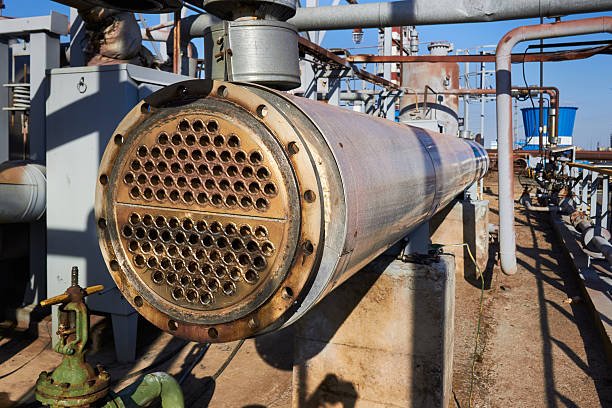
Shell-and-Tube Heat Exchanger
Shell-and-tube heat exchangers remain important for:
- High-pressure service
- High-temperature service
- Steam applications
- Gas-liquid duties
- Large process systems
- Applications requiring robust mechanical construction
They can also be easier to adapt to certain dirty or demanding process streams.
Heat Exchanger Comparison
| Heat Exchanger Type | Main Advantages | Main Limitations | Typical Waste Heat Applications |
|---|---|---|---|
| Gasketed plate | Compact, cleanable, high heat transfer | Gasket limitations | Water-to-water, HVAC, food |
| Brazed plate | Compact, economical, low volume | Limited mechanical cleaning | HVAC, refrigeration |
| Welded plate | Compact, higher-temperature capability | More specialized maintenance | Industrial process |
| Shell-and-tube | Robust, high pressure/temperature capability | Larger footprint | Steam, oil, process fluids |
| Air-cooled | No cooling-water requirement | Larger air-side equipment | Gas/exhaust cooling |
How Do Temperature Approach, Pressure Drop, and Fouling Affect Performance?
Temperature approach, pressure drop, and fouling determine whether a waste heat recovery system remains technically and economically worthwhile.
Temperature Approach
A smaller temperature approach allows more heat recovery but generally requires more heat-transfer area.
For example, reducing the approach from 10°C to 5°C may require a significantly larger heat exchanger depending on the duty and fluid conditions.
This creates a design trade-off:
Smaller approach → more recovery potential → larger exchanger → higher capital cost
The economically optimal approach is not always the smallest possible approach.
Pressure Drop
Pressure drop represents hydraulic resistance.
A heat exchanger with excessive pressure drop can increase:
- Pumping power
- Fan power
- Operating cost
- System pressure requirements
For waste heat recovery, this is especially important because energy savings from recovered heat should not be substantially offset by additional pumping or fan energy.
Fouling
Fouling reduces heat-transfer performance and can increase pressure drop.
Common fouling sources include:
- Scale
- Suspended solids
- Oil
- Biological deposits
- Process chemicals
- Corrosion products
- Dust and ash in gas systems
How Should Fouling Be Managed?
Depending on the application, consider:
- Filtration
- Strainers
- Water treatment
- Appropriate flow velocity
- Larger heat-transfer area
- Removable plates
- Cleaning-in-place
- Mechanical cleaning access
- Online pressure-drop monitoring
A heat exchanger that is highly efficient when clean may not be economical if it requires frequent shutdowns for cleaning.
How to Design and Select a Waste Heat Recovery System
Waste heat recovery should be designed from measured operating data and the relationship between the waste heat source and the actual heat demand.
Step 1: Measure the Waste Heat Source
Collect:
- Flow rate
- Inlet temperature
- Outlet temperature
- Pressure
- Fluid composition
- Operating hours
- Temperature fluctuations
- Seasonal variations
Avoid relying only on nameplate data.
Step 2: Identify the Heat Sink
Determine where the recovered heat can be used.
Examples include:
- Boiler feedwater
- Domestic hot water
- Process water
- Combustion air
- HVAC heating water
- Cleaning water
- Drying air
- Preheating process fluids
The heat sink should have sufficient demand when the waste heat is available.
Step 3: Calculate Available Heat
Use:
Q = ṁ × Cp × ΔT
Then apply realistic recovery limitations.
Step 4: Determine Required Outlet Temperatures
Define:
- Waste stream inlet/outlet temperatures
- Heat-sink inlet/outlet temperatures
- Minimum temperature approach
These parameters strongly influence exchanger size.
Step 5: Select Heat Exchanger Type
Consider:
- Liquid or gas
- Pressure
- Temperature
- Fouling
- Corrosion
- Cleaning
- Available space
- Maintenance
- Capital budget
Step 6: Check Pressure Drop
Calculate pressure drop on both sides.
Confirm that:
- Existing pumps can handle it
- New pumps are correctly sized
- Fan power remains acceptable
- Process pressure remains within limits
Step 7: Select Materials
Review:
- Fluid chemistry
- Chlorides
- pH
- Temperature
- Corrosion risk
- Gasket compatibility
- Cleaning chemicals
Step 8: Evaluate Economics
Calculate:
- Equipment cost
- Installation cost
- Annual energy savings
- Maintenance cost
- Pump/fan energy
- Expected operating hours
- Simple payback
- Lifecycle cost
Step 9: Define Controls
Typical controls may include:
- Temperature control valve
- Flow control
- Bypass valve
- Differential-pressure monitoring
- High-temperature protection
- Freeze protection
- Pump control
- Alarm functions
Step 10: Confirm Certification and Documentation
Depending on the application, define requirements for:
- Pressure equipment
- Materials
- Welding
- Pressure testing
- NDT
- Electrical systems
- Factory inspection
- Third-party inspection
- Marine classification where applicable
How Much Does Waste Heat Recovery Cost and When Does It Pay Back?
The economics depend more on annual useful heat recovery than on peak heat-recovery capacity alone.
Main Cost Factors
| Cost Factor | Effect on Project Cost |
|---|---|
| Heat exchanger size | Higher area generally increases cost |
| Material | Corrosion-resistant alloys can increase cost |
| Pressure rating | Higher design pressure increases construction requirements |
| Temperature | High-temperature service can require specialized materials |
| Pumps | Adds capital and operating cost |
| Controls | Increases system integration cost |
| Skid/piping | Adds fabrication and assembly cost |
| Insulation | Adds material and installation cost |
| Certification | May add inspection and documentation cost |
| Installation | Depends heavily on site conditions |
| Cleaning system | May increase initial cost but reduce downtime |
Simple Payback Calculation
A preliminary payback can be estimated as:
Payback Period = Total Project Investment / Annual Net Savings
Where:
Annual Net Savings = Energy Cost Avoided − Additional Operating Cost
Additional operating costs may include:
- Pump electricity
- Fan electricity
- Maintenance
- Cleaning
- Spare parts
- Water treatment
Example
Suppose:
- Project investment = $80,000
- Annual energy savings = $30,000
- Additional operating and maintenance cost = $5,000/year
Then:
Annual net savings = $30,000 − $5,000 = $25,000
Simple payback = $80,000 / $25,000 = 3.2 years
This is only a preliminary economic calculation. A full project evaluation should consider energy-price changes, equipment lifetime, financing, downtime, and maintenance.
Common Mistakes in Waste Heat Recovery Projects
Most waste heat recovery failures come from poor heat-source data, unrealistic temperature assumptions, excessive pressure drop, fouling, or a mismatch between heat supply and heat demand.
Mistake 1: Designing From Peak Conditions Only
Peak flow or temperature may occur for only a small portion of the year.
Solution: use representative operating data and load profiles.
Mistake 2: Assuming All Waste Heat Is Recoverable
The theoretical heat in a waste stream is not necessarily useful heat.
Solution: consider the heat sink temperature, minimum approach, operating schedule, and exchanger limitations.
Mistake 3: Ignoring Heat Demand
Recovering heat is useless if there is no process that can consume it.
Solution: match the waste heat source with a real and stable heat demand.
Mistake 4: Choosing the Smallest Possible Temperature Approach
A very small approach can dramatically increase exchanger size.
Solution: compare capital cost with the additional annual energy savings.
Mistake 5: Ignoring Pressure Drop
Additional pressure drop can increase pump or fan energy.
Solution: include hydraulic energy in the lifecycle cost calculation.
Mistake 6: Underestimating Fouling
Dirty fluids can rapidly reduce performance.
Solution: specify fouling resistance, filtration, cleaning access, and monitoring requirements.
Mistake 7: Selecting Materials Without Fluid Analysis
Temperature alone is insufficient for material selection.
Solution: provide fluid composition, pH, chloride level, contaminants, and cleaning chemicals where applicable.
Mistake 8: Ignoring Seasonal Operation
A heat recovery system designed for winter heating may have limited value in summer.
Solution: evaluate annual operating profiles and consider alternative heat sinks.
Mistake 9: Forgetting Maintenance Access
A heat exchanger that cannot be opened, cleaned, or replaced efficiently can create high downtime costs.
Solution: check service clearances before finalizing the layout.
Mistake 10: Focusing Only on Simple Payback
A short payback does not automatically mean the project has low technical risk.
Solution: also evaluate reliability, maintenance, safety, certification, replacement parts, and expected service life.
Waste Heat Recovery Project Checklist
Use this checklist before requesting a heat exchanger quotation or approving a waste heat recovery project.
Heat Source
Waste heat source identified
Flow rate measured
Inlet temperature measured
Outlet temperature target defined
Operating pressure confirmed
Fluid composition known
Operating hours confirmed
Seasonal variations evaluated
Heat Sink
Heat demand identified
Heat-sink flow rate known
Heat-sink inlet temperature known
Required outlet temperature defined
Heat demand available during waste-heat production
Backup heating system evaluated
Heat Exchanger
Heat duty calculated
Temperature approach defined
Pressure drop limit defined
Fouling factor considered
Heat exchanger type selected
Heat-transfer area checked
Cleaning method defined
Maintenance access confirmed
Materials
Plate/tube material selected
Gasket material selected
Corrosion risk evaluated
Fluid chemistry reviewed
Cleaning chemicals checked
System
Pumps sized
Valves selected
Bypass provided if necessary
Strainers/filters considered
Temperature sensors included
Pressure sensors included
Control logic defined
Insulation considered
Economics
Equipment cost calculated
Installation cost estimated
Annual energy savings calculated
Pump/fan energy included
Maintenance cost included
Payback estimated
Lifecycle cost evaluated
Compliance
Applicable standards identified
Pressure requirements confirmed
Material certificates defined
Testing requirements defined
Inspection requirements defined
Required documentation listed
FAQ
1. What is waste heat recovery?
Waste heat recovery is the process of capturing thermal energy from a hot waste stream and transferring it to another process that can use the heat instead of rejecting it to the environment.
2. How does waste heat recovery save energy?
A heat exchanger transfers heat from a waste stream to a useful heat-demand stream. The recovered heat reduces the amount of fuel or electricity required from boilers, heaters, heat pumps, or other heating equipment.
3. What is the best heat exchanger for waste heat recovery?
There is no universal best type. Gasketed and brazed plate heat exchangers are often suitable for clean liquid-to-liquid applications, while welded plate and shell-and-tube designs can be more appropriate for higher-temperature, higher-pressure, or demanding process conditions.
4. How do I calculate waste heat recovery potential?
For a liquid, a preliminary calculation is Q = ṁ × Cp × ΔT. For water, Q(kW) ≈ 1.163 × flow rate (m³/h) × temperature drop (°C). Actual useful recovery must account for the temperature approach, heat exchanger performance, fouling, and operating schedule.
5. Can low-temperature waste heat be recovered?
Yes. Low-temperature waste heat can be recovered when there is a suitable low-temperature heat demand. A heat pump may also be used when the recovered heat must be upgraded to a higher temperature.
6. How does fouling affect waste heat recovery?
Fouling creates additional thermal resistance and can increase pressure drop. This reduces heat-transfer performance and may increase cleaning and maintenance requirements.
7. What temperature approach should a waste heat exchanger have?
There is no single correct value. A smaller temperature approach generally increases heat recovery but also increases required heat-transfer area and capital cost. The optimum value should be determined from lifecycle economics.
8. Does waste heat recovery increase pressure drop?
Usually, the heat exchanger introduces some pressure drop. The system should be designed so that additional pump or fan energy does not offset a significant portion of the recovered energy.
9. Is waste heat recovery suitable for wastewater?
It can be. Wastewater heat recovery is often practical when flow and temperature are relatively stable. However, suspended solids, biological fouling, scaling, and cleaning requirements must be considered during heat exchanger selection.
10. How long does a waste heat recovery system take to pay back?
Payback depends on equipment cost, recoverable heat, annual operating hours, energy prices, maintenance, and pumping energy. A preliminary calculation is total investment divided by annual net savings.
11. What information is required for a waste heat recovery heat exchanger quotation?
Provide fluid type, flow rate, inlet and outlet temperatures, operating and design pressure, fluid composition, allowable pressure drop, operating hours, fouling conditions, material requirements, connection details, certification requirements, and installation conditions.
12. Can waste heat recovery systems be customized for OEM applications?
Yes. Heat exchangers and complete heat transfer systems can be configured for specific thermal duties, materials, pressure ratings, connections, control requirements, skid dimensions, and operating environments.
Key Takeaways
- Waste heat recovery reduces energy consumption by transferring otherwise rejected heat to a useful heat-demand process.
- The basic heat-recovery calculation is Q = ṁ × Cp × ΔT.
- The most important factors are heat-source temperature, flow rate, heat demand, operating hours, temperature approach, and heat exchanger performance.
- Plate heat exchangers are often effective for liquid-to-liquid recovery, while shell-and-tube and welded designs may suit higher-pressure, higher-temperature, or more demanding applications.
- Pressure drop and pumping energy must be included in the energy-saving calculation.
- Fouling can significantly reduce long-term performance, so filtration, cleaning, material selection, and maintenance access should be considered from the beginning.
- The economic optimum is not necessarily the maximum possible heat recovery; capital cost must be balanced against annual useful energy savings.
- A reliable project starts with measured operating data and a clear understanding of both the waste heat source and the heat sink.