The gasket is one of the most critical components in a gasketed plate heat exchanger. It seals the flow channels between plates, prevents external leakage, and keeps the hot and cold fluids separated.
Selecting a replacement gasket is not simply a matter of choosing EPDM, NBR, or another rubber according to the fluid name. The correct choice also depends on operating temperature, fluid concentration, pressure, cleaning chemicals, plate material, gasket design, installation method, and the specific plate model.
A gasket with the wrong material may swell, harden, crack, lose elasticity, or chemically degrade. A gasket with the correct material but the wrong dimensions or profile may also leak after installation.
This guide explains how to identify the right plate heat exchanger gasket for a new application or replacement job, what information to provide to a supplier, how common gasket materials differ, and how to avoid compatibility and installation problems.
Direct Answer: How Do You Identify the Right Plate Heat Exchanger Gasket?
The correct plate heat exchanger gasket is identified by matching the gasket design and material to the exact plate model and the actual operating conditions.
Check these factors before ordering:
- Heat exchanger manufacturer and model
- Plate size and plate type
- Gasket drawing, part number, or dimensions
- Gasket installation pattern
- Gasket material
- Process fluid
- Fluid concentration
- Normal and maximum temperature
- Operating and design pressure
- Cleaning chemicals and CIP conditions
- Plate material
- Connection and channel arrangement
- Original gasket construction
- Required quantity
Common gasket materials include EPDM, NBR, FKM, and other application-specific elastomers, but no material should be selected solely from a generic temperature chart. The actual formulation and manufacturer’s compatibility data must be checked for the complete operating conditions.
For replacement work, the safest approach is to identify the exact plate model and original gasket specification first, then verify material compatibility against the actual fluid, temperature, pressure, and cleaning conditions.
1. What Does a Plate Heat Exchanger Gasket Do?
A gasketed plate heat exchanger contains a stack of corrugated metal plates compressed together inside a frame. Gaskets installed around the plates perform two main functions:
- Seal the fluid channels
- Direct each fluid through the correct plate passages
The gasket arrangement determines which passages carry the hot fluid and which carry the cold fluid.
A typical gasket has:
- A peripheral sealing section
- Port sealing areas
- Positioning features
- A specific profile or cross-section
- A defined installation orientation
The gasket therefore has both a sealing function and a flow-management function.
A gasket that fits physically but has the wrong port or flow arrangement can cause incorrect channel separation.
Problem
A replacement gasket appears to fit the plate but the heat exchanger leaks after reassembly.
Why It Happens
The gasket may have:
- The wrong profile
- Incorrect dimensions
- Incorrect port configuration
- Incorrect material
- Improper installation
- Insufficient or excessive plate compression
How to Solve It
Do not identify a gasket by outside dimensions alone.
Provide the supplier with the heat exchanger model, plate model or drawing, existing gasket, and operating conditions. Where possible, provide photographs showing the complete gasket and plate-port arrangement.
What to Provide to the Supplier
At minimum:
- Heat exchanger brand
- Model
- Plate code
- Existing gasket code
- Plate dimensions
- Gasket dimensions
- Fluid
- Operating temperature
- Operating pressure
2. What Factors Determine the Correct Plate Heat Exchanger Gasket?
Gasket selection has two separate dimensions:
Physical fit and material compatibility.
Both must be correct.
A gasket made from a chemically compatible material is useless if its geometry does not match the plate. Likewise, a perfectly fitting gasket can fail rapidly if its elastomer is incompatible with the process fluid.
2.1 Gasket Geometry
The gasket must match:
- Plate length and width
- Gasket groove
- Port arrangement
- Gasket profile
- Plate thickness
- Gasket attachment method
- Flow configuration
Some plate heat exchanger designs use glued gaskets, while others use clip-on, snap-in, or other mechanical attachment arrangements.
The replacement gasket must use the appropriate construction for the plate.
2.2 Fluid Compatibility
The gasket material must resist the actual process fluid.
Important variables include:
- Fluid identity
- Concentration
- Temperature
- Pressure
- Exposure time
- Additives
- Contaminants
- Oxidizing conditions
For example, “water” is not a sufficiently precise description for every application. The difference between clean water, chlorinated water, seawater, glycol solution, hot water, and chemically treated process water can materially affect gasket selection.
2.3 Temperature
Temperature strongly affects elastomer behavior.
At excessive temperature, a gasket may:
- Harden
- Soften
- Lose elasticity
- Compress permanently
- Crack
- Accelerate chemical degradation
However, maximum temperature should not be treated as one universal number for an entire gasket material family.
Different formulations, fluids, pressure conditions, and manufacturers can have different allowable limits.
Always verify the temperature range for the specific gasket compound and application.
2.4 Pressure
Pressure affects the mechanical sealing requirement.
Higher pressure can increase the risk of:
- Leakage
- Gasket extrusion
- Plate deformation
- Loss of sealing force
The gasket cannot be evaluated independently from the plate pack and frame design.
The exchanger’s design pressure, operating pressure, plate configuration, and manufacturer’s compression requirements all matter.
2.5 Cleaning and CIP Conditions
Cleaning can be more demanding than normal operation.
A food-processing system, for example, may normally handle a relatively mild product but periodically use:
- Caustic cleaning solutions
- Acid cleaning solutions
- Sanitizing chemicals
- Hot cleaning fluids
A gasket that survives the normal process may deteriorate under repeated cleaning cycles.
Therefore, gasket selection should consider both process-fluid exposure and cleaning-fluid exposure.
3. Which Gasket Material Should You Choose?
There is no universal “best” plate heat exchanger gasket material.
The correct material depends on the fluid, temperature, concentration, cleaning chemicals, and equipment design.
Common elastomer options include:
| Gasket Material | Common Application Areas | Key Considerations |
|---|---|---|
| EPDM | Hot water, water-based fluids, many aqueous applications | Strong choice for many water applications; compatibility with oils and hydrocarbons must be checked |
| NBR | Oils, fuels, some hydrocarbons and industrial fluids | Good oil resistance in suitable applications; high-temperature and chemical limits must be checked |
| FKM | Selected oils, fuels, chemicals, and higher-temperature applications | Broad chemical resistance in many applications, but not universally compatible |
| PTFE-based solutions | Aggressive chemicals and specialized applications | Excellent chemical resistance in many services but different sealing behavior and design considerations |
| Other specialty elastomers | Specific chemicals or operating environments | Selection must follow application-specific compatibility data |
The table provides general guidance rather than a universal material-selection rule.
EPDM Gaskets
EPDM is widely used in water and water-based services because of its resistance to many hot-water and aqueous environments.
However, EPDM is generally not the default choice for applications involving many petroleum-based oils and hydrocarbons.
NBR Gaskets
NBR is commonly considered for oil-containing services because of its resistance to many mineral oils and fuels.
Its suitability depends on the exact fluid composition and operating temperature.
FKM Gaskets
FKM materials can provide good resistance to many oils, fuels, and chemicals and can be suitable for applications involving elevated temperatures.
However, “FKM” alone does not guarantee compatibility with every chemical. Specific chemical resistance should be confirmed.
PTFE and Specialty Materials
Aggressive chemical services may require a gasket material with stronger chemical resistance than conventional elastomers can provide.
However, PTFE-based gasket designs have different mechanical characteristics from conventional elastomer gaskets. The supplier should confirm that the material and gasket construction are suitable for the plate heat exchanger.
4. Why Is Fluid Compatibility So Important?
The gasket is continuously exposed to the process environment. Chemical incompatibility can cause swelling, shrinkage, hardening, softening, cracking, loss of elasticity, or other degradation.
Problem
A newly installed gasket begins leaking after a relatively short operating period.
Why It Happens
The gasket may be chemically incompatible with:
- Process fluid
- Additives
- Cleaning solution
- Oil
- Solvent
- Refrigerant
- Chemical concentration
- Contaminants
A gasket can also fail because of a combination of chemical exposure and elevated temperature.
How to Solve It
Do not tell the supplier only:
“The system uses water.”
Provide the complete operating information where available.
For example:
- Fluid: water/glycol mixture
- Glycol concentration: actual percentage
- Operating temperature: actual range
- Maximum temperature: actual value
- Pressure: actual operating and design pressure
- Cleaning chemical: type and concentration
- Cleaning temperature: actual value
This allows the gasket material to be evaluated against the real application.
What to Provide to the Supplier
For chemical applications, provide an SDS or technical data sheet when available.
This is especially useful when the process fluid is:
- A chemical mixture
- A proprietary formulation
- A solvent
- A food-processing product
- A cleaning solution
- A refrigerant-related fluid
- A hydrocarbon
- A corrosive solution
Example
Consider a plate heat exchanger used to cool a process oil.
An EPDM gasket may physically fit the plate perfectly, but if the fluid is incompatible with the elastomer, the gasket can swell or deteriorate.
The correct response is not to find a better-fitting EPDM gasket. The material compatibility must be reassessed.
5. How Does Temperature Affect Gasket Selection?
Temperature affects both the physical properties and chemical stability of an elastomer.
A gasket specification should therefore distinguish between:
- Normal operating temperature
- Minimum operating temperature
- Maximum operating temperature
- Short-term temperature excursions
- Cleaning temperature
- Sterilization temperature where applicable
Problem
The gasket works correctly at normal conditions but leaks after repeated high-temperature cycles.
Why It Happens
Repeated thermal exposure can accelerate aging. The gasket may lose its elasticity or develop compression set.
Thermal cycling can also change the compression relationship between the gasket and plate pack.
How to Solve It
Give the supplier the complete temperature profile, not simply the average temperature.
For example:
- Normal operation: 80°C
- Maximum operating temperature: 95°C
- Cleaning: 110°C
- Cleaning duration: specified cycle
- Frequency: specified number of cycles per week
The final gasket selection should be based on the specific compound manufacturer’s technical data and the plate heat exchanger manufacturer’s requirements.
6. How Do You Identify the Correct Gasket Size and Profile?
Correct geometry is just as important as material selection.
A gasket should normally be identified using the heat exchanger and plate information rather than by measuring only the outer perimeter.
Useful identification methods include:
Method 1: Use the Original Part Number
If the original gasket has a part number, use it as the starting point.
Verify that the replacement material and configuration are appropriate for the current application.
Method 2: Use the Heat Exchanger Model
Provide:
- Manufacturer
- Heat exchanger model
- Serial number where available
- Plate model
- Plate code
- Original gasket code
This is often the most efficient way to identify the correct replacement.
Method 3: Use a Plate Drawing
A plate drawing can show:
- Plate dimensions
- Port arrangement
- Gasket groove
- Gasket path
- Plate material
- Port diameter
- Connection arrangement
This is particularly useful for OEM or non-standard equipment.
Method 4: Compare the Existing Gasket
If documentation is unavailable, provide clear photographs and measurements of the existing gasket and plate.
Useful measurements may include:
- Overall length
- Overall width
- Port diameter
- Gasket cross-section
- Groove dimensions
- Gasket thickness
- Clip positions
- Attachment points
However, dimensional measurement should be treated as an identification aid, not a substitute for confirming the correct plate design.
7. What Is the Difference Between Glued and Clip-On Gaskets?
Plate heat exchanger manufacturers use different gasket attachment systems.
Two common approaches are glued gaskets and clip-on or mechanically attached gaskets.
| Feature | Glued Gasket | Clip-On / Mechanical Gasket |
|---|---|---|
| Attachment | Adhesive or bonding method | Mechanical attachment |
| Replacement | Requires correct adhesive/process where specified | Usually simpler when properly designed |
| Maintenance | May require more preparation | Often easier to replace |
| Compatibility | Adhesive must suit application | Gasket attachment must match plate |
| Installation | Requires correct bonding procedure | Requires correct positioning and clips |
A clip-on gasket is not automatically interchangeable with a glued gasket.
Likewise, using adhesive where the original plate design requires mechanical attachment can create installation and maintenance problems.
Buyer Tip
When ordering, specify the gasket attachment method, not just the gasket material.
8. How Can You Tell If a Plate Heat Exchanger Gasket Is Failing?
Common signs of gasket deterioration include:
- External leakage
- Fluid appearing around the plate pack
- Cross-contamination between fluids
- Gasket swelling
- Gasket hardening
- Cracking
- Permanent deformation
- Gasket displacement
- Frequent leakage after tightening
- Unusual gasket odor or discoloration in some chemical applications
However, leakage does not automatically mean that the gasket material is wrong.
Other causes include:
- Incorrect plate compression
- Damaged plates
- Incorrect gasket installation
- Warped plates
- Excessive pressure
- Excessive temperature
- Plate corrosion
- Incorrect gasket dimensions
Problem
The exchanger continues to leak after the gasket has been replaced.
Why It Happens
The original failure mechanism may not have been corrected.
How to Solve It
Inspect:
- Plate sealing surfaces
- Gasket groove
- Gasket profile
- Plate alignment
- Tightening dimensions
- Operating pressure
- Operating temperature
- Fluid compatibility
Replacing the gasket without inspecting the plate pack can result in repeated leakage.
9. How Should Gasket Compression Be Considered?
A gasketed plate heat exchanger depends on the correct compression of the plate pack.
Too little compression can result in leakage.
Excessive compression can damage the gasket, plate, or frame components and can affect the intended plate geometry.
The correct tightening dimension is specific to the exchanger and plate design.
Do not assume that all plate heat exchangers should be tightened to the same dimension.
Problem
A replacement gasket leaks even though the gasket material and dimensions appear correct.
Why It Happens
Possible causes include:
- Incorrect tightening dimension
- Uneven plate compression
- Misaligned plates
- Gasket displaced from the groove
- Damaged gasket
- Incorrect gasket thickness
- Damaged sealing surfaces
How to Solve It
Follow the manufacturer’s assembly procedure and specified plate-pack tightening dimension.
For older or unidentified equipment, obtain the correct assembly information before applying a generic tightening value.
10. Can a Gasket Material Be Selected Only by Temperature?
No. Temperature alone is not sufficient for gasket selection.
Two gaskets may both tolerate a certain temperature but behave very differently in different chemicals.
Selection should consider at least:
| Factor | Why It Matters |
|---|---|
| Fluid | Determines chemical exposure |
| Concentration | Can significantly change compatibility |
| Temperature | Affects aging and chemical resistance |
| Pressure | Affects sealing requirements |
| Cleaning chemical | May be more aggressive than the process fluid |
| Cleaning temperature | Can accelerate gasket degradation |
| Plate material | Must be considered as part of the complete sealing system |
| Gasket profile | Must match the plate groove |
| Attachment method | Must match the plate design |
| Thermal cycling | Affects long-term gasket behavior |
| Service frequency | Influences replacement and maintenance strategy |
For difficult applications, request specific chemical compatibility information for the proposed gasket compound rather than relying on a generic material name.
11. Practical Gasket Selection Decision Table
The following framework can be used when preparing a replacement gasket request.
| Selection Factor | Information to Check | Why It Matters |
|---|---|---|
| Heat exchanger model | Model and serial number | Identifies the equipment |
| Plate model | Plate code or drawing | Determines gasket geometry |
| Gasket code | Original part number | Helps identify replacement |
| Fluid | Exact process fluid | Determines material compatibility |
| Concentration | % or composition | Affects chemical resistance |
| Temperature | Normal and maximum | Determines thermal suitability |
| Pressure | Operating and design | Determines sealing requirements |
| CIP | Chemical and temperature | Checks cleaning compatibility |
| Plate material | 304, 316L, titanium, etc. | Helps assess the complete system |
| Gasket type | Glued, clip-on, etc. | Ensures correct installation |
| Gasket profile | Original geometry | Prevents sealing problems |
| Quantity | Number of plates/gaskets | Determines order quantity |
| Application | HVAC, food, oil, chemical, etc. | Provides operating context |
12. Common Plate Heat Exchanger Gasket Selection Mistakes
Mistake 1: Ordering by Material Only
A buyer may ask for “NBR gaskets” without providing the plate model.
Why it causes problems: NBR is a material category, not a complete gasket specification.
Do this instead: Provide the exact plate and gasket information as well as the operating conditions.
Mistake 2: Copying the Original Material Without Checking Current Conditions
The existing gasket may have been selected years ago.
Why it causes problems: The process may have changed. Temperature, concentration, cleaning chemicals, or operating pressure may now be different.
Do this instead: Reconfirm compatibility before ordering replacement gaskets.
Mistake 3: Selecting the Cheapest Compatible-Looking Gasket
A gasket may look identical but use a different compound or manufacturing specification.
Why it causes problems: Physical appearance alone cannot establish chemical or temperature compatibility.
Do this instead: Compare material specification, dimensions, profile, and application suitability.
Mistake 4: Ignoring CIP Conditions
The normal process may be mild while the cleaning cycle is aggressive.
Why it causes problems: Repeated exposure to cleaning chemicals and elevated temperatures can shorten gasket life.
Do this instead: Include CIP conditions in the gasket-selection specification.
Mistake 5: Assuming a Generic Temperature Rating Applies to Every Fluid
A gasket’s practical temperature limit depends on the application.
Why it causes problems: Chemical compatibility can deteriorate as temperature increases.
Do this instead: Check compound-specific compatibility data.
Mistake 6: Measuring Only the Outer Dimensions
Two gaskets may have similar overall dimensions but different port arrangements or sealing paths.
Why it causes problems: The gasket may not correctly separate the fluid channels.
Do this instead: Verify the complete gasket pattern and plate design.
Mistake 7: Replacing the Gasket Without Inspecting the Plate
A damaged plate can cause a new gasket to leak.
Why it causes problems: The sealing surface or gasket groove may already be damaged.
Do this instead: Inspect the plate pack during gasket replacement.
Mistake 8: Overlooking Plate-Pack Tightening
A correct gasket can still leak if installed incorrectly.
Why it causes problems: Gasket compression is part of the sealing system.
Do this instead: Follow the equipment-specific assembly procedure and tightening dimension.
13. Original OEM Gasket vs Compatible Replacement Gasket
Buyers often need to decide whether to purchase an original manufacturer’s gasket or a compatible replacement.
| Factor | Original OEM Gasket | Compatible Replacement |
|---|---|---|
| Equipment identification | Usually straightforward | Requires careful verification |
| Exact fit | Designed for specified equipment | Depends on supplier quality and specification |
| Material documentation | Usually follows OEM specification | Should be requested |
| Cost | May be higher | May offer alternative pricing |
| Availability | Depends on OEM supply chain | May provide additional sourcing options |
| Customization | Usually limited to OEM designs | May be available through qualified manufacturers |
| Technical verification | OEM documentation may be available | Requires supplier coordination |
A compatible replacement is not automatically inferior, but it should be technically matched to the plate design and application.
For critical equipment, ask for sufficient technical documentation to establish that the replacement gasket matches the required geometry and material specification.
14. How Does Gasket Selection Affect Total Cost?
The gasket itself is usually only one part of the lifecycle cost of a plate heat exchanger.
Important cost factors include:
- Gasket material
- Gasket profile
- Plate size
- Number of plates
- Required quantity
- Chemical compatibility
- Custom dimensions
- Attachment method
- Replacement frequency
- Cleaning requirements
- Downtime
- Installation labor
- International shipping
A cheaper gasket can become more expensive if it has a shorter service life or causes repeated leakage.
For industrial equipment, evaluate:
Gasket purchase cost + installation cost + downtime + maintenance frequency + replacement risk
A technically appropriate gasket with a higher unit price may have a lower total cost if it reduces unplanned maintenance and replacement frequency.
15. How to Extend Plate Heat Exchanger Gasket Life
Gasket service life depends on the material, operating conditions, installation quality, and maintenance practices.
Practical measures include:
Maintain Suitable Operating Conditions
Avoid unnecessary operation beyond the specified temperature and pressure range.
Control Chemical Exposure
Monitor process-fluid composition and cleaning chemicals.
Prevent Excessive Fouling
Good filtration and appropriate water treatment can reduce the need for aggressive cleaning.
Follow Correct Cleaning Procedures
Use cleaning chemicals and concentrations compatible with the gasket and plate materials.
Avoid Unnecessary Opening
Repeated disassembly increases handling and installation opportunities for gasket damage.
Inspect During Maintenance
Look for:
- Cracks
- Hardening
- Swelling
- Flattening
- Permanent deformation
- Chemical attack
- Gasket displacement
Follow Correct Plate-Pack Assembly
Use the manufacturer’s recommended tightening procedure rather than relying on visual judgment.
16. What Should You Send to a Supplier When Ordering a Replacement Gasket?
A detailed RFQ reduces the risk of receiving an incorrect gasket.
A useful request can include:
Equipment Information
- Heat exchanger manufacturer
- Model
- Serial number
- Plate model/code
- Original gasket part number
Gasket Information
- Existing gasket material
- Gasket type
- Attachment method
- Dimensions
- Photos
- Drawing, if available
Operating Information
- Fluid 1
- Fluid 2
- Concentration
- Normal temperature
- Maximum temperature
- Operating pressure
- Design pressure
- Flow rate
Cleaning Information
- CIP chemical
- Chemical concentration
- Cleaning temperature
- Cleaning frequency
Commercial Information
- Required quantity
- Destination
- Required delivery date
- Packaging requirements
- Documentation requirements
The more complete the technical information, the less likely the supplier is to select a gasket based on assumptions.
17. Plate Heat Exchanger Gasket Selection Checklist
Before placing an order, confirm:
Equipment Identification
Heat exchanger manufacturer identified
Model identified
Serial number available if possible
Plate code confirmed
Existing gasket code checked
Gasket Design
Gasket dimensions confirmed
Gasket profile confirmed
Port configuration confirmed
Attachment method confirmed
Gasket groove checked
Material Compatibility
Process fluid identified
Fluid concentration confirmed
Operating temperature confirmed
Maximum temperature confirmed
Operating pressure confirmed
Cleaning chemical identified
CIP temperature confirmed
Chemical compatibility reviewed
Installation
Plate condition inspected
Gasket groove cleaned
Correct assembly procedure available
Plate-pack tightening dimension confirmed
Purchasing
Required quantity confirmed
Replacement vs OEM requirement clarified
Documentation requirements specified
Delivery requirements confirmed
18. Frequently Asked Questions
What is the best gasket material for a plate heat exchanger?
There is no single best gasket material for every plate heat exchanger. EPDM, NBR, FKM, PTFE-based and other materials are selected according to fluid compatibility, temperature, pressure, cleaning conditions, and plate design.
Is EPDM or NBR better for a plate heat exchanger?
Neither is universally better; the choice depends primarily on the fluid and operating conditions. EPDM is commonly suitable for many hot-water and aqueous services, while NBR is often considered for oil-containing applications. Specific compatibility must be confirmed.
 How do I know what size plate heat exchanger gasket I need?
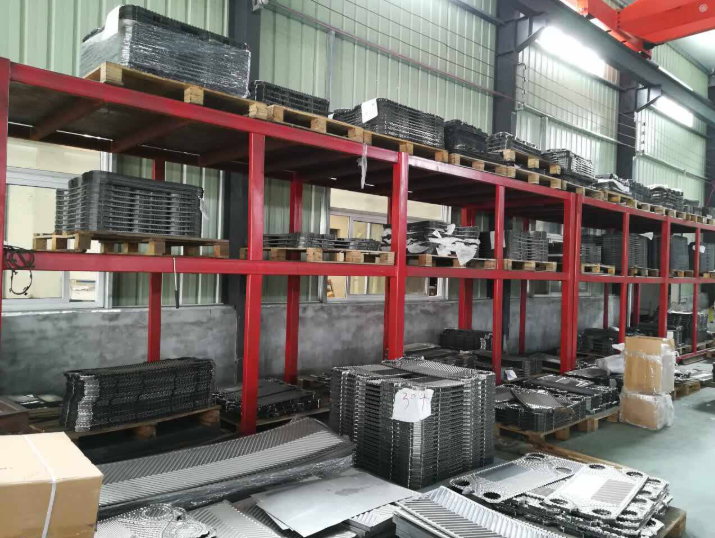 How do I know what size plate heat exchanger gasket I need?
The safest method is to identify the exact plate model and original gasket specification. The heat exchanger model, plate code, gasket part number, drawing, or clear measurements and photographs can help establish the correct gasket geometry.
Can I use a different brand of gasket?
A gasket from another supplier can be suitable if its geometry, material, profile, attachment method, and operating specifications are properly matched to the plate heat exchanger. Brand interchangeability should not be assumed from appearance alone.
Can I replace only the damaged gasket?
In some cases, individual gasket replacement is possible, but the decision depends on the gasket condition and maintenance requirements. If multiple gaskets are aged or chemically degraded, replacing the entire gasket set may be more appropriate.
Why does my new plate heat exchanger gasket leak?
Incorrect gasket installation, wrong gasket geometry, improper plate compression, damaged plates, excessive operating conditions, or material incompatibility can all cause leakage. Inspect the complete sealing system rather than assuming the gasket itself is defective.
How long does a plate heat exchanger gasket last?
Gasket service life varies significantly with temperature, pressure, fluid chemistry, cleaning cycles, thermal cycling, and installation quality. There is no reliable universal replacement interval for every application.
Can I reuse a plate heat exchanger gasket?
Reusing a gasket is generally risky because compression and aging can affect its sealing ability. For maintenance work, the equipment manufacturer’s recommendations should be followed.
Does CIP affect plate heat exchanger gasket life?
Yes. Cleaning chemicals, concentration, temperature, exposure time, and cleaning frequency can significantly affect gasket aging. CIP conditions should therefore be included in gasket selection.
What causes a gasket to swell?
Chemical incompatibility is a common cause of gasket swelling. Exposure to an incompatible fluid, additive, solvent, or cleaning chemical can cause the elastomer to absorb chemicals and change dimensions or mechanical properties.
What causes plate heat exchanger gaskets to harden?
Thermal aging, chemical exposure, oxidation, and prolonged service at unsuitable conditions can cause gasket hardening. Excessive temperature and incompatible chemicals can accelerate deterioration.
Can a gasket withstand the same temperature as the heat exchanger plate?
Not necessarily. The metal plate may tolerate a temperature that the gasket material cannot withstand continuously. The allowable gasket temperature must be checked separately for the specific compound and operating conditions.
Do I need to replace gaskets when opening a plate heat exchanger?
Replacement requirements depend on gasket condition, exchanger design, and maintenance procedures. If the gasket is aged, damaged, permanently deformed, or no longer seals reliably, replacement is generally appropriate.
What information does a supplier need to quote a replacement gasket?
The supplier normally needs the heat exchanger and plate model, gasket geometry or part number, material, fluid, temperature, pressure, cleaning conditions, and required quantity. Photos and drawings are useful when identification is uncertain.
19. Choosing a Plate Heat Exchanger Gasket Supplier
Selecting the correct gasket is partly a technical sourcing task. A capable supplier should be able to distinguish between gasket identification, material selection, and application compatibility rather than quoting a generic rubber gasket from a photograph.
For an international B2B purchase, look for a supplier or export partner that can coordinate:
- Plate and gasket identification
- Technical drawings
- Gasket material selection
- Chemical compatibility information
- Dimensional verification
- OEM or compatible replacement options
- Quality control
- Material documentation where applicable
- Packaging
- International shipping
- Communication with the actual manufacturing partner
- Technical clarification before production
A professional export partner should also communicate limitations clearly. If the plate model, fluid chemistry, or operating temperature is unknown, the supplier should request the missing information rather than making an unsupported material recommendation.
We work closely with qualified manufacturing partners and engineering teams to provide product sourcing, technical coordination, customization, quality control, and international export support.
For replacement gaskets, the objective is not simply to find a gasket that looks similar. The objective is to establish that the gasket geometry, material, and application conditions are compatible with the plate heat exchanger.
20. Final Recommendation: How to Select the Right Gasket
The correct plate heat exchanger gasket is determined by three fundamental requirements:
1. It must fit the plate correctly.
The gasket profile, dimensions, port arrangement, and attachment method must match the plate design.
2. It must be chemically and thermally compatible.
The gasket compound must be suitable for the actual process fluid, concentration, temperature, pressure, and cleaning conditions.
3. It must be installed under the correct mechanical conditions.
Plate condition, gasket positioning, alignment, and plate-pack compression all affect sealing performance.
For a replacement gasket, start with the heat exchanger model, plate code, and original gasket information. Then verify the selection against the current operating conditions. If the process has changed since the original equipment was supplied, do not automatically reuse the original gasket specification.
When the available information is incomplete, provide photographs, drawings, dimensions, fluid information, temperature, pressure, and cleaning conditions to the supplier. Final material and dimensional selection should be confirmed against the specific plate heat exchanger design and the gasket manufacturer’s technical data.
Need Help Identifying the Right Plate Heat Exchanger Gasket?
Send us your heat exchanger model, plate code, existing gasket photos, fluid information, operating temperature and pressure, and required quantity.