Heat exchanger fouling can reduce heat transfer performance, increase pressure drop, restrict fluid flow, and raise operating costs. For maintenance teams, selecting the right cleaning tools is essential to restoring performance without damaging heat transfer surfaces, gaskets, tubes, or protective coatings.
However, the best heat exchanger cleaning tools depend on the equipment design, deposit type, construction materials, and cleaning method. A brush suitable for a removable tube bundle may damage a thin plate heat exchanger plate. A chemical cleaning solution effective against mineral scale may be unsuitable for certain metals, elastomers, or process residues.
This guide explains which tools are commonly used to clean gasketed plate heat exchangers, shell-and-tube heat exchangers, and air-cooled heat exchangers. It also covers tool selection, cleaning methods, safety considerations, common mistakes, and the information buyers should provide when sourcing industrial heat exchanger cleaning equipment.
Quick Answer: What Tools Are Needed to Clean a Heat Exchanger?
The tools required to clean a heat exchanger depend on its design and the type of fouling.
Common heat exchanger cleaning tools include:
- Soft brushes and approved cleaning brushes: Remove loose deposits from accessible surfaces without excessive abrasion.
- Non-metallic scrapers and plastic tools: Help remove stubborn deposits from surfaces that could be scratched by metal tools.
- Low-pressure water flushing equipment: Removes loose dirt, sludge, and cleaning residues.
- High-pressure water jetting equipment: Removes certain stubborn deposits when the equipment and cleaning procedure permit it.
- CIP (clean-in-place) equipment: Circulates a compatible cleaning solution through the heat exchanger without dismantling it.
- Chemical cleaning pumps, tanks, and hoses: Support controlled circulation of suitable cleaning chemicals.
- Tube-cleaning brushes and rotary tools: Clean accessible tube interiors in compatible shell-and-tube designs.
- Tube-cleaning projectiles and specialist tools: Remove deposits from suitable tube geometries when the method is approved.
- Inspection tools: Include flashlights, mirrors, borescopes, thermometers, pressure gauges, and flow measurement instruments.
- Personal protective equipment: Protects maintenance personnel from hot fluids, chemicals, pressurised equipment, and debris.
Before choosing a tool, identify the heat exchanger type, fouling material, base metal, gasket material, and manufacturer’s cleaning restrictions. The objective is to remove deposits while preserving the equipment’s mechanical integrity and heat transfer performance.
1. How to Choose the Right Heat Exchanger Cleaning Tools
Problem: The Existing Cleaning Method Does Not Restore Performance
A heat exchanger may continue to exhibit high pressure drop, poor heat transfer, or restricted flow after cleaning. In some cases, the wrong tools have been used. In others, the deposits require a different cleaning method.
For example, a soft brush may remove loose debris but will not necessarily remove firmly bonded mineral scale. Chemical circulation may dissolve certain deposits but may be ineffective against hardened solids or incompatible with the equipment materials.
Why Tool Selection Matters
Heat exchangers use different heat transfer surfaces and construction methods.
- Gasketed plate heat exchangers: Use thin corrugated plates and elastomer gaskets. Aggressive scraping or uncontrolled pressure washing can damage these components.
- Shell-and-tube heat exchangers: Contain tube bundles, tube sheets, and shell-side components. Tube-cleaning tools must match the tube diameter, length, material, and deposit type.
- Air-cooled heat exchangers: Use finned surfaces that can be damaged or bent by excessive water pressure, incorrect nozzle angles, or stiff brushes.
- Brazed plate heat exchangers: Generally cannot be opened for mechanical cleaning. Compatible flushing or chemical circulation may be possible, subject to the manufacturer’s instructions.
The cleaning method should match the fouling mechanism rather than being selected solely according to the tool’s availability.
Heat Exchanger Cleaning Tool Selection Table
| Heat exchanger type | Common fouling | Suitable cleaning tools or methods | Important precautions |
|---|---|---|---|
| Gasketed plate heat exchanger | Mineral scale, sludge, organic deposits | Compatible CIP equipment, approved brushes, soft non-metallic tools, controlled flushing | Protect plates, gasket grooves, and elastomer gaskets |
| Shell-and-tube heat exchanger | Tube-side scale, sludge, biological deposits | Tube brushes, suitable rotary tools, flushing equipment, chemical circulation | Match the tool to the tube diameter, material, and deposit |
| Brazed plate heat exchanger | Scale, deposits, restricted passages | Compatible CIP pump, hoses, flushing and chemical-cleaning equipment | Do not attempt to separate brazed plates |
| Air-cooled heat exchanger | Dust, fibres, oily dirt, airborne debris | Soft brushes, approved vacuum equipment, controlled air or water cleaning | Avoid bending fins or driving contamination deeper into the fin pack |
| Industrial liquid cooling heat exchanger | Scale, corrosion products, particulate contamination | Filtration, flushing, CIP equipment, compatible chemical cleaning | Check narrow passages, seals, and material compatibility |
| Removable tube-bundle exchanger | Tube-side and shell-side deposits | Tube-cleaning equipment, suitable brushes, flushing systems | Follow the bundle removal procedure and protect tube ends |
How to Select a Cleaning Tool in Practice
Use the following decision sequence:
- Identify the heat exchanger construction. Determine whether the equipment is a plate, shell-and-tube, brazed plate, or air-cooled unit.
- Identify the deposit. Establish whether it is mineral scale, corrosion products, sludge, biological growth, oil, grease, or solid particles.
- Check the surface material. Confirm whether the cleaning surface is stainless steel, titanium, copper alloy, aluminium, or another material.
- Review the manufacturer’s instructions. Check allowable cleaning pressure, chemical restrictions, approved brushes, and disassembly procedures.
- Choose the least aggressive effective method. Start with a suitable controlled cleaning process and escalate only when necessary.
- Verify the result. Compare flow, pressure drop, and thermal performance against appropriate baseline or design values.
What to provide to a supplier: Heat exchanger model, equipment type, deposit description, cleaning frequency, surface materials, available utilities, and any manufacturer restrictions.
2. Brushes, Scrapers, and Manual Cleaning Tools
Manual cleaning tools are useful when deposits are accessible and can be removed without aggressive mechanical force.
They are particularly relevant to opened gasketed plate heat exchangers, removable tube bundles, accessible tube interiors, and certain air-cooled surfaces.
Which Brushes Are Suitable for Heat Exchanger Cleaning?
The correct brush depends on the surface, deposit, and equipment geometry.
| Tool type | Typical application | Selection considerations |
|---|---|---|
| Soft nylon brush | Light deposits and accessible surfaces | Brush stiffness, surface sensitivity, chemical resistance |
| Approved non-metallic brush | Surfaces that may be damaged by metal bristles | Bristle stiffness, shape, and compatibility |
| Tube-cleaning brush | Accessible tube interiors | Tube internal diameter, length, material, and deposit type |
| Rotary tube brush | Certain stubborn tube-side deposits | Approved rotational speed, tool diameter, tube condition |
| Plastic scraper | Deposits on surfaces vulnerable to metal scratching | Scraper edge, hardness, and surface geometry |
| Manufacturer-approved cleaning pad | Selected accessible heat transfer surfaces | Abrasiveness and compatibility with the surface |
| Soft fin-cleaning brush | Air-cooled heat exchanger fins | Fin spacing, fin material, and risk of deformation |
Do not assume that a tool is suitable simply because it is labelled for industrial cleaning. Verify its dimensions, materials, and application restrictions.
Cleaning Gasketed Plate Heat Exchangers
Problem: Deposits remain on the plates after a heat exchanger is opened.
Why it happens: Mineral scale, dried process residues, and biological deposits may adhere to corrugated plate surfaces. Deposits can also accumulate around port areas and gasket grooves.
How to solve it:
- Follow the manufacturer’s disassembly procedure.
- Keep the plate sequence and orientation identifiable.
- Use approved cleaning brushes and non-metallic tools where appropriate.
- Avoid sharp metal scrapers that can scratch or deform the plates.
- Clean gasket grooves carefully without cutting or damaging their sealing surfaces.
- Rinse away loosened deposits and cleaning residues using an approved method.
- Inspect the plates and gaskets before reassembly.
Thin heat transfer plates can be damaged by concentrated force. A scratch or deformation near a sealing area may create a leakage path even if the plate still looks generally intact.
The cleaning method must also account for the plate material. A tool suitable for one plate alloy or surface finish may not be appropriate for another.
Cleaning Shell-and-Tube Heat Exchangers
Tube brushes are commonly used to remove deposits from accessible tube interiors.
Before choosing one, confirm:
- Tube internal diameter.
- Tube length and accessibility.
- Tube material and wall condition.
- Deposit type and hardness.
- Whether straight or curved access is involved.
- Whether mechanical cleaning is permitted by the equipment design.
A brush that is too large may become stuck or damage the tube. A brush that is too small may not make sufficient contact with the deposit.
For harder deposits, specialist rotary tools or other mechanical cleaning systems may be appropriate, but the method should be checked against the tube manufacturer’s and heat exchanger manufacturer’s restrictions.
What to Provide to a Supplier
For manual cleaning tools, prepare:
- Equipment type and model.
- Plate or tube material.
- Tube internal diameter, where relevant.
- Tube length and access limitations.
- Deposit type and approximate thickness.
- Required brush diameter, length, and connection type.
- Preferred brush material, if specified.
- Any restrictions on abrasion or surface damage.
If the dimensions are uncertain, provide equipment drawings or photographs with a known reference dimension.
3. High-Pressure Water Jetting and Flushing Equipment
High-pressure water jetting can remove certain stubborn deposits from suitable heat exchanger surfaces. However, it is not universally appropriate for every heat exchanger design.
What Is the Difference Between Flushing and High-Pressure Cleaning?
Flushing generally uses flowing liquid to carry away loose particles, sludge, and cleaning residues.
High-pressure water jetting uses a concentrated water stream to remove deposits through its mechanical impact.
The correct method depends on the deposit, equipment construction, and permitted operating conditions.
A relatively gentle flushing procedure may be sufficient for loose contamination. Bonded scale or compacted deposits may require another approach.
Typical Equipment
A high-pressure cleaning setup may include:
- A pressure-rated water pump.
- Suitable hoses and fittings.
- A compatible spray gun or lance.
- Approved nozzles.
- Pressure measurement and control equipment.
- Water supply and drainage arrangements.
- Screens or filtration equipment, where appropriate.
- Barriers and protective equipment for the cleaning area.
The required pressure and flow depend on the equipment and cleaning method. There is no single pressure setting suitable for all heat exchangers.
How to Avoid Damage
Excessive jet pressure or an unsuitable nozzle can damage thin plates, bend fins, erode tube surfaces, or force contamination into areas that are difficult to clean.
For finned air-cooled heat exchangers, the direction of the water stream matters because delicate fins can be bent easily. For plate heat exchangers, concentrated jets may damage plates or sealing areas.
Before using high-pressure equipment:
- Confirm that the heat exchanger manufacturer permits the method.
- Check the maximum allowable cleaning pressure for the component being cleaned.
- Select a compatible nozzle and working distance.
- Test the method on an appropriate area when permitted.
- Prevent personnel from entering the jet path.
- Control drainage and the collection of contaminated water.
- Inspect the cleaned surface for damage.
Never use the heat exchanger’s normal operating pressure as a substitute for a cleaning-pressure specification.
What to Provide to a Supplier
- Heat exchanger type and model.
- Surface or passage being cleaned.
- Deposit type.
- Required cleaning objective.
- Available water supply and drainage.
- Required hose length and access conditions.
- Manufacturer-approved pressure limits.
- Any environmental requirements for wastewater collection.
If the equipment is still assembled, confirm whether cleaning must be performed in place or after disassembly.
4. Chemical Cleaning Equipment and CIP Systems
Chemical cleaning is often used when deposits cannot be removed effectively through flushing or manual cleaning.
A CIP system circulates a suitable cleaning solution through the heat exchanger without requiring the equipment to be completely dismantled. CIP is particularly useful for compatible plate heat exchangers and other equipment designed for in-place cleaning.
However, chemical cleaning is effective only when the cleaning chemistry, concentration, temperature, flow conditions, and exposure time are compatible with the deposits and equipment materials.
What Equipment Is Needed for Chemical Cleaning?
A typical industrial chemical cleaning setup may include:
- A compatible circulation pump.
- A chemical-resistant tank.
- Chemical-resistant hoses and fittings.
- Isolation valves.
- Temperature measurement.
- Flow measurement or monitoring.
- Pressure gauges.
- Chemical concentration or pH monitoring equipment, where relevant.
- Filtration or collection equipment, if required.
- Drainage and neutralisation arrangements where appropriate.
- Suitable personal protective equipment.
The exact arrangement depends on the cleaning procedure and the chemicals used.
How to Select a CIP Pump
The CIP pump must provide the flow required by the cleaning procedure while operating within the pressure limits of the heat exchanger and cleaning circuit.
Check the following:
| Selection factor | Why it matters |
|---|---|
| Required flow rate | Supports circulation through the intended passages |
| Pump head | Determines whether the pump can overcome system resistance |
| Chemical compatibility | Prevents degradation of wetted pump components |
| Temperature capability | Ensures the pump and seals tolerate the cleaning solution |
| Wetted materials | Affects corrosion resistance and service life |
| Seal material | Must be compatible with the cleaning chemical |
| Flow control | Helps maintain the required cleaning conditions |
| Connection size | Must match hoses and equipment connections |
| Drainage and flushing | Supports safe removal of cleaning chemicals after treatment |
Pump selection should be based on the actual circuit resistance and required cleaning flow, not simply the pump’s maximum rated flow.
How to Choose a Cleaning Chemical
Different deposits require different chemistry.
| Deposit | Potential cleaning approach | Important limitation |
|---|---|---|
| Calcium carbonate scale | A compatible acid-based cleaner may be suitable | Confirm plate, tube, gasket, and metal compatibility |
| Rust and selected metal oxides | A suitable formulated cleaner may be required | Corrosion risk depends on alloy and chemical conditions |
| Oil and grease | A compatible alkaline or detergent-based cleaner may be suitable | Confirm elastomer compatibility and wastewater requirements |
| Biological deposits | An approved cleaning or sanitising procedure may be required | Consider the deposit, process requirements, and chemical compatibility |
| Loose sediment | Flushing or mechanical removal may be sufficient | Avoid pushing solids deeper into restricted passages |
| Mixed deposits | A staged cleaning procedure may be needed | One chemical may not remove all deposit types |
These are general starting points, not chemical dosing instructions. Consult the equipment manufacturer and the cleaning chemical supplier for a validated procedure.
Important Material Compatibility Considerations
Acid-based cleaners can attack certain metals, particularly under unsuitable concentration, temperature, or exposure conditions. Chloride-containing solutions can create serious corrosion risks for some stainless steels.
Aluminium, copper alloys, titanium, stainless steel, and other materials respond differently to cleaning chemicals.
Gaskets must also be considered. A chemical that is compatible with the plate material may still cause swelling or deterioration of the gasket elastomer.
Never select a chemical based only on the type of deposit. Confirm compatibility with all wetted materials and follow the chemical supplier’s handling and disposal instructions.
What to Provide to a Supplier
- Heat exchanger construction and material.
- Gasket material, if applicable.
- Deposit composition, if known.
- Cleaning objective.
- Required flow and temperature conditions.
- Available pump and tank arrangement.
- Chemical restrictions.
- Wastewater handling requirements.
- Applicable workplace and environmental requirements.
5. Tube Cleaning Tools for Shell-and-Tube Heat Exchangers
Shell-and-tube heat exchangers may require specialised tools when deposits accumulate inside the tubes.
The appropriate method depends on the tube dimensions, fouling characteristics, tube material, and accessibility.
Common Tube Cleaning Tools
1. Manual tube brushes
Used for certain loose or relatively soft deposits in accessible tubes.
2. Rotary tube-cleaning tools
Used in compatible applications where mechanical action can improve deposit removal.
3. Tube-cleaning projectiles
Used in suitable systems to remove deposits from tube interiors. The projectile and delivery method must match the tube geometry and cleaning system.
4. Water-jetting lances
Used for certain stubborn deposits where access and equipment restrictions permit.
5. Tube inspection tools
Borescopes and other inspection devices can help identify deposits, obstructions, erosion, and tube condition.
How to Choose a Tube Cleaning Tool
The most important dimensions are the tube internal diameter, length, and access arrangement.
A tool that is too large may become stuck or damage the tube. An undersized tool may fail to remove deposits effectively.
Also consider whether the tube has bends, restricted access, thin walls, or a history of corrosion or erosion.
For mechanically cleaned tubes, the tool’s material and stiffness should be appropriate for the tube material and condition.
When Mechanical Cleaning Is Not Enough
Some deposits may be strongly bonded or located in inaccessible areas. Mechanical cleaning alone may not restore the original flow area.
In these situations, chemical cleaning, a combined cleaning method, or professional inspection may be appropriate. The choice depends on deposit composition and the equipment manufacturer’s restrictions.
What to Provide to a Supplier
- Tube internal diameter and length.
- Tube material.
- Deposit type.
- Tube-bundle configuration.
- Access limitations.
- Cleaning frequency.
- Available power, water, or compressed air.
- Required inspection or verification method.
If the exchanger has a removable tube bundle, include the bundle drawing or relevant equipment documentation where available.
6. Air-Cooled Heat Exchanger Cleaning Tools
Air-cooled heat exchangers rely on airflow across finned surfaces to transfer heat. Dust, fibres, oil, and airborne debris can accumulate between the fins and reduce airflow.
Cleaning must remove contamination without bending the fins or damaging the tubes.
Common Cleaning Tools
- Soft fin-cleaning brushes.
- Industrial vacuum equipment with suitable attachments.
- Controlled compressed-air cleaning equipment, where permitted.
- Low-pressure or otherwise approved water-cleaning equipment.
- Suitable degreasing products for compatible surfaces.
- Inspection lights and tools for checking fin condition.
Why Fin Damage Matters
Fins increase the heat transfer surface area available to the air. Bent or blocked fins can reduce airflow and heat transfer performance.
Using a stiff brush, applying excessive pressure, or directing a water jet incorrectly can deform the fin pack.
Compressed air can also create hazards by dispersing dust or driving contamination deeper into the equipment.
How to Clean an Air-Cooled Heat Exchanger
- Isolate the equipment and follow the manufacturer’s safety procedure.
- Inspect the fin pack and identify the direction of contamination.
- Remove loose debris using a suitable brush or vacuum.
- Use approved air or water cleaning methods where necessary.
- Avoid excessive force on delicate fins.
- Inspect for bent fins, corrosion, oil deposits, and remaining blockages.
- Confirm that airflow is restored and the equipment can return to service safely.
For oily deposits, a compatible cleaning agent may be necessary. Verify chemical compatibility with the fin material, tubes, coatings, and any other exposed components.
What to Provide to a Supplier
- Heat exchanger type and model.
- Fin material and spacing.
- Nature of the contamination.
- Available access around the equipment.
- Whether water or compressed air is permitted.
- Environmental restrictions on dust or wastewater.
- Any coating or corrosion-protection requirements.
7. Inspection, Measurement, and Safety Tools
Cleaning tools remove deposits, but inspection tools help determine whether cleaning is necessary and whether it has worked.
Without basic operating data, maintenance teams may confuse fouling with other problems such as insufficient flow, control-valve faults, instrument errors, or changes in process demand.
Useful Inspection Tools
| Tool | Purpose | Practical consideration |
|---|---|---|
| Thermometer or temperature sensor | Measures inlet and outlet temperatures | Check sensor accuracy and measurement location |
| Pressure gauge or pressure transmitter | Measures operating pressure | Confirm instrument range and calibration status |
| Differential pressure instrument | Measures pressure drop across the exchanger | Compare results at relevant flow conditions |
| Flow meter | Measures process or cleaning flow | Verify the measurement range and installation |
| Flashlight and inspection mirror | Examine accessible surfaces | Use suitable lighting and safe access methods |
| Borescope | Inspect accessible internal passages | Confirm that the probe can enter without damage |
| pH meter | Monitors selected cleaning solutions | Use a suitable instrument and follow the cleaning procedure |
| Conductivity meter | Monitors selected water or cleaning processes | Interpret readings according to the process and solution |
| Caliper or measuring tools | Check accessible dimensions | Use only where measurements are relevant to the maintenance task |
How to Verify Cleaning Performance
Compare the equipment’s condition before and after cleaning.
Where reliable baseline data are available, review:
- Heat exchanger inlet and outlet temperatures.
- Fluid flow rates.
- Pressure drop on each circuit.
- Cooling or heating capacity under comparable operating conditions.
- Visual evidence of remaining deposits.
- Cleaning solution condition, where relevant.
Operating conditions must be comparable for a meaningful assessment. A change in inlet temperature or flow rate can affect thermal performance even when the heat exchanger is clean.
Do not assume that a single pressure-drop measurement proves the exchanger is clean. The result must be interpreted alongside flow rate, fluid properties, instrument accuracy, and the equipment’s expected operating conditions.
Safety Equipment
Depending on the cleaning method, required protective equipment and safety provisions may include:
- Chemical-resistant gloves.
- Suitable eye and face protection.
- Protective clothing.
- Appropriate respiratory protection where a risk assessment requires it.
- Hearing protection for noisy equipment.
- Safety barriers around water jetting.
- Ventilation.
- Chemical spill-control materials.
- Suitable wastewater collection and handling arrangements.
PPE must be selected according to the hazards identified in the task-specific risk assessment and the relevant chemical safety data sheets.
Before cleaning, isolate the heat exchanger as required, verify that it is depressurized, and control any residual hot or hazardous fluid. Never open a pressurized heat exchanger.
8. Common Mistakes When Buying Heat Exchanger Cleaning Tools
Choosing the wrong cleaning equipment can damage heat transfer surfaces, increase maintenance costs, and leave deposits in place.
Mistake 1: Buying One Tool for Every Heat Exchanger Type
Why it causes problems: Plate heat exchangers, tube bundles, and finned surfaces have different geometries and damage risks.
What to do instead: Identify the exchanger design and choose tools intended for the specific surface and access conditions.
Mistake 2: Choosing a Brush Without Checking Dimensions
Why it causes problems: An oversized tube brush may become stuck or damage the tube. An undersized brush may not clean effectively.
What to do instead: Confirm the tube internal diameter, length, material, and required brush dimensions.
Mistake 3: Using Abrasive Tools on Thin Plates
Why it causes problems: Scratches, deformation, or damage to sealing areas can lead to leakage or equipment failure.
What to do instead: Use manufacturer-approved brushes and non-metallic tools where appropriate.
Mistake 4: Selecting Chemicals Before Identifying the Deposit
Why it causes problems: The chemical may be ineffective against the deposit or incompatible with the equipment materials.
What to do instead: Identify the deposit as accurately as possible and verify compatibility with plates, tubes, gaskets, coatings, and other wetted components.
Mistake 5: Ignoring Gasket Compatibility During CIP Cleaning
Why it causes problems: Some cleaning chemicals can damage elastomers even when the plate material tolerates the solution.
What to do instead: Confirm the gasket material and chemical compatibility before approving the cleaning procedure.
Mistake 6: Using Excessive Water-Jetting Pressure
Why it causes problems: High pressure can damage thin plates, fins, or tube surfaces and create safety hazards.
What to do instead: Follow the equipment manufacturer’s permitted cleaning method, pressure limits, and nozzle recommendations.
Mistake 7: Ignoring Wastewater and Chemical Disposal
Why it causes problems: Cleaning solutions may contain dissolved metals, scale, oils, or hazardous process residues.
What to do instead: Plan collection, treatment, neutralisation where appropriate, and disposal according to the chemical requirements and applicable local regulations.
Mistake 8: Buying a CIP Pump Based Only on Maximum Flow
Why it causes problems: A pump may not deliver the required flow at the pressure needed to overcome the cleaning circuit’s resistance.
What to do instead: Evaluate the pump curve, system resistance, required operating point, chemical compatibility, and temperature conditions.
Mistake 9: Cleaning Without Recording Baseline Performance
Why it causes problems: Maintenance teams cannot easily determine whether the cleaning process restored performance or whether another fault remains.
What to do instead: Record temperatures, flow rates, and pressure drop before cleaning whenever practical and compare them with post-cleaning results under comparable conditions.
Mistake 10: Using Improvised Tools on Critical Equipment
Why it causes problems: Unapproved tools can damage internal surfaces, leave foreign material behind, or compromise equipment integrity.
What to do instead: Use suitable industrial cleaning equipment and follow the manufacturer’s maintenance instructions.
 9. Manual Cleaning vs. Chemical Cleaning vs. High-Pressure Cleaning
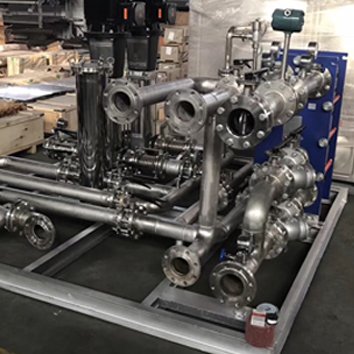 9. Manual Cleaning vs. Chemical Cleaning vs. High-Pressure Cleaning
No single cleaning method is suitable for every heat exchanger. The right choice depends on the deposit, equipment construction, access, and acceptable risk.
| Factor | Manual cleaning | Chemical cleaning / CIP | High-pressure water jetting |
|---|---|---|---|
| Typical application | Accessible deposits and opened equipment | Compatible deposits inside accessible flow circuits | Certain stubborn deposits on suitable surfaces |
| Equipment required | Brushes, approved scrapers, hand tools | Pump, tank, hoses, valves, monitoring equipment | Pressure-rated pump, hoses, lance, nozzles, safety controls |
| Disassembly | Often required for internal surfaces | May be avoidable in CIP-compatible equipment | Depends on the cleaning location and method |
| Access limitations | Limited by reach and surface geometry | Depends on circulation path and flow distribution | Depends on lance access and nozzle geometry |
| Chemical compatibility | Usually less important unless cleaning agents are used | Essential | Relevant if chemicals are combined with water jetting |
| Surface damage risk | Scratching or deformation from improper tools | Corrosion, gasket damage, or chemical attack | Erosion, deformation, or fin damage |
| Waste handling | Depends on removed deposits and cleaning agents | Often requires management of spent solution | Requires control of contaminated water and debris |
| Main limitation | Labour-intensive and difficult in inaccessible passages | Not every deposit dissolves in a compatible chemical | Not suitable for every surface or exchanger design |
Which Method Should You Choose?
- Choose manual cleaning when the surfaces are accessible and the deposits can be removed without damaging the equipment.
- Choose chemical cleaning or CIP when the deposit is chemically removable and the equipment materials tolerate the cleaning solution.
- Consider high-pressure water jetting when the deposit requires mechanical impact and the exchanger manufacturer permits the method.
- Use a combined method only when the sequence and compatibility of the methods have been assessed.
A cleaning plan may also include filtration, flushing, inspection, and performance testing. The method should be selected based on the actual fouling problem rather than a general preference for one technology.
10. What Affects the Cost of Heat Exchanger Cleaning Tools?
Industrial heat exchanger cleaning equipment ranges from simple brushes to specialised mechanical cleaning systems and chemical circulation units. Cost depends on the equipment, application, and scope of supply.
Main Cost Factors
Tool type and complexity
A manual brush and a complete CIP circulation system have very different equipment requirements.
Material compatibility
Chemical-resistant pumps, hoses, seals, and fittings may be needed for particular cleaning solutions.
Dimensions and access requirements
Long tubes, restricted access, special brush sizes, and non-standard connections can affect tool selection and sourcing.
Operating requirements
Required flow, pump head, water pressure, temperature, and duty cycle influence the specification of cleaning equipment.
Instrumentation and control
Pressure gauges, flow meters, temperature measurement, and chemical monitoring equipment may be necessary for controlled cleaning.
Safety provisions
Barriers, protective equipment, containment systems, and suitable wastewater handling may add to the overall cost.
Documentation and support
Equipment drawings, operating instructions, material information, and application-specific technical coordination may form part of the supply scope.
Quantity, packaging, and shipping
Order size, packaging requirements, delivery destination, and international transport affect the final purchase cost.
How to Compare Cleaning Equipment Quotations
Ask suppliers to specify:
- Included tools and accessories.
- Compatible heat exchanger types.
- Applicable material restrictions.
- Required utilities.
- Operating limits.
- Consumables and replacement parts.
- Documentation supplied.
- Delivery lead time.
- Packaging and shipping scope.
- Maintenance and spare-parts availability.
A low-cost tool that cannot safely clean the intended exchanger may increase labour, downtime, and repair costs. Evaluate the total cost of ownership, including operating effort, consumables, equipment life, and the risk of damage.
11. Heat Exchanger Cleaning Tool Buyer Checklist
Prepare the following information before contacting a cleaning equipment supplier.
Equipment Information
- Heat exchanger type: plate, shell-and-tube, brazed plate, air-cooled, or other.
- Manufacturer and model.
- Serial number, if available.
- Plate material, tube material, or fin material.
- Gasket material, where applicable.
- Equipment drawing or maintenance manual.
- Relevant cleaning restrictions.
Fouling and Cleaning Requirements
- Deposit type: scale, sludge, oil, biological growth, or solid particles.
- Deposit thickness or severity, if known.
- Cleaning frequency.
- Required cleaning result.
- Whether the exchanger can be dismantled.
- Whether CIP is possible.
- Available access to tubes, plates, or fin surfaces.
- Any history of corrosion, erosion, or surface damage.
Tool and Equipment Requirements
- Brush diameter and length, if applicable.
- Tube internal diameter and length, where relevant.
- Required pump flow rate and head, if known.
- Permitted water pressure.
- Required hose length and connections.
- Chemical compatibility requirements.
- Available electricity, water, and compressed air.
- Required instruments and controls.
- PPE and safety provisions.
- Wastewater collection requirements.
Purchasing and Delivery
- Required quantity.
- Preferred delivery date.
- Delivery country and destination.
- Documentation requirements.
- Packaging requirements.
- Spare-parts and consumables requirements.
- Budget or procurement constraints, if appropriate.
If some technical information is unavailable, provide the equipment nameplate, photographs, drawings, and a description of the fouling problem. A supplier can help identify the missing information before a final equipment recommendation is made.
12. Frequently Asked Questions About Heat Exchanger Cleaning Tools
1. What tools are needed to clean a heat exchanger?
Common tools include suitable brushes, non-metallic scrapers, flushing equipment, chemical cleaning pumps, CIP systems, and inspection instruments. Tube-cleaning tools are used for compatible shell-and-tube designs, while soft brushes and approved air or water cleaning methods may be used for air-cooled exchangers. The correct selection depends on the equipment type, deposit, and material compatibility.
2. What is the best way to clean a plate heat exchanger?
The best method depends on the fouling and the plate heat exchanger design. Compatible CIP cleaning may remove certain deposits without disassembly, while manual cleaning may be appropriate for accessible plates after safe disassembly. Follow the manufacturer’s instructions and avoid abrasive tools or cleaning chemicals that can damage plates and gaskets.
3. Can I use a wire brush on a plate heat exchanger?
A wire brush should not be used unless the equipment manufacturer explicitly approves it for the specific plate material and application. Metal bristles can scratch or damage thin plates and sealing surfaces. Suitable non-metallic brushes or other approved cleaning tools are generally preferable for sensitive surfaces.
4. What pump is used for heat exchanger chemical cleaning?
A chemical cleaning or CIP pump is selected according to the required circulation flow, system resistance, cleaning solution, temperature, and wetted materials. The pump must deliver the required operating point while remaining within the heat exchanger and cleaning circuit’s pressure limits. Chemical compatibility of seals, hoses, and fittings is essential.
5. Can I use acid to clean a heat exchanger?
Acid-based cleaners may be suitable for certain mineral scales, but they are not appropriate for every heat exchanger. The chemical must be compatible with the plates, tubes, gaskets, coatings, and other wetted components. Concentration, temperature, exposure time, and disposal requirements must follow the approved cleaning procedure.
6. How do I remove calcium scale from a heat exchanger?
Calcium scale may be removed using a compatible chemical descaling procedure or an approved mechanical cleaning method. The correct approach depends on the scale composition, equipment material, gasket compatibility, and deposit severity. Confirm chemical compatibility before circulation and avoid aggressive methods that could damage the heat transfer surfaces.
7. What tools are used to clean shell-and-tube heat exchanger tubes?
Common tools include manual tube brushes, rotary tube-cleaning tools, suitable cleaning projectiles, water-jetting lances, and inspection tools such as borescopes. The choice depends on tube diameter, length, material, deposit type, and access. Mechanical cleaning must not damage the tube walls or compromise equipment integrity.
8. How do you clean an air-cooled heat exchanger?
Air-cooled heat exchangers are commonly cleaned using soft brushes, suitable vacuum equipment, and approved compressed-air or water-cleaning methods. The process should remove dust and deposits without bending fins or damaging coatings. Isolate the equipment first and follow the manufacturer’s instructions for cleaning direction, pressure, and chemical use.
9. What is CIP cleaning for heat exchangers?
CIP, or clean-in-place, is a method of cleaning equipment by circulating a suitable cleaning solution through its flow passages without fully dismantling it. A typical system uses a compatible pump, tank, hoses, valves, and monitoring instruments. CIP is suitable only when the heat exchanger design, deposits, and materials permit the selected procedure.
10. How do I know if a heat exchanger needs cleaning?
Possible signs include reduced heat transfer performance, higher pressure drop, restricted flow, and visible deposits. These symptoms can also result from other problems, so compare operating data with suitable baseline values and investigate the cause before choosing a cleaning method.
11. Can high-pressure water damage a heat exchanger?
Yes. Excessive or incorrectly directed water pressure can damage thin plates, tube surfaces, seals, and delicate fins. Use high-pressure cleaning only when the manufacturer permits it and follow the specified pressure, nozzle, and access requirements.
12. What safety equipment is needed for heat exchanger cleaning?
Depending on the method, equipment may include chemical-resistant gloves, eye and face protection, protective clothing, hearing protection, suitable respiratory protection, barriers, and chemical spill-control materials. Personnel must also follow isolation, depressurization, drainage, lockout/tagout, and chemical-handling procedures appropriate to the hazards.
13. How much do heat exchanger cleaning tools cost?
The cost depends on whether you need manual brushes, tube-cleaning equipment, a high-pressure cleaning system, or a complete CIP setup. Dimensions, materials, pump requirements, instrumentation, chemical compatibility, documentation, and shipping also affect the price. Request a quotation based on the actual equipment and cleaning requirements.
14. Can the same cleaning tools be used for stainless steel and titanium heat exchangers?
Some tools may be suitable for both materials, but compatibility must be confirmed for the specific tool and cleaning procedure. Chemical compatibility, surface finish, deposit type, and the risk of introducing contamination must be considered. Do not assume that one chemical or mechanical method is appropriate for every metal.
15. What information should I provide when requesting a heat exchanger cleaning tool quotation?
Provide the heat exchanger type and model, surface materials, deposit description, required cleaning method if known, relevant dimensions, access limitations, available utilities, and destination country. Drawings, photographs, cleaning restrictions, and safety requirements help the supplier identify appropriate equipment and prepare a more accurate quotation.
13. How to Choose a Reliable Heat Exchanger Cleaning Equipment Supplier
Industrial cleaning tools must match the heat exchanger design and the intended cleaning process. A supplier should therefore understand the application rather than simply offer a generic brush, pump, or cleaning machine.
Technical Communication
A suitable supplier should ask about the exchanger type, deposit, surface material, cleaning objective, and operating restrictions.
For specialised applications, confirm whether the supplier can coordinate with an engineering team or the original equipment manufacturer to verify the proposed method.
Product Sourcing and Manufacturing Coordination
Some cleaning tools are standard industrial products. Others may require specific dimensions, connections, materials, or configurations.
A trading and export company can coordinate with appropriate manufacturing partners to source suitable products, clarify specifications, arrange agreed quality checks, and manage international delivery.
The actual manufacturing source and the scope of technical support should be clear to the buyer.
Quality and Documentation
Depending on the product, request:
- Product specifications.
- Dimensions and connection details.
- Material information.
- Operating limits.
- Instructions for use and maintenance.
- Applicable test or inspection documentation, where available.
- Spare-parts information.
- Packaging details.
Do not assume that every supplier offers the same documentation or that a generic tool is suitable for a specific heat exchanger without verification.
International Export Support
For buyers in Europe, North America, the Middle East, Southeast Asia, and Australia, clarify the delivery scope before placing an order.
Confirm packaging, shipping arrangements, delivery lead time, documentation, destination requirements, and the availability of consumables or replacement parts.
A professional sourcing partner should communicate product limitations clearly and avoid recommending equipment that cannot be verified for the intended application.
We work closely with qualified manufacturing partners and engineering teams to provide product sourcing, technical coordination, customization, quality control, and international export support.
For heat exchanger cleaning equipment, we can review the available equipment information and cleaning requirements to help identify suitable products for further technical confirmation.
Need Help Selecting Heat Exchanger Cleaning Tools?
Choosing the correct cleaning tools can help remove deposits while protecting heat transfer surfaces, gaskets, tubes, and fins.