The cost of replacement heat exchanger parts can vary significantly depending on equipment design, material specifications, operating conditions, manufacturing requirements, and availability. A gasket replacement may involve a relatively straightforward purchase, while a complete plate pack or shell-and-tube bundle can require detailed technical verification, custom fabrication, and inspection.
For maintenance engineers, procurement teams, plant managers, distributors, and industrial equipment buyers, the challenge is not simply finding the lowest quotation. The replacement must fit the existing equipment, withstand the operating conditions, deliver the required thermal performance, and arrive within the maintenance schedule.
This guide explains the main cost factors for heat exchanger gaskets, replacement plates, and tube bundles, how OEM and compatible aftermarket options compare, and what information buyers should prepare before requesting a quotation.
Quick Answer: How Much Do Heat Exchanger Gaskets, Plates, and Tube Bundles Cost?
Heat exchanger spare part costs depend on the component type, dimensions, material, equipment model, quantity, manufacturing requirements, and supplier availability. There is no reliable universal price for all gaskets, plates, or tube bundles.
- Gaskets: Cost depends on gasket material, profile, dimensions, chemical compatibility, temperature resistance, and order quantity.
- Heat exchanger plates: Cost depends on plate pattern, material grade, thickness, pressing or tooling requirements, surface condition, and compatibility with the existing plate pack.
- Tube bundles: Cost depends on tube dimensions, material, number of tubes, length, tube-sheet design, fabrication method, pressure requirements, and inspection scope.
- Total replacement cost: The purchase price is only one component. Shipping, duties, installation, downtime, testing, and potential rework can materially affect the final expense.
The most effective way to obtain a comparable quotation is to provide the equipment model, original part number, drawings or photographs, material requirements, operating conditions, quantity, and delivery destination.
1. What Determines the Cost of Heat Exchanger Spare Parts?
The main cost drivers are material, design complexity, manufacturing requirements, order quantity, availability, quality assurance, and delivery arrangements.
Two components that appear similar may have different prices because their material grades, tolerances, manufacturing processes, or service requirements differ.
1.1 Material selection and compatibility
Material selection is one of the most important cost factors for replacement heat exchanger components.
The correct material must withstand the process fluid, temperature, pressure, and expected service environment. A lower-priced material is not necessarily a cost-effective substitute if it corrodes, degrades, or fails prematurely.
Common material considerations include:
| Material or material group | Typical considerations | Potential cost implications |
|---|---|---|
| EPDM gasket compounds | Commonly used for compatible water and aqueous services; formulation and temperature limits matter | Often economical for suitable applications |
| NBR gasket compounds | Used in certain oil and hydrocarbon-related services, depending on the fluid and formulation | Cost varies with compound and compatibility |
| FKM gasket compounds | Used in selected applications requiring specific chemical or temperature resistance | Compound grade and service requirements affect cost |
| Stainless steel 304 | Used in suitable environments where its corrosion resistance is adequate | Often less costly than more corrosion-resistant alloys |
| Stainless steel 316L | Used in many industrial services requiring enhanced corrosion resistance | Usually costs more than basic stainless steel grades |
| Titanium | Used in selected corrosive services, including certain seawater applications | Material availability and fabrication can increase cost |
| Nickel-based alloys | Used for demanding corrosion or temperature conditions | Alloy grade and sourcing requirements can significantly increase cost |
| Carbon steel | Common in suitable structural and pressure-containing applications | Material may be economical, but corrosion protection and design requirements matter |
| Copper and copper alloys | Used in selected heat transfer applications | Cost depends on alloy, dimensions, and availability |
These are general comparisons, not universal price rankings. Actual material costs fluctuate, and manufacturing complexity can outweigh the difference in raw material prices.
Problem: A buyer selects the lowest-priced gasket or metal component without confirming compatibility.
Why it happens: The quotation focuses on dimensions and unit price rather than the actual operating environment.
How to solve it: Confirm the process fluid, operating and cleaning temperatures, pressure, chemical exposure, and original material specification. For demanding applications, obtain technical approval before substituting materials.
What to provide to the supplier:
- Fluid composition and concentration, where relevant
- Normal and maximum operating temperatures
- Operating and design pressures
- Original material grade or gasket specification
- Cleaning chemicals and cleaning temperature
- Applicable material documentation requirements
Example: A gasket that performs adequately in a water service may be unsuitable for a system containing aggressive cleaning chemicals. Selecting a chemically incompatible compound can lead to leakage, unplanned maintenance, and higher total cost.
1.2 Original equipment, compatible replacements, and custom parts
Replacement parts can generally be sourced through three routes:
- Original equipment manufacturer (OEM) parts.
- Compatible aftermarket parts produced by qualified alternative suppliers.
- Custom-engineered replacement components.
OEM parts may offer a direct route to original specifications when the equipment manufacturer retains the relevant drawings and product records. However, availability, production schedules, and commercial terms can affect the quotation.
Compatible aftermarket components may provide an alternative for established equipment or discontinued models. Their suitability depends on dimensional accuracy, material compatibility, manufacturing quality, and performance requirements.
Custom parts may be necessary when the original component is unavailable, obsolete, or unsuitable for the current application. Engineering review and tooling can add cost and time.
| Purchasing option | Potential advantages | Main cost considerations | What to verify |
|---|---|---|---|
| OEM replacement | Access to original specifications when available | OEM pricing, availability, and production schedule | Part number, material, revision, and origin |
| Compatible aftermarket | Additional sourcing options and potential cost flexibility | Supplier capability, tooling, and verification requirements | Fit, material, traceability, and technical approval |
| Custom-engineered replacement | Can address obsolete or application-specific requirements | Engineering, tooling, fabrication, and inspection | Drawings, design responsibility, tolerances, and approval process |
A compatible replacement is not automatically inferior to an OEM component, but it should not be treated as interchangeable merely because it looks similar. Likewise, aftermarket parts should be identified honestly rather than represented as genuine OEM products.
1.3 Quantity, availability, and production requirements
The quantity required can affect the unit price.
Larger orders may spread setup, tooling, and inspection costs across more components. However, purchasing additional spares is not always economical, particularly when the equipment is being phased out or the component has a limited shelf life.
Availability also matters. A standard component that is genuinely in stock may cost less overall than a nominally cheaper part that requires special procurement or fabrication.
Before comparing quotations, establish whether the quoted component is physically available, requires production, or needs engineering confirmation.
2. How Much Do Heat Exchanger Gaskets Cost?
Heat exchanger gasket costs depend primarily on the gasket type, material compound, dimensions, profile, manufacturing method, and quantity.
A small gasket is not necessarily inexpensive if it requires a special compound, a discontinued profile, or precise model-specific geometry. Conversely, a larger standard gasket may be economical if the material and manufacturing process are readily available.
2.1 Main factors affecting gasket prices
Gasket material
Different elastomers have different chemical compatibility, temperature limits, mechanical properties, and expected service lives.
EPDM, NBR, and FKM are used in different applications, but none is universally suitable. The correct choice depends on the complete operating and cleaning environment.
Gasket profile and dimensions
Plate heat exchangers use model-specific gasket geometries. Differences in the sealing profile, groove arrangement, plate pattern, or connection area can prevent an apparently similar gasket from fitting correctly.
Custom dimensions or less common profiles may require additional manufacturing work.
Manufacturing method
Gaskets may be produced using molding, cutting, or other processes appropriate to their design and material. Tooling requirements, production batches, and inspection procedures can affect the price.
Order quantity
Buying a complete gasket set may be more practical than ordering individual pieces when an entire plate pack is being serviced.
However, the correct quantity depends on the maintenance scope, equipment configuration, and condition of the existing gaskets.
2.2 Individual gaskets versus complete gasket sets
A buyer should distinguish between the cost of an individual gasket and the cost of a complete gasket set.
| Purchasing option | When it may be suitable | Main considerations |
|---|---|---|
| Individual replacement gasket | One identified gasket is damaged or missing | Confirm exact profile and compatibility |
| Partial gasket set | A defined portion of the equipment requires replacement | Confirm which positions and quantities are included |
| Complete gasket set | A scheduled overhaul requires replacement throughout the plate pack | Check plate count, gasket configuration, and material consistency |
| Custom gasket | Original parts are unavailable or a special profile is required | Confirm drawings, tolerances, material, and validation requirements |
Replacing only visibly damaged gaskets may reduce immediate spending, but it does not guarantee reliable operation if the remaining gaskets are aged, chemically degraded, or near the end of their service life.
A complete set may offer better maintenance consistency in some situations, although the decision should be based on equipment condition and the manufacturer’s maintenance recommendations.
2.3 Why cheap gaskets can become expensive
A low-priced gasket can create additional costs if it leaks, deforms, hardens, swells, or fails to seal correctly.
Potential consequences include:
- Repeated disassembly and reassembly
- Additional maintenance labor
- Production interruption
- Fluid leakage and cleanup
- Product contamination in sensitive applications
- Damage to other components
- Additional inspection and commissioning work
Practical recommendation: Compare gaskets using the same material specification, profile, quantity, and documentation requirements. A quotation for a standard EPDM gasket set should not be compared directly with a quotation for a specialized compound intended for a different service.
2.4 What information is needed for a gasket quotation?
Prepare the following information whenever possible:
- Heat exchanger manufacturer, model, and serial number
- Original gasket part number
- Gasket material and compound specification
- Gasket profile or groove drawing
- Plate type and plate pattern
- Quantity required
- Process fluid and operating conditions
- Required material or quality documentation
- Destination and delivery deadline
If the original part number is unavailable, provide clear photographs and dimensions. Photographs can help identify a component, but they should not replace technical verification where an incorrect fit could create a safety or reliability problem.
3. What Determines the Cost of Heat Exchanger Plates?
Heat exchanger plate costs depend on plate geometry, material grade, thickness, forming requirements, surface condition, production availability, and compatibility with the existing equipment.
A replacement plate must do more than fit inside the frame. Its corrugation pattern and dimensions influence flow distribution, turbulence, heat transfer, and pressure drop.
3.1 Plate material and thickness
Stainless steel is common in many plate heat exchanger applications, while titanium and specialized alloys may be required for more corrosive fluids.
Material selection affects more than the initial purchase price. It influences corrosion resistance, expected service life, and the risk of premature failure.
Plate thickness also matters. A plate must meet the equipment’s design requirements and match the intended configuration. Substituting a different thickness without technical approval can affect mechanical integrity and assembly.
The material grade should be verified against the process fluid, operating conditions, cleaning chemicals, and applicable equipment requirements.
3.2 Plate pattern and manufacturing requirements
Plate heat exchangers use corrugated plates designed for specific equipment configurations. The corrugation geometry affects the flow channels and heat transfer characteristics.
Two plates may have similar external dimensions but different patterns, port arrangements, or gasket grooves.
Important identification details include:
- Plate model or part number
- Plate dimensions
- Corrugation or pressing pattern
- Port configuration and diameter
- Material grade and thickness
- Gasket arrangement
- Plate orientation and position within the pack
For less common or obsolete plates, tooling availability may be a significant cost factor. If the required forming tools are unavailable, reproducing the plate may require additional engineering and manufacturing work.
3.3 Individual plates versus a complete plate pack
An individual replacement plate may be suitable when the damage is isolated and the rest of the pack remains serviceable.
A complete plate pack may be preferable when multiple plates are damaged, corrosion is widespread, or the maintenance plan calls for replacing the pack as a matched assembly.
| Option | Potential advantages | Cost and technical considerations |
|---|---|---|
| Individual plate replacement | Lower immediate material requirement | Requires exact pattern and material matching |
| Multiple replacement plates | Addresses localized or repeated plate damage | Plate position, quantity, and compatibility must be verified |
| Complete plate pack | Can simplify a comprehensive overhaul | Higher initial component cost; gasket and configuration details matter |
| Custom replacement plates | May support obsolete or hard-to-source equipment | Tooling, engineering, forming, and verification can add cost |
Important: A plate pack is a system of matched components, not simply a collection of generic metal sheets. Incorrect plates can change heat transfer performance, pressure drop, sealing behavior, or mechanical fit.
3.4 Why plate replacement quotations differ
A quotation may cover different scopes of supply. One supplier may quote individual plates without gaskets, while another may quote a complete plate pack with new gaskets and assembly-related components.
Before comparing prices, verify:
- Whether the quote is for individual plates or a complete pack.
- Whether gaskets are included.
- Whether the plates are OEM or aftermarket.
- Whether the material grade and thickness are identical.
- Whether inspection or material certificates are included.
- Whether packing, freight, and export documentation are included.
- Whether the supplier has verified compatibility with the existing frame and plate configuration.
3.5 What information is needed for a plate quotation?
Provide the heat exchanger model, serial number, plate part number, original plate drawing if available, material specification, plate count, and required quantity.
If the plate pattern is unknown, clear photographs of the plate, ports, gasket grooves, and any identification markings can support preliminary identification.
Also explain the application, fluid, operating temperature, pressure, and any corrosion or fouling problems that prompted the replacement.
Example: A food-processing plant finds several damaged plates during maintenance. Before ordering replacements, the buyer confirms the plate pattern, material, gasket arrangement, and equipment model. This helps prevent purchasing plates that physically resemble the originals but cannot be correctly assembled or operated.
4. How Much Do Shell-and-Tube Heat Exchanger Tube Bundles Cost?
Tube bundle costs depend on bundle dimensions, tube quantity, tube material, tube diameter and wall thickness, tube length, tube-sheet design, fabrication method, and inspection requirements.
A tube bundle is an engineered assembly rather than a simple collection of tubes. Its cost can include tubes, tube sheets, baffles, tie rods, supports, expansion or welding work, and associated fabrication and inspection.
The actual scope varies by exchanger design.
4.1 Tube material and dimensions
The tube specification is one of the largest cost drivers.
Important variables include:
- Material grade
- Outside diameter
- Wall thickness
- Tube length
- Number of tubes
- Straight or U-tube configuration
- Tube pitch and layout
- Required corrosion allowance, where applicable
- Material traceability and documentation
Carbon steel, stainless steel, copper alloys, titanium, and nickel-based alloys may be used in different applications. The correct material depends on the fluid, temperature, pressure, corrosion mechanisms, and design requirements.
A higher-alloy material may increase initial cost but can be justified where it reduces corrosion risk or improves service reliability.
4.2 Tube sheets, baffles, and supporting components
The tube bundle may also include:
- Tube sheets
- Baffles
- Tie rods and spacers
- Supports
- Expansion or joining details
- End connections or related components, depending on the design
These parts affect material consumption, machining, fabrication, assembly, and inspection.
Tube-sheet geometry and tube-to-tube-sheet joining methods are particularly important. The replacement bundle must match the existing exchanger’s mechanical configuration and applicable design requirements.
4.3 Fabrication and inspection requirements
Tube bundles may require tube cutting, bending, tube-sheet preparation, tube expansion or welding, assembly, dimensional checks, and other inspections appropriate to the design.
Additional requirements can increase both cost and lead time, including:
- Material certificates and traceability
- Weld documentation
- Dimensional inspection
- Non-destructive examination where specified
- Pressure or leak testing where applicable
- Third-party inspection
- Customer-specific documentation
- Applicable pressure-equipment code requirements
Not every tube bundle requires every inspection method. The applicable scope must be determined from the equipment design, service conditions, contract, and jurisdiction.
4.4 Repairing an existing bundle versus replacing it
A damaged tube bundle does not always require complete replacement. Depending on the damage, design, and applicable procedures, options may include tube plugging, selected tube replacement, retubing, or a new bundle.
| Option | When it may be considered | Main considerations |
|---|---|---|
| Plugging selected tubes | Limited tube leakage where the design permits it | Reduced effective heat transfer area and possible performance impact |
| Replacing selected tubes | Localized damage that can be repaired appropriately | Accessibility, joining method, material, and inspection |
| Retubing an existing bundle | Multiple damaged tubes with a serviceable supporting structure | Labor, fabrication scope, tube-sheet condition, and repair requirements |
| Replacing the complete bundle | Extensive damage, unsuitable existing materials, or a more practical replacement scope | Engineering verification, fabrication, lifting, installation, and testing |
| Replacing the entire exchanger | Broader mechanical or thermal problems make bundle replacement unsuitable | Capital cost, connections, footprint, and system integration |
The least expensive repair is not necessarily the best option if it compromises thermal duty, reliability, or required mechanical integrity.
4.5 What information is needed for a tube bundle quotation?
Provide the original exchanger drawing and nameplate information whenever available.
The RFQ should identify:
- Exchanger type, manufacturer, model, and serial number
- Bundle drawing and revision
- Tube material, outside diameter, wall thickness, and length
- Tube quantity and layout
- Tube-sheet material and dimensions
- Baffle arrangement and supporting components
- Operating and design conditions
- Fluid composition and corrosion concerns
- Required inspection, testing, and documentation
- Installation constraints and delivery deadline
If original drawings are unavailable, the supplier may need additional dimensions, photographs, inspection findings, or an engineering review before confirming a suitable replacement.
Safety note: Tube bundle removal, pressure-boundary repairs, and exchanger reassembly must follow applicable isolation, depressurization, draining, lifting, repair, inspection, and commissioning procedures. Use qualified personnel and obtain the required engineering approvals.
5. How Can Buyers Compare Spare Part Prices Fairly?
The most reliable comparison uses an identical technical scope, quantity, delivery basis, and quality requirement for every supplier.
A quotation with a lower unit price may exclude gaskets, material certificates, inspection, packaging, or freight. Another quotation may include these items, making the apparent price difference misleading.
5.1 Standardize the quotation scope
Ask every supplier to quote against the same information:
- Part number and equipment model
- Material grade and dimensions
- Quantity
- OEM or compatible aftermarket requirement
- Required inspection and documentation
- Delivery destination
- Incoterms, where agreed
- Required delivery date
- Packing and shipping requirements
- Warranty and claim-handling terms
If a supplier proposes an alternative material or design, request a clearly identified deviation rather than allowing the substitution to be hidden in the quotation.
5.2 Compare total landed cost
The total landed cost is the cost of obtaining the parts at the required destination, not merely the supplier’s component price.
A useful framework is:
Total landed cost = Part price + Engineering and inspection costs + Packaging + Freight and insurance + Import duties and taxes + Destination handling and delivery costs
Depending on the purchasing arrangement, some charges may already be included in the quoted price. Avoid adding them twice.
The actual cost should also be evaluated against the potential consequences of an incorrect or delayed replacement.
5.3 Compare the cost of failure and downtime
For industrial buyers, downtime can be a major part of the economic decision.
The relevant considerations include:
- Lost production or reduced throughput
- Emergency labor and contractor charges
- Additional freight costs
- Repeated installation work
- Product loss or contamination
- Damage to adjacent equipment
- Delayed project commissioning
Where reliable internal data is available, a buyer can estimate the financial effect of downtime:
Estimated downtime cost = Lost contribution or production value + Incremental labor and recovery costs + Other directly attributable losses
Use the organization’s own operational and financial data. Avoid treating gross production value as automatically equal to lost profit, and avoid counting the same loss twice.
A higher-priced component may be economically preferable if it offers verified compatibility, a suitable delivery schedule, and lower installation or reliability risk.
5.4 Questions to ask before approving a quotation
Before issuing a purchase order, ask:
- Does the quotation match the exact part number and material specification?
- Is the part physically in stock or subject to production?
- Are all required gaskets, fasteners, or supporting components included?
- What inspection and documentation are included?
- Is the price for the component only or for a complete replacement assembly?
- What is the quoted lead time, and when does it begin?
- Is freight included, and which Incoterm applies?
- What are the warranty conditions?
- How will a dimensional or material nonconformity be handled?
- What information remains unconfirmed before the order can be released?
Clear answers make quotations easier to compare and reduce the risk of unexpected costs.
6. OEM vs Aftermarket Parts: Which Offers Better Value?
OEM parts and qualified aftermarket replacements can both be suitable, but the best choice depends on compatibility, availability, documentation, price, and the consequences of failure.
| Decision factor | OEM parts | Qualified aftermarket parts |
|---|---|---|
| Original equipment identification | Often supported by original part numbers and equipment records | May require additional cross-reference and verification |
| Compatibility | Can be easier to establish when the exact original part is available | Must be confirmed against the original design and operating conditions |
| Availability | Depends on OEM stock and production schedules | Depends on alternative supplier stock, tooling, and manufacturing schedule |
| Price | May be higher or lower depending on the product and commercial terms | May offer additional price options, but savings are not guaranteed |
| Obsolete equipment | May be difficult to source if discontinued | May offer an alternative if technically feasible |
| Documentation | Depends on the supplier and purchase scope | Must be agreed and verified for the specific replacement |
| Customization | Depends on the OEM’s product and engineering scope | Depends on the alternative supplier’s engineering and manufacturing partners |
When should you choose OEM parts?
OEM parts are worth considering when original specifications are available, exact replacement is required, or the equipment warranty, contract, or approved maintenance procedure specifies OEM components.
When can aftermarket parts be suitable?
Aftermarket components may be suitable when the original parts are expensive, unavailable, or discontinued, provided the alternative can be technically verified.
For safety-critical or pressure-retaining components, confirm the applicable design, material, repair, inspection, and approval requirements before accepting a substitute.
How can you reduce aftermarket sourcing risk?
- Request clear manufacturer and part identification.
- Confirm dimensions and material specifications.
- Ask for traceability or certificates where required.
- Obtain drawings or technical data for custom parts.
- Confirm whether the component is new, refurbished, or repaired.
- Agree on inspection and acceptance criteria.
- Keep the supplier’s quotation and approved specifications as purchasing records.
A low quotation should never be treated as proof of either good or poor quality. Evaluate the actual component and its supporting documentation.
 7. How Can You Reduce Heat Exchanger Spare Part Costs Without Increasing Risk?
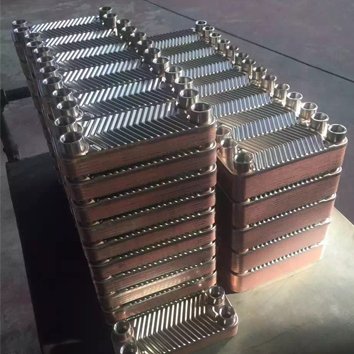 7. How Can You Reduce Heat Exchanger Spare Part Costs Without Increasing Risk?
The most effective savings usually come from better identification, appropriate maintenance planning, technically sound sourcing, and avoiding unnecessary downtime.
7.1 Improve part identification before requesting quotations
Incomplete information creates repeated questions, delays, and the risk of incorrect supply.
Provide the equipment model, serial number, part number, photographs, drawings, dimensions, material, and operating conditions in one RFQ whenever possible.
If some information is unavailable, identify what is missing instead of assuming that a supplier can safely infer it.
7.2 Separate urgent requirements from planned purchases
Not every part needs the same delivery priority.
For example, a maintenance team may need a small number of urgently required gaskets to restore operation, while additional spare plates can be ordered for planned maintenance.
Splitting urgent and nonurgent requirements may allow the critical items to move through sourcing and shipping earlier. However, confirm whether separate shipments introduce additional freight, customs, or handling charges.
7.3 Plan critical spares
For equipment with long procurement cycles or serious downtime consequences, maintaining selected spare parts may be more economical than relying entirely on emergency procurement.
A critical-spares policy should consider:
- Failure frequency and likely failure modes
- Consequences of equipment downtime
- Supplier lead time and availability
- Number of installed units using the same part
- Shelf life and storage requirements
- Obsolescence risk
- Capital tied up in inventory
Gaskets, for example, may have storage-life and storage-condition requirements that differ by compound. Inventory planning should follow the supplier’s recommendations rather than assuming all elastomer parts can be stored indefinitely.
7.4 Evaluate replacement and maintenance options together
A gasket leak, plate failure, or tube leak may indicate a broader issue such as corrosion, fouling, incorrect operating conditions, or unsuitable cleaning practices.
Before buying replacement parts, review the underlying failure mechanism.
If the same part repeatedly fails, replacing it with an identical component without addressing the cause may simply repeat the maintenance expense.
7.5 Avoid unnecessary customization
Standard components may be more economical when they meet the technical requirements and fit the equipment correctly.
Custom parts can be necessary for obsolete equipment or special operating conditions, but engineering, tooling, verification, and documentation can add cost.
Where customization is proposed, ask the supplier to explain why a standard component is unsuitable and what technical information supports the proposed design.
8. Common Mistakes When Buying Heat Exchanger Gaskets, Plates, and Tube Bundles
Mistake 1: Choosing solely by unit price
Why it causes problems: The lowest-priced quotation may omit important components, use a different material, or exclude required inspection and documentation.
What to do instead: Compare quotations using identical specifications, scope, quantities, and delivery terms. Evaluate total landed cost and the risk of premature failure.
Mistake 2: Assuming similar-looking parts are interchangeable
Why it causes problems: Gasket profiles, plate patterns, port arrangements, tube dimensions, and mechanical interfaces can differ between models.
What to do instead: Verify the part number, equipment model, drawings, dimensions, and material requirements before ordering.
Mistake 3: Ignoring fluid compatibility
Why it causes problems: An unsuitable elastomer or metal can degrade or corrode under actual operating or cleaning conditions.
What to do instead: Provide the process fluid, concentration, temperature range, pressure, and cleaning conditions. Obtain technical approval for material substitutions.
Mistake 4: Replacing a component without investigating the failure
Why it causes problems: Fouling, corrosion, vibration, thermal stress, incorrect assembly, or unsuitable operating conditions may cause repeated damage.
What to do instead: Review the maintenance findings and operating history. Address the failure mechanism where possible.
Mistake 5: Comparing quotations with different scopes
Why it causes problems: One supplier may quote a single plate, while another includes a full plate pack, gaskets, inspection, and packing.
What to do instead: Require a line-by-line breakdown and confirm exactly what is included and excluded.
Mistake 6: Overlooking material traceability and inspection
Why it causes problems: Missing documentation can prevent acceptance, particularly for demanding industrial applications or pressure-retaining components.
What to do instead: Define required certificates, inspection records, testing, and approval procedures before placing the order.
Mistake 7: Waiting until a breakdown to identify critical spares
Why it causes problems: Obsolete or custom components may require engineering and production time that cannot be eliminated through faster shipping.
What to do instead: Identify high-risk spare parts during planned maintenance and establish a suitable stocking strategy.
Mistake 8: Failing to specify the delivery destination and required date
Why it causes problems: A supplier may quote dispatch timing without accounting for international transit, import clearance, or final delivery.
What to do instead: Provide the destination country, postcode or port, preferred transport method, and required-on-site date. Ask for dispatch and estimated arrival to be stated separately.
9. Cost Comparison Framework: Gaskets vs Plates vs Tube Bundles
The three component categories have different cost structures and technical requirements.
| Cost factor | Gaskets | Plate heat exchanger plates | Shell-and-tube bundles |
|---|---|---|---|
| Primary material consideration | Elastomer compound and chemical compatibility | Metal grade and thickness | Tube and tube-sheet material specifications |
| Main design consideration | Profile, dimensions, and sealing arrangement | Corrugation pattern, ports, plate geometry, and gasket grooves | Tube layout, dimensions, tube sheets, baffles, and joining method |
| Manufacturing complexity | Depends on compound, profile, and tooling | Depends on plate pattern, pressing tools, and material | Depends on bundle size, fabrication, joining, and assembly |
| Typical replacement scope | Individual gasket, partial set, or complete set | Individual plates, multiple plates, or complete pack | Selected tube repair, retubing, or complete bundle |
| Documentation considerations | Material identification and compatibility records | Material, dimensional, and configuration records | Material traceability, fabrication records, and specified inspection |
| Availability concerns | Special compounds or profiles | Model-specific patterns and obsolete tooling | Special alloys, custom dimensions, and fabrication scheduling |
| Common hidden costs | Repeat maintenance and leakage | Incorrect plate matching and reassembly | Lifting, removal, installation, inspection, and commissioning |
| Best cost-control approach | Match the compound and profile correctly | Verify plate pattern and full quotation scope | Confirm the engineering scope and evaluate repair versus replacement |
This table is a purchasing framework, not a universal price ranking. A specialized gasket can be more expensive than a standard plate, and a simple tube bundle may cost less than a highly customized plate pack. The actual design and scope determine the result.
10. Buyer Checklist: Information Needed for a Heat Exchanger Spare Parts Quotation
Preparing a complete RFQ helps suppliers identify the correct component, assess availability, and provide a more reliable quotation.
Equipment identification
- Equipment type: plate, shell-and-tube, air-cooled, brazed plate, or liquid cooling exchanger
- Original manufacturer
- Model and serial number
- Nameplate photograph
- Original part number, if available
- Equipment drawing and revision
- Photographs of the damaged or replacement component
Component requirements
- Part type: gasket, plate, tube, tube bundle, or other component
- Required quantity
- Material grade or compound
- Dimensions and tolerances
- Plate pattern, gasket profile, or tube specifications, as applicable
- OEM or compatible aftermarket preference
- New, repaired, or refurbished status, where relevant
- Complete assembly or individual components
Operating conditions
- Process fluid and composition
- Normal and maximum operating temperature
- Operating and design pressure, where relevant
- Corrosion, erosion, or fouling concerns
- Cleaning chemicals and procedures
- Any known cause of the original component failure
Quality and documentation
- Material certificates or traceability requirements
- Dimensional inspection requirements
- Pressure or leak testing, where applicable
- Applicable standards or code requirements
- Third-party inspection requirements
- Required drawings and approval documents
- Acceptance criteria and warranty requirements
Commercial and delivery requirements
- Required quantity and whether partial shipments are acceptable
- Destination country, city, postcode, or port
- Preferred shipping method
- Applicable Incoterm, if known
- Required-on-site date
- Packaging requirements
- Budget constraints, if available
- Whether the purchase is for emergency repair, planned maintenance, or stock
Practical tip: If you cannot provide every item, send the information available and identify the gaps. A supplier can then explain which missing details are essential for identification, pricing, and technical approval.
11. Frequently Asked Questions About Heat Exchanger Spare Part Costs
1. What affects the price of heat exchanger gaskets?
Gasket prices depend on the material compound, dimensions, profile, manufacturing requirements, quantity, and availability. Chemical compatibility and temperature resistance are particularly important because a low-priced gasket that fails prematurely can increase maintenance and downtime costs.
2. Why do replacement heat exchanger plates have different prices?
Plate prices vary with material grade, thickness, plate pattern, port configuration, tooling availability, quantity, and inspection requirements. OEM and aftermarket quotations may also cover different scopes, so buyers should compare specifications and included components before evaluating price.
3. Why are titanium heat exchanger plates more expensive than stainless steel plates?
Titanium plates generally involve higher material and manufacturing costs than many standard stainless steel alternatives. They may nevertheless be appropriate for certain corrosive services. The correct choice depends on the fluid, temperature, corrosion mechanisms, and equipment design rather than material price alone.
4. Is it cheaper to replace individual plates or the entire plate pack?
Replacing individual plates usually requires fewer components, but a complete plate pack may be more practical when damage is widespread or the equipment is undergoing a major overhaul. The decision depends on plate condition, remaining service life, gasket condition, labor, and the cost of repeated maintenance.
5. What determines the cost of a shell-and-tube heat exchanger tube bundle?
The principal factors include tube material, diameter, wall thickness, length, quantity, tube-sheet design, baffle arrangement, fabrication methods, and inspection requirements. Special alloys, custom dimensions, pressure-boundary requirements, and additional documentation can increase the total cost.
6. Can a damaged tube bundle be repaired instead of replaced?
Yes, some damaged tube bundles can be repaired, retubed, or have selected tubes plugged, depending on the damage and design requirements. The appropriate method depends on the exchanger’s mechanical condition, required heat transfer capacity, applicable repair procedures, and engineering approval.
7. Are aftermarket heat exchanger parts reliable?
Aftermarket parts can be suitable when their material, dimensions, design compatibility, and quality requirements are verified. Buyers should confirm the supplier’s technical information and required documentation rather than assuming that all aftermarket parts are equivalent to OEM parts.
8. How can I identify the correct replacement gasket?
Start with the equipment model, serial number, original gasket part number, and material specification. If these are unavailable, provide photographs, dimensions, plate identification, and operating conditions. The supplier should verify the gasket profile and material compatibility before confirming the replacement.
9. Can I use a different gasket material from the original?
A different gasket material should be used only after compatibility and suitability have been verified. The replacement must meet the fluid, temperature, pressure, cleaning, and mechanical requirements of the application. A seemingly similar elastomer may have different chemical resistance or temperature limits.
10. Do heat exchanger plates need to come from the original manufacturer?
Not necessarily. Qualified alternative suppliers may provide compatible plates if the geometry, material, thickness, sealing arrangement, and operating requirements are verified. OEM sourcing may be preferable when original specifications or contractual requirements make alternatives unsuitable.
11. What is included in a heat exchanger spare parts quotation?
The scope varies by supplier. A quotation may include only the components or may also cover inspection, documentation, packaging, freight, or other services. Buyers should confirm every included and excluded item, as well as the delivery terms, before placing an order.
12. How can I reduce the total cost of replacement heat exchanger parts?
Provide complete technical information, compare equivalent quotations, investigate the cause of component failure, and plan critical spares. Where suitable, qualified alternative sourcing may provide additional options. Consider maintenance labor, downtime, shipping, and expected service life rather than focusing exclusively on purchase price.
13. How long does it take to obtain replacement gaskets, plates, or tube bundles?
Lead time depends on exact part identification, stock availability, material sourcing, manufacturing requirements, inspection, order quantity, and shipping destination. Standard stock components may be available much sooner than custom plates or tube bundles, which can require engineering and fabrication. Request separate estimates for production, dispatch, and final delivery.
14. What documents should I request when buying replacement parts?
The required documents depend on the component and application. They may include drawings, material certificates, dimensional inspection records, testing documentation, and applicable pressure-equipment records. Specify the requirements before ordering, particularly for pressure-retaining or safety-critical components.
15. Can an international trading company help source custom heat exchanger parts?
Yes. An international trading company can coordinate with qualified manufacturers and engineering teams to identify suitable sourcing options, clarify specifications, obtain quotations, arrange agreed inspection and documentation, and coordinate export logistics. The final suitability, scope, and lead time should be confirmed against the actual component requirements and supplier capabilities.
12. How to Choose a Heat Exchanger Spare Parts Supplier or Export Partner
Selecting a supplier involves more than comparing unit prices. Buyers should evaluate technical communication, specification control, quality documentation, delivery coordination, and the supplier’s ability to handle the requirements of the intended application.
Technical identification and communication
A capable supplier should ask for the information needed to identify the component correctly. For model-specific gaskets and plates, this may include part numbers, dimensions, plate patterns, and material specifications. Tube bundle enquiries may require drawings and mechanical details.
Be cautious if a supplier confirms compatibility without enough information to establish what is being supplied.
Manufacturing and sourcing transparency
For a trading or export company, clarify how the component will be sourced and which manufacturing partner will provide it.
The supplier should distinguish between:
- Confirmed stock and estimated availability
- Standard products and custom-manufactured components
- OEM parts and aftermarket alternatives
- Confirmed specifications and unresolved technical questions
These distinctions help the buyer understand both the quotation and the risks.
Quality control and documentation
Agree on the quality requirements before production or dispatch.
Depending on the component, this may include material identification, dimensional checks, traceability, testing, and documentation. For pressure-retaining parts, the relevant design and inspection requirements should be established before fabrication.
Do not assume that every component requires the same certificates or tests. The appropriate scope depends on the equipment and application.
Export and delivery coordination
International orders can involve packaging, shipping arrangements, export documents, customs clearance, and coordination with the destination consignee.
A supplier should explain what is included in the quotation, what remains the buyer’s responsibility, and which delivery milestones are confirmed or estimated.
Technical support and after-sales communication
For custom or model-specific parts, effective communication can reduce the risk of ordering the wrong component.
Buyers should establish how technical questions will be handled, how drawing approvals will be recorded, and how discrepancies will be addressed if the delivered part does not match the approved specification.
Our approach to heat exchanger spare parts sourcing
As an international trading and export company, we work closely with qualified manufacturing partners and engineering teams to provide product sourcing, technical coordination, customization, quality control, and international export support.
For heat exchanger gaskets, plates, and tube bundles, we can coordinate the review of available equipment information, clarify technical and commercial requirements, and seek suitable OEM or compatible replacement options according to the application.
Final pricing, compatibility, documentation, and delivery arrangements depend on the confirmed specification and the capabilities and schedule of the selected supplier. We do not treat an unverified part as interchangeable simply because its appearance or dimensions seem similar.
13. Request a Quotation for Heat Exchanger Gaskets, Plates, or Tube Bundles
Choosing the right replacement component starts with accurate identification and a clear understanding of the operating conditions.
Whether you need a gasket set for a plate heat exchanger, replacement plates for an existing unit, or a tube bundle for a shell-and-tube exchanger, the best quotation should address technical suitability, component scope, quality requirements, and delivery arrangements.