A heat exchanger that no longer meets its original performance requirements can create production bottlenecks, increase energy consumption, and lead to unplanned maintenance. For industrial operators, HVAC contractors, OEMs, and plant engineers, the challenge is deciding whether to repair the existing unit, retrofit selected components, or replace the entire heat exchanger.
The right decision depends on more than the purchase price. Fouling, corrosion, changing process conditions, obsolete components, excessive pressure drop, and limited spare-part availability can all affect the economics of keeping an existing unit in service.
A heat exchanger retrofit may improve performance while retaining part of the original equipment. A replacement may be more appropriate when the existing unit is damaged, fundamentally undersized, incompatible with the current process, or too costly to maintain.
This guide explains how to evaluate both options, which technical and commercial factors matter, how to reduce project risks, and what information to prepare before requesting a quotation.
Quick Answer: Should You Retrofit or Replace a Heat Exchanger?
Retrofit a heat exchanger when the existing equipment remains mechanically suitable and a targeted modification can address the performance problem. Replace it when the pressure boundary is unsuitable, damage is extensive, spare parts are unavailable, or the current design cannot meet the required duty economically.
Use this decision framework:
- Clean or repair: Consider this when fouling, gasket deterioration, or localized damage is responsible for the problem and the equipment remains suitable for service.
- Retrofit components: Consider this when a plate pack, tube bundle, gasket, connection, or other replaceable component can be upgraded without compromising the rest of the system.
- Redesign the existing unit: Consider this when operating conditions have changed and engineering analysis identifies a feasible modification.
- Replace the complete heat exchanger: Consider this when the existing unit has extensive damage, inadequate mechanical suitability, obsolete construction, or insufficient performance that cannot be corrected economically.
- Install a different heat exchanger type: Consider this when the application has changed enough that the original configuration is no longer appropriate.
Before making the decision, establish the cause of the problem, confirm the current operating requirements, and compare the expected lifecycle costs of each technically acceptable option.
1. What Is the Difference Between Heat Exchanger Retrofit and Replacement?
Heat exchanger retrofit and replacement are related but different engineering approaches. A retrofit modifies some part of the existing equipment or system, while a replacement installs a new unit or assembly to take over the required heat transfer duty.
The appropriate choice depends on equipment condition, available space, process requirements, engineering constraints, and the cost of downtime.
1.1 What Is a Heat Exchanger Retrofit?
A heat exchanger retrofit involves modifying existing equipment to improve performance, reliability, maintainability, or compatibility with updated operating conditions.
The work may include:
- Replacing a shell-and-tube exchanger’s tube bundle.
- Replacing damaged or unsuitable plate heat exchanger plates or gaskets.
- Changing selected materials to address a confirmed corrosion problem.
- Modifying connections or piping interfaces.
- Adjusting the heat transfer surface or flow arrangement through an engineered redesign.
- Upgrading controls or associated system components.
- Replacing an obsolete unit with a new design that fits the existing installation.
A retrofit does not necessarily require replacing the complete heat exchanger. However, even a component-level modification can affect thermal performance, pressure drop, mechanical loading, and system compatibility.
Problem: The existing exchanger is still usable, but it no longer meets the required performance.
Why it happens: Operating conditions may have changed, components may have deteriorated, or the original design may have limited capacity.
How to solve it: Identify the underlying cause and determine whether a defined modification can correct it without introducing new operating or mechanical problems.
What to provide to the supplier:
- Existing equipment model and drawings.
- Current and original operating conditions, if available.
- Symptoms and maintenance history.
- Required performance after the modification.
- Available installation space.
- Applicable design and inspection requirements.
1.2 What Is a Heat Exchanger Replacement?
A heat exchanger replacement involves installing a new unit or assembly to perform the required heating or cooling function.
The replacement may be:
- An identical OEM unit.
- A replacement tube bundle or plate pack.
- A dimensionally compatible alternative.
- A customized heat exchanger designed for the application.
- A different heat exchanger configuration selected to meet updated process requirements.
Replacement is often preferable when the existing unit has severe corrosion, repeated structural or pressure-boundary problems, extensive internal damage, or a design that cannot meet current requirements.
However, a new unit is not automatically the better choice. If the problem is caused by fouling, poor flow distribution elsewhere in the system, or an incorrectly operated control valve, replacing the heat exchanger without correcting the underlying cause may produce the same problem again.
1.3 Retrofit vs. Replacement: A Practical Comparison
| Decision factor | Retrofit existing equipment | Replace the heat exchanger |
|---|---|---|
| Initial equipment cost | May be lower if modifications are limited | May be higher, depending on scope |
| Engineering requirements | Requires compatibility checks and modification analysis | Requires replacement design and interface verification |
| Downtime | Can be shorter if work is straightforward, but depends on access and scope | Depends on fabrication, delivery, removal, and installation |
| Existing installation | Often retains the original shell, frame, or connections | May retain existing piping and supports if compatible |
| Performance improvement | Limited by the feasibility of the modification | May allow a more substantial redesign |
| Spare-part availability | May remain dependent on the original equipment | Can establish a new supply arrangement |
| Mechanical condition | Existing pressure boundary and retained components must be acceptable | New pressure-boundary components can be designed for the specified service |
| Main risk | Modifications may introduce compatibility issues | Replacement may require piping, foundation, or control changes |
| Best suited to | Equipment that remains suitable for service | Equipment that is damaged, obsolete, unsuitable, or uneconomical to retain |
Important: These are general tendencies, not guarantees. A retrofit can be expensive and time-consuming, while a replacement can be straightforward if the unit is standardized and readily available.
1.4 When Should You Consider Repair Instead?
Repair should be evaluated separately from retrofit and replacement.
Cleaning may restore performance when fouling is the primary cause. Gasket replacement may address leakage in a gasketed plate heat exchanger. Localized repairs may be possible for certain components if permitted by the applicable design, inspection requirements, and qualified repair procedures.
Repair is less attractive when deterioration is extensive, the cause of repeated failure remains unknown, or the equipment cannot be returned to an acceptable condition through an approved repair method.
2. How Do You Determine Why a Heat Exchanger Needs an Upgrade?
The first step is to diagnose the performance problem. Heat exchanger retrofits are more likely to succeed when they address a verified cause rather than an assumed one.
A heat exchanger may appear to have insufficient capacity when the actual problem is reduced flow, fouling, incorrect control settings, air or vapour accumulation, or a change in process conditions.
2.1 Common Warning Signs
The following symptoms justify an investigation.
| Symptom | Possible causes | What to investigate |
|---|---|---|
| Lower heating or cooling capacity | Fouling, reduced flow, changed inlet conditions, inadequate design capacity | Flow rates, inlet/outlet temperatures, heat duty, fluid properties |
| Increasing pressure drop | Blocked passages, deposits, excessive flow, damaged internal components | Pressure readings, flow rates, cleaning history |
| Frequent leakage | Worn gaskets, corrosion, damaged tubes, failed joints | Leak location, materials, pressure and temperature history |
| Rising energy consumption | Reduced heat transfer, increased pumping demand, inefficient controls | Temperature approach, pressure drop, pump and control operation |
| Repeated tube failure | Corrosion, erosion, vibration, thermal stress, unsuitable material | Tube inspection, fluid chemistry, flow conditions, failure history |
| Short gasket service life | Incompatible gasket material, overheating, excessive compression, pressure cycling | Fluid compatibility, installation procedure, operating envelope |
| Unstable outlet temperature | Variable flow, control problems, fouling, unstable inlet conditions | Instrument readings, control valves, process trends |
| Increasing maintenance frequency | Age-related deterioration, recurring fouling, unsuitable design, poor accessibility | Maintenance records, inspection results, lifecycle cost |
These symptoms are indicators, not definitive diagnoses. The same symptom can have several causes, and multiple problems may occur simultaneously.
2.2 Establish a Baseline Before Making Changes
Where practical, collect operating data before removing or modifying the equipment.
Record:
- Hot-side and cold-side flow rates.
- Inlet and outlet temperatures.
- Operating pressures.
- Pressure drop across each side, where measurable.
- Fluid composition and concentration.
- Ambient conditions for air-cooled equipment.
- Current heat duty, if it can be calculated reliably.
- Cleaning and maintenance history.
- Production demand and operating schedule.
Compare measurements taken under similar conditions. A heat exchanger operating at a lower flow rate or with a different inlet temperature may appear less effective even if its condition has not deteriorated.
For a liquid stream without a significant phase change, heat duty can often be estimated using:
[
Q = \dot{m} c_p \Delta T
]
Where:
- (Q) is the heat transfer rate, in kW.
- (\dot{m}) is the mass flow rate, in kg/s.
- (c_p) is the specific heat capacity, in kJ/(kg·K).
- (\Delta T) is the temperature change across the exchanger, in K or °C.
This calculation requires appropriate fluid properties and reliable measurements. It does not independently establish the heat exchanger’s maximum capacity or prove that a retrofit will work.
For applications involving phase change, varying fluid properties, or complex process conditions, additional analysis may be required.
2.3 Problem: The Exchanger No Longer Meets the Required Duty
Why it happens: The unit may be fouled, undersized for current production, operating with different fluids, or receiving insufficient flow.
How to solve it:
- Verify the temperature and flow measurements.
- Compare current conditions with the original design basis.
- Inspect for fouling, blockage, corrosion, or internal damage.
- Check associated pumps, valves, strainers, and controls.
- Calculate the actual heat duty where reliable data are available.
- Determine whether cleaning, repair, retrofit, or replacement addresses the cause.
What to provide to the supplier: Original design data, current operating readings, required duty, fluid details, and a description of when the problem occurs.
Example: A chilled-water system no longer reaches its target outlet temperature during peak demand. Before increasing heat transfer area, the engineering team should verify water flow, inlet temperature, control valve operation, and exchanger pressure drop. If the problem is inadequate system flow rather than insufficient heat transfer area, a larger exchanger alone may not solve it.
3. Which Heat Exchanger Retrofit Options Are Available?
Retrofit options depend on the equipment design, condition, operating requirements, and whether the existing pressure boundary and supporting structure can be retained.
A suitable modification should be supported by engineering analysis and must not compromise the equipment’s applicable design requirements.
3.1 Shell-and-Tube Heat Exchanger Retrofit
Shell-and-tube exchangers are often considered for retrofit because some internal components can be replaced while the shell and external piping interfaces remain in place.
Potential options include:
- Replacing the tube bundle.
- Replacing tubes where an approved repair or retubing procedure is suitable.
- Correcting tube-to-tube-sheet joint problems through an appropriate qualified method.
- Addressing baffle or support damage.
- Evaluating alternative tube materials.
- Reassessing the tube arrangement or heat transfer area through an engineered redesign.
A replacement tube bundle must fit the existing shell and match the required interfaces. It must also meet the specified thermal and mechanical requirements.
Key information includes:
- Shell inside diameter and length.
- Tube outside diameter, wall thickness, length, and count.
- Tube layout and pitch.
- Tube-sheet dimensions and material.
- Baffle type and spacing.
- Tube-side and shell-side flow arrangement.
- Tube-to-tube-sheet joint requirements.
- Design pressure and temperature.
- Process fluids and corrosion concerns.
Changing the tube material, tube count, or geometry may affect heat transfer, pressure drop, vibration, and differential thermal expansion. Such changes should not be treated as simple component substitutions.
3.2 Plate Heat Exchanger Retrofit
Gasketed plate heat exchangers may allow replacement of gaskets and selected plates, subject to the manufacturer’s design and the availability of compatible components.
Potential options include:
- Replacing worn or damaged gaskets.
- Replacing damaged plates.
- Rebuilding the plate pack using compatible components.
- Evaluating a different plate configuration where supported by the design.
- Replacing the complete unit with a compatible or redesigned model.
Important considerations include plate pattern, material, gasket profile, port configuration, plate count, flow-pass arrangement, and frame limits.
Adding plates or changing the plate arrangement can affect heat transfer area and flow distribution, but it may also change pressure drop, mechanical loading, and the unit’s operating characteristics. The allowable configuration must be confirmed for the specific exchanger.
3.3 Brazed Plate Heat Exchanger Replacement or Upgrade
Brazed plate heat exchangers generally have permanently joined plate assemblies, so their internal components are not normally replaced individually in the same way as gaskets and plates in a serviceable gasketed unit.
Where the exchanger is leaking internally, severely fouled, or no longer meets the required duty, replacement of the complete unit may be more practical.
A replacement should be checked for:
- Required heat duty.
- Inlet and outlet temperatures.
- Fluid compatibility.
- Flow rates and pressure drop.
- Design pressure and temperature.
- Connection dimensions and orientation.
- Available installation space.
- Required documentation and applicable standards.
A compact replacement may fit the same space while having different internal geometry and hydraulic characteristics. Dimensional compatibility should therefore be evaluated separately from thermal equivalence.
3.4 Air-Cooled Heat Exchanger Retrofit
Air-cooled heat exchangers depend on both process-side heat transfer and airflow.
Potential retrofit work may involve:
- Fan or drive replacement.
- Repair or replacement of damaged coils.
- Evaluation of fin condition and airflow obstruction.
- Control-system adjustments.
- Replacement of selected components.
- An engineered change to the coil or airflow arrangement.
Before changing the coil or fan arrangement, check ambient design temperature, process-fluid conditions, fan performance, airflow distribution, noise limits, and available electrical power.
A larger coil may not deliver the expected improvement if airflow is restricted or the operating ambient temperature is higher than assumed.
3.5 Retrofit Options by Equipment Type
| Equipment type | Potential retrofit or replacement options | Main technical concern |
|---|---|---|
| Shell-and-tube | Tube bundle replacement, retubing where suitable, material upgrade | Bundle fit, pressure boundary, vibration, thermal performance |
| Gasketed plate | Gasket or plate replacement, compatible plate-pack changes | Plate compatibility, sealing, flow configuration |
| Brazed plate | Complete-unit replacement or engineered equivalent | Internal geometry, pressure drop, thermal performance |
| Air-cooled | Fan, drive, coil, or control-system work | Airflow, ambient conditions, process duty |
| Liquid cooling | Component replacement or redesigned cooling unit | Coolant compatibility, flow distribution, pressure drop |
The correct retrofit scope should be established only after inspecting the equipment and defining the required performance.
4. How Do You Select a Replacement Heat Exchanger?
Selecting a replacement requires more than matching the original model number or physical dimensions. The replacement must fit the installation, meet the required thermal duty, tolerate the process fluids, and satisfy the applicable mechanical and regulatory requirements.
4.1 Confirm the Required Thermal Duty
Thermal duty is the amount of heat that must be transferred per unit time.
For a replacement, establish whether the required duty is the original design duty or a revised value reflecting current production needs.
The thermal review may consider:
- Hot- and cold-side flow rates.
- Inlet and required outlet temperatures.
- Fluid composition and properties.
- Available temperature difference.
- Overall heat transfer coefficient.
- Heat transfer area.
- Fouling allowance.
- Flow arrangement.
- Pressure drop.
For many sensible-heat applications, the required heat transfer area is related to duty by:
[
Q = U A \Delta T_{\mathrm{lm}}
]
Where (U) is the overall heat transfer coefficient, (A) is the effective heat transfer area, and (\Delta T_{\mathrm{lm}}) is the log mean temperature difference, with appropriate correction factors where required.
This relationship helps explain why a replacement with the same external dimensions may not provide equivalent performance. Internal geometry, flow distribution, surface condition, and fluid properties can change the effective heat transfer coefficient.
The final selection should be confirmed through an appropriate thermal design.
4.2 Check Mechanical Design Conditions
Confirm both operating and design conditions.
Relevant parameters include:
- Normal operating pressure.
- Design pressure.
- Normal operating temperature.
- Design temperature.
- Possible pressure surges.
- Thermal cycling.
- Fluid phase and composition.
- Corrosion and erosion mechanisms.
- Vibration risks.
- Connection and support loads.
- Applicable design code and jurisdiction.
A replacement designed for the original operating conditions may be unsuitable if the process has changed.
For pressure equipment, applicable requirements may include ASME Section VIII, TEMA, EN 13445, or relevant PED requirements, depending on the design and destination. The correct code, edition, and conformity obligations must be established for the actual project.
4.3 Select Materials for the Actual Fluid
Material selection should account for the process fluid, contaminants, concentration, temperature, cleaning chemicals, and expected corrosion mechanisms.
Common material options may include carbon steel, stainless steel grades such as 304 or 316L, duplex stainless steel, copper alloys, titanium, and other application-specific materials.
No material is universally best.
For example, a material with suitable corrosion resistance in one water chemistry may perform poorly in another. Chloride concentration, temperature, flow conditions, and the presence of other contaminants can influence the selection.
Before approving a material change, consider:
- Corrosion resistance.
- Thermal conductivity where relevant.
- Mechanical properties.
- Compatibility between dissimilar materials.
- Joining and fabrication requirements.
- Availability and traceability.
- Lifecycle cost.
A more expensive alloy may reduce replacement frequency in a suitable application, but that benefit should be established through a material compatibility assessment rather than assumed.
4.4 Verify Connections and Installation Constraints
A replacement must be installable and maintainable.
Check:
- Connection size, type, and orientation.
- Overall dimensions.
- Foundation and support locations.
- Piping alignment.
- Required lifting access.
- Bundle or plate-pack removal space.
- Service access for cleaning and inspection.
- Drainage and venting requirements.
- Insulation and control-system interfaces.
For shell-and-tube equipment, bundle pull-out clearance can be especially important. A replacement may fit within the operating area but be impossible to remove for future maintenance.
4.5 Replacement Selection Checklist
| Factor | Why it matters | What the buyer should provide |
|---|---|---|
| Heat duty | Determines required thermal capacity | kW or BTU/h, if known |
| Flow rate | Affects heat transfer and pressure drop | m³/h, L/min, or GPM |
| Inlet temperature | Defines thermal operating conditions | °C or °F for each fluid |
| Required outlet temperature | Establishes the target performance | °C or °F for each fluid |
| Operating and design pressure | Determines mechanical requirements | bar or psi |
| Operating and design temperature | Affects material and mechanical selection | °C or °F |
| Fluid composition | Determines compatibility and corrosion risk | Fluid name, concentration, contaminants |
| Allowable pressure drop | Limits hydraulic resistance | Specified limit for each side |
| Fouling conditions | Affects long-term performance | Fluid cleanliness and cleaning history |
| Material requirements | Influence durability and compatibility | Required grades or service conditions |
| Installation space | Determines physical compatibility | Drawings and critical dimensions |
| Connections | Determines piping compatibility | Size, type, orientation, and rating |
| Applicable standards | Defines design and conformity requirements | Code, jurisdiction, and contract |
| Quantity and destination | Affects sourcing, packaging, and delivery | Quantity, country, delivery terms |
If the original design information is incomplete, the supplier should identify the missing data and explain what additional measurements or engineering work are needed.
5. How Do You Compare Retrofit Cost with Replacement Cost?
The best economic decision compares the total expected cost of each technically acceptable option over a defined operating period.
The purchase price alone can be misleading. A low-cost retrofit may require repeated maintenance, while a more expensive replacement may reduce downtime or improve energy performance. Conversely, replacing a serviceable unit may create unnecessary expenditure.
5.1 Main Retrofit Cost Factors
Retrofit costs can include:
- Inspection and failure analysis.
- Engineering calculations and design changes.
- Replacement tubes, plates, gaskets, or other components.
- Material upgrades.
- Machining and fabrication.
- Removal and reinstallation.
- Cleaning and repair work.
- Testing and inspection.
- Piping or control modifications.
- Downtime and lost production.
- Future maintenance.
A retrofit may be financially attractive when the existing pressure boundary and structure remain suitable and the required modification is limited.
However, costs can increase if the existing unit is difficult to disassemble, its components are heavily corroded, or the design information is incomplete.
5.2 Main Replacement Cost Factors
Replacement costs may include:
- New equipment or component price.
- Engineering and design work.
- Materials and manufacturing.
- Quality inspection and testing.
- Removal of the old unit.
- Installation and commissioning.
- Piping and electrical modifications.
- Foundation or support changes.
- Export packaging and transport.
- Customs duties, taxes, and import charges where applicable.
- Spare parts and maintenance arrangements.
Customized heat exchangers may require more engineering and manufacturing coordination than standard models. Special alloys, unusual connections, strict documentation requirements, and additional inspection can also affect cost.
5.3 Compare Lifecycle Cost, Not Just Purchase Price
A practical lifecycle comparison can be expressed as:
[
C_{\mathrm{total}} =
C_{\mathrm{initial}} +
C_{\mathrm{energy}} +
C_{\mathrm{maintenance}} +
C_{\mathrm{downtime}} +
C_{\mathrm{replacement}}
]
Where the terms represent the costs over a defined evaluation period.
For a fair comparison, use the same time horizon, operating assumptions, energy prices, and maintenance expectations for each option. Avoid counting the same cost twice.
The analysis should also consider reliability and operational consequences that may be difficult to express precisely as a monetary value.
Example: A factory is considering replacing a frequently fouling exchanger. If the problem is caused by unsuitable flow conditions or a fluid-treatment issue, a new unit of similar design may continue to foul. Correcting the cause may offer greater value than purchasing new equipment. If the existing exchanger is also corroded and mechanically unsuitable, replacement may be justified even if its initial cost is higher.
5.4 How Long Does a Retrofit or Replacement Take?
There is no universal lead time. The schedule depends on equipment type, engineering complexity, material availability, manufacturing workload, inspection requirements, and installation constraints.
Retrofit work may involve less manufacturing but can be delayed by disassembly, inspection, unexpected damage, or difficult access. Replacement may require longer fabrication time but can be more predictable when the design is finalized and materials are available.
Separate the project schedule into:
- Engineering and specification confirmation.
- Drawing preparation and approval.
- Material procurement.
- Manufacturing or modification.
- Inspection and testing.
- Packaging and delivery.
- Removal, installation, and commissioning.
To reduce delays, provide complete technical information, agree on acceptance criteria early, and avoid changes after drawing approval.
 6. Common Heat Exchanger Retrofit and Replacement Mistakes
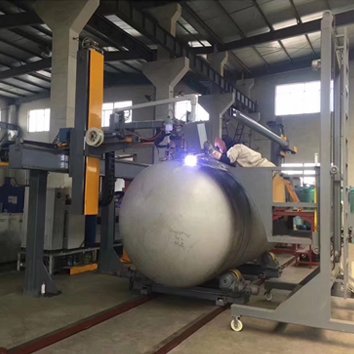 6. Common Heat Exchanger Retrofit and Replacement Mistakes
Many retrofit and replacement projects become more expensive because the initial problem is not properly diagnosed or the replacement requirements are incomplete.
Mistake 1: Replacing the Unit Before Identifying the Root Cause
What buyers do: They replace an exchanger because outlet temperatures are incorrect.
Why it causes problems: The actual cause may be low flow, fouling, control problems, or changed inlet conditions.
What to do instead: Collect operating data, inspect the equipment, and check associated pumps, valves, strainers, and controls before selecting a solution.
Mistake 2: Assuming a Dimensionally Identical Unit Will Perform Identically
What buyers do: They specify only the external dimensions and connection locations.
Why it causes problems: Different internal geometry, surface area, flow arrangement, and materials can change performance.
What to do instead: Confirm thermal duty, flow rates, pressure drop, fluid properties, and the relevant internal design features.
Mistake 3: Ignoring the Condition of Components That Will Be Retained
What buyers do: They replace a tube bundle or plate pack but assume the remaining shell, frame, nozzles, or connections are acceptable.
Why it causes problems: Corrosion, distortion, or damage in retained components can compromise the complete assembly.
What to do instead: Inspect retained components and verify their suitability before approving a retrofit.
Mistake 4: Changing Materials Without Checking Compatibility
What buyers do: They upgrade to a more expensive alloy based on a general assumption that it must last longer.
Why it causes problems: Material suitability depends on fluid chemistry, temperature, concentration, and the specific corrosion mechanism.
What to do instead: Evaluate compatibility and mechanical requirements for the actual service.
Mistake 5: Increasing Heat Transfer Area Without Checking Pressure Drop
What buyers do: They request a larger heat transfer surface to improve capacity.
Why it causes problems: The change may increase hydraulic resistance or alter flow distribution, affecting pump demand and system performance.
What to do instead: Evaluate heat duty and pressure drop together through thermal and hydraulic design.
Mistake 6: Overlooking Installation and Maintenance Access
What buyers do: They approve a replacement based on the equipment’s overall dimensions.
Why it causes problems: The unit may fit but lack clearance for lifting, bundle removal, plate-pack servicing, or routine inspection.
What to do instead: Confirm installation and maintenance clearances before finalizing the design.
Mistake 7: Failing to Define Testing and Acceptance Requirements
What buyers do: They request a replacement without specifying inspection, testing, or documentation.
Why it causes problems: The buyer and supplier may disagree about the evidence required to accept the equipment.
What to do instead: Agree on material verification, inspection scope, required tests, acceptance criteria, and final documentation before manufacturing.
Mistake 8: Comparing Supplier Quotes With Different Scopes
What buyers do: They select the lowest quotation without checking what is included.
Why it causes problems: One quotation may include engineering, inspection, packaging, and documentation, while another may exclude them.
What to do instead: Compare quotations against the same technical specification, delivery terms, inspection plan, and documentation requirements.
7. How to Plan a Heat Exchanger Retrofit or Replacement Project
A structured project plan reduces technical uncertainty and helps coordinate the plant owner, engineering team, supplier, actual manufacturer, and installation contractor.
Step 1: Define the Problem and Target Performance
Describe the issue in measurable terms.
For example:
- Required outlet temperature is not achieved.
- Pressure drop exceeds the permitted limit.
- Leakage occurs repeatedly.
- The equipment cannot meet increased production demand.
- Original replacement components are unavailable.
Define the target operating conditions and identify whether they differ from the original design.
Step 2: Collect Existing Equipment Information
Gather:
- Nameplate and model information.
- Drawings and technical data sheets.
- Current operating readings.
- Maintenance and failure history.
- Photographs and critical dimensions.
- Existing material records.
- Piping and installation drawings.
- Available clearance and access information.
Mark uncertain information rather than presenting estimates as confirmed dimensions.
Step 3: Assess the Existing Equipment
Determine which components can be retained and which require replacement.
The assessment may cover corrosion, erosion, leakage, mechanical damage, fouling, distortion, and the condition of the pressure boundary.
For pressure equipment or hazardous services, inspection and repair decisions should follow the applicable requirements and qualified engineering procedures.
Step 4: Compare Technically Feasible Options
Evaluate cleaning, repair, component retrofit, complete replacement, and redesign as applicable.
For each option, compare:
- Expected performance.
- Mechanical suitability.
- Installation requirements.
- Initial cost.
- Downtime.
- Inspection and testing requirements.
- Future maintenance.
- Expected service life, where it can be reasonably assessed.
Step 5: Finalize the Design and Scope
Before manufacturing or modification begins, agree on:
- Approved drawings.
- Design conditions.
- Materials.
- Connections and dimensions.
- Performance requirements.
- Applicable codes.
- Manufacturing scope.
- Inspection and test plan.
- Required documentation.
- Packaging and delivery arrangements.
Any deviation from the approved design should be documented and assessed for its effect on compatibility, performance, compliance, cost, and schedule.
Step 6: Coordinate Installation and Commissioning
Installation planning should address isolation, lifting, piping alignment, supports, connections, cleaning, venting, drainage, and any required system modifications.
Before returning the unit to service, complete the required installation checks, pressure or leak tests where applicable, and commissioning procedures.
Monitor initial operation against the agreed operating conditions. Record temperatures, flow rates, pressures, and pressure drops where appropriate so future maintenance teams have a useful baseline.
8. How to Choose a Heat Exchanger Supplier for Retrofit or Replacement
A suitable supplier should help clarify the technical scope, coordinate with the responsible engineering and manufacturing teams, and provide documentation appropriate to the equipment.
For international buyers, it is particularly important to distinguish the trading or export partner from the company performing the engineering and manufacturing.
8.1 Evaluate Technical Communication
A capable supplier should ask about the actual problem rather than quote solely from a product name or external dimensions.
Questions to discuss include:
- What caused the existing unit to underperform or fail?
- Which components can be retained?
- What operating data are needed?
- Does the replacement require a new thermal design?
- Which dimensions are critical?
- What materials are appropriate?
- Which standards and inspections apply?
- What information is still missing?
A transparent supplier should explain assumptions, identify unresolved issues, and avoid promising an exact replacement before sufficient information is available.
8.2 Confirm Manufacturing Responsibility
Ask who is responsible for:
- Engineering calculations.
- Drawing preparation and approval.
- Material procurement.
- Manufacturing or modification.
- Quality control.
- Inspection and testing.
- Final documentation.
- Export packing and shipping.
- Warranty and nonconformity handling.
The actual manufacturing partner should be identified where relevant, and the scope of its responsibilities should be clear.
A trading/export company can coordinate sourcing, customization, communication, quality documentation, and international logistics without claiming to own the manufacturing facility.
8.3 Review Quality and Documentation Arrangements
Depending on the project, request appropriate evidence such as:
- Approved drawings and technical specifications.
- Material certificates and traceability records.
- Manufacturing procedures and relevant qualifications.
- Inspection and test plans.
- Required NDE or test reports.
- Final inspection documentation.
- Applicable conformity documentation.
- Operating and maintenance information.
Certifications and approvals should be verified for the actual manufacturer, product, and application rather than assumed from a general company profile.
8.4 Check Commercial and After-Sales Terms
Before ordering, clarify:
- Contracting entity.
- Actual manufacturer.
- Payment terms.
- Delivery terms and named location.
- Manufacturing and shipping schedules.
- Packaging and preservation.
- Export documentation.
- Warranty scope and exclusions.
- Spare-part availability.
- Procedure for handling defects or delivery discrepancies.
For customized equipment, retaining approved drawings and material records is especially valuable because they can simplify future maintenance and replacement.
9. Heat Exchanger Retrofit and Replacement Buyer Checklist
Use this checklist before contacting a supplier.
Existing Equipment
Equipment type and model.
Original manufacturer, if known.
Nameplate photographs.
Existing drawings and data sheets.
Equipment age and maintenance history.
Photographs of damage, leakage, or corrosion.
Critical external dimensions.
Current component condition.
Operating Requirements
Process application.
Fluid on each side.
Fluid composition and concentration.
Flow rates.
Inlet and required outlet temperatures.
Required heat duty.
Operating and design pressures.
Operating and design temperatures.
Allowable pressure drop.
Fouling, corrosion, erosion, or vibration concerns.
Current performance problems.
Retrofit or Replacement Scope
Cleaning or repair under consideration.
Components to retain.
Components to replace.
Required material grades.
Connection dimensions and orientations.
Installation and service clearances.
Required performance improvements.
Permitted design changes.
Quality and Compliance
Applicable design code and jurisdiction.
Required engineering calculations.
Material traceability requirements.
Inspection and testing requirements.
Acceptance criteria.
Required documentation.
Third-party inspection or witness points, if applicable.
Commercial and Delivery
Quantity.
Target delivery date.
Destination country.
Delivery terms.
Packaging and preservation requirements.
Installation and commissioning responsibilities.
Warranty requirements.
Spare parts and future maintenance needs.
If some details are unavailable, tell the supplier what is known and what remains uncertain. This allows the supplier and engineering team to identify the next steps instead of relying on unverified assumptions.
10. Frequently Asked Questions About Heat Exchanger Retrofit and Replacement
1. What is the difference between heat exchanger retrofit and replacement?
A retrofit modifies an existing heat exchanger or selected components, while replacement installs a new unit or assembly. Retrofit may reduce equipment replacement costs when the retained components remain suitable. Replacement may be more appropriate when the existing unit is severely damaged, obsolete, or unable to meet current operating requirements.
2. When should a heat exchanger be replaced instead of repaired?
Replacement should be considered when damage is extensive, the pressure boundary is unsuitable, repeated failures continue despite appropriate repairs, critical parts are unavailable, or the required performance cannot be achieved economically. A qualified assessment should establish whether repair can restore acceptable performance and mechanical suitability.
3. Can a heat exchanger be upgraded without replacing the complete unit?
Yes, some heat exchangers can be upgraded by replacing components such as tube bundles, plates, or gaskets, or by modifying associated controls. Feasibility depends on the design, component condition, compatibility, and applicable engineering requirements.
4. Can replacing a tube bundle improve shell-and-tube heat exchanger performance?
Yes, a properly designed replacement tube bundle may restore or improve performance. The new bundle must be compatible with the shell and satisfy the required heat duty, pressure drop, material requirements, mechanical design, and flow arrangement. A simple dimensional match is not enough to establish suitability.
5. How do I know whether fouling or undersizing is causing poor performance?
Compare operating temperatures, flow rates, pressure drops, and heat duty with the original design or an established baseline. Fouling may cause declining heat transfer and increasing pressure drop, although the pattern depends on the type and location of deposits. Undersizing should be assessed through thermal design under the required operating conditions.
6. Does a larger heat exchanger always provide better performance?
No. A larger exchanger may provide more heat transfer area, but its suitability also depends on flow arrangement, pressure drop, fluid properties, material compatibility, and mechanical design. The required size should be established through thermal and hydraulic calculations.
7. What information is needed to quote a replacement heat exchanger?
Suppliers generally need the equipment type, model or drawings, heat duty, fluid details, flow rates, inlet and outlet temperatures, operating and design pressures, connection dimensions, materials, applicable standards, quantity, and delivery destination. If the original specifications are unavailable, inspection and engineering work may be required before a firm quotation can be prepared.
8. How much does a heat exchanger retrofit cost?
Retrofit cost depends on the equipment type, inspection requirements, component condition, replacement parts, material selection, engineering scope, manufacturing work, testing, installation, and downtime. An itemized quotation should distinguish engineering, components, inspection, installation, and other project costs.
9. How long does heat exchanger replacement take?
The schedule depends on design approval, material availability, manufacturing complexity, inspection requirements, transport, and installation. A reliable project schedule should separate engineering, manufacturing, delivery, and installation rather than treating them as a single lead-time figure.
10. Can a replacement heat exchanger use a different material?
Yes, if the alternative material is suitable for the process fluid, temperature, pressure, corrosion mechanisms, joining methods, and applicable design requirements. A material change should be evaluated by qualified personnel rather than selected solely because the new material is more expensive or more corrosion-resistant in other applications.
11. Can a replacement heat exchanger fit the original piping and supports?
Often, but compatibility must be verified. Critical dimensions include connection size and orientation, mounting points, overall dimensions, nozzle positions, and maintenance clearances. A dimensionally compatible unit must also satisfy the thermal and mechanical requirements.
12. What standards apply to heat exchanger replacement?
Applicable standards depend on equipment type, design conditions, destination, jurisdiction, and contractual requirements. Relevant references may include ASME Section VIII, TEMA, EN 13445, and applicable PED requirements. The correct requirements should be confirmed for the specific project.
13. What tests should be performed after a heat exchanger retrofit?
The required tests depend on the work scope and applicable design requirements. They may include dimensional inspection, leak testing, pressure testing, specified NDE, and functional checks. Test methods, acceptance criteria, and safety procedures should be agreed before the work begins.
14. Can a new heat exchanger solve recurring fouling problems?
Not necessarily. A new exchanger may still foul if the underlying causes—such as fluid contamination, unsuitable flow conditions, poor pretreatment, or inadequate cleaning arrangements—remain unchanged. The retrofit or replacement design should consider the fouling mechanism, maintenance access, and operating conditions.
15. Should I buy an OEM replacement or a customized alternative?
An OEM replacement may simplify compatibility when the original model remains available and meets current requirements. A customized alternative may be worth evaluating when the original unit is obsolete, lead time is excessive, or operating requirements have changed. Both options should be compared on technical suitability, documentation, total cost, and delivery risk.
Need Help With a Heat Exchanger Retrofit or Replacement?
If your heat exchanger is underperforming, leaking, difficult to maintain, or no longer supported by its original manufacturer, start by sharing the information available about the equipment and its operating conditions.
Click here to schedule a consultation or send us your existing drawings, equipment nameplate, operating data, performance requirements, inspection needs, quantity, and delivery destination.
We work closely with qualified manufacturing partners and engineering teams to provide product sourcing, technical coordination, customization, quality control, and international export support. We can help organize the available technical information and coordinate discussions about suitable retrofit components, replacement units, or customized heat exchanger options.
Final product selection and any modification should be confirmed through appropriate thermal and mechanical design, with the applicable standards, inspection requirements, and acceptance criteria established before work begins.