For OEM equipment manufacturers, industrial system integrators, and procurement teams, heat exchanger quality affects more than component reliability. A defect in a heat exchanger can cause fluid leakage, inadequate cooling, excessive pressure drop, equipment downtime, warranty claims, and costly production delays.
These risks become more difficult to manage when a custom heat exchanger is sourced from an external manufacturer. The buyer may specify the design and performance requirements, while a manufacturing partner handles production and testing. Without clearly defined inspection procedures and acceptance criteria, differences between the approved drawing, prototype, and production batch can go unnoticed.
Effective quality control for OEM heat exchanger production begins before manufacturing and continues through material procurement, fabrication, assembly, testing, packaging, and delivery. It combines technical specifications, process controls, documented inspections, and clear responsibilities between the OEM buyer, engineering team, manufacturer, and export partner.
This guide explains how to establish a practical heat exchanger quality control process, which inspections and tests matter most, what documentation buyers should request, and how to evaluate a supplier before approving production.
Quick Answer: What Is Quality Control in OEM Heat Exchanger Production?
Quality control in OEM heat exchanger production is the process of verifying that materials, manufacturing processes, dimensions, thermal performance, pressure integrity, and documentation meet the approved specifications and applicable requirements.
A typical quality control process includes:
- Design review: Confirm the approved drawings, operating conditions, materials, and applicable standards.
- Incoming material inspection: Verify material grades, dimensions, identification, and documentation as required.
- In-process inspection: Monitor critical manufacturing operations, joining processes, assembly, and dimensional characteristics.
- Final inspection: Check the completed unit against the approved drawing and purchase specification.
- Performance and integrity testing: Conduct applicable leakage, pressure, thermal, and hydraulic tests.
- Documentation review: Confirm that required inspection reports, test records, and material documents are complete.
- Release and traceability: Approve the unit or batch for shipment and retain the records needed for future reference.
The exact inspection plan depends on the heat exchanger design, operating conditions, risk level, customer requirements, and applicable regulations. A small liquid cooling component, a gasketed plate heat exchanger, and a code-governed industrial shell-and-tube unit should not automatically follow identical quality control procedures.
The objective is not simply to find defective products at the end of production. It is to prevent defects, detect deviations early, and demonstrate that the finished heat exchanger conforms to its approved requirements.
1. Why Is Quality Control Critical for OEM Heat Exchanger Production?
OEM heat exchangers are often designed to fit specific equipment, operating conditions, and customer requirements. Their quality must therefore be assessed against the intended application rather than against general product appearance alone.
A unit can look acceptable but still have incorrect internal dimensions, unsuitable materials, excessive pressure drop, insufficient heat transfer capacity, or a defect in a pressure-containing joint.
What Problems Can Poor Heat Exchanger Quality Control Cause?
| Quality problem | Potential consequence | Relevant quality control measure |
|---|---|---|
| Incorrect material grade | Corrosion, premature failure, or noncompliance | Material verification and traceability where required |
| Dimensional deviation | Installation difficulties or assembly interference | Dimensional inspection against the approved drawing |
| Defective brazed or welded joints | Leakage or loss of mechanical integrity | Process controls and applicable joint inspections |
| Incorrect gasket material | Swelling, degradation, leakage, or shortened service life | Material specification and compatibility review |
| Inadequate thermal performance | Failure to achieve the required cooling or heating duty | Thermal calculations and performance testing where specified |
| Excessive pressure drop | Reduced flow or increased pumping energy | Hydraulic design review and pressure-drop verification |
| Incorrect assembly | Maldistribution, sealing problems, or interface mismatch | Assembly inspection and functional checks |
| Incomplete documentation | Difficult audits, warranty investigations, or regulatory acceptance | Document review before release |
| Inconsistent production batches | Variable performance or repeated field failures | Process monitoring, batch inspection, and change control |
Problem: A Supplier Delivers a Product That Meets the Drawing but Fails in Operation
Why it happens: The drawing may define external dimensions and interfaces without fully specifying thermal duty, pressure drop, operating conditions, fluid compatibility, or test requirements.
How to solve it: Develop a complete product specification that combines mechanical drawings with thermal and hydraulic requirements, materials, operating limits, inspection criteria, and acceptance tests.
What to provide to the supplier:
- Approved technical drawings and revision numbers.
- Required heat transfer duty.
- Fluid types and operating conditions.
- Design and operating pressures and temperatures.
- Maximum allowable pressure drop.
- Material requirements.
- Applicable standards and customer specifications.
- Required inspections, tests, and acceptance criteria.
Example: An OEM may approve a liquid cooling heat exchanger because the mounting holes and connection positions are correct. However, if the supplier has not been given the required flow rate and thermal duty, dimensional conformity alone cannot demonstrate that the unit will cool the equipment adequately.
Quality Control Should Begin Before Manufacturing
The most effective time to prevent a quality problem is before the relevant component is manufactured or assembled.
For example, identifying an incorrect gasket specification during drawing review is generally easier than discovering leakage during final inspection. Similarly, confirming a material grade before fabrication can prevent a finished component from becoming unusable.
A sound quality plan therefore combines preventive measures with inspection and testing.
- Quality assurance (QA) focuses on the systems and processes used to prevent defects.
- Quality control (QC) focuses on inspecting, measuring, and testing products to verify conformity.
Both are necessary for reliable OEM heat exchanger production.
2. Establish Clear Specifications Before Production Starts
A supplier cannot consistently manufacture a custom heat exchanger if the technical requirements are incomplete, contradictory, or subject to uncontrolled changes.
Before production begins, the OEM buyer and supplier should agree on a controlled specification covering the product’s design, materials, performance, inspection, and delivery requirements.
What Should an OEM Heat Exchanger Specification Include?
A complete specification normally covers the following areas.
| Specification category | Information to define | Quality control purpose |
|---|---|---|
| Product identification | Model, part number, drawing number, revision | Prevents production against outdated information |
| Application | Equipment type, process, intended use | Establishes operating context |
| Thermal performance | Heat duty, inlet and outlet temperatures, flow rates | Defines required heat transfer capability |
| Hydraulic performance | Flow rates and allowable pressure drop | Controls flow resistance |
| Mechanical conditions | Design pressure, operating pressure, design temperature, operating temperature | Establishes mechanical design requirements |
| Fluids | Composition, concentration, cleanliness, corrosive components | Supports material selection and performance assessment |
| Materials | Plates, tubes, shell, frame, gaskets, seals, brazing materials, or other components | Defines required construction |
| Dimensions | Overall dimensions, ports, mounting points, tolerances | Ensures equipment integration |
| Manufacturing requirements | Applicable joining processes and process controls | Supports consistent manufacturing |
| Testing | Required pressure, leakage, thermal, and other tests | Defines verification requirements |
| Standards | Applicable codes, regulations, and customer standards | Establishes compliance obligations |
| Documentation | Material records, inspection reports, test results, and certificates where required | Supports acceptance and traceability |
| Packaging | Protection, labeling, handling, and export packaging | Reduces shipping damage and identification errors |
Not every project needs the same level of detail. The specification should reflect the actual equipment, risk level, and intended operating conditions.
How Should Buyers Control Drawing Revisions?
Drawing control is especially important for OEM projects with repeated production orders.
A simple revision-control process should establish:
- Which drawing revision is approved for production.
- Who can approve technical changes.
- How revised drawings are communicated.
- How obsolete drawings are removed from production use.
- How changes are recorded against affected batches.
- Whether a design change requires renewed testing or customer approval.
A drawing should not be treated as approved simply because it has been exchanged by email. The buyer and supplier should clearly identify its revision and approval status.
Which Standards Should Be Specified?
The applicable standards depend on the heat exchanger type, design conditions, installation location, and regulatory jurisdiction.
Depending on the project, relevant requirements may include:
- ASME Boiler and Pressure Vessel Code, Section VIII, where applicable to pressure vessel design and construction.
- EN 13445, where applicable to unfired pressure vessels in the relevant European context.
- The Pressure Equipment Directive (PED) and applicable European conformity requirements for equipment within scope.
- Applicable national regulations, industry standards, and customer-specific engineering requirements.
These standards are not interchangeable, and not all apply to every heat exchanger. The responsible engineering team should determine which requirements govern the product and document them in the technical specification.
Problem: The Buyer and Manufacturer Interpret the Specification Differently
Why it happens: Requirements may be spread across emails, drawings, spreadsheets, and purchase orders without one clearly approved technical baseline.
How to solve it: Create a controlled technical specification and identify the documents that take precedence if inconsistencies arise. Resolve conflicting requirements before manufacturing.
What to provide to the supplier: Approved drawings, revision history, performance requirements, material specifications, applicable standards, inspection requirements, and a designated technical contact.
Example: A purchasing order may specify a stainless steel heat exchanger while the drawing lists a particular grade and the material schedule lists another. The discrepancy should be resolved before material procurement rather than left for the manufacturer to interpret.
3. Incoming Material Inspection and Traceability
Material verification is one of the foundations of heat exchanger quality control. The materials used for plates, tubes, shells, frames, gaskets, seals, brazed joints, and connections must match the approved design requirements.
The level of verification should reflect the component’s function, service conditions, and applicable standards.
What Should Be Checked During Incoming Material Inspection?
Typical checks may include:
- Material designation and grade.
- Supplier documentation and material certificates, where required.
- Material dimensions and thickness.
- Surface condition and visible damage.
- Identification markings.
- Quantity and part numbers.
- Batch or heat numbers where traceability is required.
- Gasket or seal material identification.
- Compliance with purchase specifications.
For pressure-containing or safety-critical equipment, material traceability may be a formal requirement. In other applications, the buyer may require a simpler form of identification and documentation.
The inspection plan should define what evidence is acceptable rather than assuming that every component needs the same certification package.
Why Does Material Traceability Matter?
Traceability links a component or finished product to its material records, production history, and inspection results.
If a quality problem occurs after delivery, traceability can help identify which batch or component is affected and support a more focused investigation.
For applicable products, useful records may include:
- Material certificates.
- Heat or batch numbers.
- Incoming inspection records.
- Component identification.
- Manufacturing and assembly records.
- Inspection and test reports.
- Finished-product serial numbers.
The exact record set depends on the product and project requirements.
How Should Heat Exchanger Materials Be Verified?
Different verification methods serve different purposes.
| Verification method | What it can establish | Important limitation |
|---|---|---|
| Document review | Whether supplied records identify the specified material | Documents alone may not prove the physical identity of every component |
| Visual identification | Whether markings and visible conditions appear consistent | Appearance cannot reliably distinguish every alloy |
| Dimensional measurement | Whether thickness and dimensions meet requirements | Does not independently verify chemical composition |
| Positive material identification (PMI) | Can help verify alloy composition using an appropriate method | Method limitations, sampling plans, and acceptance criteria matter |
| Laboratory analysis | Can provide more detailed material analysis when required | Adds time and cost and may require a sample |
Material verification should be selected according to the material specification, risk, and governing requirements.
For example, a project requiring a specific stainless steel grade may need material certificates and additional verification for selected pressure-containing components. A lower-risk non-pressure structural part may follow a different inspection plan.
Problem: A Component Is Labeled as Stainless Steel but Its Exact Grade Is Unclear
Why it happens: General descriptions such as “stainless steel” do not define the alloy composition or establish suitability for a particular fluid.
How to solve it: Specify the required grade and request the appropriate material evidence. Where the application or governing specification requires it, use a suitable verification method.
What to provide to the supplier: Material grades, component locations, documentation requirements, traceability expectations, and any required PMI or independent inspection.
Example: For a heat exchanger exposed to a chloride-containing fluid, the buyer should not accept a material substitution based only on a similar appearance or a general stainless steel designation. Suitability must be assessed against the actual fluid chemistry, temperature, design conditions, and expected service.
4. In-Process Quality Control During Heat Exchanger Manufacturing
Final inspection is necessary, but it cannot reliably detect every defect created during manufacturing. In-process quality control checks critical operations while corrective action is still practical.
The specific controls depend on the heat exchanger construction.
What Should Be Inspected During Manufacturing?
Plate Heat Exchangers
For gasketed plate heat exchangers, relevant checks may include:
- Plate identification and specified material.
- Plate condition and visible damage.
- Gasket material and installation.
- Plate sequence and orientation.
- Port arrangement.
- Assembly dimensions.
- Plate-pack compression dimensions where specified.
- Frame and connection conformity.
Incorrect plate arrangement, damaged gaskets, or improper assembly can affect leakage, flow distribution, and thermal performance.
For brazed plate heat exchangers, quality controls may instead focus on plate materials, plate alignment, brazing process parameters, joint integrity, port configuration, and the applicable inspection and testing procedures.
Shell-and-Tube Heat Exchangers
Depending on the design, important inspection points may include:
- Tube material and dimensions.
- Tube-bundle arrangement.
- Tube-to-tubesheet joints.
- Baffle placement and spacing.
- Shell dimensions and nozzle locations.
- Welding and joining operations.
- Internal cleanliness.
- Required non-destructive examination.
- Final assembly dimensions.
The appropriate inspection and examination methods depend on the design code, joint type, material, and project requirements.
Air-Cooled Heat Exchangers
Relevant controls may include:
- Core dimensions and fin condition.
- Tube and header construction.
- Fan and motor specifications.
- Fan orientation and mounting.
- Electrical connections where applicable.
- Airflow arrangement.
- Guards and other required safety features.
- Vibration checks where specified.
Liquid Cooling Heat Exchangers
Depending on the construction, checks may include:
- Channel and port dimensions.
- Internal cleanliness.
- Joining or sealing quality.
- Connection alignment.
- Mounting features.
- Flow-path conformity.
- Required leakage and pressure tests.
Process Control Is More Than Visual Inspection
Some manufacturing processes require documented operating parameters and qualified procedures.
For example, brazing and welding quality may depend on material preparation, joint design, process parameters, operator qualification, and inspection requirements. A visual check alone cannot establish the integrity of every joint.
Where applicable, buyers should define the required process documentation, qualification evidence, inspection method, and acceptance criteria before production.
What Is a First Article Inspection?
A first article inspection (FAI) is a detailed examination of an initial production item to verify that it conforms to the approved design and specification.
For OEM heat exchangers, an FAI may include:
- Critical dimensional measurements.
- Confirmation of materials and components.
- Review of assembly details.
- Verification of marking and identification.
- Required functional or performance checks.
- Review of supporting documentation.
FAI is especially useful when introducing a new custom design, transferring production, changing tooling, or making a significant manufacturing change.
It should not automatically replace other required inspections or tests.
Problem: Every Sample Passes, but Production Quality Varies
Why it happens: The manufacturer may have produced the sample under special conditions without establishing repeatable controls for regular production.
How to solve it: Identify critical product characteristics, define process controls, and establish inspection requirements for the first production article and subsequent batches.
What to provide to the supplier: Approved drawings, critical-to-quality dimensions, material requirements, manufacturing specifications, inspection frequency, and rules for process changes.
Example: An OEM may approve a heat exchanger with precisely positioned ports. If the production process does not control those positions, later batches may require manual rework before installation.
The appropriate solution is to control the manufacturing process and inspect the relevant dimensions rather than relying only on the initial sample.
5. Final Inspection and Heat Exchanger Testing
Final inspection confirms that the completed heat exchanger meets the agreed requirements before shipment.
The inspection plan should identify the checks required for every unit, those performed on a sample basis, and any tests required by the governing design code or customer specification.
Which Quality Tests Are Used for Heat Exchangers?
| Test or inspection | Primary purpose | Typical application considerations |
|---|---|---|
| Dimensional inspection | Verifies dimensions and interfaces | Required for custom and OEM fit |
| Visual inspection | Identifies visible damage and workmanship issues | Applicable to most finished units |
| Leakage testing | Checks for leakage under specified test conditions | Depends on construction and service requirements |
| Pressure testing | Evaluates pressure integrity using an approved procedure | Required where specified by design, code, or contract |
| Thermal performance testing | Evaluates heat transfer performance under defined conditions | Important when the thermal duty must be demonstrated |
| Pressure-drop testing | Measures hydraulic resistance at specified flow conditions | Important where pumping capacity or flow limits are critical |
| Non-destructive examination (NDE/NDT) | Evaluates specified materials or joints without destructive testing | Method depends on construction and governing requirements |
| Functional testing | Checks operation of relevant mechanical or electrical features | Relevant to integrated heat transfer units and air-cooled equipment |
| Cleanliness inspection | Checks for manufacturing debris or contamination | Important for clean-fluid, precision, and selected process applications |
| Packaging inspection | Confirms protection and labeling before shipment | Important for international transportation and storage |
No single test establishes every aspect of quality.
For example, a pressure test does not demonstrate that the heat exchanger meets its thermal duty. A thermal test does not establish compliance with every mechanical or regulatory requirement. Dimensional inspection does not confirm the chemical composition of the material.
The inspection plan must therefore match the actual product and intended use.
Pressure Testing vs. Leakage Testing
Pressure testing and leakage testing have related but distinct purposes.
Pressure testing evaluates pressure integrity according to an approved procedure. Depending on the design and applicable requirements, the method may involve hydrostatic testing or another permitted approach.
Leakage testing evaluates whether leakage is detected using a specified method and acceptance criterion. The method depends on the construction, fluid service, and required sensitivity.
In some projects, a prescribed pressure test also serves as part of the leakage evaluation. In others, separate tests may be required.
Test pressure, medium, duration, temperature, and acceptance criteria must follow the applicable design code, approved procedure, and manufacturer instructions. Buyers should not specify arbitrary test pressures or assume that a higher test pressure is automatically safer or more appropriate.
How Is Thermal Performance Verified?
Thermal performance testing evaluates whether the heat exchanger achieves the specified heat transfer duty under defined operating conditions.
Measurements may include:
- Hot-side inlet and outlet temperatures.
- Cold-side inlet and outlet temperatures.
- Flow rates on both sides.
- Pressure drop on each side.
- Relevant fluid properties.
- Ambient or other test conditions where they affect the result.
The test setup should provide sufficiently reliable measurements to support the intended evaluation.
Heat duty can be calculated from a fluid-side energy balance when the necessary flow and temperature data are available:
Q=m˙CpΔTQ = \dot{m} C_p \Delta T
Here, QQ is heat transfer rate, m˙\dot{m} is mass flow rate, CpC_p is specific heat capacity, and ΔT\Delta T is the fluid’s temperature change.
Where practical, the energy balance can be compared across both fluid sides, allowing for measurement uncertainty and heat losses. A discrepancy may indicate measurement error, unaccounted heat loss, unstable test conditions, or another issue requiring investigation.
The required acceptance tolerance should be agreed in advance. It should account for the design, test method, measurement uncertainty, and contractual requirements.
Problem: A Test Report Says “Pass” but Provides No Measured Results
Why it happens: The inspection procedure may not require detailed reporting, or the supplier may provide only a summary statement.
How to solve it: Specify which results must be recorded, the relevant test conditions, and the acceptance limits. Request a report that identifies the tested unit or batch.
What to provide to the supplier: Test methods, test conditions, acceptance criteria, reporting format, required equipment calibration evidence where applicable, and any witness requirements.
Example: For a heat exchanger with a defined pressure-drop limit, a generic statement that the unit passed inspection is insufficient if the purchase specification requires verification at a particular flow rate. The report should contain the relevant measured result and test condition.
6. Build a Practical OEM Heat Exchanger Inspection Plan
A good inspection plan identifies what will be checked, when it will be checked, who is responsible, and what happens if the result does not meet the specification.
For many OEM projects, the most useful approach is a risk-based inspection plan rather than checking every characteristic with equal intensity.
What Is an Inspection and Test Plan?
An inspection and test plan (ITP) is a document that lists the inspection stages, verification activities, acceptance criteria, responsibilities, and required records for a product or project.
For OEM heat exchanger production, the ITP may include:
- Technical document review.
- Incoming material verification.
- In-process dimensional inspection.
- Joining-process controls.
- Assembly inspection.
- Required pressure and leakage tests.
- Thermal and hydraulic performance tests where specified.
- Final dimensional and visual inspection.
- Documentation review.
- Final release and packaging inspection.
The ITP should distinguish between mandatory checks, checks performed on selected samples, and activities that require buyer or third-party involvement.
How Should Inspection Frequency Be Determined?
Inspection frequency should reflect product risk, manufacturing stability, batch size, the importance of the characteristic, and contractual requirements.
Possible approaches include:
- Inspection of every unit for specified critical characteristics.
- First article inspection before regular production.
- Sampling inspections for selected dimensions or appearance characteristics.
- Batch-level material and documentation checks.
- Periodic process audits.
- Additional inspection after a significant manufacturing change.
Sampling can reduce inspection effort, but it does not guarantee that every unit in a batch conforms. For critical pressure-containing or safety-related characteristics, the applicable code and project requirements may prescribe specific inspection or testing obligations.
What Is a Hold Point or Witness Point?
These terms are often used in project inspection plans.
- A hold point is a stage at which work must not proceed until the designated party has completed the required review or granted release.
- A witness point is a stage at which a designated party is invited to observe an inspection or test under the agreed notification procedure.
The exact meaning and contractual effect should be defined in the project documentation.
For example, an OEM may require approval of the first article before production continues. Another project may require the buyer to be invited to witness a specified test while allowing work to proceed under agreed conditions if the buyer does not attend.
These arrangements should be agreed before manufacturing starts.
A Practical Risk-Based Inspection Framework
| Product characteristic | Potential risk if incorrect | Possible control |
|---|---|---|
| Wetted material grade | Corrosion or premature failure | Material documentation and required verification |
| Pressure-containing joints | Leakage or loss of integrity | Process control and applicable examination or testing |
| Critical mounting dimensions | Installation failure | Dimensional inspection |
| Gasket or seal specification | Leakage or chemical degradation | Material verification and assembly checks |
| Thermal duty | Equipment overheating or inadequate process performance | Design review and performance validation |
| Pressure drop | Reduced flow or excessive energy use | Thermal-hydraulic calculation and testing where specified |
| Product identification | Incorrect installation or poor traceability | Label and serial or batch identification checks |
| Test documentation | Inability to demonstrate conformity | Document review before release |
This framework should be adapted to the product. It is not a substitute for the inspection requirements of an applicable design code or regulated project.
7. Documentation, Traceability, and Production Consistency
Documentation provides evidence that the heat exchanger was manufactured, inspected, and tested according to the approved requirements.
For OEM buyers, good records also help investigate field failures, manage warranty claims, repeat production orders, and control future design changes.
Which Documents Should Buyers Request?
The required documents depend on the product, destination market, contract, and applicable regulations.
A documentation package may include:
| Document | Purpose | When it may be required |
|---|---|---|
| Approved drawing | Defines the accepted design and interfaces | Custom and OEM products |
| Technical specification | Records operating conditions and performance requirements | Most engineered products |
| Material certificates | Documents specified material information | Where required by the specification or applicable code |
| Incoming inspection records | Shows that selected materials or components were checked | Depending on the quality plan |
| Manufacturing inspection records | Records selected process or dimensional checks | As specified in the ITP |
| Welding or brazing documentation | Provides evidence of applicable process controls | Where relevant to the construction and requirements |
| Pressure or leakage test report | Records test conditions and results | Where specified or required |
| Thermal performance report | Documents measured thermal performance | Where thermal validation is required |
| Final inspection report | Summarizes final conformity checks | Where required by the contract or quality plan |
| Certificate of conformity | States conformity with defined requirements, when issued appropriately | Depending on the buyer’s or regulatory requirements |
| Packing list and shipping documents | Supports delivery and customs processes | As required for the export transaction |
A certificate of conformity should identify the requirements against which conformity is declared. It should not be treated as a substitute for required test records or statutory documentation.
Likewise, material certificates, pressure test reports, and third-party inspection records should not be assumed to be included unless they have been agreed.
How Does Traceability Support OEM Production?
Traceability connects the finished product to relevant material, manufacturing, inspection, and testing records.
Depending on the product and requirements, this may involve:
- Part numbers.
- Serial numbers.
- Batch identification.
- Material heat numbers.
- Manufacturing dates.
- Drawing revisions.
- Inspection records.
- Test reports.
- Supplier or component identification.
Traceability is particularly important when an OEM produces equipment in repeated batches or needs to investigate a problem affecting only certain units.
How Should Production Changes Be Controlled?
Changes to materials, suppliers, manufacturing processes, tooling, dimensions, or components can affect product performance and conformity.
A documented change-control process should establish:
- What change is proposed.
- Why the change is necessary.
- Which product characteristics may be affected.
- Whether engineering review is required.
- Whether the buyer must approve the change.
- Whether new inspection or testing is needed.
- Which drawings and records must be revised.
- Which production batches are affected.
A manufacturer should not substitute a material or make a significant design change merely because an alternative is easier to source.
Problem: The First Batch Is Approved, but Later Deliveries Differ
Why it happens: The approved sample may not be linked to a controlled specification, or changes to materials and manufacturing processes may not be communicated.
How to solve it: Establish a formal process for design revisions, supplier changes, approved alternatives, and requalification. Link production records to the relevant drawing revision and batch.
What to provide to the supplier: The approved technical baseline, required change notifications, traceability requirements, and rules for reapproval.
Example: An OEM may approve a heat exchanger using a specified gasket compound. If a later batch uses an alternative compound without review, the change may affect chemical compatibility or sealing performance. A controlled change process helps prevent this type of undocumented substitution.
8. Common Heat Exchanger Quality Control Mistakes
The following mistakes frequently create avoidable problems in OEM sourcing and production.
Mistake 1: Relying Only on Final Inspection
What buyers do: Check the finished product but do not define controls for material procurement, manufacturing, or assembly.
Why it causes problems: Some defects are difficult to identify after assembly, and correcting them at the end may require extensive rework.
What to do instead: Establish inspection points for critical materials and processes, then confirm the finished unit against the specification.
Mistake 2: Approving an Incomplete Drawing
What buyers do: Approve dimensions and connections but leave material grades, tolerances, performance targets, or testing requirements unclear.
Why it causes problems: The manufacturer may make assumptions that do not match the buyer’s expectations.
What to do instead: Complete the technical specification and resolve conflicting requirements before production.
Mistake 3: Assuming a Pressure Test Proves Thermal Performance
What buyers do: Accept a heat exchanger because it passed a pressure or leakage test.
Why it causes problems: Pressure integrity and heat transfer performance are different characteristics.
What to do instead: Specify thermal validation separately when the project requires demonstrated heat duty or outlet temperatures.
Mistake 4: Accepting Materials Without Appropriate Evidence
What buyers do: Rely on general material descriptions or verbal confirmation.
Why it causes problems: Incorrect material grades can affect corrosion resistance, strength, compatibility, and service life.
What to do instead: Define the material verification and documentation requirements according to the application and governing specification.
Mistake 5: Comparing Suppliers on Price Alone
What buyers do: Select the lowest quotation without comparing inspection scope, documentation, or testing.
Why it causes problems: The offers may cover different technical configurations and levels of quality verification.
What to do instead: Compare quotations against the same drawing, material specification, performance targets, test plan, documentation package, and delivery terms.
Mistake 6: Failing to Define Acceptance Criteria
What buyers do: Request “high quality” or “strict inspection” without measurable requirements.
Why it causes problems: The buyer and supplier may disagree about what constitutes an acceptable product.
What to do instead: Define dimensions, performance limits, test methods, required records, and the procedure for handling deviations.
Mistake 7: Ignoring Manufacturing Changes
What buyers do: Assume the production process will remain unchanged after sample approval.
Why it causes problems: Alternative materials, component suppliers, tooling, or joining methods can affect conformity.
What to do instead: Establish change-control requirements and specify when buyer approval or requalification is needed.
Mistake 8: Overlooking Packaging and Transportation
What buyers do: Treat packaging as a minor commercial detail.
Why it causes problems: Heat exchangers may be damaged, contaminated, or exposed to moisture during storage and shipping.
What to do instead: Define protective caps, corrosion protection where appropriate, moisture control where needed, lifting and handling instructions, and export packaging suitable for the product and shipping conditions.
Mistake 9: Requesting More Testing Than the Application Requires
What buyers do: Add every available inspection and test without considering its purpose.
Why it causes problems: Unnecessary testing can increase cost and lead time without providing useful evidence for the actual risks.
What to do instead: Develop a risk-based inspection plan aligned with the design, applicable standards, contractual requirements, and failure consequences.
The goal is appropriate verification, not the largest possible number of tests.
9. How to Compare OEM Heat Exchanger Suppliers on Quality
A capable heat exchanger supplier should be able to explain how the proposed product will meet the specification and how conformity will be verified.
For international buyers, this assessment should cover both the actual manufacturing organization and any trading or export company coordinating the transaction.
Supplier Evaluation Framework
| Evaluation factor | Questions to ask | Evidence to review |
|---|---|---|
| Technical understanding | Can the supplier identify missing information and explain design assumptions? | Technical review comments and clarification records |
| Product suitability | Is the proposed heat exchanger appropriate for the specified application? | Approved technical proposal and design information |
| Manufacturing capability | Can the manufacturing partner perform the required processes? | Relevant process information and qualification evidence |
| Material control | How are specified materials identified and verified? | Material records and inspection procedures |
| Process control | How are critical manufacturing operations controlled? | Relevant process documentation and inspection records |
| Testing | Which tests are available and which are included? | Test procedures, sample reports, and agreed acceptance criteria |
| Traceability | Can relevant components and production batches be identified? | Identification system and record examples |
| Documentation | Can the supplier provide the required technical records? | A proposed documentation list |
| Change control | How are design or material changes communicated? | Change-control procedure |
| Delivery and packaging | How will the product be protected and delivered? | Packaging proposal and shipping scope |
| After-sales support | How are defects and technical questions handled? | Written responsibilities and warranty terms |
What Is the Difference Between a Manufacturer and an Export Partner?
A heat exchanger manufacturer performs the relevant manufacturing operations. An international trading or export company may coordinate product sourcing, technical communication, customization, quality documentation, and shipping through qualified manufacturing partners.
The two roles can complement each other, but buyers should understand the division of responsibility.
Before placing an OEM order, confirm:
- Which company manufactures the product.
- Who is responsible for engineering design and approval.
- Who performs inspections and tests.
- Who issues the relevant quality records.
- Who is responsible for approving material or design changes.
- Which company is the contractual seller.
- Who manages warranty claims and technical follow-up.
A professional export partner should make these responsibilities clear rather than implying that every manufacturing operation is performed in-house.
Questions to Ask Before Approving a Supplier
Use the following questions during technical and commercial evaluation:
- Can you review our drawing and identify missing technical requirements before quotation?
- Which manufacturing partner will produce the heat exchanger?
- How are material grades and critical components verified?
- Which inspections are performed during production?
- Which tests are included in the quotation?
- Can you provide the specified material records and test reports?
- How is the approved sample linked to regular production?
- How are design changes and material substitutions controlled?
- What is the procedure for reporting and resolving nonconformities?
- Which packaging, export documentation, and after-sales services are included?
The answers should be specific enough to support a purchasing decision. General statements about excellent quality are less useful than clearly defined procedures and verifiable records.
 10. OEM Heat Exchanger Quality Control Checklist
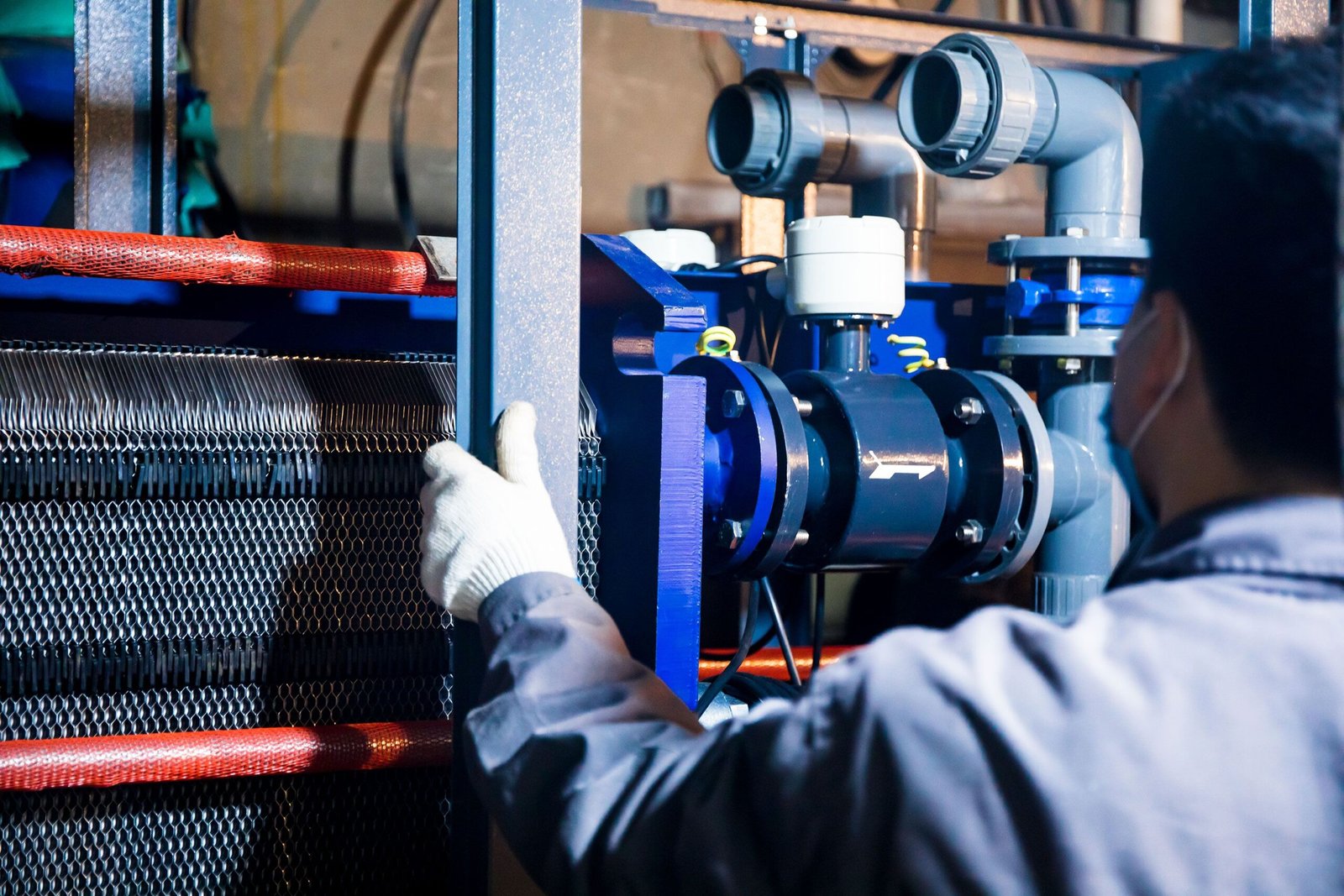 10. OEM Heat Exchanger Quality Control Checklist
Use this checklist when preparing a supplier qualification review, purchase order, or inspection and test plan.
A. Technical Specification
- Approved drawing and revision number.
- Defined product model or part number.
- Confirmed heat duty and operating conditions.
- Defined flow rates and allowable pressure drops.
- Confirmed design pressure and temperature.
- Specified materials for wetted and pressure-containing parts.
- Confirmed gasket, seal, and joining requirements.
- Defined critical dimensions and tolerances.
- Applicable standards and regulatory requirements identified.
B. Material and Manufacturing Control
- Material identification requirements agreed.
- Required material certificates defined.
- Traceability requirements established where applicable.
- Critical manufacturing processes identified.
- Applicable joining procedures and qualifications confirmed.
- In-process inspection points defined.
- First article inspection requirements established.
- Rules for material substitutions and process changes documented.
C. Testing and Final Inspection
- Dimensional inspection requirements defined.
- Visual inspection criteria agreed.
- Pressure or leakage testing requirements confirmed.
- Thermal performance testing requirements confirmed where applicable.
- Pressure-drop or flow testing requirements confirmed where applicable.
- Non-destructive examination requirements defined where applicable.
- Acceptance criteria and tolerances documented.
- Nonconformity reporting and corrective action procedures agreed.
D. Documentation and Traceability
- Required inspection reports listed.
- Required test reports listed.
- Material documentation requirements defined.
- Serial or batch identification agreed.
- Drawing revision and change-control procedures confirmed.
- Final release documentation specified.
- Required compliance documentation identified.
E. Delivery and Commercial Requirements
- Prototype or first article approval process agreed.
- Production quantity and batch size confirmed.
- Packaging requirements documented.
- Shipping method and delivery terms confirmed.
- Delivery schedule and inspection milestones agreed.
- Warranty responsibilities defined.
- After-sales and defect-resolution procedures confirmed.
Practical recommendation: Attach the agreed technical specification and applicable inspection requirements to the purchase order or contract. This creates a clearer basis for inspection, acceptance, and dispute resolution than relying on informal email statements alone.
11. How Much Does Heat Exchanger Quality Control Cost?
Heat exchanger quality control costs depend on product complexity, risk, required inspection methods, documentation, batch size, and applicable standards.
Routine dimensional checks and visual inspection generally require fewer resources than specialized material verification, extensive non-destructive examination, thermal performance testing, or independent inspection.
Main Factors Affecting Quality Control Costs
| Cost factor | Why it matters |
|---|---|
| Product complexity | More components and interfaces may require more inspection |
| Material requirements | Specialized alloys and traceability can increase verification effort |
| Pressure and temperature conditions | May affect design review, inspection, and testing requirements |
| Manufacturing processes | Some joining processes require additional controls or examinations |
| Test scope | Thermal, hydraulic, pressure, and leakage tests have different requirements |
| Documentation | Detailed quality records require preparation, review, and retention |
| Third-party inspection | Independent inspection or witnessing may add fees and scheduling requirements |
| Batch size | Inspection effort may be distributed differently across small and large batches |
| Destination and compliance | Applicable regulations or customer-specific requirements may add documentation or verification |
| Corrective action | Rework, repeat testing, and resampling can increase total project cost |
Should Buyers Pay for More Quality Control?
Buyers should pay for the level of verification needed to establish conformity and manage the risks of the application.
A lower-risk OEM component may not require the same inspection package as a pressure-containing heat exchanger used in a regulated industrial process.
However, reducing inspection without assessing the consequences of failure can create greater costs later through downtime, returns, warranty claims, or equipment damage.
A practical approach is to classify product characteristics according to their importance and define verification requirements accordingly.
Purchase Price vs. Total Cost of Ownership
A supplier’s quotation should be evaluated alongside the cost of operating and maintaining the heat exchanger.
The total cost of ownership may include:
- Initial purchase price.
- Inspection and testing.
- Installation and commissioning.
- Pumping or fan energy.
- Cleaning and maintenance.
- Replacement components.
- Production downtime.
- Warranty claims.
- Premature replacement.
Quality control cannot eliminate every failure, but appropriate verification can reduce the risk of preventable nonconformities.
For OEM buyers, the best purchasing decision is not necessarily the quotation with the lowest unit price. It is the offer that meets the technical and commercial requirements with an acceptable level of risk.
12. Frequently Asked Questions About OEM Heat Exchanger Quality Control
1. What is quality control in heat exchanger manufacturing?
Quality control in heat exchanger manufacturing verifies that the finished product meets its approved design, material, dimensional, performance, and testing requirements. It may include incoming material inspection, in-process checks, final dimensional inspection, pressure or leakage testing, thermal performance validation, and documentation review. The exact process depends on the heat exchanger type, application, applicable standards, and customer specification.
2. Which tests are required for an OEM heat exchanger?
The required tests depend on the design and intended application. Common checks include dimensional inspection, visual inspection, leakage testing, pressure testing where applicable, and thermal or pressure-drop testing when performance validation is required. The buyer and supplier should agree on test methods, acceptance criteria, reporting requirements, and any mandatory code-related inspections before production begins.
3. Does a pressure test prove that a heat exchanger is good quality?
No, a pressure test does not establish every aspect of heat exchanger quality. It evaluates pressure integrity under specified conditions, while thermal performance, material compatibility, dimensional accuracy, and hydraulic behavior require separate verification where applicable. A complete quality plan should identify the different characteristics that must be demonstrated for the intended service.
4. What is the difference between quality assurance and quality control?
Quality assurance focuses on the processes and systems used to prevent defects, while quality control focuses on checking whether the product meets specified requirements. In OEM heat exchanger production, quality assurance may include supplier qualification, process control, and document management. Quality control may include material inspection, dimensional measurement, and required testing.
5. What documents should an OEM heat exchanger supplier provide?
The required documentation depends on the purchase specification, product design, and applicable regulations. Documents may include approved drawings, material certificates, inspection reports, pressure or leakage test results, thermal performance reports, and a certificate of conformity where appropriate. Buyers should identify the required records in the quotation request or purchase order rather than assuming every document is included.
6. Why is material traceability important for heat exchangers?
Material traceability links specified materials and components to relevant records and, where applicable, to the finished product. It supports quality investigations, batch identification, and verification of material requirements. The level of traceability should reflect the design, risk, contract, and applicable code rather than being treated as identical for every component.
7. What is first article inspection in OEM heat exchanger production?
First article inspection is a detailed evaluation of an initial production item to confirm conformity with the approved design and specification. It may include dimensional measurements, material verification, assembly checks, and required functional or performance tests. It is particularly useful for new custom designs, production transfers, and significant changes to tooling or manufacturing processes.
8. How can buyers prevent inconsistent heat exchanger quality between batches?
Buyers can reduce batch-to-batch variation by controlling drawing revisions, defining critical product characteristics, verifying materials, establishing process controls, and linking production records to the approved specification. First article inspection, risk-based sampling, and documented change control can provide additional safeguards. The appropriate inspection frequency depends on the product, manufacturing process, risk, and contractual requirements.
9. Is third-party inspection necessary for OEM heat exchangers?
Third-party inspection is necessary when required by the applicable regulations, design code, contract, customer quality system, or project risk assessment. It may be unnecessary for some lower-risk applications where agreed supplier inspections provide adequate evidence. Buyers should establish the need for independent inspection and any witness or hold points before manufacturing starts.
10. What causes heat exchanger leakage during production or operation?
Leakage may result from defective joints, damaged or unsuitable gaskets, incorrect assembly, material defects, corrosion, excessive mechanical stress, or operation outside the approved design conditions. The actual cause must be established through a controlled investigation. Appropriate material selection, manufacturing controls, inspection, and specified leakage or pressure testing help reduce the risk of preventable leakage.
11. How do buyers compare heat exchanger manufacturers on quality?
Buyers should compare manufacturers based on their ability to meet the specified design, control materials and manufacturing processes, perform required inspections, provide reliable documentation, and manage changes. Relevant evidence may include process documentation, sample inspection records, test reports, traceability arrangements, and corrective-action procedures. Price alone does not establish whether two suppliers offer equivalent quality.
12. Can an international trading company manage heat exchanger quality control?
Yes, an international trading company can coordinate technical specifications, manufacturing-partner communication, inspection requirements, documentation, and export arrangements. Buyers should confirm which organization performs manufacturing, who is responsible for engineering approval, who conducts the required tests, and which company handles contractual obligations and quality claims. Clear responsibility assignments help prevent gaps between sourcing and manufacturing.
13. How should a heat exchanger quality problem be handled?
A heat exchanger quality problem should be documented, assessed against the approved specification, and investigated to determine its cause and scope. The supplier should identify affected units or batches, propose corrective action, and establish whether rework, replacement, additional inspection, or retesting is necessary. Any change to the approved design should follow the agreed engineering and change-control process.
14. How can buyers reduce quality control costs without increasing risk?
Buyers can control costs by defining requirements early, prioritizing critical characteristics, using risk-based inspection, and avoiding unnecessary tests that do not provide useful evidence. Standardizing drawings and specifications across repeat orders can also reduce duplicated work. Mandatory code inspections and tests should not be removed simply to reduce cost.
13. Working With a Heat Exchanger Export Partner on Quality Control
For international OEM buyers, quality control involves more than inspecting the finished product. It requires coordination among the buyer, engineering team, actual manufacturer, inspection personnel, and export partner.
A China-based international trading company can help organize technical requirements, communicate customization needs, coordinate inspections, review documentation, and manage export arrangements through qualified manufacturing partners.
The responsibilities of each party should be agreed before the purchase order is confirmed.
What Should Buyers Expect From an Export Partner?
A professional export partner should help clarify:
- Whether the proposed product matches the application requirements.
- Which manufacturing partner will produce the unit.
- Which technical documents are needed before production.
- Which inspection and testing requirements must be confirmed.
- How the approved drawing and material specification will be controlled.
- What quality records can be supplied.
- How nonconformities and design changes will be communicated.
- How packaging, shipment, and delivery documentation will be handled.
The export partner should not replace the engineering approval or statutory responsibilities assigned to the manufacturer, designer, or other responsible party. Instead, its role is to help coordinate requirements and maintain clear communication across the supply chain.
A Practical Approach to OEM Heat Exchanger Quality
We work closely with qualified manufacturing partners and engineering teams to provide product sourcing, technical coordination, customization, quality control, and international export support.
For a custom heat exchanger project, the process should begin with a review of the drawing, operating conditions, materials, applicable standards, and required acceptance criteria.
From there, the inspection and testing requirements can be aligned with the product design and the buyer’s quality expectations. This helps establish a clear basis for evaluating samples, approving production, and managing future orders.
14. Request an OEM Heat Exchanger Quality Review
Reliable OEM heat exchanger production depends on clear specifications, suitable materials, controlled manufacturing processes, appropriate testing, and complete documentation.
The most effective quality control process is established before manufacturing starts. By defining critical requirements and acceptance criteria early, buyers can reduce avoidable rework, clarify supplier responsibilities, and improve consistency between prototype approval and regular production.
If you are sourcing a custom heat exchanger, developing an OEM component, or evaluating a replacement supplier, prepare your technical drawing, operating conditions, material requirements, applicable standards, and inspection expectations.
Need support with an OEM heat exchanger project?
Click here to schedule a consultation or send us your technical specification. Our team can review the available requirements, coordinate with qualified manufacturing partners, and help clarify the appropriate inspection, testing, documentation, and export arrangements for your project.