For integrated steelmakers across the United States, Europe, and global markets, the blast furnace remains the dominant ironmaking route, and its hot stove system is one of the most energy-intensive operations on site. Hot stoves preheat the blast air that drives combustion inside the furnace, and blast temperature directly controls coke consumption, productivity, and hot metal quality. Yet a large share of the heat generated in modern hot stoves still escapes through the stack, and flue gas leaves the stove system at 200–400°C carrying 10–15% of the total energy input. Heat exchangers designed specifically for hot stove service recover a substantial portion of that waste heat, raising combustion air and blast furnace gas temperatures, cutting fuel demand, and reducing CO₂ emissions. This guide explains where heat exchangers fit in hot stove systems, which applications deliver the highest returns, and how to select and maintain equipment that survives the demanding conditions of steel plant operation.
How Hot Stove Systems Work and Where Heat Exchangers Fit
A hot stove is a regenerative heat exchanger in its own right. Combustion of blast furnace gas (BFG)—a low-calorific by-product gas—heats a packed bed of ceramic checkers to 1,200–1,400°C. During the subsequent blast period, cold air is blown through the hot checkers, absorbing stored heat and leaving the stove at 1,100–1,300°C before entering the blast furnace tuyeres. Multiple stoves alternate between heating (on-gas) and blowing (on-blast) to supply continuous hot blast.
The thermodynamic constraint is that BFG has a low heating value (roughly 3.0–3.5 MJ/Nm³, typically 15–20% of natural gas), so achieving high blast temperatures requires a high combustion air temperature. Without preheating, combustion air enters at ambient temperature, limiting the theoretical flame temperature and forcing operators to compensate with additional BFG or enriched fuel. This is where dedicated gas-to-gas heat exchangers enter the system: they recover heat from hot stove flue gas to preheat the combustion air, the BFG, or both, before those streams enter the stove burner. Every 100°C increase in combustion air temperature raises the achievable blast temperature by roughly 30–50°C, and every 100°C of blast temperature improvement reduces the coke rate by approximately 10–20 kg per tonne of hot metal.
Core Heat Exchanger Applications in Hot Stove Systems
1. Flue Gas Waste Heat Recovery for Combustion Air Preheating
The most common and highest-ROI application is recovering heat from hot stove flue gas to preheat combustion air. A recuperative heat exchanger is installed on the flue gas stream after the stove, transferring heat to cold combustion air before it reaches the burner.
- Typical operating range: flue gas at 200–400°C entering the exchanger, cooled to 120–160°C at the outlet; combustion air preheated from ambient to 180–300°C
- Typical performance gains: 8–15% reduction in BFG consumption for the stove system, with corresponding CO₂ reductions of 40,000–80,000 tonnes per year for a large integrated works
- Ideal configuration: two-stage systems, where a first stage recovers high-grade heat and a second stage recovers lower-grade heat, maximize total recovery without risking acid dew point corrosion
2. Blast Furnace Gas (BFG) Preheating
Preheating BFG before combustion raises the flame temperature without consuming additional fuel and is particularly valuable for stoves firing lean BFG. Because BFG contains dust and tars, the heat exchanger must be sized and cleaned accordingly.
- Typical operating range: BFG preheated from ambient to 150–200°C
- Performance gains: combined with air preheating, BFG preheat contributes to achieving 1,200–1,300°C blast temperatures using a lower total gas volume, improving stove efficiency by 5–10%
- Key design requirement: dust-tolerant flow paths and access for periodic cleaning, since BFG carries residual particulate matter from the gas cleaning plant
3. Combined Air and Gas Preheat Systems
The highest-performing hot stove installations preheat both combustion air and BFG in an integrated waste heat recovery train. Flue gas first passes through the air preheater, then through the gas preheater, extracting heat at progressively lower temperature levels.
- Typical configuration: series arrangement with flue gas flowing from the air preheater to the gas preheater, achieving flue gas outlet temperatures of 100–130°C
- Performance gains: total fuel savings of 12–18% versus an un-preheated system, allowing blast temperatures above 1,250°C on BFG-only firing in many installations
- Best suited to: large blast furnaces (2,000–5,500 m³) with continuous, high-volume operation where the capital cost is repaid in 2–4 years
4. Waste Heat Recovery for Boiler Feedwater or Plant Heating
Where flue gas heat remains after the air and gas preheaters, a final stage can preheat boiler feedwater, heat plant buildings, or supply district heating. This cascading approach maximizes total system efficiency and monetizes low-grade heat that would otherwise be lost.
Heat Exchanger Technologies for Hot Stove Service
Not all heat exchanger designs are suitable for hot stove flue gas and BFG duty. The correct technology choice depends on gas composition, dust loading, temperature range, and maintenance strategy.
Shell-and-Tube Heat Exchangers
- Mature, robust design with proven long service life in steel plant applications
- Suitable for clean to moderately dusty streams; tube banks can be designed with removable bundles for cleaning
- Best for: BFG preheating and high-pressure air preheating where reliability is the priority
Heat Pipe Heat Exchangers
- Compact, highly effective for gas-to-gas heat recovery with no moving parts and no cross-contamination between streams
- Excellent performance at the 150–400°C flue gas range typical of hot stove stacks
- Individual heat pipes can be replaced without shutting down the entire exchanger
- Best for: combustion air preheating where space is limited and modular maintenance is valued
Plate-Type (Plate Fin) Heat Exchangers
- Highest heat transfer surface density and lowest footprint of the gas-to-gas options
- Requires cleaner gas streams and tighter fouling control; less tolerant of dust and condensate
- Best for: clean combustion air preheating in modern installations with upstream dust control
Tubular Recuperators with Special Materials
- Used where corrosion or erosion demands upgraded metallurgy, such as acid-resistant alloy or glass-lined tubes in the cold-end section
- Best for: installations operating near or below the acid dew point, where conventional carbon steel would fail rapidly

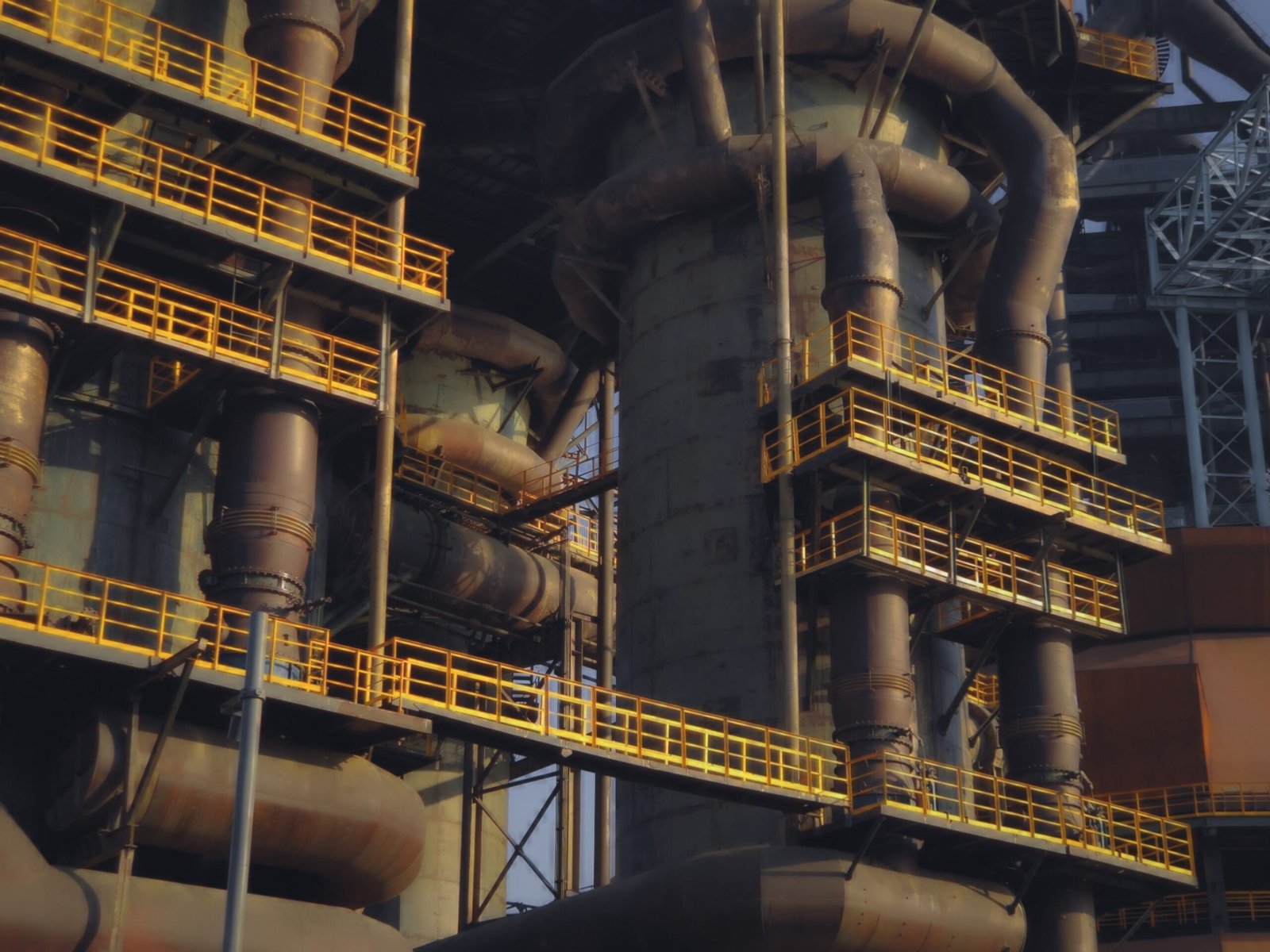
The Biggest Reliability Threat: Acid Dew Point Corrosion
The single most common cause of premature heat exchanger failure in hot stove waste heat recovery is acid dew point corrosion. Flue gas from BFG combustion contains sulfur compounds that form sulfuric acid when flue gas cools below roughly 120–150°C (the acid dew point). Condensed acid aggressively attacks carbon steel tubes, causing pitting, thinning, and rapid leakage.
Practical countermeasures:
- Design the final exchanger stage so the flue gas outlet temperature stays 15–25°C above the calculated acid dew point for the specific fuel mix
- Specify corrosion-resistant materials for the cold-end section—Corten (weathering steel), stainless grades, or glass-lined tubes—where tube wall temperatures fall into the condensation risk zone
- Use bypass control to maintain tube wall temperatures above the dew point during low-load and startup operation
- Monitor dew point continuously with online analyzers and trim operation to avoid condensation events
Equally important is erosion management: flue gas and BFG carry abrasive dust particles that erode tube surfaces, particularly at inlets and bends. Designers should allow conservative gas velocities (typically below 12–15 m/s for dusty streams), install wear protection at impingement points, and provide access for routine internal inspection and cleaning.
Design and Selection Criteria for Hot Stove Heat Exchangers
Selecting the right heat exchanger starts with accurate process data and ends with a lifecycle cost comparison. Key parameters to define before engaging suppliers:
- Flue gas composition, temperature range, and dust loading across all operating modes, including startup and stove changeover
- BFG composition, moisture content, and particulate level, which vary with the gas cleaning plant performance
- Required air and gas preheat temperatures, matched to the stove’s target blast temperature
- Available pressure drop on both gas streams, since stove changeover and fan capacity limit what can be added
- Space and layout constraints around the stove area, which is typically congested with piping, valves, and ductwork
- Maintenance philosophy: whether the plant can support modular heat pipe replacement, bundle pull, or requires in-situ cleaning capability
Then evaluate total cost of ownership—not just purchase price. Include the energy savings delivered, expected service life, inspection and cleaning labor, spare part cost, and the production impact of any unplanned outage. For most integrated plants, a well-designed waste heat recovery system pays back in 2–4 years and continues generating savings for 15–20 years of service.
Operation and Maintenance Best Practices
Reliability of hot stove heat exchangers depends on disciplined operation and maintenance:
- Implement a scheduled cleaning program based on measured pressure drop across the exchanger; rising differential pressure signals dust accumulation on tube surfaces
- Perform annual internal inspections, checking for erosion thinning at inlets, acid corrosion at the cold end, and weld integrity
- Keep a stock of spare heat pipes or spare tubes for the cold-end section, where most failures concentrate
- Monitor flue gas outlet temperature continuously and alarm on deviations that indicate fouling or bypass valve malfunction
- During extended stove shutdowns, drain condensate and protect internal surfaces against stagnant moisture corrosion
Quantifiable Benefits of Hot Stove Heat Recovery
Installing heat exchangers for hot stove waste heat recovery delivers measurable results that directly improve steelmaking economics:
- BFG consumption reduced by 8–18% for the stove system, freeing gas for other plant uses or reducing purchased fuel
- Coke rate reduced by 10–30 kg per tonne of hot metal through higher blast temperature, cutting the single largest cost input in ironmaking
- CO₂ emissions reduced by 40,000–80,000 tonnes per year for large installations, supporting EU ETS and other carbon compliance obligations
- Stove capacity utilization improved, allowing higher blast rates and increased furnace productivity
- Stable high blast temperatures above 1,200°C achieved on low-calorific BFG without enriched fuel, lowering operating cost and fuel dependence
Conclusion
Heat exchangers are not auxiliary accessories to blast furnace hot stoves—they are the equipment that determines how efficiently the entire stove system converts low-grade blast furnace gas into high-temperature blast. Waste heat recovery from flue gas to preheat combustion air and BFG is one of the highest-return energy efficiency projects available to an integrated steel plant, cutting fuel consumption, lowering coke rates, and reducing CO₂ emissions with proven, mature technology.
The key to success is treating hot stove heat exchangers as a dedicated engineering discipline: matching technology to gas conditions, protecting against acid dew point corrosion and erosion, sizing for real operating modes rather than design-point averages, and maintaining the equipment as a critical production asset. For steelmakers evaluating efficiency upgrades or planning new hot stove systems, a waste heat recovery study that models gas conditions, energy savings, and lifecycle costs is the essential first step to capturing the full value of the investment.