Choosing the right heat exchanger service provider can directly affect equipment reliability, maintenance costs, production uptime, and long-term operating performance. For industrial facilities, HVAC contractors, OEMs, and system integrators, the challenge is finding a service partner who understands the equipment, the process conditions, and the consequences of an incorrect repair or maintenance procedure.
Not every provider offers the same capabilities. Some specialize in cleaning and routine maintenance, while others focus on pressure-boundary inspections, leak diagnosis, component replacement, performance troubleshooting, or complete equipment replacement. A company experienced with gasketed plate heat exchangers may not have the same expertise in shell-and-tube equipment, brazed plate units, or liquid-cooling systems.
International buyers face additional considerations. A local service company may be best positioned to perform on-site work, while an overseas supplier or export partner may be better suited to sourcing replacement equipment, coordinating with the original manufacturer, and supplying compatible spare parts.
This guide explains how to evaluate a heat exchanger service provider, compare technical capabilities, assess quotations, avoid common mistakes, and determine when maintenance, repair, or replacement is the most practical option.
Quick Answer: How Do You Choose the Right Heat Exchanger Service Provider?
Choose a heat exchanger service provider based on its experience with your specific equipment type, ability to diagnose the actual problem, understanding of operating conditions, use of approved maintenance procedures, quality of documentation, spare-parts support, safety practices, and clearly defined commercial terms.
Before making a decision:
- Identify the heat exchanger type, model, and reported problem.
- Confirm that the provider has relevant experience with the equipment.
- Ask how it will diagnose the issue before recommending a repair.
- Verify that proposed cleaning methods and replacement parts are compatible with the unit.
- Request a written scope of work, quotation, and expected completion schedule.
- Clarify inspection, testing, warranty, and documentation requirements.
- Compare repair costs with replacement costs and potential downtime.
- Confirm who is responsible for on-site work, technical decisions, and follow-up support.
The best provider is not necessarily the cheapest or the largest. It is the one whose verified capabilities match the technical problem, safety requirements, and commercial needs of your application.
1. Identify the Service Your Heat Exchanger Actually Needs
Before contacting a service provider, determine whether you need routine maintenance, performance troubleshooting, cleaning, repair, spare parts, or complete replacement. These services require different technical capabilities, tools, procedures, and commercial arrangements.
A supplier who sells heat exchangers may coordinate replacement equipment and components without performing on-site maintenance. Conversely, a local service contractor may be equipped to clean or repair an installed unit but may not supply a suitable replacement for a specialized application.
Understanding the required service helps you approach the right provider and avoid paying for unnecessary work.
What services do heat exchanger providers offer?
| Service type | Typical purpose | What the provider should clarify |
|---|---|---|
| Preventive maintenance | Reduce the likelihood of unexpected failures | Inspection scope, recommended intervals, and maintenance records |
| Performance troubleshooting | Investigate reduced heat transfer or abnormal pressure drop | Diagnostic process, required operating data, and possible causes |
| Chemical cleaning | Remove deposits using a compatible cleaning solution | Deposit identification, chemical compatibility, procedure, and disposal requirements |
| Mechanical cleaning | Remove deposits using approved mechanical methods | Equipment suitability, risk of surface damage, and cleaning limitations |
| Gasket replacement | Restore sealing in a serviceable gasketed plate exchanger | Gasket material, model compatibility, plate-pack assembly, and testing |
| Plate or tube inspection | Assess fouling, corrosion, erosion, or physical damage | Inspection method, acceptance criteria, and documentation |
| Leak diagnosis and repair | Investigate leakage or suspected internal cross-contamination | Safe isolation, failure analysis, repair limitations, and verification |
| Spare-parts supply | Replace defective or worn components | Exact part identification, material compatibility, and lead time |
| Complete unit replacement | Replace equipment that is uneconomical or unsuitable to repair | Technical selection, connections, installation requirements, and lifecycle cost |
| Technical consultation | Review specifications or operating problems | Information required, deliverables, and the scope of engineering support |
The service provider should define what is included and excluded. For example, a cleaning quotation may not include gasket replacement, internal inspection, pressure testing, reassembly, or recommissioning unless these items are expressly listed.
Problem: The heat exchanger is underperforming, but the cause is unknown
Why it happens: Reduced heat transfer may result from fouling, incorrect flow, air trapped in the system, a control-valve problem, a faulty sensor, changed process conditions, or a genuine exchanger defect.
How to solve it: Ask the provider to explain its diagnostic approach before recommending cleaning or replacement. The investigation should compare operating data with the commissioning baseline or an appropriate performance reference under comparable conditions.
What to provide to the provider:
- Heat exchanger type and model.
- Process fluids and operating temperatures.
- Flow rates and pressure readings.
- Original design duty, if available.
- Description of the performance change.
- Recent maintenance and process changes.
Example: A chilled-water system delivers warmer-than-expected outlet water. Before concluding that the plate heat exchanger requires cleaning, the service provider should consider flow restrictions, valve positions, pump performance, sensor accuracy, fluid conditions, and actual cooling demand.
A structured diagnosis can prevent unnecessary disassembly and help identify the real source of the problem.
2. Evaluate the Provider’s Technical Expertise
A qualified heat exchanger service provider should understand the equipment’s construction, operating limits, materials, common failure mechanisms, and maintenance requirements. General industrial maintenance experience is useful, but it does not automatically demonstrate competence with every heat exchanger design.
Ask for evidence of relevant experience with the equipment type, application, and service you require. This may include appropriately anonymized service reports, example maintenance procedures, technician qualifications where relevant, or documented experience with comparable equipment.
What technical capabilities should you verify?
Understanding of heat exchanger design
The provider should be familiar with the relevant construction and operating principles.
For example:
- Gasketed plate heat exchangers: Plate-pack assembly, gasket compatibility, tightening dimensions, flow arrangement, and plate condition.
- Brazed plate heat exchangers: Internal passage design, brazed-joint integrity, approved cleaning methods, and repair limitations.
- Shell-and-tube heat exchangers: Tube bundles, tubesheets, baffles, tube-side and shell-side flow, and pressure-boundary considerations.
- Air-cooled heat exchangers: Fins, airflow, fans, motors, vibration, and environmental exposure.
- Liquid-cooling heat exchangers: Coolant compatibility, flow requirements, internal cleanliness, air ingress, and leak detection.
Understanding of operating conditions
A provider should ask about the actual process conditions before recommending a procedure.
Important factors include:
- Operating and design pressure.
- Inlet and outlet temperatures.
- Flow rates and allowable pressure drop.
- Fluid composition and concentration.
- Suspended solids and fouling tendency.
- Corrosion and erosion risks.
- Thermal cycling and pressure fluctuations.
- Applicable safety and inspection requirements.
A cleaning method suitable for a water circuit may be unsuitable for a circuit containing aggressive chemicals, specialty coolant, or sensitive materials.
Ability to distinguish symptoms from causes
A useful provider investigates the failure mechanism rather than treating every problem in the same way.
For example, increased pressure drop may indicate fouling or blockage, but it can also result from a partially closed valve, clogged upstream strainer, altered fluid viscosity, or measurement error.
Likewise, leakage may originate from a gasket, connection, tube, brazed joint, weld, or another component. The repair approach should depend on the identified cause and equipment design.
Questions to ask before hiring a provider
- Have you worked with this type and model of heat exchanger?
- How will you determine the cause of the reported problem?
- Which operating records and inspection data do you need?
- Will you follow the original manufacturer’s maintenance procedures?
- How do you verify the compatibility of cleaning chemicals and replacement parts?
- What inspection or testing is included in the proposed service?
- What documentation will be provided after the work?
- Which tasks require specialist contractors or manufacturer involvement?
A credible provider should be able to explain its approach and acknowledge when further inspection or manufacturer consultation is necessary.
 3. Check Whether the Provider Can Handle Your Heat Exchanger Type
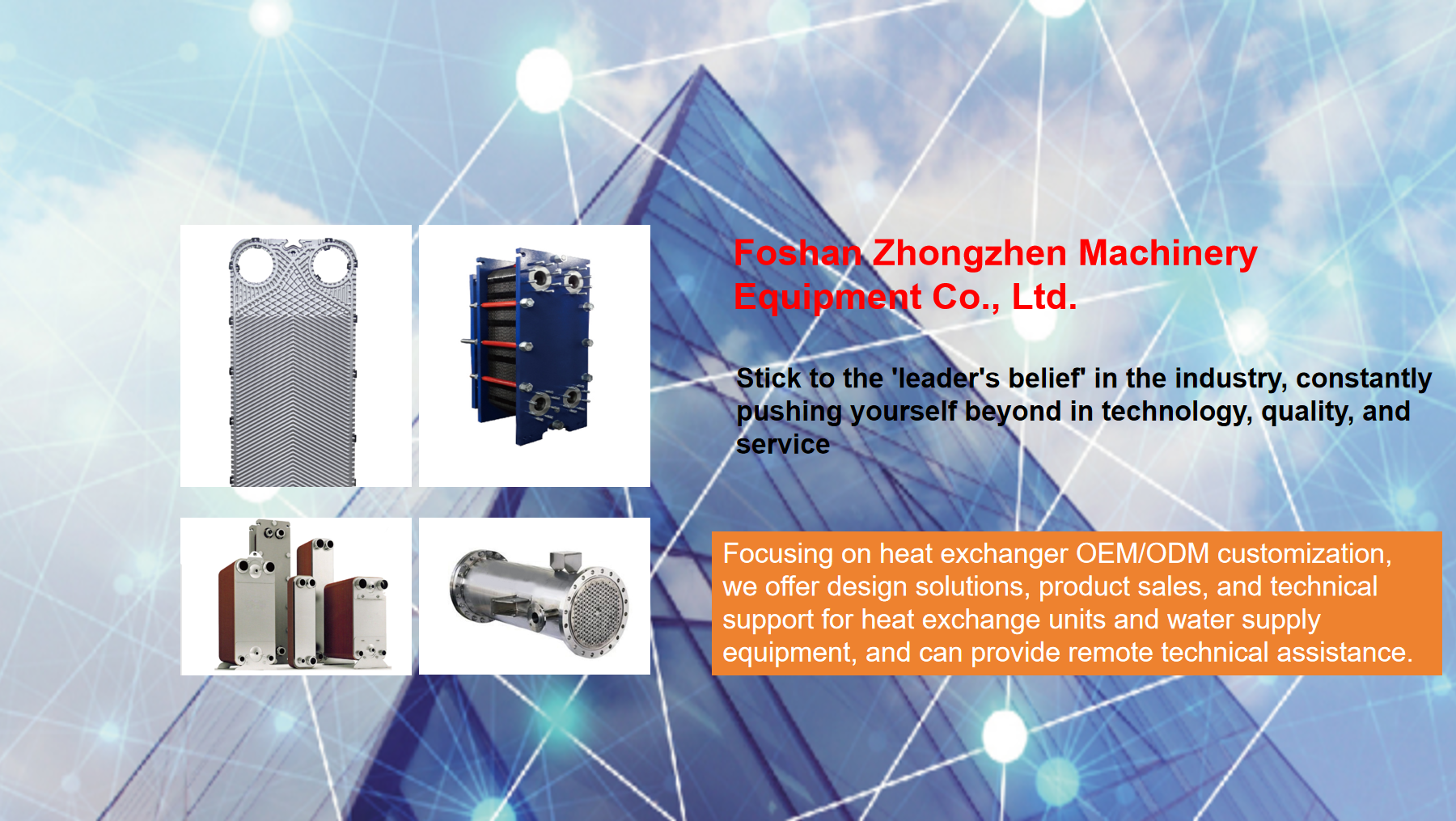 3. Check Whether the Provider Can Handle Your Heat Exchanger Type
Different heat exchangers have different service requirements. A provider’s capabilities should match the equipment being maintained, repaired, or replaced.
Gasketed plate heat exchanger service
Gasketed plate heat exchangers are commonly used in HVAC, district energy, food processing, industrial cooling, and other applications.
Typical service requirements include:
- Checking external leakage.
- Inspecting gasket condition.
- Assessing plate fouling and visible damage.
- Verifying plate-pack assembly dimensions.
- Replacing compatible gaskets or plates.
- Following approved cleaning and reassembly procedures.
Ask whether the provider can identify the correct gasket and plate specifications for the exact model. Components that look similar may differ in material, geometry, thickness, or compatibility.
Disassembly and reassembly should follow the manufacturer’s instructions. Equipment must be safely isolated, depressurized, and brought to a suitable temperature before opening.
Brazed plate heat exchanger service
Brazed plate heat exchangers are compact units in which plates are joined through brazing. Many models are not designed to be opened for mechanical cleaning or routine internal repair.
A suitable provider should understand the manufacturer’s approved flushing or chemical cleaning procedures and the limits of field repair.
Ask:
- Is the proposed cleaning method approved for this model?
- Are the cleaning chemicals compatible with the plates and brazing material?
- Can the reported failure be diagnosed without damaging the unit?
- Is replacement more practical than repair if internal leakage is confirmed?
Do not assume that procedures used on gasketed plate exchangers are suitable for brazed units.
Shell-and-tube heat exchanger service
Shell-and-tube equipment is used across power generation, chemical processing, oil and gas, manufacturing, refrigeration, and other industrial applications.
Relevant service work may include:
- Tube-side or shell-side cleaning.
- Tube and tubesheet inspection.
- Examination of baffles and support components.
- Investigation of tube leakage.
- Assessment of corrosion, erosion, and vibration.
- Inspection of gaskets, connections, and pressure-retaining components.
Some work may require specialized equipment, nondestructive examination, pressure-boundary expertise, or regulatory inspection.
Verify that the provider can perform the required scope safely and has access to appropriately qualified personnel. Do not assume that a general cleaning contractor is qualified to assess or repair every pressure-retaining component.
Air-cooled heat exchanger service
Air-cooled heat exchangers depend on effective airflow across finned heat transfer surfaces.
Typical service requirements include:
- Cleaning fins and air passages.
- Checking fan and motor condition.
- Inspecting vibration and mechanical supports.
- Checking for airflow obstruction or hot-air recirculation.
- Assessing corrosion and environmental damage.
- Inspecting electrical and control components where included in the service scope.
Fin cleaning requires care because aggressive methods can bend fins or damage the heat transfer surface.
Liquid-cooling heat exchanger service
Liquid-cooling systems may be used in industrial machinery, electronics, battery systems, and other temperature-sensitive applications.
The provider should understand the specified coolant, flow requirements, filtration, air-removal requirements, and material compatibility.
Depending on the application, the service scope may include coolant sampling, flushing, leak detection, flow verification, and inspection of associated pumps, valves, or sensors.
Where coolant chemistry or electrical conductivity is important, follow the system manufacturer’s specifications rather than assuming that all water-glycol mixtures or specialty coolants are interchangeable.
Comparison: Which provider is suitable for each service?
| Requirement | Provider capability to prioritize | Important verification |
|---|---|---|
| Gasketed plate exchanger cleaning | Plate-pack cleaning and reassembly experience | Approved procedure, gasket compatibility, and assembly dimensions |
| Brazed plate exchanger troubleshooting | Knowledge of brazed construction and approved cleaning methods | Repair limitations and replacement options |
| Shell-and-tube inspection | Tube-bundle and pressure-boundary inspection expertise | Inspection methods, qualifications, and applicable requirements |
| Air-cooled exchanger maintenance | Fin, fan, motor, and airflow maintenance capability | Cleaning method and mechanical safety procedures |
| Liquid-cooling system service | Coolant chemistry and system-flow understanding | Fluid compatibility and application-specific requirements |
| Replacement equipment sourcing | Technical selection and manufacturer coordination | Datasheet, operating limits, connection compatibility, and documentation |
| International spare-parts supply | Accurate part identification and export coordination | Model, serial number, material, lead time, and shipping responsibilities |
A provider does not need to offer every service. It needs to be competent in the specific work required and transparent about the work it cannot perform.
4. Compare Diagnostic Methods, Quality Control, and Safety Procedures
A professional service provider should explain how it will verify the problem, perform the work, and determine whether the heat exchanger can safely return to operation.
A quotation that simply states “clean exchanger” or “repair leak” may not provide enough detail to assess technical quality or compare suppliers.
What should a service procedure include?
The appropriate procedure depends on the heat exchanger type and the scope of work, but buyers should look for the following elements where relevant.
1. Initial assessment
The provider should review the reported symptoms, equipment specifications, operating history, and available inspection data.
2. Safe isolation
Before opening or working on the equipment, the responsible team must follow the site’s approved isolation procedures. Depending on the application, this may include depressurization, draining, cooling, electrical isolation, and management of hazardous fluids.
3. Inspection and diagnosis
The provider should identify the intended inspection method and the conditions under which additional work may be necessary.
4. Approved cleaning or repair
Cleaning chemicals, mechanical tools, replacement components, and repair methods must be compatible with the equipment design and materials.
5. Verification
The work scope should specify the checks required after cleaning or repair. These may include visual inspection, dimensional checks, leak checks, approved pressure testing, flow verification, or performance measurements, as appropriate.
6. Documentation
The provider should record the work performed, replaced components, findings, deviations, and any recommended follow-up actions.
What quality-control questions should buyers ask?
| Question | Why it matters |
|---|---|
| What inspection method will be used? | Helps determine whether the procedure is appropriate for the suspected failure |
| What acceptance criteria apply? | Defines how the provider will determine whether the work is satisfactory |
| Are replacement parts specified by model and material? | Reduces compatibility and installation risks |
| Are cleaning chemicals documented? | Helps establish material compatibility and safe handling |
| Is testing included in the quotation? | Prevents disputes over additional charges |
| Who is responsible for pressure-boundary work? | Clarifies safety, qualification, and regulatory responsibilities |
| Will a service report be provided? | Creates a record for future maintenance and warranty assessment |
| What happens if the initial repair does not resolve the problem? | Clarifies additional diagnostic work, costs, and responsibility |
Why safety procedures matter
Heat exchangers may contain hot fluids, high-pressure media, corrosive chemicals, refrigerants, or other hazardous substances. Improper opening, cleaning, or testing can create serious risks.
The provider should follow the manufacturer’s instructions, site safety procedures, and applicable laws and standards.
Do not authorize improvised pressure testing, uncontrolled chemical cleaning, or repairs to pressure-retaining components without the appropriate technical review and qualified personnel.
For regulated equipment, confirm whether inspections or repairs must be carried out by specifically authorized or qualified organizations under the applicable jurisdiction.
5. Evaluate Cost, Response Time, and Total Cost of Ownership
The lowest quotation does not always represent the lowest overall cost. Buyers should compare the scope of work, expected downtime, spare-parts requirements, testing, documentation, and potential follow-up costs.
A useful comparison separates the immediate service price from the wider cost of keeping the equipment reliable.
What affects heat exchanger service costs?
| Cost factor | How it affects the quotation |
|---|---|
| Heat exchanger type and size | Determines access, disassembly requirements, handling, and work complexity |
| Nature of the problem | Routine cleaning differs from internal leak diagnosis or pressure-boundary repair |
| Fouling or contamination | Deposit type and severity influence cleaning time and method |
| Material compatibility | May restrict available cleaning chemicals or repair procedures |
| Replacement parts | Plates, gaskets, tubes, and auxiliary components vary by specification |
| Inspection and testing | Additional diagnostic or verification work may require specialized methods |
| Site access | Lifting, confined access, isolation, and removal requirements can increase labor |
| Downtime constraints | Urgent work, temporary equipment, or accelerated logistics may add cost |
| Travel and labor | Depends on location, service scope, and personnel requirements |
| International logistics | Freight, packaging, insurance, customs, and delivery affect overseas replacement costs |
| Documentation | Inspection reports, material records, and other agreed deliverables may affect the price |
Request an itemized quotation where practical. It should distinguish included work from optional services and identify assumptions that could change the final price.
How should buyers compare service quotations?
Use the same scope when requesting quotations from multiple providers.
| Comparison factor | Provider A | Provider B | Provider C |
|---|---|---|---|
| Relevant equipment experience | Confirm | Confirm | Confirm |
| Diagnostic method | Review | Review | Review |
| Cleaning or repair procedure | Review | Review | Review |
| Parts and materials included | Review | Review | Review |
| Inspection and testing | Review | Review | Review |
| Service report | Confirm | Confirm | Confirm |
| Estimated completion time | Compare | Compare | Compare |
| Exclusions and additional charges | Review | Review | Review |
| Warranty on service or parts | Review | Review | Review |
| Follow-up support | Confirm | Confirm | Confirm |
| Total quoted cost | Compare | Compare | Compare |
Do not compare a quotation that includes disassembly, cleaning, replacement gaskets, testing, and reassembly with another that covers only basic flushing.
Consider the cost of downtime
For production-critical equipment, the financial impact of downtime may be more significant than the service invoice.
Total service-related cost can be assessed as:
Total service cost = Service charges + Parts + Logistics + Installation and recommissioning + Downtime-related costs + Follow-up maintenance
Use actual operating data to estimate production losses. The calculation should account for the duration of the shutdown, the affected production capacity, available backup equipment, and the cost of alternative operating arrangements.
For example, a food-processing facility may find that an apparently inexpensive repair is not the best option if replacement parts have a long lead time and the equipment is essential to production. A technically suitable replacement available within the required project schedule may be more economical overall.
However, replacement is not automatically the better choice. The decision should account for the actual condition of the existing exchanger, repair feasibility, expected remaining service life, and lifecycle costs.
6. Decide Between Maintenance, Repair, and Replacement
A good heat exchanger service provider should explain the available options and the reasons for its recommendation. Buyers should be cautious when a provider recommends replacing equipment without identifying the problem or proposes repeated repairs without addressing recurring failures.
When is maintenance the right choice?
Routine maintenance or cleaning may be appropriate when:
- Performance decline is consistent with removable fouling.
- Inspection does not identify unacceptable damage.
- The equipment remains suitable for the required operating conditions.
- The recommended cleaning method is compatible with the materials.
- Maintenance costs are reasonable relative to the expected benefit.
Cleaning should not be used as a substitute for investigating corrosion, cracking, leakage, or other structural concerns.
When should repair be considered?
Repair may be appropriate when a defect can be safely and effectively corrected using an approved procedure.
Relevant considerations include:
- The location and cause of the damage.
- Equipment design and repairability.
- Availability of compatible spare parts.
- Applicable pressure-equipment requirements.
- The cost and duration of repair.
- The expected reliability after the repair.
- Any effect on the existing warranty.
Repairs to pressure-retaining components may require specialized engineering assessment, inspection, and approval. The service provider should explain these requirements before work begins.
When is replacement more practical?
Replacement may be appropriate when the existing exchanger has extensive damage, is unsuitable for the current process, cannot be repaired economically, or repeatedly fails despite appropriate maintenance.
A replacement unit may also be necessary if the process has changed significantly and the existing equipment no longer provides the required thermal duty or operating flexibility.
The decision should compare the expected cost and performance of repair with those of replacement, including installation, downtime, energy consumption, maintenance, spare parts, and remaining service life.
Repair vs. replacement decision table
| Decision factor | Maintenance or repair may be appropriate when | Replacement may be appropriate when |
|---|---|---|
| Equipment condition | Damage is limited and the unit remains structurally acceptable | Damage is extensive or the unit is no longer suitable for safe operation |
| Performance | Fouling or a correctable component issue explains the problem | Required duty cannot be achieved economically |
| Parts availability | Compatible parts are available within an acceptable time | Critical parts are unavailable or obsolete |
| Repair cost | Repair is economical relative to expected remaining service life | Repair cost and risk approach or exceed replacement value |
| Downtime | Repair can be completed within the operating schedule | Replacement provides a more practical recovery path |
| Operating requirements | Existing design still matches the process | Process changes require a different capacity or design |
| Reliability | The cause can be identified and corrected | Failures recur or major deterioration is present |
No single factor should determine the decision. The recommendation should be supported by technical findings and a transparent cost comparison.
7. Choose Between a Local Service Company, Manufacturer, and International Export Partner
The most suitable service arrangement depends on whether the work must be performed on-site, whether specialized manufacturer knowledge is required, and whether replacement equipment or parts need to be sourced internationally.
These business models are not interchangeable, and some projects benefit from cooperation between more than one provider.
Local heat exchanger service company
A local service company may be suitable when the equipment requires site inspection, cleaning, disassembly, installation, or other physical work.
Potential advantages include easier site access, familiarity with local requirements, and the ability to coordinate with the plant’s maintenance team.
Before hiring one, verify its experience with the equipment, work scope, safety procedures, and ability to provide the required inspection records.
Original equipment manufacturer or authorized service organization
The original equipment manufacturer may be best placed to clarify design-specific maintenance procedures, component compatibility, approved repair methods, and product limitations.
An authorized service organization may provide similar support within its defined scope, but buyers should verify the authorization and its applicability to the equipment and location.
Manufacturer involvement may be particularly valuable for specialized designs, proprietary components, unresolved technical issues, or warranty-sensitive work.
International heat exchanger supplier or export partner
An international supplier or trading/export company may be useful when the buyer needs replacement equipment, spare parts, customization coordination, technical documentation, or international shipping.
A trading company does not necessarily perform on-site service or manufacture the equipment directly. Its role may be to coordinate the buyer’s requirements with qualified manufacturing partners and engineering teams.
A suitable export partner should help clarify:
- The actual manufacturer and product model.
- Technical specifications and material requirements.
- Availability and identification of compatible spare parts.
- Agreed inspection and quality-control arrangements.
- Product documentation and export requirements.
- Packaging, freight, and delivery arrangements.
- The warranty provider and claim-handling process.
- The division of responsibility between the exporter, manufacturer, installer, and local service provider.
Which option should you choose?
| Requirement | Provider type to consider first | Important qualification |
|---|---|---|
| On-site inspection and cleaning | Local service company | Confirm equipment-specific experience and safe working procedures |
| Specialized design or repair questions | Original manufacturer or qualified specialist | Verify technical scope and availability |
| Replacement gaskets, plates, or tubes | Manufacturer, authorized supplier, or qualified parts supplier | Confirm exact model and material compatibility |
| Complete replacement unit | Manufacturer or international sourcing/export partner | Confirm design suitability, documentation, and delivery requirements |
| Customized or OEM heat exchanger | Supplier coordinating with qualified manufacturing and engineering partners | Define technical approval, inspection, and contractual responsibilities |
| International spare-parts shipment | Export partner or supplier with suitable logistics arrangements | Confirm part identification, lead time, and shipping terms |
| Warranty-sensitive failure | Warranty provider, with appropriate technical support | Follow the claim procedure before unauthorized repair or return |
For some applications, the most effective arrangement is a local service contractor for physical work and an international supplier or manufacturer for technical clarification and replacement components.
8. How to Prepare Before Contacting a Heat Exchanger Service Provider
A well-prepared service request helps the provider assess the problem, identify the right personnel, estimate costs, and avoid delays caused by missing information.
You do not need to know the exact failure mechanism before making contact. However, the more reliable the equipment and operating information, the easier it is to develop an appropriate service plan.
Heat exchanger service request checklist
Equipment information
Heat exchanger type.
Manufacturer and model, if known.
Serial number or equipment identification.
Nameplate photograph.
Datasheet or equipment drawing.
Approximate installation date.
Available operating and maintenance manuals.
Operating information
Application and industrial process.
Fluid on each side.
Fluid concentration or composition.
Inlet and outlet temperatures.
Flow rates.
Operating pressure and available pressure-drop readings.
Original design duty, if available.
Recent process changes or abnormal operating events.
Problem description
Reduced heat transfer.
Abnormal pressure drop.
External leakage.
Suspected internal leakage or cross-contamination.
Corrosion, erosion, or visible damage.
Unusual noise or vibration.
Repeated fouling or blockage.
Other symptoms and the date they began.
Maintenance history
Previous cleaning methods.
Cleaning chemicals used.
Gasket, plate, tube, or other component replacements.
Previous repairs and inspection findings.
Fluid-treatment and filtration records.
Recent alarms or shutdowns.
Commercial and logistical requirements
Site location and access conditions.
Required service completion date.
Acceptable downtime.
Availability of backup equipment.
Required inspection and testing documentation.
Budget constraints, if available.
Spare-parts or replacement-unit requirements.
Warranty requirements.
Destination country for internationally sourced parts or equipment.
If the exact model is unknown, clear photographs of the nameplate, connections, and overall unit may help the supplier identify the equipment. Identification should be confirmed before ordering critical replacement components.
Frequently Asked Questions About Heat Exchanger Service Providers
1. What does a heat exchanger service provider do?
A heat exchanger service provider may offer inspection, cleaning, troubleshooting, repair, spare-parts replacement, performance assessment, or complete equipment replacement. The exact scope depends on the provider’s capabilities. Before hiring one, confirm which services are performed directly, which require subcontractors, and which need manufacturer involvement.
2. How do I know if a heat exchanger service provider is qualified?
Check relevant experience with your equipment type, technical diagnostic methods, maintenance procedures, safety practices, and ability to document completed work. For specialized inspections or pressure-boundary repairs, verify the qualifications and approvals required for the specific equipment and jurisdiction. Do not rely solely on general industrial maintenance experience.
3. How much does heat exchanger servicing cost?
Service costs depend on equipment type, size, condition, cleaning requirements, replacement parts, labor, testing, site access, and downtime constraints. Request a written quotation that separates included work from optional services. Compare the complete scope rather than choosing based only on the lowest initial price.
4. How often should a heat exchanger be serviced?
Service frequency depends on the equipment design, process fluid, fouling tendency, corrosion risk, operating conditions, and manufacturer’s recommendations. Some applications require routine scheduled inspections, while others benefit from condition-based monitoring. Follow applicable legal inspection requirements and adjust maintenance plans using operating trends and documented findings.
5. Can any service provider clean a plate heat exchanger?
No. The provider should understand the specific plate design, gasket materials, deposits, and approved cleaning methods. Gasketed plate units may be opened when the design permits, while brazed plate units usually require different cleaning approaches. Ask how the proposed procedure protects the plates, gaskets, brazed joints, and other wetted components.
6. Should I use the original manufacturer for heat exchanger repairs?
The original manufacturer is often a useful source for model-specific procedures, component identification, and repair limitations. However, a qualified independent service company may be suitable for certain routine tasks. The decision depends on the required work, warranty conditions, local regulations, available expertise, and the consequences of an incorrect repair.
7. Can a heat exchanger service provider supply replacement parts?
Many providers can source replacement components, but capability varies. Confirm whether parts are sourced from the original manufacturer or another supplier, and verify material compatibility, dimensions, and model suitability. For critical applications, request the agreed component documentation and confirm whether the parts meet the original specification.
8. What should be included in a heat exchanger service quotation?
A useful quotation identifies the equipment, problem description, scope of work, inspection and cleaning methods, included parts, testing requirements, schedule, price, exclusions, and service warranty where applicable. It should also clarify who is responsible for isolation, lifting, transport, disposal, installation, and recommissioning.
9. Is cleaning always the solution when heat transfer performance drops?
No. Reduced performance may result from fouling, insufficient flow, control-valve problems, incorrect sensor readings, air in the system, changed process conditions, or equipment damage. A provider should review operating data and investigate plausible causes before recommending cleaning or replacement.
10. When should a heat exchanger be replaced instead of repaired?
Replacement may be appropriate when damage is extensive, the equipment cannot meet the required duty, critical components are unavailable, or repair is uneconomical. The decision should consider technical condition, safety, expected remaining service life, parts availability, downtime, energy use, and lifecycle cost. A documented assessment is preferable to a recommendation based on purchase price alone.
11. What is the difference between a heat exchanger manufacturer and a service provider?
A manufacturer designs or produces the equipment, while a service provider performs defined activities such as maintenance, cleaning, inspection, or repair. Some companies perform both roles, but many do not. Buyers should verify which organization is responsible for each task, particularly for warranties, technical approvals, and pressure-boundary work.
12. Can an overseas supplier help with a heat exchanger problem?
Yes, an overseas supplier or export partner may help identify equipment, coordinate technical questions with the manufacturer, source compatible spare parts, and arrange replacement equipment and international shipping. However, remote support does not replace on-site inspection or repair where these are necessary. Clarify the supplier’s actual service scope before placing an order.
13. What information should I send when requesting a heat exchanger service quotation?
Provide the equipment type, model or nameplate photograph, process fluids, operating temperatures and pressures, flow rates, pressure-drop readings, reported symptoms, maintenance history, and required completion date. If replacement parts are needed, include the part identification and relevant drawings. The provider may request additional information after reviewing the initial request.
14. Should I repair or replace a heat exchanger that leaks?
The correct choice depends on the source of the leak, equipment design, damage severity, repairability, applicable safety requirements, and cost. A gasket leak on a serviceable plate exchanger may require a different response from a tube leak or a failed brazed joint. Safely isolate the equipment according to site procedures and obtain a qualified assessment before deciding.
15. Can a heat exchanger service provider guarantee that a problem will not recur?
No provider should promise that every future failure can be prevented regardless of operating conditions. A competent provider can explain the identified failure mechanism, the corrective work, relevant limitations, and recommended preventive measures. Any performance guarantee or warranty should define its scope, conditions, exclusions, and duration in writing.
How to Choose a Reliable Heat Exchanger Supplier and Service Partner
Selecting a service provider is ultimately about reducing technical uncertainty and ensuring that the proposed work is appropriate for the equipment and application.
Before committing to a supplier, verify the actual service scope, technical expertise, inspection procedures, spare-parts arrangements, documentation, and commercial responsibilities. Ask for written clarification whenever the quotation leaves an important issue unresolved.
For international purchases, also distinguish the responsibilities of the actual manufacturer, the trading or export company, the local installer, and any independent service contractor.
A China-based heat exchanger trading and export company can support international buyers by coordinating with qualified manufacturing partners and engineering teams. Depending on the agreed scope, this may include:
- Sourcing plate, shell-and-tube, air-cooled, brazed plate, and liquid-cooling heat exchangers.
- Coordinating product selection and customized or OEM requirements.
- Identifying replacement plates, gaskets, tubes, and other components.
- Communicating technical requirements between buyers and manufacturing partners.
- Coordinating agreed quality-control arrangements and documentation.
- Supporting export packaging, shipping coordination, and commercial communication.
- Clarifying warranty responsibilities and communicating technical questions to the relevant manufacturer.
These services should be defined for each order. On-site maintenance, specialized inspection, and pressure-boundary repair depend on the agreed scope and the availability of appropriately qualified personnel.