Choosing materials for a custom heat exchanger is not simply a matter of selecting stainless steel or choosing the lowest-cost option. The correct material depends on the process fluids, operating temperature, design pressure, corrosion risks, heat transfer requirements, cleaning methods, and expected service life.
A material that performs well in clean-water applications may corrode rapidly in a chloride-rich process. A material with excellent corrosion resistance may also increase initial equipment costs or require special fabrication procedures. These differences can affect reliability, maintenance frequency, production downtime, and the total cost of ownership.
For engineers, procurement teams, OEMs, and industrial buyers sourcing customized heat exchangers, material selection should therefore be treated as an engineering decision rather than a purchasing shortcut.
This guide explains how to compare stainless steel, titanium, nickel alloys, carbon steel, copper alloys, and other common heat exchanger materials. It also covers material selection for different heat exchanger designs, practical compatibility checks, common purchasing mistakes, and the information to prepare before requesting a quotation from a supplier.
Quick Answer: How Do You Choose Heat Exchanger Materials?
Choose heat exchanger materials according to the chemical composition of both process fluids, operating and design temperatures, pressure requirements, corrosion mechanisms, heat transfer requirements, and maintenance conditions. The best material is the one that meets the application’s mechanical and corrosion requirements throughout its expected service life at an acceptable total cost.
Use these principles as a starting point:
- 304 stainless steel: Consider for suitable general-purpose applications with compatible fluids and relatively low corrosion risk.
- 316L stainless steel: Often considered where improved resistance to certain corrosive environments is needed, although it is not suitable for every chloride-containing application.
- Titanium: Frequently evaluated for seawater and other chloride-rich environments where corrosion resistance is critical.
- Carbon steel: Often suitable for compatible water, oil, and industrial services when corrosion is adequately controlled.
- Copper and copper alloys: Consider for applications requiring high thermal conductivity, provided the fluid chemistry is compatible.
- Nickel alloys and duplex stainless steels: Evaluate for demanding chemical, chloride, temperature, or mechanical conditions when standard materials are insufficient.
- Gaskets, brazing materials, and tube-to-tubesheet joints: Check separately because the complete heat exchanger must be compatible with all wetted materials, not just its plates or tubes.
These are preliminary guidelines, not universal recommendations. Final material selection should be confirmed against the actual process conditions, relevant corrosion data, equipment design, and applicable codes.
1. Which Factors Matter Most When Selecting Heat Exchanger Materials?
The first step is to define the operating environment. Material selection should begin with the fluids and operating conditions, not with a preferred alloy or an existing supplier’s standard product range.
Fluid Chemistry and Corrosion Risk
Fluid chemistry is often the most important factor in selecting heat exchanger materials because corrosion depends on the specific combination of chemicals, concentration, temperature, flow conditions, and contaminants.
The same material may perform differently in two fluids that appear similar. For example, clean water, seawater, chlorinated water, and water containing dissolved salts create different corrosion risks.
Before choosing a material, identify:
- The exact fluid on each side of the heat exchanger.
- Chemical composition and concentration.
- Chloride content and other relevant dissolved salts.
- pH and its expected operating range.
- Dissolved oxygen and other oxidizing agents.
- Potential contaminants introduced during production.
- Cleaning chemicals and sterilization agents.
- Whether the fluid composition changes during operation.
Do not evaluate corrosion resistance using pH alone. Chloride concentration, temperature, crevices, deposits, and local chemistry can substantially influence corrosion behavior.
For example, a food-processing application may use a cleaning-in-place system with chemicals that are more aggressive than the normal process fluid. The exchanger material and gasket must withstand both operating conditions and the specified cleaning procedure.
What to provide to a supplier: Fluid names, chemical concentrations, operating temperature, pH range, chloride content where relevant, cleaning chemicals, and any known corrosion history.
Operating Temperature and Design Temperature
Temperature affects corrosion rates, material strength, thermal expansion, gasket performance, and the suitability of brazing or joining materials.
A metal that performs adequately at a lower temperature may experience accelerated corrosion or reduced allowable strength at a higher temperature. Temperature changes can also create thermal stresses when connected materials expand at different rates.
Distinguish between:
- Normal operating temperature: The expected temperature during routine operation.
- Maximum and minimum operating temperatures: The credible temperature extremes during startup, shutdown, cleaning, and process variations.
- Design temperature: The temperature used for the applicable mechanical design assessment.
Do not select a material based only on the normal operating temperature. Consider credible upset conditions and cleaning cycles as well.
For gasketed plate heat exchangers, gasket temperature limits can be as important as the metal plate limits. In brazed plate units, the brazing alloy and joining design must also be compatible with the operating conditions.
What to provide to a supplier: Normal, minimum, maximum, and design temperatures for both fluid sides, including any temporary cleaning or sterilization temperatures.
Operating Pressure and Mechanical Requirements
The material must satisfy the mechanical design requirements of the complete heat exchanger.
Pressure capability depends on more than the alloy itself. It also depends on wall thickness, plate geometry, tube dimensions, joint design, fabrication quality, temperature, and the applicable design code.
The selection process should distinguish between operating pressure and design pressure. It should also identify pressure differences between the two fluid sides, possible pressure surges, vacuum conditions, and the consequences of cross-contamination.
For example, a shell-and-tube exchanger may operate with different pressures on the shell and tube sides. Its tubes, tubesheets, shell, and joints must be evaluated as a connected mechanical system.
A plate heat exchanger has different structural considerations, including plate geometry, frame design, gasket arrangement, and the permitted pressure and temperature limits of the specific model.
What to provide to a supplier: Operating and design pressures on both sides, design temperatures, differential pressure requirements, vacuum conditions if applicable, and relevant design codes or standards.
Fouling, Erosion, and Cleaning Requirements
Material selection must account for how deposits form and how the equipment will be cleaned.
Fouling can result from scale, suspended solids, biological growth, crystallization, polymerization, or chemical reactions. Deposits may reduce heat transfer and increase pressure drop. They can also create localized corrosion beneath the deposit.
High fluid velocities or entrained particles may cause erosion or erosion-corrosion in susceptible locations. Conversely, very low velocities can encourage deposition or inadequate heat transfer in some applications.
Material selection should therefore be considered alongside:
- Fluid velocity and flow distribution.
- Suspended solids and particle characteristics.
- Scaling and deposition tendencies.
- Cleaning frequency and chemical compatibility.
- Mechanical cleaning methods, where applicable.
- Inspection and maintenance access.
A corrosion-resistant alloy cannot eliminate every fouling problem. The exchanger’s geometry, operating conditions, and cleaning strategy must also be suitable.
What to provide to a supplier: Expected fouling conditions, solids content, cleaning methods, cleaning chemicals, maintenance intervals, and any previous problems with scale, blockage, or erosion.
2. Comparison of Common Heat Exchanger Materials
Different alloys offer different combinations of corrosion resistance, thermal conductivity, mechanical properties, availability, and cost. The following table provides a preliminary comparison for industrial material selection.
| Material | Main Advantages | Important Limitations | Applications to Evaluate |
|---|---|---|---|
| 304 stainless steel | Widely used, generally available, good corrosion resistance in many suitable environments | Can suffer pitting or crevice corrosion in chloride-containing environments | General industrial water, compatible process fluids, selected HVAC and food-processing duties |
| 316L stainless steel | Improved resistance to many corrosive environments compared with 304, including some chloride-related conditions | Not immune to chloride-induced pitting or stress corrosion cracking | Compatible process water, food and beverage systems, selected chemical applications |
| Duplex stainless steel | Higher strength than many austenitic stainless steels and potentially improved resistance to certain chloride-related corrosion mechanisms | Requires appropriate grade selection, fabrication, and welding controls | Selected marine, chemical, and industrial services |
| Titanium | Excellent resistance in many seawater and chloride-containing environments | Higher material cost; suitability depends on the specific chemical environment and design | Seawater cooling, marine systems, selected corrosive services |
| Carbon steel | Often economical and suitable for compatible services; established fabrication practices | Requires corrosion assessment and, where appropriate, corrosion allowance, coatings, or water treatment | Compatible water, oil, steam-related systems, and many industrial services |
| Copper and copper alloys | High thermal conductivity and good performance in selected applications | Susceptible to attack by certain chemicals, ammonia-containing environments, sulfides, and other incompatible conditions depending on alloy | HVAC, refrigeration, and compatible water or process duties |
| Nickel alloys | Some grades provide strong resistance to demanding chemical and high-temperature environments | High cost; performance varies substantially by alloy and chemistry | Selected chemical processing and severe corrosion environments |
| Aluminium alloys | Low weight and relatively high thermal conductivity | Corrosion and joining limitations depend on alloy, fluid, and design | Selected air-cooled equipment and applications with compatible fluids |
Important: This table is a screening tool, not a corrosion-resistance guarantee. The exact alloy grade, fluid chemistry, temperature, stress condition, fabrication method, and exposure time must be considered before making a final decision.
304 vs. 316L Stainless Steel: Which Is Better?
316L is often selected when improved resistance to certain corrosive environments is needed, but it is not automatically the correct choice for every industrial heat exchanger.
Both 304 and 316L are widely used stainless steel grades. The molybdenum content in 316L generally improves resistance to pitting and crevice corrosion in some chloride-containing environments compared with 304. However, sufficiently aggressive chloride conditions can still damage 316L.
Consider the following before choosing:
- Chloride concentration.
- Fluid temperature.
- Presence of deposits or stagnant zones.
- Crevice geometry and gasket design.
- Cleaning chemicals.
- Required service life and acceptable corrosion risk.
For clean-water applications with compatible chemistry, 304 may be sufficient. For some process-water and food-processing duties, 316L may offer a more appropriate balance of corrosion resistance and cost.
For warm seawater or other severe chloride environments, neither grade should be assumed suitable without a detailed assessment.
When Should You Consider Titanium?
Titanium is frequently evaluated for seawater heat exchangers because it offers excellent resistance to corrosion in many seawater environments.
It can be a suitable candidate for marine cooling, desalination-related services, and other applications where chloride-related corrosion creates substantial maintenance or failure risks.
However, titanium is not universally resistant to every chemical. Certain reducing acids, fluoride-containing environments, and other specific chemistries may require a different material or a more detailed compatibility assessment.
Its higher initial material cost should also be compared with the potential costs of corrosion-related maintenance, replacement, leakage, and downtime.
Practical recommendation: If an exchanger handles seawater or a chloride-rich process fluid, ask the supplier to explain the material recommendation using the actual chemistry, temperature, and design conditions rather than relying on a general statement that a particular alloy is corrosion-resistant.
When Is Carbon Steel Appropriate?
Carbon steel is often a cost-effective option for compatible industrial services, particularly where corrosion can be adequately controlled.
It may be suitable for selected oil, water, and other process applications. However, its suitability depends on dissolved gases, contaminants, temperature, flow conditions, water treatment, and other corrosion factors.
A material comparison should include the expected corrosion allowance, coating or lining requirements where applicable, inspection plan, and maintenance strategy.
Carbon steel should not be selected simply because the fluid is called water. Water chemistry can vary significantly, and untreated or contaminated water may create unacceptable corrosion risks.
3. How Does Heat Exchanger Design Affect Material Selection?
Material requirements differ between gasketed plate, brazed plate, shell-and-tube, air-cooled, and liquid cooling heat exchangers. Selecting the right alloy for the heat transfer surface is only part of the decision.
Gasketed Plate Heat Exchangers
Gasketed plate heat exchangers use thin metal plates to separate two fluid streams while transferring heat between them. Their material selection typically includes the plates, frame-related components, gaskets, and connections.
Common plate materials include stainless steel and titanium, with other alloys available for selected designs and applications.
Key considerations include:
- Corrosion resistance on both fluid sides.
- Plate thickness and mechanical design.
- Gasket compatibility with fluids and temperature.
- Cleaning chemicals and maintenance procedures.
- Compatibility with the existing plate pattern and frame.
- Availability of replacement plates and gaskets.
The two fluid sides may have different chemical requirements. A plate material suitable for one side may be unsuitable for the other if both sides contact the same plate surface under different conditions.
Example: A process may use treated water on one side and a chloride-containing solution on the other. The plate material must be suitable for both environments, and the gasket must remain compatible with the process and cleaning chemicals.
Brazed Plate Heat Exchangers
Brazed plate heat exchangers combine metal plates with a brazing material, commonly copper or nickel-based depending on the design.
The plate material and brazing alloy must be assessed as a combined system. It is not sufficient to check only the corrosion resistance of the stainless steel plates.
For example, a copper-brazed exchanger may be unsuitable for some fluids that attack copper, even when the plate material itself would otherwise be acceptable.
When evaluating a brazed plate unit, check:
- Plate material.
- Brazing alloy.
- Fluid compatibility with both materials.
- Maximum and minimum operating temperatures.
- Design pressure and pressure cycling.
- Cleaning method and chemical compatibility.
- Consequences of internal leakage between fluid circuits.
Brazed plate units generally cannot be opened and serviced in the same way as gasketed plate heat exchangers. Internal damage or incompatible materials may therefore make replacement more practical than conventional component repair.
Shell-and-Tube Heat Exchangers
Shell-and-tube heat exchangers use tubes to separate fluid streams, with heat transferring through the tube walls. The shell, tubes, tubesheets, baffles, and joints may use different materials depending on the design.
Tube materials may include carbon steel, stainless steel, copper alloys, titanium, and selected nickel alloys.
Material selection must consider:
- Shell-side and tube-side fluid chemistry.
- Tube-to-tubesheet joint design.
- Tube-wall thickness and mechanical loading.
- Erosion, vibration, and flow distribution.
- Fouling and cleaning methods.
- Galvanic corrosion risks between dissimilar metals.
- Inspection and repair requirements.
A tube material with excellent corrosion resistance may still be unsuitable if its mechanical properties, fabrication requirements, or compatibility with other wetted components are not addressed.
Supplier question: Ask for the proposed materials of construction for all wetted components, not just the tube or shell material.
Air-Cooled Heat Exchangers
Air-cooled heat exchangers reject heat to ambient air rather than relying on a separate cooling-water circuit.
Common material considerations include aluminium, carbon steel, stainless steel, and other alloys selected according to the coil design and operating environment.
Important factors include:
- Process-fluid chemistry.
- Outdoor humidity and salt exposure.
- Ambient temperature range.
- Dust, sand, and airborne contaminants.
- Fin and tube material compatibility.
- Corrosion protection and coating requirements.
- Thermal expansion and mechanical support.
- Access for cleaning and inspection.
In coastal or offshore environments, external corrosion can be as important as internal process-fluid corrosion. A material selection that is adequate for a sheltered indoor installation may not provide the same service life in a marine atmosphere.
Liquid Cooling Heat Exchangers
Liquid cooling heat exchangers are used in industrial equipment, power electronics, battery systems, data centers, and other applications where heat must be removed from liquid circuits.
The correct materials depend on the coolant, additives, temperature, pressure, contamination risks, and consequences of leakage.
For example, a water-glycol mixture may have different compatibility requirements from deionized water or a specialized dielectric coolant. Additives and contaminants can also affect corrosion behavior.
Buyers should confirm:
- Coolant type and concentration.
- Compatibility with metals, elastomers, and seals.
- Operating and transient temperatures.
- Maximum working pressure and pressure drop.
- Permissible leakage risk.
- Water quality or coolant maintenance requirements.
- Electrical and system-safety considerations where relevant.
For sensitive equipment, material compatibility and leak prevention should be evaluated at the system level, not just at the heat exchanger level.
4. How Do You Match Materials to Different Industrial Applications?
Application-based selection helps narrow the options, but industry labels alone do not determine the correct material. Two plants in the same industry may use different fluids and operating conditions.
| Application | Materials Commonly Evaluated | Key Checks |
|---|---|---|
| HVAC and chilled water | 304 or 316L stainless steel, copper alloys, carbon steel in suitable configurations | Water treatment, glycol concentration, temperature, corrosion control |
| Food and beverage processing | 304 or 316L stainless steel, compatible gasket materials | Product chemistry, cleaning-in-place chemicals, hygiene requirements |
| Chemical processing | 316L, duplex stainless steel, titanium, nickel alloys, carbon steel for compatible services | Chemical concentration, temperature, corrosion mechanisms, contamination limits |
| Seawater cooling | Titanium, selected copper alloys, selected corrosion-resistant alloys | Salinity, temperature, velocity, biofouling, erosion, galvanic effects |
| Oil and gas | Carbon steel, stainless steel, duplex grades, nickel alloys, depending on service | Process composition, chlorides, sour-service conditions where relevant, pressure, temperature |
| Power generation | Carbon steel, stainless steel, copper alloys, titanium, or other service-specific materials | Steam or water chemistry, temperature, pressure, erosion, maintenance strategy |
| Refrigeration | Copper, aluminium, stainless steel, and other design-specific materials | Refrigerant compatibility, pressure, oil compatibility, joining method |
| Data center and industrial liquid cooling | Stainless steel, aluminium, copper alloys, and other compatible materials | Coolant chemistry, leak risk, corrosion, pressure drop, temperature, system cleanliness |
| Desalination | Titanium, selected stainless steels, duplex grades, and other corrosion-resistant materials | Chloride concentration, temperature, concentration effects, oxygen, local corrosion risks |
Use this table to create a shortlist, then confirm the selection against actual operating conditions.
Material Selection for Food and Beverage Equipment
Food and beverage applications often require corrosion resistance, cleanability, and compatibility with cleaning-in-place procedures. The acceptable material may also be affected by product-contact requirements and local regulatory or hygienic design expectations.
Do not assume that choosing 316L automatically satisfies every hygienic requirement. Surface finish, joint design, gasket selection, drainability, dead-leg control, and cleaning validation may also matter.
Buyers should specify the process fluid, cleaning chemicals, operating temperatures, hygiene requirements, and any relevant standards or customer specifications.
Material Selection for Chemical Processing
Chemical processing requires particular attention to concentration, temperature, contaminants, and possible changes in process chemistry.
A material that performs adequately in a dilute solution may be unsuitable in a concentrated solution, or vice versa. Mixing chemicals, startup conditions, cleaning procedures, and process upsets may also change the corrosion environment.
Where failure could cause hazardous leakage or major production disruption, obtain a documented material recommendation based on the complete process conditions. For demanding services, corrosion data and specialist materials engineering may be necessary.
Material Selection for Marine and Seawater Systems
Seawater systems can create challenges involving chloride-related corrosion, deposits, biofouling, erosion, and galvanic effects.
Titanium is commonly evaluated for demanding seawater heat transfer applications, but the entire system still requires assessment. Connections, fasteners, tube supports, coatings, and other wetted components can introduce additional corrosion risks.
The operating temperature, flow velocity, water quality, cleaning strategy, and equipment configuration all influence material suitability.
5. What Technical Specifications Should You Confirm Before Ordering?
A material grade cannot be selected independently of the heat exchanger’s thermal and mechanical design. Buyers should confirm the complete operating envelope before requesting a final quotation.
Key Heat Exchanger Selection Parameters
| Parameter | Why It Matters | What the Buyer Should Provide |
|---|---|---|
| Fluid on each side | Determines chemical compatibility and corrosion risks | Fluid names, composition, concentration, additives |
| Flow rate | Influences heat transfer, velocity, and pressure drop | m³/h, L/min, or GPM for each side |
| Inlet temperature | Affects heat transfer and corrosion behavior | °C or °F for each side |
| Required outlet temperature | Defines the target thermal performance | Target temperature and operating range |
| Heat duty | Establishes the required heat transfer capacity | kW or BTU/h, if known |
| Operating and design pressure | Determines mechanical requirements | bar or psi for each side |
| Design temperature | Affects allowable stress and material suitability | Minimum and maximum design temperatures |
| Allowable pressure drop | Constrains flow passage and exchanger design | Maximum permitted pressure drop for each side |
| Fouling conditions | Influence material durability and maintenance | Solids, scale, biological growth, deposits |
| Cleaning procedure | Affects material and gasket compatibility | Cleaning chemicals, concentration, temperature |
| Wetted materials | Determines corrosion and contamination risk | Required alloy grades and gasket or brazing materials |
| Applicable codes | Establishes design, fabrication, and inspection requirements | Required code, standard, and destination requirements |
| Installation constraints | Affects practical equipment selection | Footprint, connections, weight limits, access |
| Expected service life | Helps compare initial and lifetime cost | Duty cycle, maintenance expectations, operating hours |
Does Thermal Conductivity Determine the Best Material?
No. Thermal conductivity matters, but it does not independently determine the best heat exchanger material.
Copper and aluminium generally have higher thermal conductivity than stainless steel. However, a heat exchanger’s overall performance also depends on fluid-side heat transfer coefficients, flow arrangement, surface geometry, fouling resistance, heat transfer area, and wall thickness.
The overall heat transfer coefficient, often represented by (U), describes the combined resistance to heat transfer across the system. In a simplified heat exchanger calculation:
[
Q = U A \Delta T_{\mathrm{lm}}
]
Where:
- (Q) = heat transfer rate, typically in watts or kilowatts.
- (U) = overall heat transfer coefficient.
- (A) = effective heat transfer area.
- (\Delta T_{\mathrm{lm}}) = logarithmic mean temperature difference (LMTD).
Material selection affects part of the overall thermal resistance, but the relationship between material and exchanger performance is not determined by conductivity alone.
The final thermal design must also consider flow rates, fluid properties, operating temperatures, fouling allowances, and allowable pressure drop.
What About Thermal Expansion and Galvanic Corrosion?
Different materials expand at different rates when heated. If dissimilar materials are joined or constrained, temperature cycling can create additional stresses at joints, supports, and connections.
Galvanic corrosion may also occur when dissimilar conductive metals are electrically connected in the presence of an electrolyte. The severity depends on the materials, environment, geometry, and relative exposed surface areas.
These issues are particularly relevant to shell-and-tube exchangers, mixed-metal piping systems, air-cooled equipment, and systems exposed to seawater or other conductive fluids.
Ask the engineering team to review material combinations, joint design, temperature cycling, and corrosion protection where these risks are relevant.
6. Common Heat Exchanger Material Selection Mistakes
Material selection errors can lead to leakage, corrosion, premature replacement, poor heat transfer, and unplanned shutdowns. The following mistakes are worth checking before approving a design.
Mistake 1: Choosing a Material Based Only on Price
Why it causes problems: A lower-cost alloy may require more frequent maintenance or fail prematurely in an incompatible fluid.
What to do instead: Compare the purchase price with expected maintenance, cleaning, replacement, downtime, and failure consequences over the planned service period.
Mistake 2: Assuming 316L Stainless Steel Is Suitable for All Corrosive Fluids
Why it causes problems: 316L can suffer pitting, crevice corrosion, and other forms of attack in sufficiently aggressive environments, including some chloride-containing services.
What to do instead: Provide the full chemical composition, concentration, temperature, and exposure conditions. Evaluate more corrosion-resistant alternatives where necessary.
Mistake 3: Checking Only the Main Metal Component
Why it causes problems: A plate may be chemically compatible while its gasket is not. A brazed plate exchanger may have suitable stainless steel plates but an incompatible brazing alloy.
What to do instead: Request a complete materials-of-construction list covering all wetted components, including gaskets, brazing materials, tubesheets, joints, and coatings where applicable.
Mistake 4: Ignoring Cleaning Chemicals
Why it causes problems: Cleaning solutions can be more corrosive than the normal process fluid, especially at elevated temperatures or concentrations.
What to do instead: Include the cleaning-in-place procedure, chemical concentrations, temperatures, exposure duration, and cleaning frequency in the material review.
Mistake 5: Using a Generic Material Recommendation Without Actual Fluid Data
Why it causes problems: Fluid names such as cooling water, brine, glycol, or process water can describe significantly different chemical environments.
What to do instead: Provide detailed fluid data, including contaminants and additives. If the composition is uncertain, identify the uncertainty before approving the design.
Mistake 6: Ignoring Flow Velocity and Fouling
Why it causes problems: High local velocities may increase erosion risk, while low velocities or poor flow distribution may encourage deposits in some services.
What to do instead: Review velocity, pressure drop, flow distribution, solids content, and cleaning requirements as part of the thermal and mechanical design.
Mistake 7: Assuming Similar Materials Are Interchangeable
Why it causes problems: Different grades may have different corrosion resistance, strength, fabrication requirements, and allowable operating limits.
What to do instead: Specify the exact material grade and applicable standard. Confirm any proposed substitution before manufacture.
Mistake 8: Failing to Define Design Conditions
Why it causes problems: A material may be suitable at normal operating conditions but unsuitable during startup, shutdown, cleaning, or abnormal operation.
What to do instead: Document the full operating envelope and relevant design conditions, including temperature and pressure extremes.
Mistake 9: Comparing Quotations With Different Technical Scopes
Why it causes problems: One quotation may include corrosion-resistant plates, compatible gaskets, material documentation, and inspection, while another may exclude them.
What to do instead: Compare quotations using the same duty, design conditions, materials of construction, code requirements, testing scope, documentation, and delivery terms.
 7. How Do Material Choices Affect Heat Exchanger Cost?
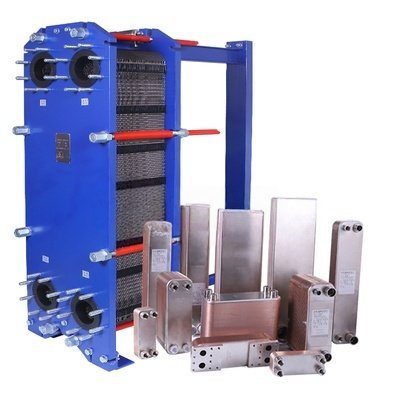 7. How Do Material Choices Affect Heat Exchanger Cost?
Heat exchanger material cost depends on the alloy grade, equipment configuration, dimensions, fabrication requirements, quantity, and project-specific engineering requirements. There is no reliable universal price for a material without knowing the application and equipment design.
A higher-priced alloy may be economically justified if it substantially reduces corrosion risk or extends the useful service life. Conversely, specifying an unnecessarily expensive alloy can increase capital expenditure without providing a meaningful benefit.
Main Cost Factors
| Cost Factor | Potential Effect on Price | What to Check |
|---|---|---|
| Base material | Different alloys have different raw-material and processing costs | Exact grade and material standard |
| Heat transfer area | Larger equipment may require more material and fabrication | Required duty and thermal design |
| Design pressure and temperature | May require different dimensions, materials, joints, and fabrication methods | Mechanical design conditions |
| Corrosion requirements | More resistant alloys or protective measures may increase cost | Fluid chemistry and corrosion assessment |
| Gaskets and brazing materials | Compatibility requirements may restrict available options | Chemical and temperature compatibility |
| Customization | Special connections, dimensions, or configurations may require additional engineering | Approved drawings and interface requirements |
| Testing and inspection | Scope depends on the design, code, and contract | Required tests, inspections, and documentation |
| Traceability and documentation | Additional material records or inspection documents may affect cost | Contractual and regulatory requirements |
| Quantity | Order volume can influence sourcing and production economics | Quantity and repeat-order expectations |
| Packaging and shipping | Export packaging, freight, insurance, and destination charges affect delivered cost | Destination, shipment method, and delivery terms |
| Maintenance and downtime | Material performance can influence long-term operating cost | Cleaning, inspection, replacement, and failure risks |
How Should You Compare Material Cost With Lifetime Cost?
Use a lifecycle assessment rather than comparing purchase prices alone.
A simplified comparison is:
Total lifecycle cost = initial equipment cost + installation cost + expected maintenance cost + energy and operating costs + expected downtime and failure-related costs.
The analysis period, operating hours, maintenance assumptions, and failure probabilities should be based on the actual application wherever possible.
For example, a more corrosion-resistant material may justify its higher initial cost in a continuously operating process where leakage would cause expensive downtime. In a less demanding application with compatible fluid chemistry, a standard material may offer better overall value.
Do not assume that a premium alloy will automatically improve energy efficiency. Thermal performance depends on the exchanger design and operating conditions, not just the material’s price or corrosion resistance.
Should You Choose a Standard or Custom Heat Exchanger Material?
A standard material may be appropriate when the fluid chemistry, pressure, temperature, and performance requirements fit an established design.
A custom material or configuration may be necessary when the application involves unusual chemicals, demanding corrosion conditions, special dimensions, restricted installation space, or specific OEM requirements.
Customization can increase engineering and sourcing complexity. Before requesting a custom quotation, clarify which requirements are mandatory and which are preferences. This helps the supplier and manufacturing partner evaluate technically suitable options without adding unnecessary cost.
8. How to Work With a Heat Exchanger Supplier on Material Selection
A reliable supplier should help translate the application’s operating conditions into a clearly defined technical specification. For customized equipment, communication between the buyer, export company, engineering team, and manufacturing partner is particularly important.
A trading and export company can coordinate product sourcing, technical requirements, customization, documentation, quality control, and international shipment. The actual engineering design and manufacture should be handled by appropriately qualified organizations according to the agreed scope.
What Should You Ask a Supplier?
Before approving a quotation, ask:
- What materials are proposed for every wetted component? Request exact grades rather than general descriptions such as stainless steel.
- Why are these materials suitable for my fluid? The recommendation should reflect the actual chemistry, concentration, temperature, and operating conditions.
- Are the gaskets and brazing materials compatible? Check these separately from the main metal.
- What design conditions and standards are covered? Confirm pressure, temperature, applicable codes, and required documentation.
- What happens if the operating conditions change? Identify any limits on fluid composition, temperature, pressure, or cleaning chemicals.
- What material documentation is available? Confirm whether material certificates, traceability records, inspection reports, or other documents are required and can be supplied.
- Who is responsible for technical approval? Establish the responsibilities of the supplier, engineering team, and actual manufacturer.
- What testing and inspection are included? Define the scope in the quotation and contract rather than assuming every test is standard.
- How will substitutions be handled? Require approval before changes to specified materials or components.
- What support is available after delivery? Clarify technical communication, spare parts, warranty conditions, and the process for handling problems.
Our Approach to Custom Heat Exchanger Sourcing
We work closely with qualified manufacturing partners and engineering teams to provide product sourcing, technical coordination, customization, quality control, and international export support.
For custom heat exchangers, the objective is to establish a clear technical specification before selecting equipment. This includes reviewing fluid compatibility, required materials, thermal and mechanical conditions, connection requirements, documentation, and delivery expectations.
The proposed materials and final design should be confirmed by the responsible engineering and manufacturing teams against the actual application. Where fluid chemistry is complex or the consequences of failure are significant, specialist corrosion engineering may be necessary.
This approach helps international buyers compare options on a consistent technical basis and identify important requirements before production begins.
9. Heat Exchanger Material Selection Checklist
Prepare the following information before requesting a quotation for a custom heat exchanger.
Application and Process Conditions
Industry and application.
Heat exchanger type: plate, shell-and-tube, air-cooled, brazed plate, liquid cooling, or another configuration.
Fluid on each side, including chemical composition and concentration.
Flow rate for each fluid.
Inlet and required outlet temperatures.
Required heat duty, if known.
Operating and design pressures.
Minimum, normal, and maximum temperatures.
Allowable pressure drop on each side.
Expected operating hours and duty cycle.
Corrosion and Maintenance Conditions
Chloride concentration and other relevant contaminants.
pH range and relevant chemical properties.
Dissolved gases, suspended solids, or additives.
Fouling, scaling, erosion, or biological growth concerns.
Cleaning chemicals and cleaning procedures.
Required inspection and maintenance intervals.
Acceptable leakage risk and consequences of cross-contamination.
Existing corrosion, leakage, or premature failure history.
Design and Purchasing Requirements
Required material grades or acceptable alternatives.
Gasket, brazing, joint, and other wetted-component requirements.
Applicable design codes and destination-market requirements.
Equipment dimensions, connection sizes, and orientation.
Available installation space and maintenance access.
Quantity and expected future demand.
Required drawings, material documentation, and inspection records.
Testing requirements.
Target delivery date and shipping destination.
Budget and expected service-life requirements.
Preferred warranty and after-sales support arrangements.
If some information is unavailable, provide the best available process data and clearly identify the unknowns. The supplier and engineering team can then determine what additional information is necessary before finalizing the material selection.
Frequently Asked Questions
1. What Is the Best Material for a Heat Exchanger?
There is no single best material for every heat exchanger. Stainless steel, titanium, carbon steel, copper alloys, duplex stainless steels, and nickel alloys each have suitable applications. The correct choice depends on fluid chemistry, temperature, pressure, corrosion risk, mechanical design, maintenance requirements, and lifecycle cost.
2. Is 316L Stainless Steel Better Than 304 for Heat Exchangers?
316L generally provides improved resistance to certain corrosive environments compared with 304, particularly some chloride-related conditions. However, it is not immune to pitting or crevice corrosion. The appropriate grade depends on fluid chemistry, temperature, deposits, cleaning procedures, and the expected service conditions.
3. Is Titanium Better Than Stainless Steel for Seawater Heat Exchangers?
Titanium is often a strong candidate for seawater applications because of its excellent corrosion resistance in many seawater environments. However, the final choice depends on the exact conditions, equipment design, other wetted materials, and cost. A detailed application assessment is preferable to choosing by material name alone.
4. Can Carbon Steel Be Used in a Water Heat Exchanger?
Yes, carbon steel can be suitable for some water applications if the water chemistry, operating conditions, and corrosion-control measures are appropriate. Water containing dissolved oxygen, salts, contaminants, or other aggressive constituents may require different materials or additional protection.
5. Does a Higher Thermal Conductivity Material Always Improve Heat Exchanger Performance?
No. Thermal conductivity is only one part of the overall heat transfer process. Fluid-side heat transfer coefficients, heat transfer area, wall thickness, flow distribution, fouling, and temperature differences also affect performance. Material selection must balance thermal performance with corrosion resistance, mechanical requirements, and cost.
6. How Do You Select Gasket Materials for a Plate Heat Exchanger?
Select gasket materials according to fluid chemistry, operating temperature, pressure conditions, cleaning chemicals, and the gasket design. The gasket must be compatible with both normal operation and credible cleaning conditions. Confirm the exact gasket material and model compatibility with the equipment supplier.
7. Can Stainless Steel Be Used in Chloride-Containing Fluids?
Sometimes, but suitability depends on the chloride concentration, temperature, flow conditions, deposits, and exposure duration. Some chloride environments can cause pitting, crevice corrosion, or stress corrosion cracking in susceptible stainless steels. More resistant materials may be necessary for demanding applications.
8. What Materials Are Commonly Used for Shell-and-Tube Heat Exchangers?
Shell-and-tube heat exchangers may use carbon steel, stainless steel, copper alloys, titanium, duplex stainless steels, or nickel alloys. The shell, tubes, tubesheets, baffles, and joints may have different materials. Selection depends on both fluid streams, mechanical design conditions, corrosion risks, and fabrication requirements.
9. What Materials Are Commonly Used for Brazed Plate Heat Exchangers?
Brazed plate heat exchangers commonly use stainless steel plates joined by a copper-based or nickel-based brazing material, depending on the design. Both the plate material and brazing alloy must be compatible with the fluids and operating conditions. The actual materials should be confirmed from the product specification.
10. What Information Is Needed for a Custom Heat Exchanger Material Quotation?
Provide the fluid composition on both sides, flow rates, inlet and outlet temperatures, operating and design pressures, heat duty, allowable pressure drop, cleaning conditions, corrosion concerns, installation constraints, and applicable standards. If you have existing equipment, include its nameplate, drawings, and maintenance history.
11. How Does Material Selection Affect Heat Exchanger Price?
Material selection affects raw-material cost, fabrication, joining methods, availability, and sometimes inspection and documentation requirements. A more expensive alloy may reduce corrosion-related maintenance or failure risk, but the benefit depends on the application. Compare total lifecycle cost rather than the initial equipment price alone.
12. Can a Heat Exchanger Use Different Materials on Different Components?
Yes. Many heat exchangers use different materials for the shell, tubes, tubesheets, plates, gaskets, brazing materials, and structural components. However, each material must be suitable for its environment, and dissimilar-metal combinations must be evaluated for galvanic corrosion, thermal expansion, and mechanical compatibility.
13. Should I Choose a Material Based on the Manufacturer’s Standard Product Range?
A manufacturer’s standard range can be a useful starting point, but it should not override the application’s technical requirements. If none of the standard options is suitable, discuss alternatives with the responsible engineering team. Confirm material compatibility and the complete design before approving the order.
14. Are Material Certificates Necessary for Heat Exchangers?
Material certificates and traceability records may be required by the applicable design code, contract, industry, or end user. They are particularly relevant when material identity and composition must be documented. Buyers should specify the required certificate type, traceability scope, inspection requirements, and documentation format before ordering.
15. How Can I Reduce the Risk of Choosing the Wrong Heat Exchanger Material?
Provide accurate process-fluid data, define the full operating envelope, disclose cleaning procedures, and identify corrosion or failure history. Request a documented explanation of the proposed materials, including gaskets and joining materials. For aggressive or uncertain chemical environments, obtain specialist corrosion advice before approving the design.
Need Help Selecting Materials for a Custom Heat Exchanger?
Choosing a suitable material requires more than comparing stainless steel grades or checking a general compatibility chart. The fluid chemistry, operating envelope, equipment design, fabrication requirements, and lifecycle cost must all be considered together.
Click here to schedule a consultation or send us your heat exchanger requirements. Include your process fluids, operating temperatures, pressures, flow rates, target heat duty, corrosion concerns, and preferred materials if known.
We can review the information and coordinate with qualified manufacturing partners and engineering teams to discuss suitable material options, customized configurations, technical requirements, and international export arrangements.