Heat exchanger certification depends on the equipment design, operating pressure, temperature, fluid, installation location, and destination market. There is no single certificate that applies to every heat exchanger; a plate, shell-and-tube, brazed, welded, or custom OEM unit may require different standards and documentation.
This guide explains how to determine which certifications and standards apply, what documents buyers should request, how pressure-vessel requirements affect heat exchanger selection, and how to avoid common certification problems during procurement and export.
You will learn how to evaluate:
- Pressure equipment requirements
- Material certificates and traceability
- Welding and inspection documentation
- CE/PED-related requirements
- ASME and other pressure-vessel standards
- FDA/3-A-related considerations for hygienic applications
- Marine and project-specific approvals
- Test reports and certificates of conformity
- Certification costs and lead-time impact
- Documentation required for replacement and OEM projects
Important: Certification requirements must be confirmed against the final equipment design, applicable legislation, installation location, and customer specification. A supplier should not claim a certification unless the specific product and documentation are actually covered by it.
Quick Answer
Which certification does a heat exchanger need? The answer depends primarily on pressure, temperature, fluid classification, equipment category, and destination market.
| Project condition | Certification / standard area to investigate |
|---|---|
| EU pressure equipment | PED 2014/68/EU and applicable harmonized standards |
| North American pressure equipment | ASME BPVC or project/customer specification |
| Food and beverage | Hygienic design, material traceability, applicable sanitary standards |
| Marine application | Classification society requirements |
| Chemical/process plant | Pressure equipment, material, welding and NDT requirements |
| HVAC/refrigeration | Applicable pressure and refrigerant regulations |
| OEM replacement | Original design requirements, material and dimensional documentation |
| Custom high-pressure equipment | Pressure design code, welding procedure, NDT and pressure testing |
A certificate of material compliance is not the same as a product certification, and a factory quality certificate is not automatically approval for the heat exchanger itself.
Table of Contents
- What Certifications Does a Heat Exchanger Need?
- Which Heat Exchanger Standards Apply in Different Markets?
- What Documents Should You Request From a Supplier?
- How Are Heat Exchanger Materials and Pressure Parts Certified?
- How Does Pressure Affect Heat Exchanger Certification?
- How to Verify Heat Exchanger Certification Before Ordering
- How Certification Affects Heat Exchanger Cost and Lead Time
- Common Mistakes When Buying Certified Heat Exchangers
- Heat Exchanger Certification Checklist
- FAQ
- Key Takeaways
What Certifications Does a Heat Exchanger Need?
A heat exchanger needs the certifications and technical documentation required by its pressure category, application, market, and project specification.
There is an important distinction between regulatory certification, design standards, material certificates, and inspection records.
Regulatory certification
Regulatory certification demonstrates compliance with a legal or market-access requirement.
Examples may include:
- EU Pressure Equipment Directive requirements
- Applicable North American pressure-equipment requirements
- Marine classification approval
- Sanitary or hygienic requirements
- Project-specific third-party inspection
Design and manufacturing standards
A standard defines how equipment is designed, manufactured, tested, or inspected.
Depending on the heat exchanger, applicable standards may concern:
- Pressure design
- Welding
- Materials
- Brazing
- Dimensions
- Performance testing
- Inspection
- Hygienic construction
Material certification
Material documentation identifies the material grade and provides information about its compliance with the specified material standard.
Common documentation includes:
- Mill test certificates
- Material certificates
- Heat numbers
- Chemical composition
- Mechanical properties
- Material traceability
Inspection and test documentation
These records demonstrate that specified inspections were performed.
Examples include:
- Hydrostatic pressure test reports
- Pneumatic test records where permitted
- Dye penetrant testing
- Radiographic testing
- Ultrasonic testing
- Visual inspection
- Dimensional inspection
- Welding inspection records
Certification vs. documentation
| Item | What it proves | Typical purpose |
|---|---|---|
| Product certification | Product meets a defined regulatory requirement | Market access / legal compliance |
| Design code | Design follows a recognized engineering method | Engineering compliance |
| Material certificate | Material conforms to specified grade | Material verification |
| Pressure test report | Equipment passed specified pressure test | Safety / QA |
| NDT report | Specified weld or component was inspected | Quality assurance |
| Certificate of Conformity | Supplier declares conformity to defined requirements | Contract / regulatory documentation |
| Factory quality certificate | Management system meets a standard | Supplier qualification |
A common procurement error is treating all of these documents as interchangeable. They are not.
Which Heat Exchanger Standards Apply in Different Markets?
The destination market determines which regulatory framework should be checked first, but the actual requirement also depends on the equipment category and application.
Europe: PED and pressure equipment requirements
For applicable pressure equipment placed on the EU market, the Pressure Equipment Directive (PED) 2014/68/EU is a major regulatory consideration.
The applicable requirements depend on factors such as:
- Maximum allowable pressure
- Volume
- Fluid properties
- Fluid group
- Equipment type
- Pressure equipment category
- Conformity assessment route
For a plate heat exchanger, for example, the supplier may need to evaluate each pressure-containing circuit rather than simply classify the entire product based on its name.
Do not assume that a product is automatically “CE certified” simply because it is sold in Europe.
The supplier should identify:
- Applicable directive or regulation
- Equipment classification
- Conformity assessment procedure
- Applicable standards
- Required technical documentation
- Declaration of Conformity, where applicable
- CE marking requirements, where applicable
North America: ASME and project specifications
For North American projects, customers may specify ASME Boiler and Pressure Vessel Code, particularly for pressure-containing equipment.
The exact requirement depends on:
- Equipment type
- Design pressure
- Design temperature
- Jurisdiction
- Customer specification
- Installation requirements
- Whether an ASME certification is contractually or legally required
An ASME-related requirement should therefore be checked against the actual project specification rather than assumed from the destination country alone.
Marine applications
Marine heat exchangers may require approval from a classification society or compliance with vessel-specific rules.
Depending on the project, the purchaser may need to consider:
- Design approval
- Material approval
- Welding documentation
- Pressure testing
- NDT
- Inspection by an authorized surveyor
- Marine environmental requirements
The applicable classification society should be identified at the quotation stage.
Food, beverage, and pharmaceutical applications
Hygienic applications require more than pressure certification.
Important considerations include:
- Product-contact material
- Surface finish
- Drainability
- Crevice minimization
- Gasket material
- Cleaning method
- CIP requirements
- Chemical compatibility
- Traceability
Depending on the application and customer specification, standards or requirements related to sanitary equipment may apply.
What Documents Should You Request From a Heat Exchanger Supplier?
A serious certification package should allow the buyer to trace the heat exchanger from design and materials through manufacturing, testing, and final inspection.
Basic commercial and technical documents
For a standard heat exchanger purchase, request:
- Technical datasheet
- General arrangement drawing
- Nameplate information
- Operating conditions
- Design conditions
- Material specification
- Performance calculation or selection sheet
- Pressure-drop information
- Test requirements
- Installation and maintenance manual
Pressure and quality documents
For projects requiring stronger quality control, the documentation package may include:
- Material certificates
- Welding procedure specification
- Welding procedure qualification records
- Welder qualifications
- NDT reports
- Hydrostatic test report
- Leak test report
- Dimensional inspection report
- Final inspection report
- Certificate of Conformity
- Declaration of Conformity, where applicable
Documentation package comparison
| Documentation level | Typical content | Suitable for |
|---|---|---|
| Standard commercial | Datasheet, drawing, test information | General HVAC / industrial replacement |
| Project QA package | Material certificates, test reports, inspection records | Industrial projects |
| High-control project | Full traceability, welding and NDT records, third-party inspection | Chemical, energy, critical process applications |
| OEM package | Drawings, material data, performance data, replacement information | OEM / system integration |
Not every application requires the most expensive documentation package. The correct approach is to specify documentation requirements before quotation and production.
How Are Heat Exchanger Materials and Pressure Parts Certified?
Material certification confirms that pressure-retaining or specified components are made from the required material grade and can be traced to supporting records.
Common heat exchanger materials
Typical materials include:
- Stainless steel
- Carbon steel
- Copper
- Titanium
- Nickel alloys
- Aluminum alloys
- Duplex stainless steels
- Nickel-based alloys
The correct material depends on the fluid, temperature, pressure, corrosion conditions, mechanical requirements, and required service life.
Material selection criteria
When specifying materials, consider:
- Fluid composition
- Chloride concentration
- pH
- Operating temperature
- Design temperature
- Operating pressure
- Design pressure
- Corrosion allowance
- Erosion risk
- Fouling tendency
- Cleaning chemicals
- Galvanic corrosion
- Required service life
For example, selecting stainless steel only because it is described as “corrosion resistant” is insufficient. Chloride-containing water can create corrosion risks even when stainless steel is used.
What is a material certificate?
A material certificate normally provides information such as:
- Material grade
- Product form
- Heat number
- Chemical composition
- Mechanical properties
- Applicable material standard
- Manufacturer identification
- Inspection results
For critical applications, the heat number should be traceable to the relevant component.
Gaskets also require material control
For gasketed plate heat exchangers, gasket selection can be as important as plate material.
Consider:
- Fluid compatibility
- Temperature range
- Pressure
- Cleaning chemicals
- Aging
- Swelling
- Hardening
- Food-contact requirements where applicable
A heat exchanger can have correctly certified plates but still fail prematurely if the gasket material is unsuitable for the actual fluid and temperature.
How Does Pressure Affect Heat Exchanger Certification?
Pressure is one of the most important factors because a heat exchanger can contain two separate pressure boundaries with different design conditions.
For example:
- Hot-side design pressure: 1.6 MPa
- Cold-side design pressure: 1.0 MPa
The two circuits must be evaluated according to their respective design conditions.
Operating pressure vs. design pressure
Do not use normal operating pressure as the design pressure.
A simplified relationship is:
Design pressure ≥ maximum expected operating pressure + appropriate engineering margin
The actual design method depends on the applicable pressure-vessel code and equipment type.
Pressure drop also matters
Certification is not the only engineering consideration.
A heat exchanger should satisfy both:
- Required heat-transfer duty
- Acceptable pressure drop
A simplified thermal relationship is:
[
Q = U A \Delta T_{lm}
]
Where:
- Q = heat-transfer duty
- U = overall heat-transfer coefficient
- A = heat-transfer area
- ΔTlm = log mean temperature difference
Pressure drop must then be checked against the available pump or compressor pressure.
Temperature approach
The temperature approach is the difference between the outlet temperature of one fluid and the inlet temperature of the other fluid at the closest temperature point.
A smaller approach generally requires:
- More heat-transfer area
- Better heat-transfer performance
- Potentially higher pressure drop
- More careful fouling consideration
- Higher equipment cost
Certification does not guarantee that the heat exchanger is correctly sized.
A certified heat exchanger can still be the wrong heat exchanger for the process.
How to Verify Heat Exchanger Certification Before Ordering
The safest approach is to verify certification requirements before production and match every required document to the exact equipment being purchased.
Step-by-step certification verification guide
Step 1: Define the application
Record:
- Fluid on each side
- Flow rate
- Inlet temperature
- Outlet temperature
- Operating pressure
- Design pressure
- Operating temperature
- Design temperature
- Corrosive components
- Cleaning chemicals
Step 2: Identify the destination market
Determine where the equipment will be installed.
Examples:
- European Union
- United Kingdom
- United States
- Canada
- Middle East
- Southeast Asia
- Marine vessel
- Offshore installation
The installation location can change the applicable regulatory requirements.
Step 3: Identify the heat exchanger type
Specify whether the equipment is:
- Gasketed plate heat exchanger
- Brazed plate heat exchanger
- Welded plate heat exchanger
- Shell-and-tube heat exchanger
- Double-wall heat exchanger
- Air-cooled heat exchanger
- Custom OEM heat exchanger
Different construction methods create different certification and inspection considerations.
Step 4: Determine pressure category
Check the maximum allowable pressure, volume where applicable, fluid classification, and design temperature.
Do not classify the equipment based only on the model name.
Step 5: Define material requirements
Specify:
- Plate material
- Tube material
- Shell material
- Connection material
- Gasket material
- Brazing material where applicable
Step 6: Define inspection requirements
Decide whether you need:
- Visual inspection
- Dimensional inspection
- Pressure test
- Leak test
- NDT
- Third-party inspection
- Material traceability
Step 7: Review the certification package
Before approving production, confirm:
- Certificate type
- Certificate scope
- Product identification
- Applicable standard
- Manufacturer information
- Validity
- Traceability
- Required test records
Step 8: Confirm nameplate information
The nameplate should correspond with the final equipment documentation.
Typical information can include:
- Manufacturer
- Model
- Serial number
- Design pressure
- Design temperature
- Test pressure
- Volume where applicable
- Material information where required
- Applicable conformity marking
Step 9: Match documents to the serial number
For project equipment, traceability should connect:
Purchase order → drawing → serial number → materials → manufacturing records → inspection → test → final documentation
This is especially important for replacement equipment and regulated applications.
Which Certification Factors Affect Heat Exchanger Cost and Lead Time?
Certification costs increase when the project requires additional engineering, material traceability, testing, inspection, third-party involvement, or special documentation.
Main cost factors
| Factor | Potential effect on cost | Why |
|---|---|---|
| Standard material | Low | Common materials are easier to source |
| Special alloy | Medium–High | Higher material and processing cost |
| Material certificates | Low–Medium | Requires controlled procurement and documentation |
| Extensive NDT | Medium | Adds inspection and labor |
| Third-party inspection | Medium–High | Adds inspection and coordination |
| Special pressure code | Medium–High | May require additional engineering |
| Custom OEM design | Medium–High | Requires engineering and validation |
| Hygienic construction | Medium–High | Tighter material and manufacturing controls |
| Marine approval | Medium–High | Depends on vessel and classification requirements |
| Urgent delivery | Medium–High | May require priority production and logistics |
Lead-time factors
Certification can affect lead time when:
- Special materials must be purchased
- Material certificates are required
- Third-party inspection must be scheduled
- Custom calculations are required
- Welding procedures require qualification
- NDT is required
- Special testing is required
- Certification documents require review and approval
For this reason, certification requirements should be included in the RFQ rather than added after the purchase order.
How Should You Compare Heat Exchanger Certification Options?
The right certification level is the minimum level that fully satisfies the legal, engineering, customer, and project requirements.
Standard vs. project-certified equipment
| Requirement | Standard commercial unit | Project-certified unit |
|---|---|---|
| Technical datasheet | Usually | Yes |
| General drawing | Usually | Yes |
| Standard pressure test | Often | Yes |
| Material certificates | Optional | Often required |
| Full traceability | Limited | Usually required |
| NDT | Application dependent | Project dependent |
| Third-party inspection | Rare | Possible |
| Special design calculation | Sometimes | Often |
| Extensive QA dossier | No | Yes |
| Custom documentation | Limited | Usually |
Which is better?
Neither is universally better.
For a routine HVAC replacement, paying for extensive third-party inspection may add cost without improving the practical outcome.
For a chemical processing project, pressure equipment with material traceability and documented inspection may be essential.
The correct question is:
What documentation and certification are required to legally install, operate, inspect, maintain, and accept this specific heat exchanger?
 What Should You Check for a Heat Exchanger Replacement?
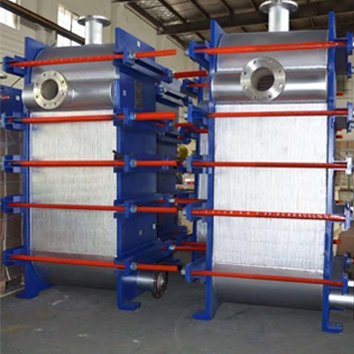 What Should You Check for a Heat Exchanger Replacement?
A replacement heat exchanger should be certified against the new unit’s actual design conditions, not simply copied from the old nameplate.
Before ordering a replacement, collect:
- Original model
- Serial number
- Heat-transfer duty
- Fluid types
- Flow rates
- Inlet and outlet temperatures
- Operating pressures
- Design pressures
- Design temperatures
- Connection sizes
- Connection positions
- Overall dimensions
- Plate or tube material
- Gasket material
- Required certification
- Existing failure history
Replacement compatibility
A replacement for an existing heat exchanger should be evaluated for:
- Thermal capacity
- Pressure drop
- Pressure rating
- Temperature rating
- Connection configuration
- Installation dimensions
- Material compatibility
- Gasket compatibility
- Maintenance requirements
A physically compatible unit is not necessarily a thermally compatible unit.
Similarly, a unit with the same connection size may have a substantially different pressure drop or heat-transfer performance.
Common Mistakes When Buying Certified Heat Exchangers
Most certification problems come from unclear specifications, incorrect assumptions, or documents that do not correspond to the actual equipment.
Mistake 1: Asking only for “CE certification”
Problem: The buyer requests CE but does not provide pressure, temperature, fluid, or equipment information.
Solution: Provide complete operating and design conditions so the supplier can determine the applicable conformity route.
Mistake 2: Confusing ISO certification with product certification
An ISO 9001 quality-management certificate demonstrates a company’s quality-management system; it does not automatically certify a specific heat exchanger.
Solution: Request the actual product conformity and inspection documents required by the project.
Mistake 3: Selecting material based only on price
Cheap material can increase corrosion, leakage, maintenance, and replacement risk.
Solution: Evaluate material compatibility with the actual process fluid and cleaning conditions.
Mistake 4: Ignoring fouling
A clean heat exchanger calculation may not represent real operating conditions.
Fouling increases thermal resistance and can reduce performance.
A simplified resistance relationship can be represented as:
[
\frac{1}{U} \approx \frac{1}{h_1} + R_{f1} + R_{wall} + R_{f2} + \frac{1}{h_2}
]
Where Rf1 and Rf2 represent fouling resistance.
Solution: Include realistic fouling assumptions in sizing and maintenance planning.
Mistake 5: Ignoring pressure drop
Increasing heat-transfer area does not automatically solve a system problem if the design creates excessive pressure loss.
Solution: Review thermal duty and hydraulic performance together.
Mistake 6: Requesting certification after production starts
Late certification requests can cause:
- Additional testing
- Documentation delays
- Material replacement
- Rework
- Increased cost
- Shipment delays
Solution: Freeze certification requirements before manufacturing.
Mistake 7: Assuming an old certificate covers a new unit
Certification and test records may apply only to a specific product, model, design, manufacturer, or production scope.
Solution: Verify the certificate’s scope and its relationship to the actual equipment.
Mistake 8: Treating a replacement as a simple dimensional copy
The new heat exchanger may fit mechanically but fail to meet the required thermal duty or pressure-drop limits.
Solution: Recalculate the replacement based on actual operating conditions.
Heat Exchanger Certification Checklist
Use this checklist before approving a purchase order or production release.
Application
Fluid on Side 1 identified
Fluid on Side 2 identified
Flow rates confirmed
Inlet temperatures confirmed
Outlet temperatures confirmed
Operating pressures confirmed
Design pressures confirmed
Operating temperatures confirmed
Design temperatures confirmed
Fouling conditions evaluated
Cleaning chemicals identified
Equipment
Heat exchanger type confirmed
Thermal duty confirmed
Pressure drop checked
Temperature approach checked
Connection sizes confirmed
Connection orientation confirmed
Installation dimensions checked
Maintenance space checked
Materials
Plate/tube material specified
Shell material specified where applicable
Gasket material specified
Brazing/filler material specified where applicable
Corrosion compatibility reviewed
Material certificates required if applicable
Traceability requirements defined
Certification and QA
Destination-market regulations identified
Applicable design code identified
Product certification requirement confirmed
Declaration of Conformity required or not required
Pressure testing requirement defined
NDT requirements defined
Third-party inspection requirement defined
Documentation package defined
Nameplate requirements defined
Serial-number traceability confirmed
Commercial
Certification cost included in quotation
Documentation cost included
Special material lead time confirmed
Inspection lead time confirmed
Production lead time confirmed
Delivery schedule confirmed
Replacement parts availability confirmed
FAQ
1. What certification does a heat exchanger need in Europe?
A heat exchanger subject to EU pressure-equipment legislation may need to comply with the Pressure Equipment Directive (PED) 2014/68/EU. The applicable requirements depend on pressure, volume, fluid classification, equipment type, and conformity-assessment category.
2. Is CE marking required for every heat exchanger?
No. CE marking requirements depend on whether the specific product falls under applicable EU legislation requiring CE marking and on the resulting conformity route. The product should be evaluated based on its actual technical parameters.
3. Is ASME certification required for a heat exchanger in the USA?
Not automatically. Requirements can depend on the equipment, jurisdiction, application, customer specification, and applicable code. Some projects specifically require ASME compliance or certification.
4. What is the difference between a material certificate and a product certificate?
A material certificate verifies specified material properties and traceability. A product certificate or declaration addresses conformity of the finished equipment with defined requirements.
5. Does ISO 9001 certify a heat exchanger?
No. ISO 9001 generally relates to a company’s quality-management system. It does not by itself certify the design or pressure safety of an individual heat exchanger.
6. What documents should I request when buying a pressure-rated heat exchanger?
Depending on the project, request the technical datasheet, drawing, material certificates, pressure-test report, inspection records, NDT reports where required, conformity documentation, and final QA dossier.
7. How do I certify a replacement heat exchanger?
Start with the actual operating and design conditions, then verify thermal duty, pressure drop, pressure rating, materials, dimensions, connections, and applicable regulatory requirements. A replacement should not be selected from dimensions alone.
8. Does certification increase heat exchanger cost?
It can. Additional material traceability, testing, NDT, engineering calculations, third-party inspection, special materials, and documentation can increase both equipment cost and lead time.
9. What certification is needed for a food-processing heat exchanger?
The requirements depend on the application and jurisdiction. In addition to pressure requirements, evaluate hygienic design, product-contact materials, gasket compatibility, surface condition, cleanability, traceability, and applicable sanitary requirements.
10. Do shell-and-tube and plate heat exchangers need the same certification?
Not necessarily. Their construction, pressure boundaries, materials, welding or brazing methods, and applicable design standards can differ. Certification should be determined from the actual equipment design.
11. Does a pressure test prove that a heat exchanger is correctly designed?
No. A pressure test verifies a particular aspect of pressure integrity. It does not by itself prove thermal performance, corrosion resistance, correct material selection, adequate pressure-drop performance, or compliance with every applicable regulation.
12. Can a supplier provide certification after the heat exchanger is manufactured?
Some documents can be issued or compiled after manufacturing, but waiting until production is complete can create significant problems if special inspection, traceability, or certification requirements were not planned in advance. Certification requirements should be agreed before production.
Key Takeaways
- Heat exchanger certification depends on the application, pressure, temperature, fluid, equipment type, and destination market.
- PED requirements should be evaluated for applicable pressure equipment entering the EU market.
- ASME requirements should be confirmed against the actual North American project, jurisdiction, and customer specification.
- Material certificates, product certificates, ISO certificates, and test reports serve different purposes and should not be treated as interchangeable.
- Material selection must consider corrosion, temperature, pressure, fouling, cleaning chemicals, and service conditions—not only purchase price.
- Thermal performance and pressure drop must be checked together; certification does not make an incorrectly sized heat exchanger suitable for the application.
- Certification, inspection, special materials, and documentation can affect both cost and lead time, so requirements should be defined before production.
- For OEM and replacement projects, verify thermal duty, pressure rating, materials, dimensions, connections, maintenance requirements, and certification scope before approving the replacement.