There is no single answer to “how often should a heat exchanger be cleaned?” A unit in clean cooling water may run for years. A unit in a crystallizing chemical stream may need cleaning in weeks.
The right cleaning frequency is not a calendar number. It is based on fouling rate, process risk, and measured performance. Clean too late, and you lose production and energy. Clean too early, and you waste labor, chemicals, and downtime.
This guide covers typical cleaning intervals, the signs that tell you it is time, and how to set a cleaning threshold that works in the real plant.
Why There Is No Fixed Cleaning Schedule
A heat exchanger fouls because of what is flowing through it. Different fluids, temperatures, velocities, and materials produce different fouling rates.
Key variables:
Fluid type: Cooling water, seawater, oil, chemical, slurry, food product.
Fouling mechanism: Scale, crystallization, coking, biofilm, particulate, corrosion.
Temperature: Higher surface temperature accelerates scaling, coking, and polymerization.
Velocity: Low velocity promotes settling and deposit adhesion. High velocity reduces fouling but increases erosion.
Heat exchanger type: Plate, shell and tube, air cooler, scraped surface.
Water chemistry: Hardness, alkalinity, pH, chlorides, oxygen, bacteria.
Duty cycle: Continuous, batch, startup/shutdown, seasonal.
Cleaning method: Chemical, mechanical, CIP, online. Some methods restore performance better than others.
Because these change from plant to plant, a universal schedule is misleading. A better approach is condition-based cleaning with a documented baseline.
Typical Cleaning Intervals by Service
These ranges are for reference only. Use your own data to set the actual interval.
| Service | Typical interval | Main fouling type |
|---|---|---|
| Clean cooling water, good treatment | 12–24 months | Light scale, biofilm |
| Cooling tower water, average treatment | 3–12 months | Scale, biofilm, particulate |
| Seawater | 3–12 months | Biofouling, scale, corrosion |
| Plate heat exchanger, clean fluid | 6–18 months | Light scale |
| Plate heat exchanger, fouling fluid | 1–6 months | Scale, particulate, organics |
| Shell and tube, hydrocarbon | 6–24 months | Coke, polymer, scale |
| Air cooler, dusty environment | 3–12 months | External dust, lint |
| Slurry or particulate stream | 1–6 months | Settling, bridging |
| Crystallizing or sticky product | Weeks to 3 months | Crystallization, burn-on |
| Scraped surface heat exchanger | Continuous scraping, inspect 3–12 months | Product film, wear |
If your unit is cleaning more often than the low end of these ranges, the problem is likely design, operation, or pre-treatment—not cleaning frequency.
Signs It Is Time to Clean
Fouling rarely appears without warning. It shows up in data first. If you monitor the right indicators, you can plan cleaning instead of reacting to a failure.
1. Pressure Drop Increases
Pressure drop is the most reliable fouling indicator for most heat exchangers.
As deposits narrow the flow channels, ΔP rises. A gradual increase over weeks or months points to fouling. A sudden increase points to blockage, a broken part, or a valve issue.
A common threshold: clean when pressure drop rises 20–30% above the clean baseline at the same flow and temperature. For critical units, use a tighter limit.
2. Temperature Approach Changes
Approach temperature is the difference between the hot outlet and cold inlet, or cold outlet and hot inlet, depending on the service.
When the heat transfer surface fouls, the unit cannot bring the outlet temperatures as close as before. The approach widens.
A practical limit: clean when the approach temperature increases by 5–10°C (9–18°F) above baseline, or when it exceeds the process control limit.
3. Outlet Temperature Drifts
If the hot fluid outlet temperature rises, or the cold fluid outlet temperature falls, fouling is likely.
Operators often compensate by increasing steam, coolant, or flow. That hides the problem until the unit cannot meet duty. Trend the outlet temperature at constant conditions.
4. Heat Transfer Coefficient Drops
Calculate the overall heat transfer coefficient (U-value) from flow, temperatures, and area. A drop of 15–20% from baseline usually means significant fouling.
This is more work than reading a gauge, but it is the most accurate measure of thermal performance.
5. Flow Rate Falls
At constant pump or fan power, a fouled heat exchanger passes less flow. If the pump is on a fixed speed, flow may drop. If it is on variable speed, power may rise.
Check flow meters and pump curves. Do not assume the pump is the problem until you rule out the heat exchanger.
6. Energy Consumption Rises
More steam, more cooling water, more pump power, more fan power. Fouling shows up in utility bills before it shows up in product quality.
If the unit uses 10–15% more energy for the same duty, investigate fouling.
7. Production Capacity Drops
The unit cannot reach design flow or temperature. Production slows. In some plants, this is the first obvious sign because no one was watching ΔP or U-value.
8. Visual Inspection
During any shutdown, open the unit if possible. Look for:
Scale on tubes or plates
Sludge in low-flow areas
Biofilm or slime
Crystals or sticky deposits
Corrosion products
Bent or blocked passages
A visual check takes minutes and confirms what the data suggests.
Condition-Based Cleaning vs Calendar Cleaning
Calendar cleaning is simple: clean every six months, whether it needs it or not.
Condition-based cleaning uses data: clean when performance drops below a set threshold.
Condition-based is usually better because it:
Avoids unnecessary shutdowns
Uses maintenance labor where it is needed
Catches fouling before production is affected
Extends equipment life by avoiding repeated aggressive cleaning
But it requires instrumentation, trending, and discipline. If your plant lacks these, a conservative calendar schedule with visual inspection is a practical fallback.
How to Set a Cleaning Threshold
A threshold is the point where you decide to clean. Set it before fouling becomes a production problem.
Steps:
Establish a clean baseline. After cleaning or commissioning, record ΔP, flow, temperatures, and U-value at normal operating conditions.
Set alarm limits. Typical starting points:
ΔP increase: 20–30%
Approach temperature increase: 5–10°C (9–18°F)
U-value drop: 15–20%
Energy increase: 10–15%
Adjust for criticality. A unit with no spare capacity needs tighter limits. A unit with a standby unit can run longer.
Trend the data. Use DCS, historian, or manual logs. Weekly or daily depending on fouling rate.
Plan the cleaning. When the threshold is reached, schedule cleaning before the unit fails to meet duty.
Do not wait for a leak, a plugged channel, or a production stop. At that point, the cost is much higher.
Cleaning Methods and How They Affect Frequency
The cleaning method affects how well performance is restored and how long it lasts.
Chemical cleaning (CIP)
Dissolves scale, organics, and some deposits. Good for plate heat exchangers and sanitary service. If the chemistry is wrong, it may not remove the deposit fully. Residual fouling shortens the next cycle.
Mechanical cleaning
Hydroblasting, rodding, brushing, drilling. Effective for hard scale and heavy deposits. Can damage surfaces if done incorrectly. A damaged surface fouls faster.
Online cleaning
Sponge balls, reverse flow, or continuous circulation. Extends run length but does not replace full cleaning. Best as a preventive measure.
Manual opening and cleaning
For plate heat exchangers, opening and cleaning plates is common. Check gaskets and plate condition. Reassemble to correct torque.
The better the cleaning, the longer the next interval. A poor cleaning job can make fouling worse because rough or damaged surfaces attract deposits.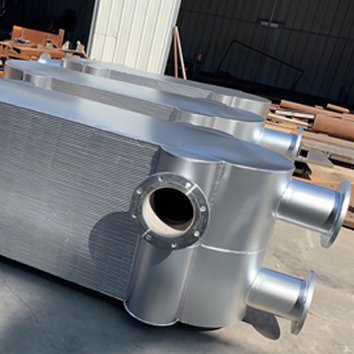
How to Extend Cleaning Intervals
You can often reduce cleaning frequency without replacing the heat exchanger.
Improve filtration. Remove solids before they enter the unit. Strainers, filters, hydrocyclones.
Treat cooling water. Scale inhibitors, dispersants, biocides, pH control.
Control temperature. Lower surface temperature reduces scaling and coking.
Maintain velocity. Keep flow above settling velocity but below erosion limits.
Remove air. Air pockets reduce flow and promote corrosion.
Use antifoulants. Check compatibility with the process.
Choose a better design. Wide-gap plates, large tubes, spiral, or scraped surface for hard services.
Add online cleaning. Sponge balls or reverse flow can double run length in some cooling water systems.
Fix upstream problems. A failing filter or a relief valve passing flow can increase fouling and heat load.
Document everything. Cleaning date, method, deposit type, and performance after cleaning. Use the history to predict the next cycle.
Common Mistakes
Waiting for production loss
By then, the unit is badly fouled and cleaning is urgent. Plan ahead.
Cleaning on a fixed calendar only
You may clean too often or too late. Use data.
Using the wrong cleaning chemical
It may not remove the deposit or may corrode the metal. Match the chemistry to the fouling type.
Not restoring performance
If ΔP or U-value does not return to baseline after cleaning, the cleaning was incomplete or the design is wrong.
Ignoring the root cause
If the unit fouls every month, cleaning is not the answer. Fix the water chemistry, filtration, velocity, or design.
FAQ
How often should a heat exchanger be cleaned?
It depends on the service. Clean cooling water may need cleaning every 12–24 months. Cooling tower water, seawater, and fouling chemicals may need it every 1–12 months. Use pressure drop, temperature approach, and U-value to decide.
What is the best indicator that a heat exchanger needs cleaning?
Pressure drop increase is the most common and reliable indicator. Temperature approach and U-value drop are also strong signs.
Can I clean a heat exchanger without shutting down?
Sometimes. Online cleaning methods like sponge balls, reverse flow, or CIP can extend run time. Heavy fouling usually requires offline cleaning.
How much pressure drop increase is acceptable?
A common threshold is 20–30% above the clean baseline at the same flow and temperature. For critical units, use a tighter limit.
Why does my heat exchanger foul so quickly?
Common causes: low velocity, high surface temperature, poor water treatment, inadequate filtration, wrong material, or a design with dead zones.
Is chemical or mechanical cleaning better?
Chemical cleaning is better for scale and organics and reaches areas mechanical tools cannot. Mechanical cleaning is better for hard deposits. Often a combination works best.
How do I know if cleaning was successful?
Performance returns to baseline: ΔP, approach temperature, and U-value. If not, investigate incomplete cleaning, damaged surfaces, or a design problem.
Bottom Line
Heat exchanger cleaning frequency should be based on performance, not habit. Monitor pressure drop, temperature approach, U-value, flow, and energy use. Set a cleaning threshold. Clean when the data says it is time.
That approach cuts downtime, saves energy, and extends equipment life. It also tells you when cleaning is not the real problem—and a design or operating change is needed.
If you are trying to set a cleaning schedule or solve repeat fouling, send your heat exchanger type, fluid, operating temperatures, pressure drop trend, and cleaning history. We will help you identify the fouling mechanism and choose a design or cleaning strategy that lasts longer.