When buying a heat exchanger from an overseas manufacturer, product specifications are only part of the decision.
A professional buyer also needs to know:
- How are heat exchangers manufactured?
- How are raw materials inspected?
- How are plates, tubes and frames processed?
- How are welding and brazing quality controlled?
- How are finished heat exchangers pressure tested?
- How are leaks detected?
- What quality inspections are performed before shipment?
A factory visit can answer these questions more effectively than a product catalog.
This guide takes you through the typical heat exchanger manufacturing process and quality inspection workflow, from raw material inspection to final testing and shipment.
1. What to Look for When Visiting a Heat Exchanger Factory
A professional heat exchanger factory should have a clearly controlled production process.
A typical manufacturing workflow is:
Engineering & Design
↓
Raw Material Inspection
↓
Material Cutting & Forming
↓
Plate / Tube / Component Manufacturing
↓
Welding / Brazing / Assembly
↓
Dimensional Inspection
↓
Pressure & Leak Testing
↓
Final Quality Inspection
↓
Nameplate & Documentation
↓
Packaging & Shipment
The exact process depends on the heat exchanger type.
A gasketed plate heat exchanger, brazed plate heat exchanger and shell-and-tube heat exchanger require different manufacturing and inspection methods.
Therefore, buyers should evaluate the factory according to the actual heat exchanger technology being purchased.
2. Engineering Comes Before Production
The manufacturing process starts before the first plate or tube is processed.
The engineering team should review the customer’s operating conditions and equipment requirements.
Typical design information includes:
- Heat duty
- Fluid type
- Flow rate
- Inlet temperature
- Outlet temperature
- Operating pressure
- Design pressure
- Operating temperature
- Design temperature
- Allowable pressure drop
- Material requirements
- Connection specifications
- Applicable standards
The manufacturer then determines the appropriate equipment configuration.
For a plate heat exchanger, this can include:
- Plate material
- Plate thickness
- Plate pattern
- Number of plates
- Pass arrangement
- Gasket material
- Frame size
- Connection type
For a shell-and-tube heat exchanger, the design may include:
- Tube material
- Tube diameter
- Tube length
- Number of tubes
- Tube arrangement
- Shell diameter
- Baffle arrangement
- Tube-sheet design
This is why a reliable factory should be able to explain not only what product it is selling, but also why that configuration is suitable for the application.
3. Raw Material Inspection
Quality control starts with the incoming materials.
Typical materials may include:
- Stainless steel plate
- Carbon steel
- Titanium
- Nickel alloys
- Copper
- Brazing material
- Tubes
- Gaskets
- Frame components
- Flanges
- Bolts and other hardware
The manufacturer should verify that the material matches the engineering specification.
Depending on the project, material inspection may include:
- Material grade
- Thickness
- Dimensions
- Surface condition
- Material certificates
- Heat number
- Chemical composition
- Mechanical properties
Material traceability becomes particularly important for pressure equipment and critical industrial applications.
The purpose is simple:
The material entering production must be the material specified by the design.
4. Heat Exchanger Plate Manufacturing
For plate heat exchangers, metal sheets are typically formed into the required corrugated geometry.
The plate pattern is not simply a cosmetic feature.
It affects:
- Fluid distribution
- Turbulence
- Heat transfer
- Pressure drop
- Fouling characteristics
- Mechanical strength
The plate geometry therefore needs to remain within the specified manufacturing tolerances.
After forming, plates should be inspected for:
- Dimensions
- Plate thickness
- Forming quality
- Surface defects
- Cracks
- Deformation
- Port dimensions
- Gasket groove condition
For gasketed plate heat exchangers, the gasket groove is particularly important because the gasket must seal correctly after assembly.
5. Tube Manufacturing and Tube Inspection
For shell-and-tube heat exchangers, tubes are one of the most critical components.
The tube material must be suitable for:
- Fluid chemistry
- Operating temperature
- Operating pressure
- Corrosion conditions
- Erosion conditions
Depending on the design, tube inspection can include:
- Dimensional inspection
- Surface inspection
- Material verification
- Tube straightness
- Tube-wall inspection
- Non-destructive testing
Tube-to-tube-sheet connections also require careful control.
A small defect in a critical tube connection can eventually lead to leakage or cross-contamination between the two fluids.
6. Welding Quality Control
Welding is one of the most important manufacturing processes for welded and shell-and-tube heat exchangers.
A professional production process should control:
- Welding procedure
- Welding parameters
- Welder qualification
- Base material
- Filler material
- Preheating where required
- Interpass temperature
- Post-weld treatment where required
- Weld inspection
The objective is not simply to produce a visually acceptable weld.
The weld must provide the required:
Strength + pressure resistance + corrosion resistance + leak tightness
For industrial heat exchangers, non-destructive examination may include methods such as ultrasonic testing, radiographic testing, dye penetrant testing and other inspection methods depending on the equipment and applicable code. Alfa Laval, for example, lists ultrasonic, X-ray/gamma-ray, hydrostatic, helium and dye-penetrant testing among its testing capabilities for process heat exchangers.
7. Brazing Process for Brazed Plate Heat Exchangers
Brazed plate heat exchangers use a different manufacturing process from gasketed plate heat exchangers.
The plates are assembled with brazing material and processed in a controlled brazing furnace.
The brazing process must achieve reliable bonding between the plates while maintaining the required flow channels.
Important manufacturing parameters include:
- Plate material
- Brazing material
- Plate arrangement
- Furnace temperature
- Heating profile
- Cooling conditions
- Joint quality
The finished unit must then be inspected and tested for leakage and pressure resistance.
Danfoss, for example, describes brazed plate heat exchanger manufacturing as a specialized production process and identifies brazing ovens as part of its manufacturing expansion.
8. Gasket Installation and Plate Pack Assembly
For gasketed plate heat exchangers, gasket installation is a critical quality-control step.
The gasket must:
- Match the correct plate
- Fit correctly into the gasket groove
- Have the correct material
- Be properly positioned
- Avoid damage during installation
The plate pack must then be assembled in the correct sequence.
Incorrect plate orientation or an incorrect plate sequence can affect:
- Flow arrangement
- Heat-transfer performance
- Pressure drop
- Sealing
- Internal fluid distribution
The final tightening or compression dimension must also meet the manufacturer’s specified requirements.
A gasketed plate heat exchanger is designed to be opened for inspection and service, which makes correct plate and gasket assembly particularly important.
9. Dimensional Inspection
Before final testing, the assembled heat exchanger should be checked against the engineering drawings and specifications.
Typical measurements include:
- Overall length
- Width
- Height
- Connection position
- Connection size
- Plate pack dimensions
- Frame dimensions
- Flange dimensions
- Bolt dimensions
- Weight
Dimensional inspection helps prevent installation problems at the customer’s site.
A heat exchanger can pass a pressure test and still create installation problems if the connection location or overall dimensions are incorrect.
For OEM projects and replacement applications, dimensional accuracy is especially important.
10. Pressure Testing
Pressure testing is one of the most important final quality inspections.
The objective is to verify that the heat exchanger can withstand the specified test pressure and that the pressure boundary remains intact.
Depending on the equipment type and applicable code, testing may include:
Hydrostatic pressure testing
Leak testing
Helium leak testing
Pneumatic testing where permitted
The exact test pressure and procedure must follow the applicable design code, equipment specification and local regulations.
For example, Alfa Laval’s maintenance instructions recommend a hydrostatic leakage test after certain maintenance operations involving plate or gasket removal, with the test performed according to specified pressure limits.
11. Leak Testing
Pressure testing and leak testing are related but not necessarily identical.
A pressure test checks pressure integrity.
A dedicated leak test can be used to identify smaller leakage paths.
For certain industrial heat exchangers, helium leak testing provides a highly sensitive method for detecting leaks.
Danfoss states that its semi-welded plate heat exchanger cassettes and assembled units undergo helium leak testing before leaving the factory.
The appropriate test method depends on:
- Heat exchanger design
- Fluid
- Pressure level
- Safety requirements
- Applicable standards
- Customer specification
12. Non-Destructive Testing
Non-destructive testing allows manufacturers to inspect components without destroying the equipment.
Depending on the design and applicable requirements, methods can include:
Ultrasonic Testing — UT
Used to detect certain internal or material discontinuities.
Radiographic Testing — RT
Uses X-rays or gamma rays to examine weld quality.
Dye Penetrant Testing — PT
Useful for detecting surface-breaking defects in suitable materials.
Magnetic Particle Testing — MT
Used for detecting surface and near-surface discontinuities in ferromagnetic materials.
Helium Leak Testing
Used when highly sensitive leak detection is required.
Not every heat exchanger requires every inspection method.
A good manufacturer should be able to explain:
Which tests are required, why they are required, and what standard or specification they are performed against.
 13. Final Product Inspection
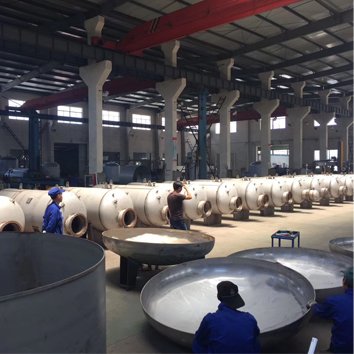 13. Final Product Inspection
After production and testing, the finished heat exchanger should undergo a final inspection.
The quality team may verify:
- Model number
- Serial number
- Heat-transfer area
- Number of plates or tubes
- Material
- Connection size
- Design pressure
- Test pressure
- Design temperature
- Overall dimensions
- Surface condition
- Nameplate information
- Test results
The final inspection should correspond with the approved technical specification.
This prevents a common purchasing problem:
The equipment supplied is technically similar to the quotation but does not exactly match the approved specification.
14. Heat Exchanger Nameplate Inspection
Before shipment, buyers should check the equipment nameplate.
Typical information may include:
- Manufacturer
- Model
- Serial number
- Manufacturing date
- Design pressure
- Test pressure
- Design temperature
- Heat-transfer area
- Material
- Applicable certification
Danfoss technical documentation, for example, identifies design pressure, testing pressure, design temperature, heat-transfer area and manufacturing information as equipment data.
The nameplate should match the documentation supplied with the equipment.
15. Quality Documents Buyers Should Request
A professional heat exchanger supplier should be able to provide appropriate quality documentation for the project.
Depending on the application, this may include:
- Material certificates
- Certificate of conformity
- Pressure test report
- Leak test report
- Welding inspection records
- NDE reports
- Dimensional inspection report
- Product datasheet
- Performance calculation
- Assembly drawing
- Installation manual
- Operation and maintenance manual
- Spare-parts information
The exact document package depends on the project requirements.
For standard equipment, a full documentation package may not be necessary.
For pressure equipment, chemical processing, refrigeration and other critical applications, documentation requirements can be significantly higher.
16. How to Judge a Heat Exchanger Factory During a Visit
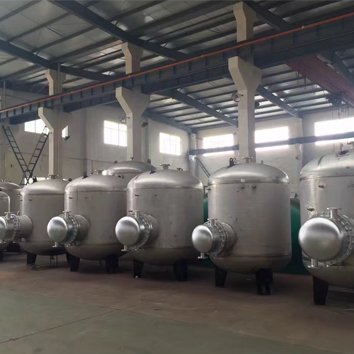 16. How to Judge a Heat Exchanger Factory During a Visit
Do not judge a factory only by how large the building looks.
Instead, look for evidence of process control.
Ask:
1. Can the factory show material traceability?
Can the manufacturer connect the finished product with the original material documentation?
2. Are inspection records maintained?
Ask to see examples of inspection records, with confidential customer information removed if necessary.
3. Are welding procedures controlled?
For welded equipment, ask about welding qualifications and inspection procedures.
4. Is pressure testing performed?
Ask how test pressure is determined and how test results are recorded.
5. How are leaks detected?
Ask which leak-testing methods are available for the product type.
6. How is the final product released?
There should be a defined final inspection and release process.
A professional factory should be able to answer these questions clearly rather than relying only on statements such as:
“Our quality is very good.”
17. What a Good Heat Exchanger Production Line Looks Like
A good production line should have clear separation between:
Incoming Materials
→
Production
→
Inspection
→
Testing
→
Finished Products
This makes quality problems easier to identify and prevents untested equipment from being accidentally shipped.
The production environment should also provide suitable storage for:
- Stainless steel plates
- Tubes
- Gaskets
- Brazing materials
- Finished components
- Tested products
Material identification should remain clear throughout the production process.
18. Quality Control Should Not Start at the Final Inspection
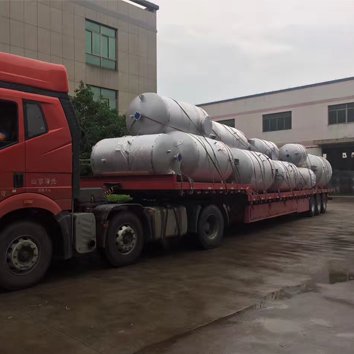 18. Quality Control Should Not Start at the Final Inspection
Final inspection is important, but it is not enough.
If a manufacturing defect is discovered only at the end of production, the factory may have already spent significant time and material on a defective unit.
A stronger quality system controls the product at multiple stages:
Incoming Material Inspection
↓
Process Inspection
↓
Assembly Inspection
↓
Pressure / Leak Testing
↓
Final Inspection
This approach reduces the risk of passing defects from one production stage to the next.
19. Factory Quality Control for Different Heat Exchanger Types
Different heat exchanger technologies require different inspection priorities.
Gasketed Plate Heat Exchanger
Important controls include:
- Plate material
- Plate forming
- Gasket quality
- Gasket installation
- Plate sequence
- Plate-pack compression
- Connection dimensions
- Pressure testing
- Leak testing
Brazed Plate Heat Exchanger
Important controls include:
- Plate material
- Brazing material
- Plate arrangement
- Furnace process
- Brazing quality
- Pressure testing
- Leak testing
- Connection dimensions
Shell-and-Tube Heat Exchanger
Important controls include:
- Tube material
- Tube dimensions
- Tube-sheet quality
- Welding
- Tube-to-tube-sheet joints
- Baffles
- Shell dimensions
- Non-destructive testing
- Hydrostatic testing
- Leak testing
The quality-control process should therefore be matched to the construction technology.
20. Factory Inspection Before Placing a Large Order
For a large or critical order, a buyer can conduct a factory audit before production.
A practical audit can cover:
Manufacturing Capability
- Production equipment
- Welding equipment
- Brazing equipment
- Forming equipment
- Assembly capability
Quality Capability
- Inspection equipment
- Pressure-testing equipment
- Leak-testing equipment
- NDE capability
- Calibration records
Engineering Capability
- Thermal design
- Hydraulic calculation
- Mechanical design
- Drawing control
- Technical documentation
Production Control
- Material traceability
- Process records
- Inspection records
- Final release procedure
After-Sales Capability
- Spare parts
- Gaskets
- Plates
- Technical support
- Troubleshooting
- Cleaning and maintenance support
This is especially useful when purchasing equipment for long-term industrial operation.
21. Factory Inspection Checklist for Heat Exchanger Buyers
Before approving a supplier, check:
☐ Raw material traceability
☐ Material certificates
☐ Production process control
☐ Plate or tube inspection
☐ Welding quality control
☐ Brazing process control
☐ Gasket inspection
☐ Dimensional inspection
☐ Pressure testing
☐ Leak testing
☐ Non-destructive testing where required
☐ Final inspection
☐ Nameplate verification
☐ Quality documentation
☐ Packaging inspection
☐ Technical support
A supplier that can provide evidence for these points is easier to evaluate than one that relies only on product photographs and general quality claims.
22. What Should You See Before a Heat Exchanger Leaves the Factory?
Before shipment, the equipment should have completed the inspections and tests required by its specification.
The basic sequence is:
Manufacturing completed
↓
Dimensional inspection
↓
Pressure / leak testing
↓
Final quality inspection
↓
Documentation completed
↓
Nameplate checked
↓
Packaging
↓
Shipment
The exact test requirements depend on the product and applicable standards.
For example, Danfoss states that its semi-welded plate heat exchangers undergo comprehensive final testing, including hydraulic strength testing and helium leak testing.
23. Why Factory Transparency Matters
For an overseas buyer, factory transparency reduces purchasing risk.
A transparent supplier should be willing to explain:
- Where materials come from
- How products are manufactured
- What quality standards are followed
- What tests are performed
- What documents are supplied
- How non-conforming products are handled
- How warranty issues are managed
This is particularly important for custom heat exchangers.
A standard catalog product can be compared relatively easily.
A customized industrial heat exchanger requires greater confidence in the manufacturer’s engineering and production capability.
24. Questions to Ask a Heat Exchanger Manufacturer
Before placing an order, ask:
What materials do you use?
Can you provide material certificates?
How do you control plate or tube quality?
How are welded joints inspected?
Do you perform hydrostatic pressure testing?
Do you perform leak testing?
Which NDE methods are available?
Can you provide inspection reports?
Can you provide a thermal calculation?
Can you provide a dimensional drawing before production?
How do you control gasket or brazing quality?
What documentation is included with shipment?
What spare parts are available after delivery?
A manufacturer that answers these questions with specific procedures and records is generally easier to evaluate than one that provides only general assurances.
25. Heat Exchanger Factory Tour: What Buyers Should Focus On
A factory visit should not be treated as a sightseeing tour.
The purpose is to verify whether the manufacturer’s actual production capability matches its technical claims.
Focus on five things:
1. Materials
Are materials identified and traceable?
2. Manufacturing
Are production processes controlled?
3. Inspection
Are critical dimensions and components inspected?
4. Testing
Are pressure and leakage risks tested before shipment?
5. Documentation
Can the manufacturer provide records proving that the required inspections were completed?
These five areas provide a practical framework for evaluating a heat exchanger factory.
26. From Factory Production to Final Delivery
A reliable heat exchanger supply chain should look like:
Engineering
→
Material Control
→
Manufacturing
→
Process Inspection
→
Assembly
→
Pressure & Leak Testing
→
Final Inspection
→
Documentation
→
Packaging
→
Delivery
The objective is not simply to manufacture a heat exchanger.
The objective is to deliver equipment that meets the agreed:
Thermal performance + Mechanical requirements + Material requirements + Quality requirements
Conclusion: How to Choose a Reliable Heat Exchanger Factory
The lowest quotation is not always the lowest-risk choice.
When evaluating a heat exchanger manufacturer, look beyond:
Price + Product Photos + Catalog
Evaluate:
Engineering Capability
Manufacturing Capability
Material Traceability
Process Control
Pressure Testing
Leak Testing
Quality Inspection
Technical Documentation
After-Sales Support
A professional heat exchanger factory should be able to show how the product moves from raw material to finished equipment, how critical processes are controlled, and how the finished unit is tested before shipment.
For buyers planning a new heat exchanger project, a factory audit can be combined with a technical review of the equipment specification.
Before requesting a quotation, prepare:
Fluid + Flow Rate + Inlet/Outlet Temperatures + Heat Duty + Operating Pressure + Design Pressure + Allowable Pressure Drop + Material Requirements.
The more complete the technical information, the easier it is for the manufacturer to provide an accurate heat exchanger design and quotation.
Looking for a heat exchanger manufacturer for your next project?
Request the factory’s production capability, quality-control procedure, testing standards and technical documentation before making the final purchasing decision.