Lorem ipsum dolor sat amet,consectetur adipiscing elit。 Ut elittellus,luctus nec ullamcorper mattis,pulvinar dapibus leo。
When a heat exchanger fails unexpectedly, the problem is not simply finding a replacement. Every day of delay can extend equipment downtime, interrupt production, postpone commissioning, or push an entire project behind schedule.
For an urgent heat exchanger replacement or time-critical industrial project, the key question is:
How can you get the required heat exchanger delivered as quickly as possible without sacrificing thermal performance, pressure integrity, material quality, or project requirements?
The answer is usually not to simply ask a manufacturer to “make it faster.” A shorter lead time comes from removing unnecessary waiting time from the entire process—from technical specification and quotation to engineering approval, material procurement, manufacturing, inspection, and shipment.
What Causes Long Heat Exchanger Lead Times?
A heat exchanger can require considerably more time when it is fully customized.
The lead time may include:
- Thermal design and heat transfer calculations
- Mechanical design
- Drawing preparation and approval
- Material procurement
- Tube, plate, shell or coil fabrication
- Welding and machining
- Non-destructive testing
- Hydrostatic or pressure testing
- Inspection and documentation
- Surface treatment or special coating
- Packing and transportation
For a standard heat exchanger, some of these steps may already be simplified or eliminated. For a custom heat exchanger, however, each additional specification can introduce another stage of engineering, purchasing or approval.
This is why asking for a custom heat exchanger with a short lead time requires a different procurement strategy from ordering an off-the-shelf unit.
1. Send Complete Heat Exchanger Specifications at the Beginning
One of the easiest ways to lose several days—or even weeks—is to begin the quotation process with incomplete information.
Instead of sending only:
“We need a shell and tube heat exchanger urgently.”
provide as much technical information as possible.
Useful information includes:
- Heat duty
- Fluid name on both sides
- Flow rate
- Inlet and outlet temperatures
- Operating pressure
- Design pressure
- Operating temperature
- Design temperature
- Fouling factors
- Required heat transfer area, if known
- Heat exchanger type
- Tube material
- Shell material
- Plate or gasket material, where applicable
- Connection sizes
- Applicable design code
- Required inspection
- Installation dimensions
- Existing equipment drawing or nameplate information
If you are replacing an existing heat exchanger, provide the manufacturer, model number, equipment drawing, nameplate photograph and previous datasheet whenever available.
This allows the supplier to determine quickly whether an existing design can be reproduced, modified, or replaced with a suitable alternative.
A complete specification can shorten the quotation and engineering process because the manufacturer does not have to repeatedly request missing information.
2. Ask for an Emergency Heat Exchanger Solution, Not Just a Normal Quotation
If the equipment is required urgently, tell the supplier clearly that the project is time-critical.
Useful terms include:
- urgent heat exchanger replacement
- emergency heat exchanger replacement
- expedited heat exchanger delivery
- rush heat exchanger order
- fast delivery heat exchanger
- quick ship heat exchanger
- short lead time heat exchanger
- heat exchanger required urgently
- replacement heat exchanger ASAP
- custom heat exchanger with short lead time
This matters because some manufacturers have separate procedures for urgent orders.
For example, suppliers in the market offer dedicated expedited programs for replacement heat exchangers, tube bundles and shell-and-tube equipment. Some manufacturers also maintain stock or production capacity specifically to support emergency requirements.
The important point is to communicate the actual deadline:
“The replacement heat exchanger must arrive at our facility by March 15.”
This is much more useful than simply saying:
“We need it quickly.”
3. Check Existing Stock Before Starting a New Custom Design
If downtime is already affecting production, a completely new design may not always be the fastest solution.
Ask the manufacturer:
“Do you have a standard or previously manufactured heat exchanger that can meet our requirements?”
Also ask about:
- Stock heat exchangers
- Standard shell-and-tube models
- Standard plate heat exchangers
- Replacement tube bundles
- Spare tube bundles
- Replacement coils
- Standard heat exchanger components
- Existing materials in stock
- Previously engineered designs
For certain applications, selecting a standardized unit can remove substantial engineering and manufacturing time.
Standardized fast-track products are already used in the heat exchanger industry specifically to reduce selection and delivery time.
For emergency projects, the fastest solution is sometimes a suitable standard heat exchanger rather than a perfect custom-designed unit.
However, the equipment must still satisfy the required thermal, mechanical, pressure and application conditions.
4. Use Existing Drawings and Equipment Data for Replacement Projects
Replacement projects have one major advantage over new projects:
The existing heat exchanger provides valuable engineering information.
If the original equipment is available, send:
- Nameplate photo
- Model number
- Serial number
- Manufacturer
- Overall dimensions
- Tube diameter
- Tube length
- Number of tubes
- Tube material
- Shell diameter
- Nozzle sizes
- Nozzle orientation
- Flange standards
- Design pressure
- Design temperature
- Previous operating conditions
- Existing drawings
- Previous inspection reports
This information can help the supplier determine whether the replacement can follow the existing design.
For a failed heat exchanger, the failure itself should also be explained.
For example:
- Tube leakage
- Tube corrosion
- Fouling
- Cracking
- Gasket failure
- Vibration damage
- Pressure failure
- Reduced heat transfer performance
A replacement should not simply copy the old unit if the original failure was caused by unsuitable material, excessive fouling, corrosion or operating conditions.
5. Confirm Material Availability Before Confirming the Delivery Date
Material availability can become one of the biggest constraints in an urgent heat exchanger project.
Common materials include:
- Carbon steel
- Stainless steel
- 304 / 304L stainless steel
- 316 / 316L stainless steel
- Duplex stainless steel
- Copper alloys
- Titanium
- Nickel alloys
- Hastelloy and other special alloys
Special materials may require additional procurement time.
For this reason, do not ask only:
“What is your production lead time?”
Ask:
“Is the required material already in stock?”
And:
“Is the quoted lead time based on material being available today?”
This distinction is important because a manufacturer may have production capacity available but still be unable to start fabrication until the required material arrives.
Some suppliers specifically maintain heat exchanger tube inventory for emergency requirements, allowing cutting, testing and other preparation to begin without waiting for new material production.
 6. Freeze the Technical Specification Early
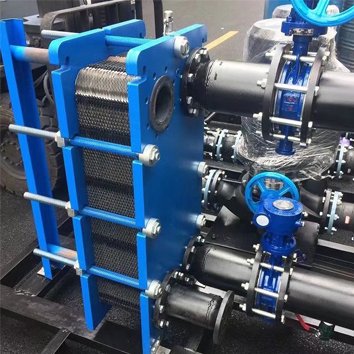 6. Freeze the Technical Specification Early
Engineering changes after production begins can destroy the time saved elsewhere.
For an urgent heat exchanger project, try to freeze the following before fabrication:
- Heat duty
- Dimensions
- Materials
- Nozzle configuration
- Pressure rating
- Design code
- Tube arrangement
- Gasket requirements
- Inspection requirements
- Testing requirements
- Documentation requirements
If the project requires drawing approval, establish who has final approval authority.
A simple workflow is:
Specification → Quotation → Technical review → Drawing approval → Purchase order → Material confirmation → Production → Inspection → Shipment
The fewer unnecessary loops in this process, the shorter the overall lead time.
7. Separate Critical Requirements From Optional Requirements
Not every specification has the same importance.
During an emergency replacement, identify:
Must-have requirements
versus
Preferred requirements
For example, a specific material grade may be mandatory because of corrosion resistance, while a cosmetic surface finish may not affect equipment operation.
Likewise, a particular nozzle arrangement may be necessary for installation, while certain non-critical dimensional preferences may be adjustable.
This does not mean ignoring engineering standards.
It means identifying which requirements actually determine whether the heat exchanger can operate safely and correctly.
A qualified thermal and mechanical engineer should approve any proposed technical change.
8. Plan Transportation Before the Heat Exchanger Is Finished
Manufacturing is only part of the delivery schedule.
A heat exchanger may be completed on Friday but still arrive too late if transportation is not arranged.
Before production is completed, confirm:
- Delivery address
- Required delivery date
- Packaging requirements
- Equipment dimensions
- Equipment weight
- Shipping method
- Export documentation
- Import requirements
- Customs clearance
- Final-mile transportation
- Site unloading requirements
For an urgent international shipment, discuss the logistics plan with the supplier before the equipment is ready.
Possible transportation options may include:
- Air freight
- Express air cargo
- Sea freight
- Road transport
- Multimodal transportation
The correct choice depends on equipment size, weight, destination and deadline.
The cheapest transportation method is not necessarily the lowest-cost solution when a production line is waiting for the replacement equipment.

9. Ask the Supplier for a Realistic Expedited Delivery Schedule
Do not accept only a general statement such as:
“We can deliver as soon as possible.”
Ask for a specific schedule.
For example:
| Project Stage | Target |
|---|---|
| Technical review | 1–2 business days |
| Quotation | 1 business day |
| Drawing approval | 1–3 business days |
| Material confirmation | Immediate |
| Manufacturing | Confirmed project schedule |
| Testing | Scheduled before completion |
| Packing | Pre-arranged |
| Shipment | Pre-booked |
The exact timeline depends on the exchanger type, materials, complexity and inspection requirements.
Published industry examples show how widely lead times can vary: standard products may be available in weeks, while fully custom-engineered heat exchangers can require substantially longer schedules. At the same time, dedicated rush programs can significantly reduce delivery time when the product, materials and production capacity are suitable.
Therefore, never judge an urgent order only by the supplier’s standard lead time. Ask for the confirmed lead time for your exact specification.
10. What Should You Send When Requesting an Urgent Heat Exchanger Quote?
If you need a fast response, prepare one complete RFQ package.
A practical email subject could be:
URGENT RFQ – Replacement Shell and Tube Heat Exchanger – Required Delivery Date: [Date]
Include:
Application:
Cooling / heating / condensation / evaporation / process duty
Heat duty:
[Value]
Flow rates:
[Value]
Operating temperatures:
[Value]
Design temperatures:
[Value]
Operating pressures:
[Value]
Design pressures:
[Value]
Fluids:
[Fluid A] / [Fluid B]
Materials:
[Required materials]
Heat exchanger type:
Shell and tube / plate / air-cooled / coil / other
Dimensions:
[Available dimensions]
Connection requirements:
[Details]
Applicable standard/code:
[ASME / EN / PED / other]
Inspection requirements:
[Details]
Quantity:
[Number]
Required delivery date:
[Exact date]
Then ask the supplier:
- Can you meet the required delivery date?
- Do you have the required materials in stock?
- Can you offer an expedited production schedule?
- Can you provide a standard or existing design?
- What is the earliest confirmed shipment date?
- What information is still required from us?
- What testing and documentation are included?
This format allows the supplier to make a much faster technical and commercial decision.
How Much Can an Urgent Heat Exchanger Lead Time Be Reduced?
There is no universal answer.
A standard product with available inventory may be shipped considerably faster than a fully custom heat exchanger requiring new engineering and special materials.
The realistic reduction depends on:
- Product type
- Thermal duty
- Equipment size
- Design complexity
- Material availability
- Production capacity
- Drawing approval time
- Inspection requirements
- Testing requirements
- Shipping distance
- Customs clearance
Real-world industry examples demonstrate that accelerated programs can produce substantial savings in delivery time. In a 2026 refinery replacement case, an accelerated tube-bundle project reduced delivery time by approximately six to eight weeks and contributed to an overall project acceleration of eight to ten weeks.
The objective should therefore not be “the fastest possible manufacturing time at any cost.”
The objective should be:
the shortest reliable total project lead time.
A Practical Emergency Heat Exchanger Procurement Strategy
If your plant is already experiencing downtime, use this sequence:
Step 1 — Define the deadline
Determine the exact date when the heat exchanger must arrive.
Step 2 — Collect existing equipment information
Send the nameplate, drawings, model number, dimensions and operating data.
Step 3 — Send complete process conditions
Provide flow, temperature, pressure, fluids and heat duty.
Step 4 — Ask about stock
Check whether a suitable standard unit, tube bundle or required material is already available.
Step 5 — Request an expedited quotation
Ask for both price and a confirmed delivery schedule.
Step 6 — Freeze the specification
Avoid unnecessary changes after the order is released.
Step 7 — Approve drawings immediately
Assign one responsible engineer or project manager for approval.
Step 8 — Arrange logistics early
Prepare transportation and export/import documentation before production is completed.
Step 9 — Track production milestones
Monitor material availability, fabrication, testing, inspection and packing.
Step 10 — Confirm shipment
Obtain the actual shipping date and tracking information rather than relying on an estimated completion date.
Final Takeaway: Fast Heat Exchanger Delivery Starts Before Manufacturing
When a heat exchanger is urgently required, the biggest time savings often come from better preparation rather than simply asking a factory to work faster.
A complete technical specification, available materials, existing drawings, rapid engineering approval, suitable standardization, coordinated production and pre-planned transportation can significantly reduce the total lead time.
If your project involves an urgent heat exchanger replacement, short lead time requirement, custom heat exchanger, shell and tube heat exchanger, plate heat exchanger, replacement tube bundle, or emergency shutdown, provide the supplier with the complete operating and mechanical requirements from the beginning.
The more complete the information, the faster the supplier can determine what is technically feasible, what can be accelerated, and when the equipment can realistically be delivered.
Need a heat exchanger on a tight schedule? Send your heat exchanger specifications, existing equipment drawings or nameplate information, required delivery date, operating conditions and material requirements for a technical review and expedited delivery assessment.