Custom heat exchanger gaskets are essential when standard replacement parts do not match the required dimensions, sealing profile, material, or operating conditions. For equipment manufacturers, maintenance teams, distributors, and industrial buyers, sourcing the right gasket involves more than finding a supplier that can cut rubber to a specified shape.
A gasket that fits the plate geometry but is incompatible with the process fluid, temperature, pressure, or cleaning chemicals can leak, deteriorate prematurely, or cause unplanned equipment downtime. Meanwhile, ordering a custom profile may involve mold or tooling charges, minimum order quantities (MOQ), sample approval, and lead times that differ significantly from those for standard replacement gaskets.
These factors make it important to establish the technical requirements and commercial terms before placing an order.
This guide explains how to choose materials for custom heat exchanger gaskets, when new tooling is necessary, how MOQ affects purchasing decisions, and what information to provide when requesting a quotation from a heat exchanger gasket supplier in China.
Quick Summary: What Should Buyers Know Before Ordering Custom Gaskets?
To source custom heat exchanger gaskets successfully, confirm five things before requesting a final quotation:
- Compatibility: Identify the heat exchanger model, gasket profile, process fluids, operating temperature, pressure, and cleaning conditions.
- Material: Select an elastomer based on chemical compatibility, temperature resistance, compression behavior, and expected service life.
- Dimensions and tooling: Determine whether an existing mold or production tool can reproduce the required profile or whether new tooling is necessary.
- MOQ and total cost: Compare unit price, tooling charges, sample costs, minimum order quantity, production lead time, and future reorder requirements.
- Quality verification: Agree on dimensional tolerances, material identification, inspection requirements, sample approval, and traceability where applicable.
The most economical solution is not necessarily the gasket with the lowest unit price. Buyers should evaluate compatibility, sealing reliability, tooling amortization, and replacement availability over the expected service life.
1. What Are Custom Heat Exchanger Gaskets?
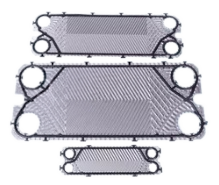
Custom heat exchanger gaskets are sealing components manufactured to match a particular heat exchanger design, plate geometry, connection arrangement, or application requirement. They are commonly used in gasketed plate heat exchangers, where the gaskets seal the channels between adjacent plates and direct the two process fluids through their intended flow paths.
Custom gaskets may also be required for replacement equipment, older heat exchangers, OEM systems, special plate designs, or applications involving unusual fluids and operating conditions.
How do heat exchanger gaskets work?
In a gasketed plate heat exchanger, thin metal plates are assembled into a plate pack. Gaskets sit in designated grooves around the plates, forming seals between neighboring channels and around the relevant ports.
The gasket must perform three functions:
- Prevent external leakage from the plate pack.
- Separate the two process fluids and prevent cross-contamination.
- Direct each fluid through the intended flow channels.
The plate pack’s compression and the gasket’s elastic properties help establish the seal. Correct gasket geometry, material condition, plate alignment, and assembly compression all influence sealing performance.
A gasket that is too hard, too soft, incorrectly profiled, chemically incompatible, or dimensionally inaccurate may not seal reliably, even if it looks similar to the original component.
Which heat exchangers use custom gaskets?
| Equipment type | Typical gasket requirements | Important considerations |
|---|---|---|
| Gasketed plate heat exchanger | Plate-specific perimeter and port seals | Plate geometry, gasket groove, material, and compression |
| Industrial process plate heat exchanger | Application-specific sealing materials and profiles | Chemical compatibility, temperature, pressure, and cleaning |
| HVAC plate heat exchanger | Gaskets suited to heating, cooling, or chilled-water service | Fluid composition, temperature cycling, and maintenance intervals |
| Food and beverage heat exchanger | Materials suitable for the intended hygienic application | Applicable food-contact requirements, cleaning chemicals, and temperature |
| OEM heat transfer equipment | Drawings or proprietary gasket profiles | Dimensional control, repeatability, and production consistency |
| Replacement or legacy equipment | Existing gasket or plate geometry may need to be reproduced | Identification, reverse engineering, and sample verification |
Important distinction: Not every heat exchanger uses replaceable elastomer gaskets. Brazed plate heat exchangers, for example, use brazed joints rather than conventional removable plate-pack gaskets. Shell-and-tube equipment may use flange, channel, bonnet, or other static seals instead of plate heat exchanger gaskets.
The first sourcing step is therefore to identify the equipment and the exact sealing component required.
Problem: The original gasket is no longer available
Why it happens: The heat exchanger may be an older model, the original supplier may have discontinued the part, or the equipment owner may not have access to the original part number.
How to solve it: Start by collecting the equipment nameplate information, model number, plate designation, original gasket part number if available, and clear photographs of the gasket and its installation position.
If documentation is unavailable, a supplier may be able to assess the physical sample or plate geometry. However, visual similarity alone does not establish dimensional accuracy or material compatibility.
What to provide to the supplier:
- Heat exchanger manufacturer and model, if known
- Original gasket part number, if available
- Plate identification or designation
- Existing gasket sample
- Photographs of the plate and gasket groove
- Process fluid and operating conditions
- Required quantity
Example: A maintenance team needs replacement gaskets for a plate heat exchanger whose original spare-parts documentation is missing. The team provides the plate markings, photographs, an existing gasket, and operating data. The supplier can then assess whether the component can be identified from existing tooling or requires further dimensional investigation.
2. How to Choose the Right Material for a Custom Heat Exchanger Gasket
The correct gasket material depends on the process fluid, operating and cleaning temperatures, pressure, chemical exposure, and required service life. EPDM, NBR, HNBR, FKM, and other elastomers have different properties, so no single material is suitable for every heat exchanger application.
Buyers should confirm material compatibility for the actual operating conditions rather than selecting a gasket based only on its color, nominal temperature rating, or lowest purchase price.
Common heat exchanger gasket materials
| Material | General characteristics | Typical application considerations | Points to verify |
|---|---|---|---|
| EPDM | Often offers good resistance to water, steam in suitable formulations, and many aqueous environments | Heating, cooling, chilled water, and selected process applications | Oil compatibility, exact formulation, temperature limits, and cleaning chemicals |
| NBR (nitrile rubber) | Commonly used where resistance to mineral oils and certain hydrocarbon-based fluids is required | Oil systems and selected industrial applications | Fluid composition, operating temperature, and resistance to additives |
| HNBR | Often provides improved heat and mechanical performance compared with conventional NBR | More demanding oil and industrial environments | Exact formulation, fluid compatibility, and temperature limits |
| FKM | Offers resistance to many oils, fuels, and chemicals at suitable operating conditions | Selected high-temperature or chemically demanding applications | Compatibility with specific chemicals, steam, hot water, and cleaning agents |
| Silicone rubber | Offers flexibility across a broad temperature range in suitable formulations | Selected specialized applications where its other properties are appropriate | Mechanical strength, compression behavior, fluid compatibility, and required approvals |
| Other engineered elastomers | May be selected for specialized chemical, thermal, or mechanical requirements | Applications that do not fit standard material options | Supplier documentation and application-specific testing |
This table is a starting point, not a material approval list. Different compounds within the same polymer family can have significantly different properties.
A material that performs well with one oil, acid, alkali, or cleaning solution may be unsuitable for another. Concentration, temperature, exposure time, and the presence of other chemicals can change compatibility.
EPDM vs. NBR vs. FKM: Which should you choose?
EPDM is frequently considered for water-based heating and cooling applications because many EPDM compounds offer good resistance to hot water and selected aqueous chemicals. It is generally unsuitable for many petroleum-based oils and fuels.
NBR is often considered when oil resistance is a priority. Its suitability depends on the type of oil, temperature, and formulation. It should not be assumed to withstand every hydraulic fluid or chemical mixture.
FKM can be appropriate for selected oil, fuel, and chemical applications where higher temperature resistance is needed. However, FKM is not universally compatible with every chemical or cleaning process, and its suitability must be checked against the actual service conditions.
HNBR and other specialized compounds may also be appropriate when additional mechanical or thermal performance is required.
Which operating conditions matter most?
Before confirming a material, assess the following:
1. Process fluid
Identify both the main process fluid and any additives, contaminants, or secondary chemicals that may contact the gasket.
2. Operating temperature
Record normal, minimum, and maximum temperatures. Include startup, shutdown, cleaning, sterilization, and other temperature excursions.
3. Pressure and pressure cycling
Provide operating pressure and any relevant pressure fluctuations. The suitability of a gasket depends on the complete plate-and-gasket assembly, not only the elastomer’s nominal properties.
4. Cleaning and maintenance chemicals
Industrial cleaning solutions can be more aggressive than the process fluid itself. Food-processing and pharmaceutical applications may involve repeated chemical cleaning or hot-water cycles.
5. Compression and recovery
The gasket must maintain adequate contact pressure within the heat exchanger’s specified assembly range. Compression set, aging, and repeated thermal cycles can reduce sealing performance.
Problem: A replacement gasket becomes hard, swollen, or cracked
Why it happens: The elastomer may be incompatible with the process fluid, exposed to excessive temperature, affected by cleaning chemicals, or deteriorated through aging and compression set.
How to solve it: Inspect the failed gasket and review the operating history before ordering a replacement. Changing to a harder or more expensive material without identifying the failure mechanism may not solve the problem.
What to provide to the supplier:
- Current gasket material, if known
- Process fluid composition
- Normal and maximum temperatures
- Operating pressure
- Cleaning chemicals and concentrations
- Approximate service life of the existing gasket
- Photographs of the damaged component
Example: A gasket used in a water-based cooling system deteriorates after a process change introduces an oil-containing additive. The replacement material should be evaluated against the revised fluid composition rather than selected using the original water-service specification.
What about material certificates and traceability?
For critical industrial applications, buyers may need documented material identification, batch traceability, specified physical properties, or compliance with application-specific requirements.
The exact documentation depends on the product, manufacturer, and end-use regulations. A generic statement that a gasket is “food grade,” “chemical resistant,” or “high temperature” is not enough to demonstrate suitability.
Request the relevant documentation and verify that it applies to the supplied compound and intended application.
3. Custom Gasket Tooling: When Do You Need a New Mold?
Tooling is one of the main commercial considerations when ordering custom heat exchanger gaskets. A new mold or production tool may be necessary when the required gasket profile cannot be produced using existing tooling, but not every custom order requires a new mold.
The key question is whether a supplier already has a suitable tool that matches the required geometry, dimensions, material, and production process.
What is gasket tooling?
Tooling refers to the mold, die, or other production equipment used to manufacture a gasket with a particular shape and profile.
For a molded plate heat exchanger gasket, the tooling must reproduce the required sealing features, including relevant port areas, locating features, and perimeter geometry.
Depending on the design and manufacturing method, the process may involve:
- Mold design and manufacturing
- Tool setup and production preparation
- Material and process qualification
- Initial sample production
- Dimensional inspection
- Sample approval
- Production release
Not all gasket manufacturing processes require a conventional mold. Some flat or simpler sealing components may be cut from sheet material or produced using another suitable method. The manufacturing method should match the gasket design and its performance requirements.
When is new tooling necessary?
New tooling may be needed in the following situations:
- The gasket has a proprietary or uncommon profile.
- No existing tool matches the required dimensions.
- The original component is obsolete.
- The design has been modified.
- The customer requires a new OEM gasket design.
- The gasket includes special locating or sealing features.
- Existing tooling cannot meet the required dimensional or production requirements.
However, if an existing tool is available and confirmed to match the required gasket, using it may reduce initial costs and shorten preparation time.
Do not assume that two gaskets are interchangeable because they look similar. The port geometry, sealing beads, locating features, thickness, and overall profile may differ even between visually similar designs.
How much does custom gasket tooling cost?
There is no universal tooling price for custom heat exchanger gaskets. The cost depends on the complexity of the gasket, dimensions, material and manufacturing process, mold construction, precision requirements, and whether the tool already exists.
The quotation should separate one-time tooling charges from recurring unit costs.
| Cost item | What it covers | Questions to ask |
|---|---|---|
| Existing tooling | Use of an available production tool | Does it match the exact gasket profile and dimensions? |
| New mold or tool | Tool design and manufacture | What design assumptions and specifications are included? |
| Sample production | Initial gasket samples | How many samples are included in the quotation? |
| Inspection | Dimensional and material checks | Which dimensions and properties will be inspected? |
| Tool modifications | Changes after initial sampling | What happens if the sample does not meet the agreed drawing? |
| Repeat production | Manufacturing subsequent batches | Are setup charges or minimum production quantities applicable? |
| Tool storage and maintenance | Keeping the tool available for future orders | Who owns the tool, where is it stored, and how long is it retained? |
Who owns the custom gasket mold?
Tool ownership should be agreed in writing before tooling begins.
A buyer paying a tooling charge should not automatically assume that the payment transfers ownership or guarantees unrestricted access to the tool. Contract terms may distinguish between ownership of the physical mold, intellectual property in the gasket design, and permission to use the tool for production.
The purchase agreement should clarify:
- Who owns the tool
- Who holds and maintains it
- Whether the tool can be used for other customers
- Whether the tool can be transferred to another factory
- What happens if the supplier relationship ends
- How long the tool will be retained
- Who pays for repairs, maintenance, or replacement
- Whether the tool may be used only for the buyer’s orders
These questions are particularly important for OEMs and distributors that expect to purchase the same gasket over several years.
Problem: The supplier quotes a low unit price but a high tooling charge
Why it happens: Tooling is a fixed initial cost, while the unit price covers recurring production. A low unit price does not necessarily make the order economical if the initial quantity is small.
How to solve it: Compare the total cost at realistic order quantities and forecast demand. Request separate prices for tooling, samples, and production units.
What to provide to the supplier:
- Gasket drawing or sample
- Expected first-order quantity
- Estimated annual demand
- Forecast order frequency
- Required delivery schedule
- Tool ownership requirements
Example: A distributor expects to purchase replacement gaskets periodically rather than in one large batch. It should compare a quotation with a new mold against one using an existing compatible tool, including any differences in unit cost, lead time, and future availability.
4. MOQ for Custom Heat Exchanger Gaskets: How Does It Work?
MOQ, or minimum order quantity, is the smallest quantity a supplier is willing to manufacture or sell under specified commercial conditions. For custom heat exchanger gaskets, MOQ can depend on the production process, material batch requirements, tooling, setup time, and the supplier’s manufacturing economics.
There is no standard MOQ that applies to every gasket supplier or design. Buyers should request the minimum quantity for the specific gasket, material, and production method rather than relying on a general industry figure.
What determines gasket MOQ?
1. Manufacturing process
Molded gaskets may require production setup and process preparation. Simple cut gaskets may have different minimum quantities because the manufacturing process is different.
2. Material requirements
Specialized elastomer compounds, unusual colors, or specific material requirements may affect minimum production quantities.
3. Tooling availability
An existing tool may reduce initial preparation costs, but it does not guarantee that a supplier will accept a very small order.
4. Setup and inspection costs
Small production runs can require nearly the same setup, documentation, and inspection activities as larger runs. Suppliers may establish an MOQ to make these activities commercially viable.
5. Customization complexity
A gasket with a new profile, special tolerances, or extensive inspection requirements may have different commercial conditions from a standard replacement part.
6. Demand predictability
Suppliers may be more flexible when a buyer can provide a reliable forecast or place repeat orders.
How can buyers reduce MOQ?
Several approaches may help reduce the quantity required for an initial order:
- Ask whether the supplier already has compatible tooling.
- Check whether an existing standard profile can meet the application requirements.
- Request a sample or small pilot batch before committing to larger production.
- Discuss a forecast-based supply agreement for repeat orders.
- Consolidate compatible orders where the designs, materials, and production requirements genuinely allow it.
- Ask whether the supplier can manufacture a smaller batch at a different unit price.
A lower MOQ may come with a higher unit price. Buyers should compare the complete cost rather than treating MOQ as the only purchasing criterion.
Should you buy more gaskets to obtain a lower unit price?
Only if the expected demand, storage conditions, and shelf-life requirements justify the additional inventory.
Elastomer components can deteriorate during storage if they are exposed to unsuitable temperatures, light, ozone, deformation, contamination, or other adverse conditions. Storage recommendations and shelf-life requirements depend on the compound and applicable specifications.
Before purchasing a large quantity, establish:
- Expected annual consumption
- Planned maintenance intervals
- Storage conditions
- Supplier’s stated shelf-life or storage guidance
- Packaging method
- Batch identification and traceability
- Reorder lead time
- Cost of inventory and risk of obsolescence
A lower unit price can be offset by unused inventory, deterioration, or changes to the equipment design.
Problem: The supplier’s MOQ exceeds the buyer’s immediate demand
Why it happens: The supplier may need to recover setup costs, purchase a minimum quantity of compound, or run production economically.
How to solve it: Ask for alternatives, such as existing tooling, a small pilot batch, a higher unit price for a smaller order, or scheduled releases under an agreed supply arrangement.
What to provide to the supplier:
- Quantity needed immediately
- Forecast annual demand
- Number of gasket designs
- Whether all designs use the same material
- Required delivery dates
- Inventory and storage limitations
Example: An equipment service company needs a limited number of replacement gaskets for maintenance work but expects similar demand throughout the year. It can compare a small initial order with a larger batch delivered in scheduled quantities, provided storage conditions, shelf life, and commercial terms are agreed.
5. How to Specify a Custom Heat Exchanger Gasket Correctly
A supplier cannot reliably quote or manufacture a custom gasket from a vague description such as “rubber gasket for a plate heat exchanger.” The buyer must provide enough information to identify the component, reproduce its geometry, and select an appropriate material.
The best starting point is the original part number or a controlled engineering drawing. If neither is available, a physical sample and equipment information may support identification, but additional dimensional verification may be necessary.
What dimensions should a custom gasket drawing include?
The required dimensions depend on the gasket design, but a drawing may need to show:
- Overall length and width
- Gasket thickness
- Port diameters and shapes
- Perimeter profile
- Sealing bead geometry
- Locating tabs or clips
- Groove engagement features
- Relevant cross-sectional dimensions
- Dimensional tolerances
- Material designation
- Critical sealing surfaces
- Revision number and drawing identification
For a plate heat exchanger gasket, the sealing profile and its relationship to the plate groove are particularly important. A gasket that is slightly too large, too small, too thick, or incorrectly located may interfere with plate assembly or fail to seal as intended.
Do not measure only the outer dimensions if the gasket includes complex port seals or locating features.
Can a supplier manufacture a gasket from a physical sample?
Yes, a physical sample can be used as a reference for identification and dimensional assessment, provided the supplier has the necessary capabilities and sufficient information.
However, an old gasket may have expanded, shrunk, hardened, torn, or permanently deformed during service. Its current dimensions may not match the original design.
Whenever possible, provide the sample together with the corresponding plate, equipment model, original part number, or engineering drawing. These additional references can reduce uncertainty.
If the gasket is safety-critical or used in a demanding process, the buyer should require a documented design review and appropriate sample verification before approving production.
What should a custom gasket RFQ include?
| Requirement | Information to provide | Why it matters |
|---|---|---|
| Equipment identification | Manufacturer, model, plate designation | Helps identify the correct gasket design |
| Part identification | Original part number or drawing number | Reduces ambiguity |
| Geometry | Drawing, dimensions, or physical sample | Defines the required profile |
| Material | Required elastomer or performance criteria | Supports material selection |
| Fluid conditions | Process fluid and cleaning chemicals | Determines compatibility requirements |
| Temperature | Normal and maximum operating temperatures | Helps screen material suitability |
| Pressure | Operating pressure and relevant fluctuations | Provides application context |
| Quantity | Initial order and forecast demand | Supports MOQ and pricing |
| Tooling | Existing-tool preference or new-tool requirement | Clarifies initial costs |
| Inspection | Critical dimensions and acceptance criteria | Defines quality expectations |
| Packaging | Individual, bulk, labeled, or other requirements | Supports handling and traceability |
| Destination | Country and delivery location | Helps determine export and shipping requirements |
| Documentation | Material identification, inspection records, or other required documents | Establishes acceptance requirements |
| Delivery | Required delivery date and shipment arrangement | Supports production and logistics planning |
How should samples be approved?
Sample approval should be based on agreed criteria rather than appearance alone.
Depending on the application, the approval process may include:
- Confirming the drawing and revision.
- Checking critical dimensions and gasket profile.
- Verifying the specified material and relevant documentation.
- Inspecting visible defects and workmanship.
- Confirming that locating and sealing features match the intended plate.
- Reviewing assembly fit using the correct equipment and procedures.
- Conducting an appropriate sealing or functional test when required.
- Recording the approval and identifying the approved sample or specification.
A sample that fits the plate is not automatically proof of long-term chemical compatibility or service life. Those properties must be evaluated using the relevant material information and application conditions.
Problem: The new gasket looks correct but leaks after installation
Why it happens: Potential causes include incorrect dimensions, an unsuitable compound, damaged plates, improper gasket installation, contamination, incorrect plate-pack compression, or operating conditions outside the equipment’s design limits.
How to solve it: Check the complete sealing system before concluding that the gasket material is defective. Follow the heat exchanger manufacturer’s approved assembly and tightening procedures. Do not compensate for a dimensional or material mismatch by applying excessive compression.
What to provide to the supplier:
- Approved gasket drawing and revision
- Photographs of the installed gasket and leakage location
- Plate condition and equipment model
- Assembly procedure and relevant compression information
- Operating temperature and pressure
- Process fluid and cleaning history
- Details of any recent maintenance or process changes
Example: A replacement gasket leaks around a port after reassembly. Inspection reveals that the gasket profile does not align correctly with the plate’s locating features. The problem requires correction of the component specification or installation, not simply a change to a supposedly stronger elastomer.
6. Custom Gasket Manufacturing and Quality Control
Reliable custom gasket sourcing requires control over material, geometry, manufacturing consistency, and acceptance criteria. Buyers should agree on these requirements before production begins, especially for OEM parts or components used in critical industrial equipment.
The supplier’s actual process and inspection capabilities should be verified for the specific gasket design. A supplier that can produce simple cut gaskets may not necessarily have the tooling, molding process, or technical experience required for a complex molded plate heat exchanger gasket.
Which quality checks should buyers request?
The appropriate checks depend on the gasket’s design and application.
Dimensional inspection
Critical dimensions, sealing features, port geometry, and locating features should be checked against the approved drawing.
Material verification
Where required, the supplier should provide appropriate material identification or documentation demonstrating conformity with the specified compound.
Visual inspection
Check for visible defects such as tears, incomplete molding, contamination, surface damage, or other imperfections relevant to the manufacturing method.
Production consistency
For repeat orders, establish how the supplier controls changes in material, tooling, process parameters, and inspection methods.
Functional verification
Where appropriate, evaluate fit and sealing performance using an agreed procedure. Testing should reflect the equipment design and intended operating conditions.
Batch identification
For applications requiring traceability, agree on how production batches, material lots, inspection records, and supplied quantities will be identified.
Should buyers request pressure or leak testing?
Testing requirements depend on the product and application. A gasket may be dimensionally inspected as an individual component, while sealing performance is verified after assembly in the intended heat exchanger or an appropriate test fixture.
Buyers should distinguish between an individual gasket inspection and a functional test of the complete assembled equipment. The latter depends on plate condition, assembly, compression, test medium, pressure, and the applicable procedure.
Do not assume that a standalone gasket can demonstrate complete heat exchanger pressure integrity.
For critical applications, agree on the test method, acceptance criteria, responsible party, and required records before production.
How should suppliers handle engineering changes?
Any change to the gasket profile, material, tooling, or critical production process should be assessed against the approved specification.
For OEM and repeat-order applications, establish a change-control process that includes:
- Identification of the affected drawing or part number
- Description of the proposed change
- Reason for the change
- Assessment of fit and material implications
- Required sample or requalification activities
- Written approval before implementation, where contractually required
- Updated documentation and revision control
This helps prevent a replacement batch from differing from the component originally approved by the buyer.
7. Comparing Custom Gasket Options and Suppliers
The best sourcing option depends on the equipment design, material requirements, order quantity, tooling availability, and the buyer’s need for technical and export support.
Buyers should compare suppliers on their ability to deliver the correct component consistently, not just on unit price or whether they describe themselves as a manufacturer.
Existing tooling vs. new tooling
| Factor | Existing compatible tooling | New tooling |
|---|---|---|
| Initial cost | May avoid a new mold charge | Usually involves an additional setup or tooling investment |
| Lead time | May reduce tooling preparation time | Requires tool production and sample verification |
| Design flexibility | Limited to what the existing tool can produce | Can be designed around the specified geometry |
| Dimensional suitability | Must be verified against the required part | Must be verified through drawing review and sampling |
| Best suited to | Identified replacement parts with a confirmed match | New OEM designs, unavailable profiles, or required design changes |
| Main risk | Assuming a similar-looking tool is compatible | Paying for tooling before requirements and ownership are clarified |
An existing tool is beneficial only if it produces the correct part. Buyers should request confirmation of the profile, dimensions, material suitability, and sample acceptance.
Direct manufacturer vs. trading or export partner
A direct manufacturer and a trading/export partner can both be suitable sourcing routes. The right choice depends on the buyer’s internal resources, order complexity, and requirements for manufacturing access and international coordination.
| Factor | Direct manufacturer | Trading/export partner |
|---|---|---|
| Production access | May provide direct access to its own manufacturing process | Should explain which manufacturing partner will produce the gasket |
| Technical communication | May communicate directly with production and engineering teams | Can coordinate technical requirements between buyer and manufacturing partner |
| Product range | Depends on the manufacturer’s specialization | May coordinate sourcing across multiple qualified manufacturing partners |
| Export coordination | Buyer may need to manage some export processes directly | May provide export documentation, shipping coordination, and communication support |
| Quality control | Buyer should verify the manufacturer’s actual inspection processes | Buyer should verify how the partner coordinates inspection and communicates results |
| Main consideration | Confirm the manufacturer can produce the exact gasket type | Confirm the actual producer, technical transparency, and responsibilities |
A trading/export partner should not be mistaken for the factory producing the gasket. Buyers should know who manufactures the product, who performs the inspection, which legal entity is responsible for the sale, and how quality issues will be handled.
How to verify a gasket supplier in China
Before placing a significant order, buyers should consider the following checks:
- Verify the legal entity. Confirm the registered business identity and the party named in the quotation and contract.
- Identify the actual manufacturer. Ask which company will produce the gasket and what manufacturing process it uses.
- Review relevant production capability. Request evidence appropriate to the exact gasket type, such as tooling information, process descriptions, or a remote production review.
- Confirm material and inspection arrangements. Establish how materials, critical dimensions, and nonconforming products are handled.
- Approve a sample. Use an agreed drawing and acceptance criteria.
- Consider independent inspection. For higher-risk orders, arrange an inspection before shipment when commercially appropriate.
- Check payment details. Confirm that the contractual and payment arrangements are consistent and independently verify any unexpected changes to bank details.
- Review delivery and after-sales terms. Establish responsibility for defects, replacement parts, documentation, and lead-time commitments.
A website, catalog, certificate image, or supplier statement should not be treated as sufficient proof of manufacturing capability on its own.
What makes a good custom gasket supplier?
Look for a supplier that can:
- Understand the heat exchanger and identify the required sealing component.
- Discuss material compatibility using the actual service conditions.
- Review drawings and dimensional requirements.
- Explain whether existing tooling is available.
- Quote tooling, samples, MOQ, and recurring production separately.
- Define inspection and acceptance criteria.
- Maintain appropriate material and production records.
- Communicate lead times and production constraints clearly.
- Support repeat orders and manage specification changes.
- Coordinate export packaging and documentation where required.
A supplier that asks detailed questions about fluids, temperature, gasket geometry, and intended use may be better positioned to evaluate the requirement than one that provides a price without clarifying the specifications.
 8. What Affects the Price of Custom Heat Exchanger Gaskets?
 8. What Affects the Price of Custom Heat Exchanger Gaskets?
The price of a custom heat exchanger gasket depends on its design, material, manufacturing process, order quantity, tooling requirements, inspection needs, and delivery arrangements. Buyers should request an itemized quotation so that initial engineering and tooling costs can be distinguished from recurring production costs.
Main cost factors
| Cost factor | Why it affects the quotation | What to clarify |
|---|---|---|
| Material | Different elastomer compounds have different costs and processing requirements | Exact material designation and required documentation |
| Gasket dimensions | Size and geometry affect material consumption and production method | Approved drawing and dimensional tolerances |
| Profile complexity | Complex molded features may require specialized tooling | Whether an existing tool is suitable |
| Tooling | New molds or dies create initial costs | Tool ownership, storage, maintenance, and transfer terms |
| MOQ | Small batches may have higher unit costs | Minimum quantity and pricing at alternative quantities |
| Quality requirements | Additional inspection or documentation can add cost | Inspection plan and acceptance criteria |
| Customization | Special designs or OEM requirements may involve engineering work | Scope of design, samples, and approval activities |
| Packaging | Individual packaging, labeling, or special protection may add cost | Packaging specification and labeling requirements |
| Shipping | Freight, delivery terms, and destination affect landed cost | Incoterms, shipment method, and destination |
| Import charges | Duties, taxes, brokerage, and local charges may apply | Import responsibilities and applicable charges |
How should buyers compare quotations?
Compare the total cost of supply, not only the unit price.
A practical cost comparison should include:
- Tooling and engineering charges
- Sample and inspection costs
- Unit price at the actual order quantity
- MOQ and any excess inventory
- Packaging and labeling
- International freight
- Applicable import duties, taxes, and handling charges
- Expected reorder lead time
- Replacement availability
- Potential cost of premature gasket failure
For example, a lower-priced gasket that is incompatible with the process fluid may need to be replaced more frequently and create additional labor, downtime, and maintenance costs. A higher-priced option is not automatically better either; it should be supported by suitable material specifications, dimensional accuracy, and relevant evidence of quality.
What should a custom gasket quotation include?
Request a quotation that clearly identifies:
- Gasket description and part number
- Drawing or sample reference
- Material specification
- Unit price and currency
- MOQ and price breaks, if available
- Tooling and sample charges
- Production lead time
- Inspection and documentation requirements
- Packaging and labeling
- Shipping terms and destination assumptions
- Payment terms
- Warranty or nonconformance arrangements, where applicable
- Tool ownership and storage terms
- Quotation validity period
A complete quotation reduces the risk of comparing different technical or commercial assumptions as if they were equivalent.
9. Common Mistakes When Ordering Custom Heat Exchanger Gaskets
Avoiding specification and sourcing mistakes can reduce leakage risks, unnecessary tooling expenditure, delivery delays, and inventory problems.
Mistake 1: Selecting a gasket by appearance alone
What goes wrong: Two gaskets may look similar but differ in profile, thickness, port geometry, or locating features.
What to do instead: Confirm the original part number, drawing, plate designation, or physical sample. Verify critical dimensions before approving production.
Mistake 2: Choosing material based only on temperature
What goes wrong: A gasket may tolerate the temperature but react poorly to the process fluid, additives, or cleaning chemicals.
What to do instead: Evaluate temperature and chemical compatibility together. Include startup, shutdown, cleaning, and abnormal operating conditions.
Mistake 3: Assuming the same polymer always has the same performance
What goes wrong: Compounds within the same polymer family can differ in hardness, compression behavior, chemical resistance, and temperature limits.
What to do instead: Specify the required compound or agreed performance criteria and request relevant documentation.
Mistake 4: Ignoring tooling ownership
What goes wrong: The buyer may pay for a custom mold but later discover that access, transfer, or future use is restricted by the supplier’s terms.
What to do instead: Agree on ownership, permitted use, maintenance, storage, and transfer conditions in writing before paying for tooling.
Mistake 5: Focusing only on MOQ
What goes wrong: A supplier with a lower minimum quantity may have a higher unit price, while a larger order may create unnecessary inventory.
What to do instead: Compare total cost at realistic demand levels and include storage, shelf life, reorder frequency, and obsolescence risks.
Mistake 6: Approving samples without defined criteria
What goes wrong: A sample may look acceptable but fail dimensional, material, or functional requirements.
What to do instead: Approve against a controlled drawing, agreed material specification, critical dimensions, and suitable inspection or functional tests.
Mistake 7: Overlooking plate condition and installation
What goes wrong: A correct gasket may still leak if plates are damaged, sealing grooves are contaminated, the gasket is incorrectly installed, or plate-pack compression is outside the specified range.
What to do instead: Inspect the complete sealing system and follow the heat exchanger manufacturer’s assembly instructions.
Mistake 8: Accepting vague material or quality claims
What goes wrong: Terms such as “premium rubber,” “industrial grade,” or “chemical resistant” do not establish suitability for a particular application.
What to do instead: Specify the compound or performance requirements and identify the documentation and inspections needed for acceptance.
Mistake 9: Failing to control specification changes
What goes wrong: A later production batch may use a different material or profile without the buyer realizing it.
What to do instead: Establish drawing revision control and written approval requirements for changes that affect fit, material, or performance.
Mistake 10: Comparing prices without checking the actual producer
What goes wrong: Different quotations may represent different manufacturing processes, inspection levels, materials, or levels of export support.
What to do instead: Identify the actual manufacturer, confirm technical assumptions, and compare equivalent products and commercial terms.
10. Custom Heat Exchanger Gaskets: Buyer Checklist
Use this checklist before sending an RFQ to a gasket supplier or export partner.
Equipment and identification
Heat exchanger manufacturer and model
Plate designation or part number
Original gasket part number, if available
Existing gasket sample or engineering drawing
Photographs of the gasket and installation position
Required gasket quantity and number of different designs
Technical requirements
Required gasket dimensions and profile
Material specification or application requirements
Process fluid and any relevant additives
Normal and maximum operating temperatures
Operating pressure and relevant pressure fluctuations
Cleaning chemicals and cleaning conditions
Corrosion or chemical-compatibility concerns
Critical dimensions and tolerances
Relevant functional or sealing requirements
Applicable industry or customer-specific requirements
Tooling and MOQ
Confirmation of whether suitable existing tooling is available
New tooling quotation, if required
Sample and inspection costs
Tool ownership and storage arrangements
MOQ and unit pricing at different quantities
Expected annual demand
Repeat-order requirements and forecast
Quality and documentation
Approved drawing and revision
Material identification requirements
Dimensional inspection criteria
Sample approval process
Batch traceability requirements, where applicable
Required inspection or test records
Change-control procedure
Defect, replacement, and warranty arrangements
Commercial and logistics
Currency and unit price
Payment terms
Production lead time
Required delivery date
Packaging and labeling
Delivery destination
Shipping terms and Incoterms
Export and import documentation
Expected reorder lead time
The more complete the specification, the easier it is for a supplier to quote the correct gasket and identify technical or commercial risks before production starts.
11. Frequently Asked Questions About Custom Heat Exchanger Gaskets
1. Can heat exchanger gaskets be made to a custom size?
Yes. Custom gaskets can be produced for specific dimensions, profiles, and sealing requirements, provided the design can be manufactured using an appropriate process. Buyers should provide a drawing, original part number, or suitable sample and confirm material compatibility and critical tolerances before production.
2. Do custom heat exchanger gaskets always require a new mold?
No. A new mold is necessary only when a suitable existing tool is unavailable or cannot produce the required design. If a supplier can verify that existing tooling matches the required profile and dimensions, it may be possible to avoid a new tooling charge.
3. What is the typical MOQ for custom heat exchanger gaskets?
There is no universal MOQ for custom heat exchanger gaskets. The minimum quantity depends on the manufacturing process, tooling, material, setup requirements, and supplier policies. Ask for the MOQ for the exact gasket design and request alternative pricing for smaller and larger quantities.
4. Which material is best for heat exchanger gaskets?
There is no single best material for every heat exchanger. EPDM is commonly considered for suitable water-based applications, NBR for many oil-related applications, and FKM for selected demanding chemical or temperature conditions. The correct choice depends on the exact fluid, temperature, pressure, cleaning conditions, and gasket design.
5. Can a supplier manufacture a gasket from an old gasket sample?
Yes, a sample may help a supplier identify the profile and assess dimensions. However, an old gasket may have changed shape through aging, swelling, compression, or damage. Providing the heat exchanger model, plate information, drawing, or an undamaged reference component can improve identification.
6. How long does it take to manufacture custom heat exchanger gaskets?
Lead time depends on tooling availability, design complexity, material sourcing, sample approval, production scheduling, and inspection requirements. Orders requiring new tooling usually involve additional preparation compared with confirmed repeat orders. Buyers should request separate estimates for sampling, tooling, and mass production.
7. How can I reduce the cost of custom gasket tooling?
The most direct approach is to determine whether suitable existing tooling is available. Other options include simplifying the design where engineering permits, forecasting repeat demand, and comparing tooling costs at realistic production volumes. Any design change must preserve the required sealing geometry and application suitability.
8. Can EPDM gaskets be used with oil?
EPDM is generally unsuitable for many petroleum-based oils and fuels. Compatibility depends on the exact fluid and compound, so the buyer should confirm the fluid composition and operating conditions before selecting a replacement material.
9. Why does a new heat exchanger gasket leak?
Common causes include incorrect dimensions, unsuitable material, damaged plates, contamination, improper installation, or incorrect plate-pack compression. Check the gasket specification and the complete assembly before concluding that the material itself is defective.
10. Are all plate heat exchanger gaskets interchangeable?
No. Gaskets may differ in profile, dimensions, port geometry, locating features, material, and design. Confirm the heat exchanger model or the required drawing and part number before ordering. Visual similarity is not proof of compatibility.
11. What information should I provide for a custom gasket quotation?
Provide the heat exchanger model, original part number or drawing, gasket dimensions, material requirements, process fluid, temperature, pressure, required quantity, destination, and delivery deadline. If drawings are unavailable, include clear photographs and a physical sample where possible.
12. Can custom gasket suppliers provide material certificates?
Some suppliers can provide material identification documents, batch information, or other records, depending on the product and manufacturing process. Buyers should specify required documentation in advance and verify that it applies to the supplied material and intended application.
13. Should I order spare gaskets in advance?
Keeping spare gaskets can reduce downtime when replacement parts are needed, particularly for critical equipment. The appropriate quantity depends on failure history, maintenance schedules, lead time, storage conditions, and shelf-life requirements. Avoid overstocking without checking the manufacturer’s storage recommendations.
14. Can a trading company supply custom heat exchanger gaskets?
Yes. A trading or export company can coordinate sourcing, technical communication, customization, quality-control arrangements, packaging, and international shipment through manufacturing partners. Buyers should confirm the actual manufacturer, agree on technical acceptance criteria, and establish who is responsible for inspection and nonconforming products.
15. How do I verify a custom gasket supplier in China?
Check the supplier’s legal identity, identify the actual producer, review relevant manufacturing capabilities, confirm material and inspection arrangements, and approve a sample against the agreed specification. For higher-risk orders, consider an independent inspection and ensure that contract, payment, and delivery terms are clear.
12. Working With a China-Based Heat Exchanger Gasket Sourcing Partner
Sourcing custom heat exchanger gaskets from China can involve several separate tasks: identifying the correct component, confirming material suitability, checking tooling availability, coordinating samples, controlling production specifications, and arranging international delivery.
A reliable sourcing process should connect these tasks rather than treating the order as a simple purchase of a rubber component.
We work closely with qualified manufacturing partners and engineering teams to provide product sourcing, technical coordination, customization, quality-control coordination, and international export support.
For custom heat exchanger gasket inquiries, the most useful starting point is the equipment identification and technical information available to you. An original part number or drawing is ideal, but a physical sample, photographs, and application details may also help establish the next steps.
Before production, buyers should aim to confirm:
- The actual gasket design and intended equipment
- The proposed material and its suitability for the application
- Whether existing tooling is available
- The need for new tooling or samples
- MOQ, unit pricing, and initial costs
- Dimensional and material acceptance criteria
- Production lead time and delivery requirements
- Documentation and traceability requirements
- Responsibilities for inspection, defects, and replacement
The exact manufacturing arrangement, available documentation, and inspection scope should be confirmed for each product rather than assumed to be identical across all suppliers.
Request a Quote for Custom Heat Exchanger Gaskets
Need help sourcing custom heat exchanger gaskets from China?
Send us your heat exchanger model, gasket drawing or sample information, material requirements, operating conditions, and estimated order quantity. If the original gasket is obsolete or the required profile is unclear, explain the application and provide photographs where available.
We can review the sourcing requirements and coordinate with qualified manufacturing partners to discuss suitable gasket options, tooling availability, MOQ, sample approval, quality-control arrangements, and international export requirements.
A complete RFQ helps establish whether an existing gasket can meet your requirements or whether a custom design and tooling review is necessary.
Click here to schedule a consultation or submit your gasket requirements for review.