If you sell heat exchangers under your own brand, finding the right OEM manufacturer is more important than simply finding the lowest factory price.
A reliable OEM partner should be able to do more than manufacture a product.
The factory needs to understand your specifications, manufacture consistently, control quality, protect your product information, meet delivery requirements and support you when the product enters the market.
For brands, distributors, system integrators and equipment manufacturers, the real question is:
How do you find a heat exchanger factory that can reliably manufacture your product under your brand?
This guide explains how to evaluate a heat exchanger OEM manufacturer, from the first supplier search to sample approval and mass production.
1. What Is Heat Exchanger OEM Manufacturing?
OEM manufacturing means that a manufacturer produces a heat exchanger according to the buyer’s specifications, design, performance requirements or approved sample.
The finished product may be sold under the buyer’s own brand.
Depending on the project, OEM manufacturing can include:
- Manufacturing to customer drawings
- Manufacturing to customer specifications
- Custom heat exchanger design
- Private labeling
- Custom nameplates
- Custom packaging
- Custom connections
- Custom materials
- Product modifications
- Prototype production
- Mass production
For some projects, the buyer already has a complete design.
For others, the buyer only knows the required performance and installation dimensions and needs the factory to complete the engineering.
This creates an important distinction:
OEM manufacturing usually means manufacturing to an established customer specification.
ODM manufacturing generally involves more design responsibility from the manufacturer.
A brand should determine which model it actually needs before approaching factories.
2. Who Usually Needs a Heat Exchanger OEM Factory?
OEM sourcing is not limited to large industrial companies.
Typical customers include:
- Heat exchanger brands
- HVAC equipment manufacturers
- Refrigeration equipment manufacturers
- Heat pump manufacturers
- Chiller manufacturers
- Industrial equipment manufacturers
- Hydraulic equipment manufacturers
- Compressor manufacturers
- Energy equipment companies
- Distributors
- Engineering companies
- System integrators
- Aftermarket brands
A company may already have customers and sales channels but may not want to build its own heat exchanger production line.
An OEM factory allows the brand to outsource manufacturing while maintaining control over the product sold to its customers.
3. Do You Need an OEM Factory or a Distributor?
This is the first question to answer.
A distributor may be able to provide standard products quickly.
An OEM manufacturer should be able to provide a deeper level of production support.
For example:
| Requirement | Distributor | OEM Factory |
|---|---|---|
| Standard products | Usually | Yes |
| Custom dimensions | Limited | Yes |
| Custom drawings | Limited | Yes |
| Private labeling | Sometimes | Usually |
| Custom materials | Limited | Yes |
| Product engineering | Limited | Depending on factory |
| Prototype development | Limited | Usually possible |
| Mass production | Depends on source | Yes |
| Factory quality control | Limited visibility | Directly controllable |
However, not every company calling itself a “manufacturer” actually performs all manufacturing processes in-house.
Therefore, do not rely only on the word factory.
Verify what the supplier actually manufactures.
4. How to Find Heat Exchanger OEM Manufacturers
There are several practical ways to build an OEM supplier list.
Google Search
Google is useful for finding manufacturers using searches such as:
heat exchanger OEM manufacturerOEM heat exchanger factorycustom heat exchanger manufacturerprivate label heat exchanger manufacturerheat exchanger OEM suppliercustom plate heat exchanger manufacturerOEM plate heat exchangerOEM shell and tube heat exchangerbrazed plate heat exchanger OEMindustrial heat exchanger OEM manufacturer
Add the product type when necessary.
For example:
plate heat exchanger OEM manufacturer
will produce a different supplier set from:
shell and tube heat exchanger OEM manufacturer
The more specific the search intent, the easier it is to find factories capable of producing the required product.
5. Search by Product Instead of Only Searching “Heat Exchanger OEM”
“Heat exchanger” is a very broad category.
A buyer should first identify the actual product.
For example:
Plate Heat Exchanger
Search:
plate heat exchanger OEM manufacturer
Brazed Plate Heat Exchanger
Search:
brazed plate heat exchanger OEM factory
Shell and Tube
Search:
shell and tube heat exchanger OEM manufacturer
Plate-Fin
Search:
plate fin heat exchanger OEM supplier
Oil Cooler
Search:
industrial oil cooler OEM manufacturer
Custom Heat Exchanger
Search:
custom heat exchanger manufacturer
This approach helps reduce irrelevant suppliers.
6. How to Tell Whether a Supplier Is a Real Factory
A website alone is not enough.
A supplier may describe itself as a manufacturer while outsourcing significant parts of production.
Ask direct questions:
Where is the factory located?
Which manufacturing processes are performed in-house?
Which processes are outsourced?
Can you provide a factory video or live factory tour?
Can you show the production equipment?
Where are pressure tests performed?
Where are quality inspections performed?
Can you provide sample inspection records?
Can you provide a production-flow diagram?
These questions are more useful than simply asking:
“Are you a factory?”
A manufacturer should be able to explain its production process clearly.
Some established OEM manufacturers publicly describe workflows covering engineering, production, validation, testing and long-term technical support rather than simply reselling catalog products.
7. Ask What the Factory Actually Manufactures
Do not ask only:
“Do you manufacture heat exchangers?”
Ask:
“Which components and processes do you manufacture in-house?”
For a plate heat exchanger, this may include:
- Plate forming
- Plate inspection
- Gasket production or installation
- Frame manufacturing
- Plate-pack assembly
- Pressure testing
- Final inspection
For a brazed plate heat exchanger:
- Plate forming
- Brazing
- Furnace processing
- Assembly
- Pressure testing
- Leak testing
For a shell-and-tube heat exchanger:
- Tube preparation
- Tube-sheet processing
- Shell fabrication
- Welding
- Tube installation
- Tube-to-tube-sheet joining
- Pressure testing
- Final inspection
This tells you much more about the factory’s actual capability.
8. Check the Factory’s Engineering Capability
OEM manufacturing is not always just a production job.
A brand may need the factory to solve technical problems.
For example:
“Our existing heat exchanger is too large for the new machine.”
or:
“We need the same thermal performance with a smaller footprint.”
or:
“The existing model has excessive pressure drop.”
or:
“We need a different material because the fluid is corrosive.”
A capable OEM partner should be able to evaluate the application instead of simply copying dimensions.
For heat exchanger projects, engineering may involve:
- Thermal calculation
- Heat-transfer area
- LMTD
- Pressure-drop calculation
- Flow arrangement
- Material selection
- Plate or tube selection
- Connection design
- Mechanical design
- CAD drawings
Some OEM manufacturers explicitly provide thermal calculations, drawings and material documentation as part of custom manufacturing.
9. Prepare Your OEM Specification Before Asking for a Quote
The quality of your RFQ directly affects the quality of the quotation.
At minimum, provide:
Thermal Requirements
- Heat duty
- Hot-side inlet temperature
- Hot-side outlet temperature
- Cold-side inlet temperature
- Cold-side outlet temperature
Flow Requirements
- Hot-side flow rate
- Cold-side flow rate
- Minimum flow
- Maximum flow
Fluid Information
- Fluid name
- Concentration
- Density
- Specific heat
- Viscosity
- Corrosive components
Hydraulic Requirements
- Maximum allowable pressure drop
Mechanical Requirements
- Operating pressure
- Design pressure
- Operating temperature
- Design temperature
Physical Requirements
- Maximum dimensions
- Connection type
- Connection size
- Installation orientation
The more complete the specification, the less likely the supplier is to make assumptions.
10. If You Already Have a Product, Send the Existing Drawing
If your company already sells a heat exchanger, you may not need to start the design from zero.
Provide:
- Existing drawing
- CAD file
- Product datasheet
- Photos
- Nameplate
- Sample unit
- Performance requirements
- Connection dimensions
- Installation dimensions
For replacement OEM projects, the existing model number can also be useful.
A factory may then determine whether it can:
Manufacture an equivalent product
or:
Redesign the product to meet the same performance requirements.
However, the supplier should not simply copy an existing product without confirming the required thermal and mechanical performance.
11. Sample First, Mass Production Later
Do not move directly from quotation to a large OEM order.
A safer process is:
Supplier Screening
↓
Technical Review
↓
Quotation
↓
Sample / Prototype
↓
Testing
↓
Sample Approval
↓
Pilot Production
↓
Mass Production
The sample should be tested under the actual application requirements whenever practical.
Check:
- Dimensions
- Connections
- Material
- Weight
- Heat-transfer performance
- Pressure drop
- Leakage
- Pressure resistance
- Appearance
- Nameplate
- Packaging
A sample that only “looks right” is not enough.
12. What Should Be Tested on an OEM Sample?
The exact tests depend on the product.
For a liquid-to-liquid heat exchanger, typical checks may include:
Thermal Performance
Can the unit achieve the required heat duty?
Pressure Drop
Does the pressure drop remain within the specified limit?
Leakage
Does the unit remain leak-free under the required test conditions?
Pressure Resistance
Does the pressure boundary meet the specified requirements?
Dimensions
Does the unit fit the customer’s equipment?
Connections
Are connection type, size and orientation correct?
Materials
Do the supplied materials match the approved specification?
For some products and applications, manufacturers may also perform specialized leak or non-destructive testing.
13. Quality Control Should Be Written Into the OEM Agreement
Do not leave quality requirements as verbal promises.
The OEM agreement or purchase specification should define important requirements such as:
- Product specification
- Approved drawings
- Materials
- Performance requirements
- Pressure-test requirements
- Leak-test requirements
- Inspection requirements
- Packaging
- Labeling
- Documentation
- Acceptable tolerances
- Warranty requirements
This creates a clear reference when production begins.
It also reduces disputes caused by different interpretations of the original quotation.
14. Ask for a Pre-Production Drawing
Before mass production, request an approved drawing.
The drawing should clearly show relevant information such as:
- Overall dimensions
- Connection dimensions
- Connection locations
- Mounting points
- Materials
- Plate/tube configuration where applicable
- Nameplate information
The buyer should approve the final production drawing before manufacturing begins.
This is particularly important for OEM products because a small dimensional change can prevent the product from fitting into the final machine.
15. Private Label and Branding Requirements
If the heat exchanger will be sold under your brand, define branding requirements before production.
Possible requirements include:
- Brand name
- Logo
- Nameplate
- Model number
- Serial number
- Product label
- User manual
- Packaging
- Carton markings
- Barcode
- QR code
Confirm whether the factory can produce the required labels and packaging.
Do not wait until the production order is ready to discuss branding.
Private-label OEM programs commonly include customer-specific branding and packaging requirements.
16. Protect Your Drawings and Product Information
If you provide proprietary drawings or product designs, consider how the information will be controlled.
Important documents may include:
- CAD files
- Engineering drawings
- Performance specifications
- Material specifications
- Customer lists
- Packaging designs
- Product pricing
- Proprietary modifications
Before sharing sensitive information, consider an appropriate:
NDA
and, where necessary:
OEM manufacturing agreement
The contract should clearly define:
- Ownership of drawings
- Ownership of tooling
- Confidentiality
- Permitted use
- Product exclusivity if applicable
- Production authorization
- Branding rights
Do not assume that sending a CAD file automatically gives the manufacturer permission to use it for other customers.
17. Ask About Tooling Ownership
Some OEM products require:
- Stamping dies
- Forming tools
- Fixtures
- Jigs
- Special welding fixtures
- Inspection fixtures
- Custom molds
If you pay for the tooling, define who owns it.
Also clarify:
Where is the tooling stored?
Can it be used for another customer?
Who pays for maintenance?
What happens if the supplier relationship ends?
This becomes increasingly important as the product volume increases.
 18. Compare OEM Suppliers by Total Cost, Not Unit Price
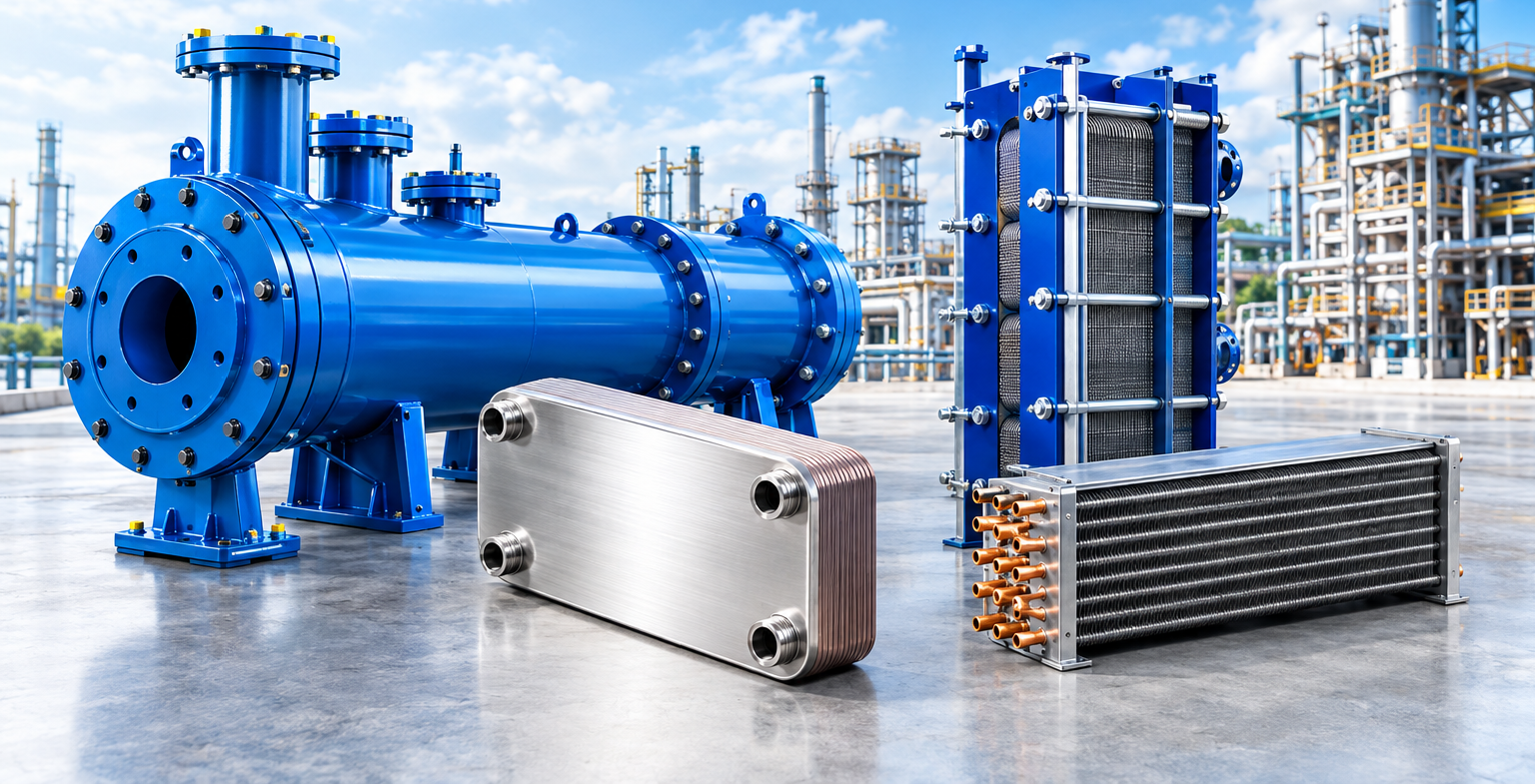 18. Compare OEM Suppliers by Total Cost, Not Unit Price
A supplier offering the lowest unit price may not be the lowest-cost option.
Calculate:
Product Price
Tooling
Sample Cost
Testing
Packaging
Shipping
Import Costs
Quality Inspection
Warranty Risk
Potential Failure Cost
The actual sourcing cost is the total landed and operating cost.
A slightly higher unit price may be justified if the supplier provides:
- Better quality control
- Lower failure rates
- More stable production
- Better documentation
- Shorter lead times
- Better technical support
19. MOQ: How Many Units Do You Need?
MOQ means:
Minimum Order Quantity
Different factories have different MOQ requirements.
For a new OEM program, ask about:
- Prototype MOQ
- Sample MOQ
- Pilot-production MOQ
- Mass-production MOQ
Do not assume that the factory’s standard MOQ applies to customized OEM products.
A customized heat exchanger may require special tooling or materials, which can change the minimum economical production quantity.
Some OEM manufacturers explicitly support prototype quantities before moving into volume production.
20. Ask About Production Capacity
If your brand grows, the factory must be able to scale with you.
Ask:
What is your monthly production capacity?
What is your current utilization?
How many production lines are available?
What is the normal lead time?
What happens when demand doubles?
Can you support urgent orders?
Capacity should not be judged only by the size of the factory.
Look at actual production capability for the specific heat exchanger type you are purchasing.
21. Lead Time Is Part of OEM Quality
A technically good product delivered late can still create problems.
Ask for separate lead times for:
- Prototype
- Sample
- Tooling
- Pilot production
- Mass production
Also clarify whether the lead time begins after:
Purchase order
or:
Drawing approval
or:
Deposit payment
or:
Material confirmation
This small detail can prevent significant misunderstandings.
22. Quality Inspection During Mass Production
Do not rely only on final inspection.
A stronger OEM quality process can include:
Incoming Material Inspection
↓
First Article Inspection
↓
Process Inspection
↓
Assembly Inspection
↓
Pressure / Leak Testing
↓
Final Inspection
↓
Packaging Inspection
Quality should be controlled throughout production rather than discovered only after the finished products are completed.
Some heat exchanger manufacturers publicly describe multi-stage quality systems covering incoming materials, production, testing and final inspection.
23. Ask for Quality Records
For important OEM programs, request appropriate documentation such as:
- Material certificates
- Inspection reports
- Pressure-test reports
- Leak-test reports
- Dimensional inspection
- Performance test results
- Certificate of conformity
- Calibration records where applicable
The exact documentation should match the product and customer requirements.
A supplier should not promise every certification for every product without first confirming the applicable design and regulatory requirements.
 24. Factory Audit Before Mass Production
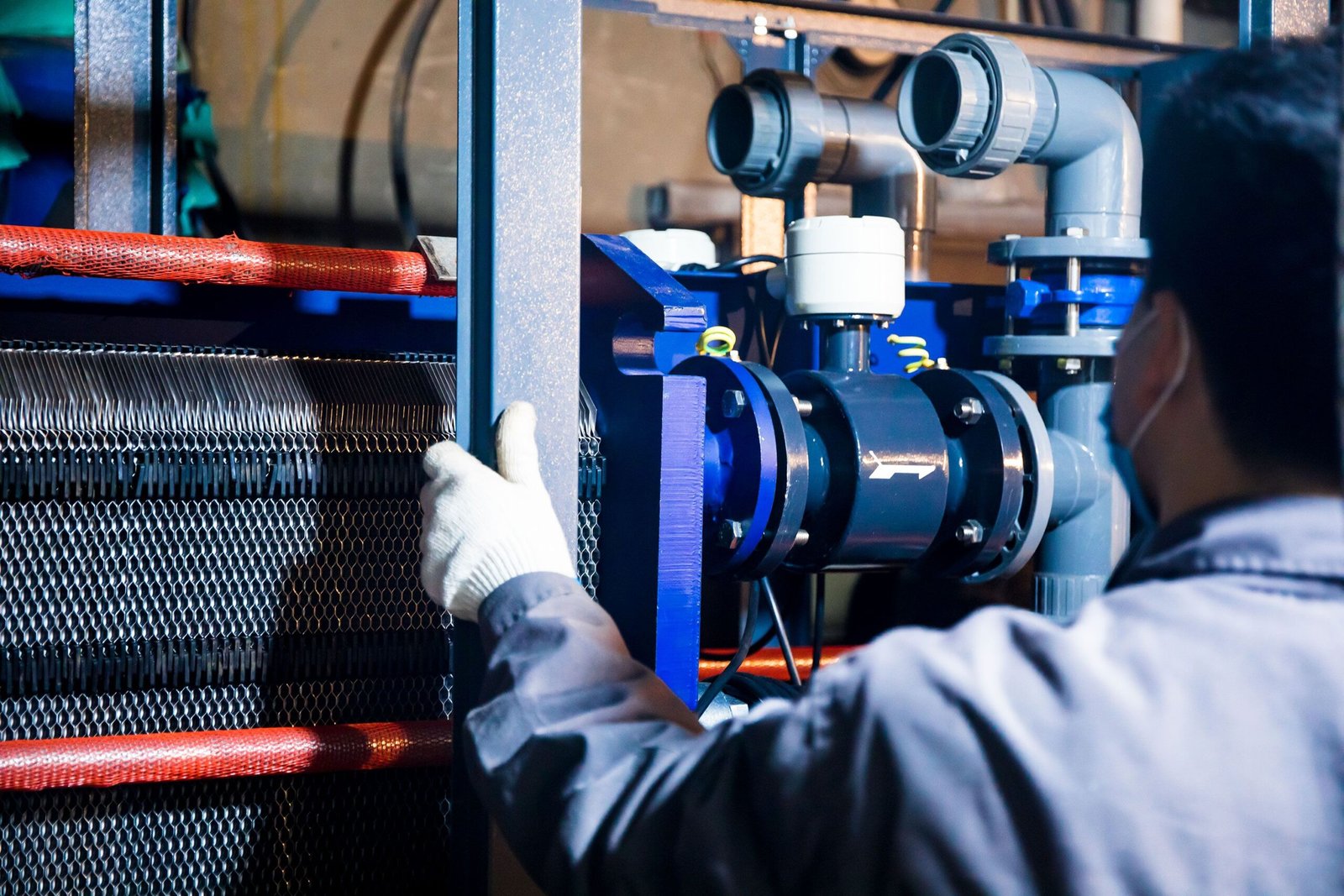 24. Factory Audit Before Mass Production
For a large OEM program, consider conducting a factory audit.
A practical audit should examine:
Production
- Manufacturing equipment
- Production capacity
- Production flow
- Process control
Quality
- Inspection equipment
- Testing equipment
- Calibration
- Quality records
- Non-conforming product control
Engineering
- Design capability
- Thermal calculation
- CAD
- Technical documentation
Supply Chain
- Raw material suppliers
- Critical component suppliers
- Material traceability
Management
- Production planning
- Lead-time management
- Corrective actions
A factory audit is particularly useful when the product is customized or failure would create significant warranty or reputational costs.
25. Warning Signs When Choosing an OEM Factory
Be cautious if a supplier:
1. Gives a price without asking about the application
A heat exchanger cannot always be selected reliably from only:
“500 kW.”
The factory should ask for relevant operating conditions.
2. Cannot explain its production process
A manufacturer should know how the product is made.
3. Refuses to provide basic technical documentation
Documentation requirements vary, but a serious OEM project requires clear technical communication.
4. Changes specifications after ordering
Unexpected changes to materials, dimensions or components should be investigated.
5. Offers an unusually low price without explaining why
A low price may result from:
- Different material
- Reduced testing
- Lower manufacturing tolerance
- Different components
- Excluded documentation
- Different warranty conditions
6. Cannot provide a sample
For customized OEM products, sample validation is an important risk-control step.
26. How to Compare Three OEM Heat Exchanger Factories
Do not compare suppliers using price alone.
Create a supplier scorecard.
| Category | Supplier A | Supplier B | Supplier C |
|---|---|---|---|
| Factory capability | |||
| Engineering support | |||
| Product quality | |||
| Testing capability | |||
| OEM experience | |||
| Sample quality | |||
| Lead time | |||
| MOQ | |||
| Price | |||
| Documentation | |||
| Communication | |||
| After-sales support |
Assign a score to each category.
This makes supplier selection more objective.
27. The Best OEM Factory Is Not Necessarily the Cheapest
Suppose three factories quote:
Supplier A: $100
Supplier B: $108
Supplier C: $118
It is tempting to choose Supplier A.
But imagine:
Supplier A has inconsistent quality.
Supplier B provides stable production and good documentation.
Supplier C has excellent engineering but significantly longer lead times.
The best supplier depends on your business model.
For a new brand, reliability may be more important than saving a few dollars per unit.
For high-volume commodity products, unit economics may become more important.
The correct decision depends on:
Product value + failure risk + volume + market requirements + customer expectations.
28. OEM Contract: Points to Confirm Before Production
Before signing a long-term OEM agreement, confirm:
Product
- Approved model
- Approved drawing
- Materials
- Performance
Quality
- Inspection standards
- Test requirements
- Acceptance criteria
Branding
- Logo
- Nameplate
- Packaging
- Manuals
Commercial
- Price
- MOQ
- Payment terms
- Lead time
Intellectual Property
- Drawings
- Tooling
- Confidential information
- Product ownership
Warranty
- Warranty period
- Defect definition
- Replacement policy
- Technical support
Delivery
- Shipping terms
- Packaging
- Documentation
The agreement should reflect the actual requirements of your OEM program.
29. From Prototype to Mass Production
A reliable OEM sourcing process can be structured as:
1. Define the product
↓
2. Prepare technical requirements
↓
3. Search for manufacturers
↓
4. Verify factory capability
↓
5. Request quotations
↓
6. Compare suppliers
↓
7. Review engineering
↓
8. Build sample
↓
9. Test sample
↓
10. Approve drawing
↓
11. Pilot production
↓
12. Inspect production
↓
13. Start mass production
↓
14. Monitor quality
This process reduces the risk of discovering major problems after a large order has already been produced.
30. What Should You Send to a Heat Exchanger OEM Factory?
For the fastest and most accurate quotation, prepare:
Product type
Application
Fluid
Flow rate
Inlet temperature
Outlet temperature
Operating pressure
Design pressure
Allowable pressure drop
Heat duty
Material requirement
Connection size
Maximum dimensions
Annual quantity
Target market
Required certifications
Branding requirements
Packaging requirements
If you already have a drawing or sample, send it with the RFQ.
If you are replacing an existing product, provide the existing model and nameplate information whenever possible.
31. OEM Heat Exchanger Sourcing Checklist
Before selecting a factory, ask:
☐ Is it a real manufacturing facility?
☐ What processes are performed in-house?
☐ Can the factory manufacture to drawings?
☐ Can it provide engineering support?
☐ Can it produce samples?
☐ Can it support custom materials?
☐ Can it perform pressure testing?
☐ Can it perform leak testing?
☐ Can it provide inspection documentation?
☐ Can it provide private labeling?
☐ Can it customize packaging?
☐ Can it protect proprietary drawings?
☐ Can it meet your MOQ?
☐ Can it meet your required lead time?
☐ Can it scale production?
☐ Can it provide after-sales support?
If several answers are unclear, the supplier should not yet be considered a fully qualified OEM partner.
32. How Brands Should Start an OEM Heat Exchanger Project
Do not start with:
“Give me your best price.”
Start with:
“Here is our product requirement. Can your factory manufacture it?”
Then establish:
Technical Fit
↓
Manufacturing Fit
↓
Quality Fit
↓
Commercial Fit
↓
Long-Term Supply Fit
Price should be evaluated after these basic requirements are confirmed.
This approach prevents a common sourcing mistake:
Choosing the cheapest supplier before confirming whether the supplier can actually manufacture the required product.
Conclusion: How to Find the Right Heat Exchanger OEM Factory
Finding a heat exchanger OEM manufacturer is not simply a search for a low-cost factory.
The right OEM partner should be able to provide the combination of:
Engineering
Manufacturing
Quality Control
Testing
Private Label Support
Stable Production
Documentation
Delivery
After-Sales Support
Start by defining your product requirements.
Then identify manufacturers with relevant production capability.
Verify the factory.
Request a quotation.
Review the engineering.
Build and test a sample.
Approve the production drawing.
Run a pilot order.
Only then move to larger-scale production.
For brands, distributors and equipment manufacturers, this process provides a much stronger basis for building a long-term OEM supply chain.
Looking for a Heat Exchanger OEM Manufacturer?
Send your:
Drawing / Sample + Heat Duty + Fluid + Flow Rate + Inlet/Outlet Temperatures + Pressure + Material Requirements + Annual Quantity
A qualified manufacturer can then determine whether the product can be manufactured to your requirements and provide a more meaningful OEM quotation.
The goal is not simply to find a factory that can make a heat exchanger.
The goal is to find a manufacturing partner that can make your heat exchanger consistently, to your specification, under your brand, at the quality and volume your market requires.