Need a heat exchanger quotation quickly?
The fastest way to get an accurate quote is to provide the right operating data with your RFQ.
A heat exchanger supplier does not need a long project description to prepare a preliminary quotation. In most cases, a relatively small set of technical parameters provides the basic information needed to evaluate the application.
The most important information is:
Heat duty + fluid type + flow rate + inlet/outlet temperatures + allowable pressure drop + operating pressure and temperature.
If you provide these parameters clearly, the supplier can usually determine the appropriate heat exchanger type and prepare a much more useful quotation.
If important information is missing, the supplier may need to come back with additional questions, make assumptions, or provide a quotation with technical conditions that are difficult to compare.
What Information Is Needed for a Heat Exchanger Quote?
For a standard liquid-to-liquid heat exchanger, prepare the following information:
- Heat duty
- Hot-side fluid
- Cold-side fluid
- Hot-side inlet temperature
- Hot-side outlet temperature
- Cold-side inlet temperature
- Cold-side outlet temperature
- Flow rate on both sides
- Maximum allowable pressure drop on both sides
- Operating pressure
- Design pressure, if available
- Operating temperature
- Design temperature, if available
- Fluid concentration
- Fluid viscosity, if known
- Fouling conditions
- Required material
- Connection size and standard
- Installation dimensions, for replacement projects
Not every project requires every parameter before a preliminary quote.
However, the more complete the information, the less uncertainty there is in the quotation.
Alfa Laval identifies heat load, inlet and outlet temperatures on both sides, allowable pressure drop, maximum operating temperature, maximum operating pressure and flow rate as key parameters for plate heat exchanger calculations.
1. Heat Duty: How Much Heat Must Be Transferred?
The first question is:
How much heat does the heat exchanger need to transfer?
Heat duty is commonly specified in:
- kW
- MW
- BTU/h
- kcal/h
- TR
For example:
Required heat duty: 500 kW
If the heat duty is already known, include it in the RFQ.
If it is not known, it can often be calculated from the fluid flow rate, specific heat and temperature change for a single-phase liquid:
Q = ṁ × Cp × ΔT
Where:
- Q = heat duty
- ṁ = mass flow rate
- Cp = specific heat
- ΔT = temperature change
For applications involving steam condensation, refrigerant evaporation, boiling or other phase changes, the calculation is different and additional information is required.
Do not estimate heat duty simply from the size of the existing heat exchanger.
2. Tell the Supplier What Fluid Is on Each Side
A heat exchanger quotation cannot be properly prepared from temperature and flow rate alone.
The supplier needs to know what is flowing through the equipment.
For example:
Hot side: Hot water
Cold side: Chilled water
Or:
Primary side: 30% propylene glycol
Secondary side: Process water
Other common fluids include:
- Water
- Glycol
- Thermal oil
- Hydraulic oil
- Seawater
- Refrigerant
- Steam
- Condensate
- Chemical solutions
- Food products
- Process liquids
Fluid selection affects heat transfer, pressure drop, material compatibility and gasket selection.
For unusual or corrosive fluids, provide the chemical composition whenever possible.
3. Provide All Four Inlet and Outlet Temperatures
This is one of the most important parts of a heat exchanger RFQ.
Provide:
Hot Side
Inlet temperature
Outlet temperature
Cold Side
Inlet temperature
Outlet temperature
For example:
| Parameter | Hot Side | Cold Side |
|---|---|---|
| Fluid | Hot water | Cooling water |
| Inlet temperature | 80°C | 25°C |
| Outlet temperature | 50°C | 40°C |
| Flow rate | 20 m³/h | 24 m³/h |
These four temperatures establish the temperature program used for the thermal calculation.
The effective temperature difference is a fundamental factor in determining the required heat transfer area. Heat exchanger calculations commonly use the log mean temperature difference (LMTD) together with heat-transfer characteristics and area.
If one temperature is unknown, tell the supplier rather than inventing a value.
The supplier may be able to calculate the missing parameter from the known duty and flow conditions.
4. Provide the Flow Rate on Both Sides
Flow rate is another essential quotation parameter.
State the flow rate and unit clearly.
Common units include:
- m³/h
- L/min
- kg/h
- kg/s
- GPM
- lb/h
For example:
Hot side: 20 m³/h
Cold side: 25 m³/h
If the system has variable flow, provide the operating range:
Normal flow: 20 m³/h
Minimum flow: 12 m³/h
Maximum flow: 25 m³/h
This can be important for systems with variable-speed pumps or control valves.
Flow rate affects both heat transfer and pressure drop, so using an approximate flow value can result in an inappropriate heat exchanger selection.
5. Tell the Supplier the Maximum Allowable Pressure Drop
This parameter is frequently forgotten when requesting a quotation.
Do not simply ask:
“Please quote a 500 kW heat exchanger.”
Also specify the maximum pressure drop that the system can accept.
For example:
Hot side: ≤ 50 kPa
Cold side: ≤ 60 kPa
Pressure drop affects the heat exchanger design and the pump requirements.
If the allowable pressure drop is very low, the supplier may need a larger heat transfer area or a different channel configuration.
If a higher pressure drop is acceptable, a more compact design may be possible.
Therefore, two heat exchangers with the same heat duty can have significantly different designs depending on the allowable pressure drop.
6. Operating Pressure and Design Pressure
Tell the supplier the normal operating pressure on both sides.
For example:
Hot side operating pressure: 6 barg
Cold side operating pressure: 4 barg
If known, also provide the required design pressure:
Hot side design pressure: 8 barg
Cold side design pressure: 6 barg
Operating pressure and design pressure are not necessarily the same.
The design pressure is the pressure used for mechanical design and pressure containment.
For replacement projects, also check the existing equipment nameplate and documentation.
 7. Operating Temperature and Design Temperature
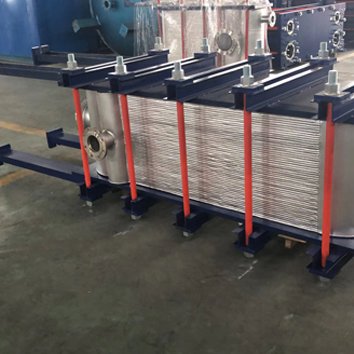 7. Operating Temperature and Design Temperature
Normal operating temperature is not always the same as design temperature.
For example:
Normal operating temperature: 80°C
Design temperature: 100°C
The supplier needs to know the maximum credible temperature conditions to select suitable plates, tubes, gaskets, brazing materials and other components.
For a standard water application, this may be straightforward.
For high-temperature oil, steam, refrigerant or chemical applications, it becomes much more important.
8. Fluid Concentration Matters
If the fluid is a mixture, provide the concentration.
For example:
30% propylene glycol
or
40% ethylene glycol
Do not simply write:
“Glycol.”
Glycol concentration affects:
- Density
- Viscosity
- Specific heat
- Heat transfer
- Pressure drop
- Pumping requirements
- Freeze protection
The supplier needs the concentration to perform a meaningful thermal and hydraulic calculation.
9. Tell the Supplier About Fouling
If the fluid can cause scale, deposits, biological growth, oil contamination or other fouling, mention it in the RFQ.
Examples include:
- Hard water
- Cooling tower water
- Seawater
- Dirty process water
- Oil
- Wastewater
- Liquids containing suspended solids
- Food products
- Chemical process fluids
A supplier may need to adjust the heat exchanger design according to the fouling conditions.
For plate heat exchangers, fouling can also affect pressure drop as deposits restrict the flow passages. Manufacturer documentation notes that increasing pressure drop combined with reduced heat transfer can indicate deposits on the heat transfer surface.
Do not assume that every application needs the same fouling allowance.
10. Material Requirements
If you have a specific material requirement, state it.
For example:
Plate material: 316L stainless steel
Gasket material: EPDM
However, if you are unsure which material is appropriate, provide the fluid composition and operating conditions instead.
The supplier can then evaluate material compatibility.
This is particularly important for:
- Seawater
- High-chloride water
- Acidic fluids
- Alkaline fluids
- Solvents
- Refrigerants
- Thermal oils
- Food products
The cheapest material is not necessarily the lowest-cost choice if corrosion or premature gasket failure shortens equipment life.
11. Connection Size and Standard
For a new installation, connection size may be determined during equipment selection.
For a replacement heat exchanger, it is much more important.
Provide:
- Connection diameter
- Flange standard
- Pressure rating
- Connection type
- Connection orientation
- Pipe center-to-center dimensions, if critical
For example:
DN100 PN16
or
4″ ASME Class 150
Do not assume that two suppliers will use the same connection configuration unless it is specified.
 12. Replacement Heat Exchanger? Send the Existing Nameplate
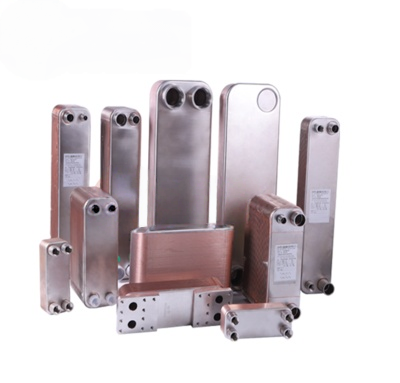 12. Replacement Heat Exchanger? Send the Existing Nameplate
If you are replacing an existing heat exchanger, the fastest route to a quotation may be the existing equipment information.
Send photographs of:
- Nameplate
- Connections
- Overall equipment
- Plate pack or frame
- Existing installation
- Piping around the heat exchanger
Also provide, if available:
- Existing model number
- Manufacturer
- Heat transfer area
- Number of plates
- Plate material
- Gasket material
- Operating temperatures
- Flow rates
- Pressure drop
- Previous maintenance records
The original thermal data sheet is particularly useful when available. Manufacturer service documentation commonly requests the original thermal data sheet together with current flow rates and inlet/outlet temperatures when evaluating existing heat exchangers.
13. What If You Don’t Know the Heat Duty?
You can still request a quotation.
Provide the information you have.
For example:
Fluid: Water
Flow: 20 m³/h
Inlet: 80°C
Required outlet: 50°C
Cooling water inlet: 25°C
Maximum pressure drop: 50 kPa
From the flow rate, specific heat and temperature change, the approximate heat duty can be calculated.
For water, the supplier can normally determine the thermal load from the available process information.
This is much better than sending only:
“Please quote a 20 m³/h heat exchanger.”
14. What If You Only Know the Required Capacity?
You can still contact a supplier, but expect additional questions.
For example:
“I need a 300 kW plate heat exchanger.”
The supplier will normally need to know:
- What fluid?
- What inlet temperatures?
- What outlet temperatures?
- What flow rates?
- What pressure?
- What maximum pressure drop?
- What materials?
- What application?
A 300 kW heat exchanger for water-to-water service is not necessarily comparable with a 300 kW exchanger for glycol, oil or another process fluid.
Capacity alone is not enough for a reliable heat exchanger quotation.
15. Minimum Information for a Fast Preliminary Quote
If you need a quotation quickly and do not have a complete engineering datasheet, provide at least:
Required
1. Fluid on both sides
2. Flow rate on both sides, or at least one side
3. Inlet and outlet temperatures
4. Heat duty, if known
5. Maximum allowable pressure drop
Strongly Recommended
6. Operating pressure
7. Operating temperature
8. Fluid concentration
9. Fouling conditions
10. Material requirements
For Replacement Projects
11. Existing model
12. Nameplate photo
13. Connection size
14. Installation dimensions
This information is usually enough to move from a general enquiry toward a meaningful preliminary selection.
16. A Heat Exchanger RFQ Example
Instead of sending:
Please quote a plate heat exchanger, 500 kW.
Send something like this:
Heat Exchanger RFQ
Application: Process water cooling
Heat duty: 500 kW
Hot-side fluid: Process water
Hot-side flow: 20 m³/h
Hot-side inlet: 70°C
Hot-side outlet: 48°C
Cold-side fluid: Cooling water
Cold-side flow: 25 m³/h
Cold-side inlet: 25°C
Cold-side outlet: 42°C
Maximum hot-side pressure drop: 50 kPa
Maximum cold-side pressure drop: 60 kPa
Operating pressure: 5 barg
Design pressure: 8 barg
Operating temperature: 70°C
Design temperature: 100°C
Plate material: 316L stainless steel
Gasket: Supplier recommendation
Connections: DN100 PN16
Installation: New system
Quantity: 2 units
Required delivery: Please advise
This gives the supplier a clear technical basis for preliminary sizing and pricing.
17. How to Get a More Accurate Heat Exchanger Quote
If you want the quotation to be as accurate as possible, provide additional information such as:
- Fluid viscosity
- Fluid density
- Specific heat
- Thermal conductivity
- Fluid composition
- Chloride concentration
- Solids content
- Fouling tendency
- Minimum and maximum flow
- Minimum and maximum temperature
- Design pressure
- Design temperature
- Required standards
- Installation limitations
- Required delivery date
For special applications, also provide the process flow diagram or existing equipment datasheet.
The more important point is not to send every possible piece of information unnecessarily.
Send the information that affects thermal performance, hydraulic performance, mechanical design and material compatibility.
Fast Heat Exchanger Quotation Checklist
Before sending an RFQ, check:
☐ Heat duty
☐ Hot-side fluid
☐ Cold-side fluid
☐ Hot-side flow rate
☐ Cold-side flow rate
☐ Hot-side inlet temperature
☐ Hot-side outlet temperature
☐ Cold-side inlet temperature
☐ Cold-side outlet temperature
☐ Maximum allowable pressure drop on both sides
☐ Operating pressure
☐ Design pressure
☐ Operating temperature
☐ Design temperature
☐ Fluid concentration
☐ Fouling conditions
☐ Material requirements
☐ Connection requirements
☐ Quantity
☐ Replacement dimensions, if applicable
If these parameters are available, the supplier can move much faster from RFQ → thermal calculation → model selection → quotation.
Need a Heat Exchanger Quote?
You do not need to prepare a complicated engineering document before contacting a heat exchanger manufacturer.
Send the information you already have:
Fluid + flow rate + inlet/outlet temperatures + heat duty + allowable pressure drop + operating pressure.
For glycol, oil, seawater, refrigerant or other special fluids, also provide the fluid concentration or composition.
For a replacement heat exchanger, send the existing model number and nameplate photos if available.
If some parameters are missing, state what is unknown instead of guessing. A heat exchanger supplier can determine which additional information is required.
The more complete the operating data, the faster and more accurate the heat exchanger quotation.