A heat exchanger can lose performance long before it completely fails.
In many heating and cooling systems, the problem appears as a higher outlet temperature than expected, a larger temperature difference, increasing pressure drop, reduced flow, longer operating time or higher energy consumption.
When this happens, three operating factors should be checked first:
temperature difference, flow rate and fouling.
Optimizing these three factors can improve heat transfer performance without automatically replacing the entire heat exchanger.
What Determines Heat Exchanger Efficiency?
Heat exchanger performance is commonly evaluated through heat transfer duty, outlet temperatures, flow rates, pressure drop and the overall heat transfer coefficient.
The basic heat transfer relationship can be expressed as:
Q = U × A × ΔT
where:
- Q = heat transfer rate
- U = overall heat transfer coefficient
- A = heat transfer area
- ΔT = effective temperature difference between the two fluids
In practical heat exchanger design, the log mean temperature difference (LMTD) is commonly used because the temperature difference changes continuously along the heat exchanger.
This means that simply increasing the temperature of one fluid is not always the best way to improve performance.
The actual operating conditions matter.
1. Optimize the Temperature Difference
Temperature difference is one of the most important factors affecting heat transfer.
For a heating application, the hot fluid must normally be sufficiently hotter than the cold fluid. For a cooling application, the cooling medium must be sufficiently colder than the process fluid.
If the temperature approach becomes too small, the heat exchanger needs more effective heat transfer area to achieve the same duty.
What happens when the temperature difference is too small?
A heat exchanger may show:
- Insufficient heating
- Insufficient cooling
- Higher required flow rate
- Longer operating time
- Higher energy consumption
- Difficulty reaching the target outlet temperature
However, increasing the temperature difference is not always the correct solution.
A higher hot-side temperature may increase energy consumption, while a lower cooling-medium temperature may increase refrigeration load.
The goal is therefore not simply to maximize the temperature difference.
The goal is to achieve the required heat duty at the lowest practical energy input.
Check these temperatures first
When troubleshooting a heat exchanger, record:
Hot-side inlet temperature → hot-side outlet temperature
Cold-side inlet temperature → cold-side outlet temperature
Then compare the actual values with the original design conditions.
If the actual temperature approach has changed significantly, the problem may be related to flow, fouling, control valves, fluid properties or changes in the upstream system.
2. Optimize Heat Exchanger Flow Rate
Flow rate has a major influence on heat exchanger performance.
If the flow rate is too low, the heat transfer coefficient may decrease and the fluid can spend more time in contact with the heat transfer surface.
If the flow rate is increased, heat transfer performance can improve because fluid velocity and turbulence generally increase.
But there is a limit.
Higher flow rate also increases pressure drop and pumping power.
Therefore:
More flow does not automatically mean better overall efficiency.
The practical objective is to find a flow rate that provides sufficient heat transfer while remaining within the allowable pressure drop and pump capacity.
What happens when flow is too low?
Typical symptoms include:
- Outlet temperature does not reach the target
- Low heat transfer coefficient
- Poor heat exchanger performance
- Uneven temperature distribution
- Increased risk of fouling in some applications
- Reduced thermal capacity
Low flow can also make fouling problems more difficult because deposits can accumulate more easily under unfavorable flow conditions.
What happens when flow is too high?
Excessive flow can cause:
- High pressure drop
- Higher pump power consumption
- Increased operating cost
- Excessive erosion risk in certain services
- Unnecessary hydraulic losses
Research on fouling and plate heat exchangers shows that increasing velocity can help remove or reduce deposits because higher shear forces act on the heat transfer surface, but this benefit comes with increased pressure drop.
The correct flow rate is therefore a thermal-hydraulic optimization problem, not simply a matter of maximizing velocity.
3. Check Pressure Drop Before Increasing Flow
Pressure drop is often overlooked when trying to improve heat exchanger performance.
A customer may increase pump flow because the outlet temperature is not satisfactory. The heat exchanger may then transfer more heat, but the pump consumes substantially more energy.
The result can be worse overall system efficiency.
Before increasing flow, check:
- Heat exchanger pressure drop
- Pump available head
- Pump operating point
- Control valve position
- Pipe pressure losses
- Filter or strainer condition
- Heat exchanger fouling
If the pressure drop across the heat exchanger is already higher than the original design value, increasing pump speed may only mask the underlying problem.
A significant increase in pressure drop can be an important indication of fouling or flow passage restriction. Fouling reduces the available flow area and increases hydraulic resistance.
4. Fouling Is One of the Biggest Causes of Heat Exchanger Performance Loss
Fouling occurs when unwanted material accumulates on heat transfer surfaces.
Common examples include:
- Scale
- Mineral deposits
- Sludge
- Biological deposits
- Oil
- Process residue
- Dust and particulate matter
The exact type of fouling depends on the fluid and application.
A fouling layer creates additional thermal resistance between the fluid and the heat transfer surface.
As fouling increases, the heat exchanger may transfer less heat under the same operating conditions.
At the same time, deposits can restrict flow passages and increase pressure drop.
This creates two problems at once:
Lower heat transfer + higher pressure drop.
Studies of fouled heat exchangers have demonstrated reductions in overall heat transfer performance together with substantial increases in pressure drop.
5. How to Tell If a Heat Exchanger Is Fouled
Fouling should be suspected when the heat exchanger gradually performs worse even though the system operating conditions have not changed significantly.
Common signs include:
Higher pressure drop
The pump must work harder to maintain the same flow.
Lower heat transfer
The required outlet temperature is no longer achieved.
Increasing temperature approach
The difference between the hot and cold streams changes compared with the clean operating condition.
Increasing energy consumption
More pumping, heating or cooling energy is required to achieve the same process result.
Reduced flow
A partially blocked heat exchanger may not maintain its original flow rate.
For plate heat exchangers, even relatively small changes in flow passage conditions can become important because the channels are compact.
6. Do Not Increase Flow to Compensate for Fouling Without Finding the Cause
This is a common troubleshooting mistake.
Suppose a heat exchanger originally operates at the required flow rate and achieves the target outlet temperature.
After several months, performance decreases.
One possible response is to increase pump speed.
The outlet temperature may improve temporarily.
But if the real problem is fouling, the system is simply using more pumping energy to compensate for a deteriorating heat transfer surface.
A better approach is to compare:
Current performance vs. original clean performance.
Record:
- Inlet temperatures
- Outlet temperatures
- Flow rates
- Pressure drop
- Heat transfer duty
- Fluid properties
- Operating hours
If pressure drop has increased while thermal performance has decreased, fouling or blockage should be investigated before simply increasing pump capacity.
7. Clean the Heat Exchanger at the Right Time
Cleaning should not be based only on a fixed calendar.
A better approach is to monitor performance indicators.
Consider cleaning when there is a sustained combination of:
- Reduced heat transfer capacity
- Increased pressure drop
- Reduced flow
- Increased energy consumption
- Increasing temperature approach
For gasketed plate heat exchangers, cleaning may involve opening the unit and mechanically or chemically cleaning the plates, depending on the application and manufacturer’s recommendations.
Some systems can use CIP (clean-in-place) procedures without opening the heat exchanger.
The cleaning method should match the deposit.
For example, mineral scale, biological fouling and oil deposits require different cleaning approaches.
Using an unsuitable chemical can damage plates, gaskets or other components.
 8. Prevent Fouling Instead of Only Cleaning It
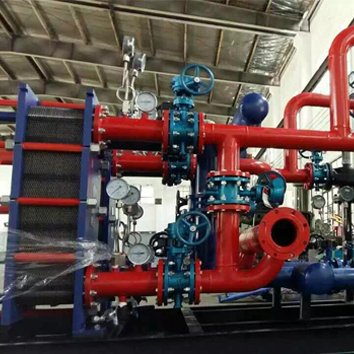 8. Prevent Fouling Instead of Only Cleaning It
Cleaning removes existing deposits.
Good operating conditions can reduce the rate at which deposits form.
Depending on the application, useful measures include:
- Maintaining appropriate fluid velocity
- Improving water treatment
- Installing suitable filtration
- Controlling fluid temperature
- Preventing unnecessary stagnation
- Monitoring water chemistry
- Selecting appropriate plate materials
- Selecting the correct plate pattern
- Designing sufficient access for maintenance
Flow velocity is particularly important because it affects both heat transfer and deposit formation.
However, simply increasing velocity is not a universal solution. The allowable pressure drop, pump capacity, fluid properties and erosion risk must also be considered.
9. Optimize Temperature, Flow and Fouling Together
The three factors should not be evaluated independently.
Consider a typical cooling system.
The customer reports that the process outlet temperature is too high.
There are several possible causes:
Problem A: Low flow
The cooling-water flow is below the design value.
Solution: Check the pump, valves, filters and piping before increasing equipment size.
Problem B: Fouling
The cooling-water pressure drop is higher than normal and heat transfer has deteriorated.
Solution: Inspect and clean the heat exchanger.
Problem C: Higher process load
The actual process heat load has increased beyond the original design condition.
Solution: Recalculate the required heat exchanger capacity.
Problem D: Higher cooling-water inlet temperature
The cooling source is warmer than the original design condition.
Solution: Evaluate the cooling system and determine whether additional heat transfer area or a different operating condition is required.
These problems may produce similar symptoms but require completely different solutions.
10. Compare Actual Performance With Design Conditions
The most reliable way to optimize a heat exchanger is to compare actual operating data with the original design data.
Create a simple performance record:
| Parameter | Design | Actual |
|---|---|---|
| Hot-side inlet temperature | — | — |
| Hot-side outlet temperature | — | — |
| Cold-side inlet temperature | — | — |
| Cold-side outlet temperature | — | — |
| Hot-side flow rate | — | — |
| Cold-side flow rate | — | — |
| Hot-side pressure drop | — | — |
| Cold-side pressure drop | — | — |
| Heat transfer duty | — | — |
This comparison can quickly show whether the problem is mainly related to temperature, flow, fouling or a change in process conditions.
For engineering troubleshooting, measured operating data is much more useful than assuming that the heat exchanger itself is defective.
 11. When Should You Replace or Upgrade the Heat Exchanger?
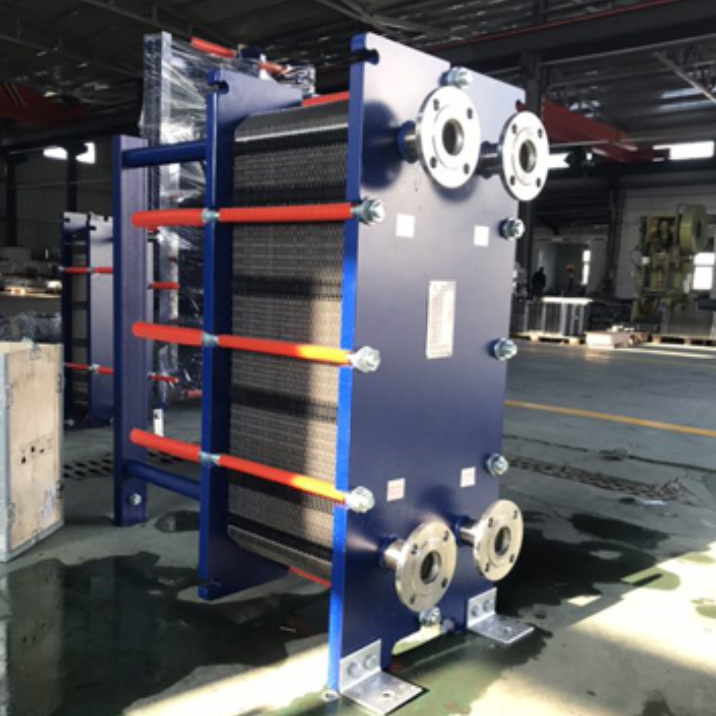 11. When Should You Replace or Upgrade the Heat Exchanger?
Cleaning and operating adjustments are not always enough.
Replacement or upgrading may be appropriate when:
- The original heat exchanger is undersized
- Process capacity has increased
- Required outlet temperatures have changed
- Fluid properties have changed
- Pressure drop is no longer acceptable
- Fouling is unavoidable under the current design
- The heat exchanger has suffered corrosion or mechanical damage
- The existing unit cannot achieve the required duty
- Energy consumption has become excessive
A replacement heat exchanger should be selected from the actual operating conditions, not only from the old model number.
Provide the manufacturer with the current:
- Heat duty
- Fluid type
- Inlet and outlet temperatures
- Flow rate
- Operating pressure
- Allowable pressure drop
- Fouling conditions
- Installation limitations
This allows the supplier to evaluate the thermal and hydraulic requirements together.
12. How to Improve Heat Exchanger Efficiency Without Increasing Size
In many cases, performance can be improved without immediately installing a larger heat exchanger.
Start with the operating fundamentals:
Step 1 — Measure temperatures
Check all four inlet and outlet temperatures.
Step 2 — Measure flow
Confirm that actual flow matches the required operating condition.
Step 3 — Check pressure drop
Compare current pressure drop with the original design or clean condition.
Step 4 — Check for fouling
If pressure drop has increased and heat transfer has decreased, inspect for deposits or blockage.
Step 5 — Check fluid conditions
Confirm fluid concentration, viscosity, temperature and water quality.
Step 6 — Optimize controls
Check pumps, valves, temperature controllers and bypass lines.
Step 7 — Recalculate the heat duty
Determine whether the current heat exchanger is still correctly sized for the actual process.
This approach avoids replacing equipment before the actual cause of the performance loss is understood.
The Most Effective Heat Exchanger Efficiency Strategy
Improving heat exchanger efficiency is not about maximizing one parameter.
It is about finding the best balance between:
Temperature difference + flow rate + heat transfer area + pressure drop + fouling resistance + energy consumption.
Higher flow can improve heat transfer but increases pressure drop.
A larger temperature difference can increase heat transfer potential but may require more heating or cooling energy.
Cleaning can restore heat transfer performance, but preventing excessive fouling can reduce maintenance costs over the long term.
The best operating point is therefore the one that achieves the required heat duty with acceptable pressure drop and minimum practical energy consumption.
If your heat exchanger is not reaching the required outlet temperature, consuming more energy, experiencing increasing pressure drop or gradually losing heat transfer performance, do not immediately assume that a larger heat exchanger is required.
First compare the current temperature difference, flow rate, pressure drop and fouling condition with the original design data.
If the existing unit is undersized or the operating conditions have changed, a new heat exchanger may be required.
For heat exchanger selection or performance optimization, provide the actual operating data—heat duty, fluid type, inlet/outlet temperatures, flow rates, operating pressure and allowable pressure drop—so the heat exchanger can be evaluated according to the real application rather than a nominal capacity.