Ordering a custom heat exchanger requires more than specifying the required cooling or heating capacity. Buyers must provide accurate operating conditions, identify suitable materials, define pressure and temperature requirements, and confirm that the proposed design fits the application.
For engineers, procurement managers, OEMs, and industrial equipment buyers, incomplete specifications can lead to incorrect sizing, excessive pressure drop, corrosion, installation difficulties, or unexpected maintenance costs. A heat exchanger that meets the initial purchase price target may still perform poorly if its thermal and mechanical design does not match actual operating conditions.
This guide explains how to order a custom heat exchanger, what information to prepare before requesting a quotation, how to evaluate suppliers, and which technical and commercial details to confirm before placing an order.
Whether you need a custom plate heat exchanger, shell-and-tube heat exchanger, brazed plate heat exchanger, air-cooled heat exchanger, or liquid cooling heat exchanger, following a structured procurement process helps reduce technical risks and avoid costly misunderstandings.
Quick Answer: How Do You Order a Custom Heat Exchanger?
To order a custom heat exchanger, define the application, provide the operating conditions of both fluid streams, establish the required heat transfer duty, select suitable materials, confirm pressure and temperature ratings, and specify the installation and documentation requirements.
The typical ordering process involves these steps:
- Define the heating or cooling application.
- Provide fluid types, flow rates, inlet temperatures, and required outlet temperatures.
- Confirm operating pressure, allowable pressure drop, and design conditions.
- Evaluate suitable heat exchanger types and materials.
- Request a preliminary thermal and mechanical design.
- Review the technical proposal, drawings, and quotation.
- Confirm testing, inspection, documentation, packaging, and delivery requirements.
- Approve the final specifications before production begins.
The most important principle is to select a heat exchanger based on actual operating conditions rather than choosing a model by connection size, physical dimensions, or nominal capacity alone.
1. Define Your Application Before Requesting a Custom Heat Exchanger
The first step is to explain what the heat exchanger needs to accomplish.
A supplier cannot recommend a suitable design reliably without understanding the process, the two fluid streams, and the expected operating conditions.
What Problem Are You Trying to Solve?
Buyers typically need a custom heat exchanger for one of the following reasons:
- A standard model cannot achieve the required heating or cooling performance.
- Existing equipment has insufficient heat transfer capacity.
- Available installation space limits the equipment dimensions.
- The application requires special materials because of corrosion.
- The operating pressure or temperature exceeds standard product specifications.
- The equipment must integrate with an existing machine or process system.
- The application requires a specific connection arrangement or mounting configuration.
- A replacement unit must match an existing system’s operating requirements.
- The application involves specialized fluids, including glycol mixtures, industrial oils, or electronic cooling liquids.
Identifying the underlying problem helps determine whether a fully customized unit is necessary or whether a standard heat exchanger can meet the requirements.
What Information Should You Provide?
Start by preparing a short application description covering the following points:
| Information | Example |
|---|---|
| Application | Industrial machine cooling |
| Hot-side fluid | Hydraulic oil |
| Cold-side fluid | Cooling water |
| Required function | Remove heat from hydraulic oil |
| Installation | Inside an existing machine enclosure |
| Main constraint | Limited installation space |
| Operating schedule | Continuous operation |
| Procurement purpose | New equipment or replacement |
These examples illustrate the information a buyer might provide; they are not a complete design specification.
Practical Example: Replacing an Existing Heat Exchanger
Suppose a factory’s existing oil cooler cannot maintain the required oil temperature during continuous operation.
Simply ordering a larger cooler may not solve the problem. The original unit could be undersized, but other causes are possible, including insufficient cooling-water flow, excessive inlet-water temperature, internal fouling, or an unexpected increase in the machine’s heat load.
Before ordering a replacement, investigate the actual operating conditions and compare them with the original design specifications.
What to provide to the supplier:
- Existing heat exchanger model, if available.
- Original nameplate information.
- Current operating temperatures.
- Oil and cooling-water flow rates.
- Available water pressure and pressure drop.
- Installation dimensions.
- Observed performance problems.
- Photographs, drawings, and connection details.
This information helps the supplier determine whether the application needs a direct replacement, a redesigned unit, or a different heat exchanger type.
2. Choose the Right Type of Custom Heat Exchanger
The heat exchanger type affects thermal performance, pressure drop, maintenance requirements, installation space, and overall cost.
The most appropriate design depends on the fluids, operating conditions, cleanliness requirements, and available maintenance facilities.
Plate Heat Exchangers
Plate heat exchangers transfer heat between fluid streams flowing through channels formed by thin metal plates.
They are frequently used in HVAC systems, industrial process heating and cooling, food processing, and district energy applications.
Common advantages include:
- High heat transfer performance relative to installation space.
- Compact construction.
- Flexible capacity adjustment in suitable designs.
- Convenient maintenance for serviceable gasketed models.
Potential limitations include sensitivity to certain fouling conditions, pressure-drop constraints, and material compatibility requirements.
Gasketed plate heat exchangers are often suitable when regular cleaning or future capacity adjustment is important. Brazed plate heat exchangers are more compact but generally cannot be opened for routine internal mechanical cleaning.
Shell-and-Tube Heat Exchangers
Shell-and-tube heat exchangers use tubes enclosed within a shell, with the two fluid streams flowing through separate passages.
They are widely used in industrial processing, oil cooling, power generation, chemical applications, and other systems requiring robust mechanical construction.
They may be preferable when an application requires:
- Specific pressure and temperature capabilities.
- Compatibility with industrial process conditions.
- Tube-side or shell-side arrangements suited to the fluids.
- Mechanical cleaning access in an appropriate design.
- A configuration tailored to an existing process system.
The suitability of a particular design depends on the construction, materials, pressure requirements, and applicable engineering standards.
Brazed Plate Heat Exchangers
Brazed plate heat exchangers join corrugated metal plates using a brazing material, creating a compact, sealed assembly.
They are commonly considered for refrigeration, heat pumps, hydraulic systems, compact industrial equipment, and liquid-to-liquid cooling.
Their advantages include compact dimensions and the absence of replaceable plate-pack gaskets.
However, internal mechanical cleaning is generally not possible, and the compatibility of the brazing material with the process fluids must be checked. Operating pressure, temperature limits, water quality, and freeze protection also require careful review.
Air-Cooled Heat Exchangers
Air-cooled heat exchangers reject heat directly to ambient air, usually with the assistance of fans or natural convection.
They are useful when cooling water is unavailable, expensive, restricted, or undesirable.
Their performance depends on ambient temperature, airflow, heat transfer surface area, and the properties of the process fluid.
High ambient temperatures can significantly reduce cooling capacity. Fan power, noise, dust accumulation, and maintenance access should also be considered.
Liquid Cooling Heat Exchangers
Liquid cooling heat exchangers are used to remove heat from equipment and systems such as power electronics, battery systems, industrial lasers, data center equipment, and high-power electrical devices.
Depending on the application, the design may use plate-based, brazed, shell-and-tube, or other specialized constructions.
Important selection factors include:
- Coolant composition and concentration.
- Required heat removal.
- Allowable pressure drop.
- Operating and transient temperatures.
- Corrosion compatibility.
- Risk of leakage between fluid circuits.
- Flow distribution and thermal uniformity.
- Reliability requirements.
For sensitive electronic equipment, a supplier may also need information about the permitted coolant temperature variation and the consequences of a leak.
How Do You Compare Different Heat Exchanger Types?
| Heat exchanger type | Common applications | Main advantages | Important limitations |
|---|---|---|---|
| Gasketed plate | HVAC, industrial process systems | Compact, serviceable, adaptable | Gasket compatibility and replacement requirements |
| Brazed plate | Heat pumps, compact cooling systems | Compact, no replaceable plate-pack gaskets | Limited internal mechanical cleaning |
| Shell-and-tube | Industrial processing, oil cooling | Flexible mechanical design options | Often larger and heavier for comparable duties |
| Air-cooled | Industrial cooling without a water supply | Avoids cooling-water consumption | Performance depends on ambient conditions and airflow |
| Specialized liquid cooling | Electronics, batteries, industrial equipment | Can be tailored to equipment requirements | Requires careful control of coolant, leakage, and pressure drop |
No single design is best for every application. A thermal and mechanical assessment should determine which option provides the most appropriate balance of performance, reliability, maintainability, and cost.
What to provide to the supplier: Describe the application, operating conditions, installation restrictions, maintenance preferences, and any preferred heat exchanger type. If the type has not been determined, ask the supplier to evaluate suitable alternatives.
3. Prepare the Thermal Design Requirements
Thermal requirements are among the most important inputs when ordering a custom heat exchanger.
The supplier needs to understand how much heat must be transferred and the conditions under which the transfer must occur.
What Is Heat Transfer Duty?
Heat transfer duty, commonly expressed in kilowatts (kW), is the rate at which a heat exchanger transfers thermal energy.
For a fluid with approximately constant specific heat and negligible phase change, the heat duty can be estimated using:
[
Q = \dot{m} c_p \Delta T
]
Where:
- (Q) = heat transfer duty, in kW when consistent SI units are used.
- (\dot{m}) = fluid mass flow rate, in kg/s.
- (c_p) = specific heat capacity, in kJ/(kg·K).
- (\Delta T) = temperature change across the heat exchanger, in K.
For a liquid, the temperature change is the difference between its inlet and outlet temperatures.
For example, a cooling application may require the heat exchanger to reduce the temperature of circulating oil while transferring that heat to cooling water.
The required duty should be established from the process heat load, measured operating data, or a suitable engineering calculation.
For fluids undergoing phase change, such as condensing steam or evaporating refrigerant, the calculation must account for latent heat and the relevant thermodynamic properties.
Why Are Inlet and Outlet Temperatures Important?
The inlet and required outlet temperatures determine the thermal driving force available for heat transfer.
A heat exchanger may be able to transfer the required duty at one set of operating conditions but fail to achieve the same outlet temperature when the cooling-water temperature rises or the flow rate changes.
For example, a water-cooled system designed around relatively cool supply water may provide insufficient cooling during a hot season if the water temperature increases substantially.
The supplier therefore needs both the normal operating conditions and the relevant worst-case conditions.
Provide:
- Hot-side inlet temperature.
- Hot-side required outlet temperature.
- Cold-side inlet temperature.
- Cold-side required outlet temperature, if specified.
- Normal and maximum flow rates.
- Expected seasonal variations.
- Minimum and maximum operating temperatures.
- Required heat transfer duty, if already calculated.
If the duty and all four temperatures are specified, the supplier should verify that they are mutually consistent with the available flow rates and fluid properties.
How Does Flow Rate Affect Heat Exchanger Selection?
Flow rate influences heat transfer performance, pressure drop, flow distribution, and sometimes the risk of fouling.
Increasing flow rate may improve the heat transfer coefficient by increasing turbulence, but it can also increase pressure drop and pumping requirements.
Reducing flow rate may lower pressure drop but can reduce heat transfer performance and, in some systems, increase the risk of deposits accumulating.
For this reason, buyers should not specify only the maximum flow rate. They should also provide the normal operating flow rate and any expected operating range.
For variable-flow systems, the supplier should evaluate whether the required outlet temperature can be maintained at minimum, normal, and maximum flow.
What If You Do Not Know the Required Heat Duty?
You can still request a preliminary quotation, but the supplier will need enough process information to estimate the duty.
Provide measured temperatures, flow rates, fluid properties, equipment heat load, and the desired outlet conditions wherever available.
The supplier can then determine whether additional information or engineering calculations are required before confirming the design.
A preliminary price based on incomplete data should not be treated as confirmation that the heat exchanger will meet the required performance.
4. Specify Pressure, Temperature, Fluids, and Materials
A custom heat exchanger must satisfy both thermal performance requirements and mechanical design requirements.
Selecting materials based only on the fluid name or choosing a pressure rating without considering the actual system conditions can lead to premature failure or unnecessary expense.
Operating Pressure and Design Pressure
Operating pressure describes the pressure expected during normal service.
Design pressure is an engineering parameter used to establish the equipment’s required pressure capability in accordance with the applicable design basis and standards.
The two values are related but are not necessarily identical.
Buyers should provide:
- Normal operating pressure on each side.
- Maximum expected operating pressure.
- Required design pressure, if specified by the project.
- Possible pressure surges or water hammer.
- Vacuum conditions, if applicable.
- Differential pressure between the two fluid circuits.
- Applicable pressure equipment standards.
The supplier must confirm that the proposed construction is suitable for the specified pressure conditions.
Operating Temperature and Design Temperature
The operating temperature is the temperature expected during normal use. The design temperature establishes the temperature conditions used for mechanical design.
Maximum and minimum temperatures may influence material strength, gasket selection, brazing material suitability, thermal expansion, and the risk of freezing.
If a system experiences frequent starts and stops or rapid temperature changes, the supplier should also evaluate thermal cycling and associated mechanical stresses.
How Do You Select Heat Exchanger Materials?
Material selection depends on the fluid chemistry, temperature, pressure, contamination, corrosion risk, and expected service life.
Common materials include stainless steel, titanium, copper, nickel-based alloys, carbon steel, and various gasket or brazing materials.
| Material | Potential applications | Important considerations |
|---|---|---|
| Stainless steel 304 | Suitable water and industrial applications | Compatibility depends on water chemistry and contaminants |
| Stainless steel 316L | Many applications requiring improved corrosion resistance | Not resistant to every chloride-containing environment |
| Titanium | Selected seawater and chloride-containing applications | Higher material cost; grade and conditions require verification |
| Copper | Suitable heat transfer applications where compatible | May be unsuitable for certain fluids or galvanic conditions |
| Carbon steel | Compatible industrial fluids and structural applications | Requires assessment of corrosion and protective measures |
| Nickel-based alloys | Selected demanding corrosive or high-temperature applications | Cost and exact alloy selection require engineering review |
These are general guidelines, not universal material recommendations.
For example, stainless steel 316L may be suitable for one water-based application but unsuitable for another with a different chloride concentration, temperature, or cleaning chemistry.
Likewise, titanium can provide strong corrosion resistance in certain seawater environments, but the specific grade, crevice conditions, temperature, and other process variables still matter.
What to provide to the supplier:
- Full fluid names and compositions.
- Concentrations of glycol, salts, acids, alkalis, or other additives.
- Chloride concentration where relevant.
- Operating and cleaning temperatures.
- Water quality information.
- Known contaminants.
- Required corrosion resistance.
- Material restrictions imposed by the project or end user.
If the fluid composition is proprietary or uncertain, consult the process engineer and discuss the available information with the supplier before finalizing materials.
5. Confirm Connections, Dimensions, Installation, and Maintenance
A heat exchanger that meets its thermal requirements can still be unsuitable if it cannot be installed, connected, inspected, or maintained properly.
Installation constraints should therefore be identified before the final design is approved.
What Dimensions Should You Provide?
If the heat exchanger must fit into existing equipment or replace an installed unit, provide the available installation envelope and the relevant connection dimensions.
Useful information includes:
- Maximum length, width, and height.
- Available clearance for installation and removal.
- Mounting-hole positions.
- Connection size and type.
- Connection orientation.
- Pipework arrangement.
- Equipment weight limitations.
- Access requirements for cleaning or maintenance.
- Applicable dimensional drawings.
For replacement applications, photographs can help explain the layout, but they should not replace dimensioned drawings when dimensional accuracy is critical.
How Do Connection Requirements Affect the Design?
Connections must match the system’s pipework and operating requirements.
Depending on the application, the supplier may need to consider threaded, flanged, welded, or other connection types.
Specify the connection standard, nominal size, pressure class where applicable, material, orientation, and whether the connections need to follow an existing arrangement.
For international projects, clarify the applicable flange or thread standard instead of assuming that connections with similar nominal sizes are interchangeable.
What Maintenance Requirements Should You Consider?
Maintenance requirements vary by heat exchanger type and process conditions.
Gasketed plate heat exchangers may be opened for inspection and cleaning if designed for that purpose. Shell-and-tube units may offer access to tube-side or shell-side surfaces depending on their construction. Brazed plate units generally do not permit routine internal mechanical cleaning.
Before ordering, determine:
- Whether the fluids contain suspended solids.
- Whether scaling or biological growth is possible.
- Whether chemical cleaning is permitted.
- Whether mechanical cleaning is required.
- How frequently maintenance is expected.
- Whether spare gaskets, plates, or other components should be supplied.
- Whether the unit must be removable without dismantling surrounding equipment.
A design that is easy to install but difficult to clean may have a higher total cost over its operating life.
6. Request a Complete Technical Quotation
Once the application and operating conditions are understood, the next step is to request a quotation that includes the information necessary to evaluate the proposed equipment.
A quotation containing only a product name, price, and delivery estimate is insufficient for many custom industrial applications.
What Should a Custom Heat Exchanger Quotation Include?
Request the following information where applicable:
- Proposed heat exchanger type and model.
- Rated heat transfer duty.
- Hot-side and cold-side operating conditions.
- Design and operating pressures.
- Design and operating temperatures.
- Materials of construction.
- Heat transfer area or other relevant design information.
- Pressure drop on each fluid side.
- Connection sizes, standards, and orientation.
- Overall dimensions and installation requirements.
- Dry weight and operating weight, where relevant.
- Applicable design standards and compliance requirements.
- Testing and inspection requirements.
- Included technical documentation.
- Spare parts and maintenance provisions.
- Packaging and shipping arrangements.
- Production lead time and delivery terms.
- Warranty terms and exclusions.
Not every item applies to every heat exchanger. The quotation should be tailored to the product and application.
What Is the Difference Between a Preliminary Quotation and a Final Technical Offer?
A preliminary quotation may be based on estimated duty, incomplete process data, or an initial product configuration.
A final technical offer should identify the agreed operating conditions and the design basis for the proposed equipment.
For a custom heat exchanger, the buyer should obtain written confirmation of the performance requirements, material specifications, mechanical limits, connection details, and relevant acceptance criteria before approving production.
If the design depends on assumptions, those assumptions should be documented rather than left implicit.
How Should You Compare Supplier Quotations?
Compare quotations against the same technical specification.
| Comparison factor | What to verify |
|---|---|
| Thermal performance | Required duty and outlet temperatures |
| Pressure drop | Allowable pressure drop on both sides |
| Materials | Compatibility with process and cleaning fluids |
| Mechanical design | Pressure and temperature requirements |
| Installation | Dimensions, connections, and mounting |
| Maintenance | Cleaning access and spare parts |
| Quality assurance | Inspection and testing scope |
| Documentation | Drawings, material records, and test reports where required |
| Commercial terms | Price, delivery, warranty, and payment terms |
| Long-term cost | Maintenance, pumping power, downtime, and service life |
A lower quotation may exclude testing, documentation, special materials, or engineering work included in a competing offer.
The correct comparison is therefore based on equivalent technical and commercial scope, not price alone.
7. Understand Custom Heat Exchanger Pricing and Lead Time
The cost of a custom heat exchanger depends on the equipment design, materials, performance requirements, manufacturing process, quality requirements, and delivery arrangements.
There is no reliable universal price for a custom heat exchanger without defining the application and specification.
What Factors Affect the Price?
Heat transfer duty and design complexity
A higher heat duty may require more heat transfer surface area, different flow arrangements, or a larger unit. However, capacity alone does not determine the final price.
Materials of construction
Stainless steel, titanium, copper, carbon steel, and specialized alloys have different costs and processing requirements.
Material selection should be based on compatibility and operating conditions rather than price alone.
Pressure and temperature requirements
Higher design pressures or demanding temperature conditions may require more robust construction, specialized components, or additional engineering.
Heat exchanger type
Gasketed plate, brazed plate, shell-and-tube, and air-cooled units have different construction methods, components, and maintenance characteristics.
Connections and customization
Special connection sizes, nonstandard orientations, restricted dimensions, custom mounting arrangements, and OEM integration can increase engineering and production costs.
Inspection and documentation
Third-party inspection, specified pressure tests, material traceability, performance testing, and formal documentation may add cost.
These requirements should be agreed upon before ordering.
Order quantity and logistics
Order quantity, packaging, transport mode, shipment dimensions, destination, and delivery terms influence the total procurement cost.
How Can You Reduce the Cost Without Sacrificing Performance?
Use the following approach:
- Provide accurate operating conditions to avoid unnecessary design revisions.
- Confirm whether a standard model can meet the application requirements.
- Avoid specifying expensive materials without a technical justification.
- Define mandatory inspection and documentation requirements early.
- Check whether the installation permits more than one suitable heat exchanger configuration.
- Compare suppliers using equivalent technical specifications.
- Evaluate operating costs, maintenance, and downtime alongside purchase price.
For international buyers, the total landed cost may include the equipment, packaging, freight, insurance, import duties, taxes, customs clearance, and local handling.
The applicable costs depend on the destination and agreed delivery terms.
What Determines Production Lead Time?
Lead time depends on design approval, material availability, production scheduling, customization, inspection requirements, and shipping arrangements.
Complex or nonstandard designs may require additional engineering and procurement time.
Before placing an order, request a written schedule covering technical approval, production, inspection, packing, and dispatch.
If the equipment is needed for a shutdown or a critical project milestone, communicate the required delivery date at the quotation stage.
 8. Common Mistakes When Ordering a Custom Heat Exchanger
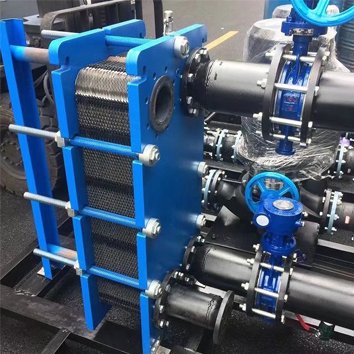 8. Common Mistakes When Ordering a Custom Heat Exchanger
Avoiding the following mistakes can reduce performance problems, unexpected expenses, and procurement delays.
Mistake 1: Ordering Based Only on Heat Transfer Capacity
Why it causes problems: Two heat exchangers with the same nominal duty may have different pressure drops, materials, temperature capabilities, and installation requirements.
What to do instead: Confirm the complete thermal and mechanical operating conditions before selecting the model.
Mistake 2: Providing Only the Fluid Name
Why it causes problems: A fluid’s concentration, contaminants, temperature, and cleaning chemistry can significantly affect corrosion and fouling.
What to do instead: Provide the full composition and operating conditions wherever possible.
Mistake 3: Ignoring Pressure Drop
Why it causes problems: A design with excessive pressure drop can increase pumping power or prevent the system from achieving the required flow rate.
What to do instead: Specify the allowable pressure drop for each fluid circuit and confirm the proposed values.
Mistake 4: Choosing Materials Based Only on Purchase Price
Why it causes problems: Incompatible materials can corrode, leak, or require premature replacement.
What to do instead: Evaluate chemical compatibility, operating conditions, expected service life, and maintenance costs.
Mistake 5: Measuring Only the Overall Dimensions
Why it causes problems: The equipment may fit physically but have incompatible connections, insufficient maintenance clearance, or incorrect mounting positions.
What to do instead: Supply dimensioned drawings that include connections, mounting details, and access requirements.
Mistake 6: Ignoring Seasonal Operating Conditions
Why it causes problems: A heat exchanger may meet the required outlet temperature under normal conditions but fail during hot weather or peak process loads.
What to do instead: Provide the expected operating range and identify the worst-case design conditions.
Mistake 7: Failing to Define Inspection and Documentation
Why it causes problems: The delivered equipment may not include records or test evidence required by the end user or project specification.
What to do instead: Agree on applicable standards, inspection procedures, test requirements, and documentation before production.
Mistake 8: Comparing Quotations With Different Specifications
Why it causes problems: One supplier may quote a basic standard unit while another includes customized connections, additional testing, or higher-grade materials.
What to do instead: Issue the same technical specification to every supplier and compare the included scope line by line.
Mistake 9: Approving Production Before Reviewing Drawings
Why it causes problems: Incorrect connection orientation, mounting details, or dimensions may be difficult or expensive to correct after fabrication.
What to do instead: Review and approve the final technical drawings before production begins.
Mistake 10: Selecting a Supplier Based Only on Price
Why it causes problems: Poor technical communication, unclear manufacturing responsibility, or incomplete quality documentation can create risks that outweigh initial savings.
What to do instead: Evaluate engineering coordination, manufacturing capability, inspection arrangements, documentation, delivery commitments, and after-sales support.
9. What Information Should You Send When Requesting a Custom Heat Exchanger?
A structured request for quotation helps suppliers assess the application and reduces unnecessary communication.
The following checklist can be used for most liquid-to-liquid industrial heat exchanger projects. Adapt it when dealing with phase-change, air-cooled, or specialized cooling applications.
Custom Heat Exchanger RFQ Checklist
| Category | Information to provide |
|---|---|
| Application | Equipment or process served by the heat exchanger |
| Procurement purpose | New system, replacement, upgrade, or OEM integration |
| Heat exchanger type | Preferred type, if known |
| Hot-side fluid | Fluid name and composition |
| Cold-side fluid | Fluid name and composition |
| Hot-side flow rate | Normal, minimum, and maximum where relevant |
| Cold-side flow rate | Normal, minimum, and maximum where relevant |
| Hot-side inlet temperature | °C |
| Hot-side outlet temperature | Required °C |
| Cold-side inlet temperature | °C |
| Cold-side outlet temperature | Required °C, if specified |
| Heat duty | kW, if known |
| Operating pressure | Pressure on each fluid side |
| Design pressure | Required value or applicable design basis |
| Operating temperature | Normal operating range |
| Design temperature | Required value or applicable design basis |
| Allowable pressure drop | Separate limit for each side |
| Material requirements | Plates, tubes, shell, gaskets, brazing material, and connections as applicable |
| Fluid chemistry | Concentrations, additives, contaminants, and water quality |
| Fouling conditions | Solids, scaling, deposits, or biological growth |
| Connections | Size, type, standard, material, and orientation |
| Dimensions | Maximum available installation space |
| Mounting | Mounting holes, brackets, supports, or base |
| Maintenance | Cleaning method and spare parts requirements |
| Standards | Applicable project or regulatory requirements |
| Inspection | Required tests, witness points, and acceptance criteria |
| Documentation | Drawings, material records, manuals, and reports |
| Quantity | Initial order quantity and expected future demand |
| Delivery | Destination, required date, and agreed delivery terms |
| Commercial requirements | Warranty, payment terms, and quotation validity |
If some data is unavailable, mark it as unknown rather than estimating it without a technical basis.
A supplier may be able to provide a preliminary recommendation using incomplete information, but final sizing and performance confirmation may require additional data.
10. How to Evaluate a Custom Heat Exchanger Supplier
A supplier’s ability to coordinate the technical requirements is as important as the initial quotation.
For international procurement, the buyer should understand who is responsible for product design, manufacturing, inspection, documentation, export, and after-sales communication.
Technical Communication
A capable supplier should identify missing information, clarify conflicting specifications, and explain the trade-offs between alternative designs.
Be cautious if a quotation confirms a precise performance level without sufficient operating data or a clear design basis.
Manufacturing Capability
Determine which company will manufacture the heat exchanger and whether its capabilities match the required design.
Depending on the application, review relevant experience with the selected construction type, materials, pressure conditions, and industry.
A trading or export company can coordinate a project professionally without owning a factory, provided it communicates manufacturing responsibilities clearly.
Quality Control and Testing
Ask how materials, dimensions, workmanship, and performance-related requirements will be verified.
Depending on the design and applicable standards, the project may require pressure testing, leak testing, dimensional inspection, material traceability, or thermal performance verification.
Confirm which tests are applicable and included in the quotation. Do not assume that every supplier provides the same inspection scope.
Technical Documentation
Depending on the project, documentation may include:
- Approved general arrangement drawings.
- Connection and dimensional drawings.
- Material specifications or certificates where required.
- Pressure or leak test records.
- Operating and maintenance instructions.
- Spare parts lists.
- Applicable compliance documentation.
The exact documentation package should be agreed upon before ordering.
Export and Delivery Coordination
For international orders, clarify packaging requirements, shipping dimensions, customs documentation, delivery terms, and responsibility for transport-related arrangements.
If the heat exchanger is part of a larger machine or system, confirm how the equipment will be identified and packaged to support installation at the destination.
After-Sales Support
Before placing an order, determine how technical questions, installation issues, replacement parts, and warranty claims will be handled.
For customized equipment, retaining the approved drawings and final specifications is particularly important when future replacements or modifications may be required.
Working With a China-Based Heat Exchanger Export Partner
An international trading company can help coordinate product sourcing, communication between the buyer and manufacturer, customization, quality requirements, and export arrangements.
For example, a China-based export partner working with qualified heat exchanger manufacturers and engineering teams can help collect the buyer’s process data, coordinate a technical proposal, clarify manufacturing scope, and organize the required documentation.
The buyer should still verify the actual manufacturer’s capabilities, the proposed design, and the contractual responsibilities of each party.
The objective is not simply to identify a supplier offering a low quotation. It is to establish a clear technical and commercial agreement that supports reliable equipment performance.
11. Frequently Asked Questions About Ordering Custom Heat Exchangers
1. What information do I need to order a custom heat exchanger?
You should provide the application, fluid types, flow rates, inlet and required outlet temperatures, operating pressure, allowable pressure drop, material requirements, and installation dimensions. If you know the required heat duty, include it. Additional information may be needed to confirm the thermal and mechanical design.
2. Can I order a custom heat exchanger without knowing the required heat duty?
Yes, you can request a preliminary assessment without a calculated heat duty. Provide the available flow rates, temperatures, fluid properties, and process requirements so the supplier can estimate the duty or identify the additional data needed.
3. How long does it take to manufacture a custom heat exchanger?
Lead time depends on the design, material availability, customization, manufacturing schedule, inspection requirements, and delivery arrangements. Request a project-specific schedule that includes technical approval, production, inspection, and dispatch.
4. Is a custom heat exchanger better than a standard model?
A custom heat exchanger is preferable when standard models cannot meet the required performance, materials, pressure conditions, dimensions, or connections. If a standard model satisfies all relevant requirements, it may offer a simpler and more economical solution.
5. How do I choose between a plate heat exchanger and a shell-and-tube heat exchanger?
Choose based on the required heat duty, pressure and temperature conditions, fluid properties, pressure drop, maintenance needs, installation space, and total cost. Plate heat exchangers can offer compact, high-performance designs, while shell-and-tube units provide different mechanical and maintenance options for industrial applications.
6. What materials are commonly used in custom heat exchangers?
Common materials include stainless steel, titanium, copper, carbon steel, nickel-based alloys, and application-specific gasket or brazing materials. The correct selection depends on fluid chemistry, temperature, pressure, corrosion risk, and applicable standards.
7. Can a custom heat exchanger be designed for corrosive fluids?
Yes, provided a suitable design and compatible materials are available for the specified conditions. The supplier needs detailed information about the fluid composition, concentration, temperature, contaminants, and cleaning chemicals to assess material compatibility.
8. What affects the price of a custom heat exchanger?
Price depends on heat duty, construction type, materials, design pressure, operating temperature, connection requirements, customization, inspection, documentation, order quantity, and shipping arrangements. The total cost should also account for maintenance, energy use, and expected service life.
9. Can I order a replacement heat exchanger using only the old unit’s dimensions?
Dimensions alone are usually insufficient to confirm a suitable replacement. Provide the original model and nameplate information, operating conditions, connections, materials where known, and the performance problem, if any. The replacement must be checked for both thermal and mechanical compatibility.
10. Can a supplier manufacture a heat exchanger to match an existing installation?
Yes, a suitable manufacturing partner may be able to customize dimensions, mounting arrangements, connections, and other design details. Feasibility depends on the required performance, construction, materials, pressure conditions, and available design information.
11. What is the difference between operating pressure and design pressure?
Operating pressure is the pressure expected during normal service. Design pressure is a parameter used to establish the equipment’s required pressure capability under the applicable design basis and standards. Both should be clarified during the specification process.
12. Do custom heat exchangers require pressure testing?
Testing requirements depend on the construction, applicable standards, operating conditions, and project specification. Confirm the required test method, acceptance criteria, documentation, and whether inspection by a third party is necessary before placing the order.
13. Can a custom heat exchanger be used with glycol?
Yes, many heat exchanger designs can be used with suitable glycol mixtures. The supplier needs the glycol type and concentration, operating temperatures, flow rate, pressure drop limits, and other relevant fluid properties because these affect heat transfer and hydraulic performance.
14. Should I request drawings before ordering?
Yes. Review and approve the relevant technical drawings before production, especially for custom dimensions, connection orientations, mounting arrangements, and OEM integration. The approved documents should form part of the final technical agreement.
15. How can I reduce the risk of ordering the wrong heat exchanger?
Provide accurate process data, define acceptance criteria, compare quotations against the same specification, verify the manufacturer’s capabilities, and approve the final drawings and technical offer before production. Documenting assumptions and unresolved technical questions also helps prevent misunderstandings.
Final Recommendation: Prepare Your Specification Before You Order
Ordering a custom heat exchanger is a technical and commercial decision. The best results come from defining the application clearly, providing reliable operating data, selecting materials based on actual conditions, and confirming the design before production.
A professional sourcing and export partner can coordinate with qualified manufacturing partners and engineering teams to review requirements, compare suitable configurations, clarify customization options, and organize the documentation and delivery process.
Need help selecting a custom heat exchanger for your application? Click here to schedule a consultation or send us your operating conditions, fluid details, temperature requirements, pressure limits, and installation dimensions. We can review the information with our manufacturing partners and coordinate a suitable technical proposal for your project.