Three families. Three different sets of trade-offs.
An indirect heat exchanger keeps fluids apart. A direct contact unit mixes them. A regenerative unit stores heat in a mass and releases it to the other stream. Each one wins on different metrics. Choose the wrong one, and you pay for it in fouling, corrosion, leakage, or fan power for the next ten years.
Here is the honest comparison — efficiency, cost, maintenance, and lifespan — so you can pick the right type for your duty.
Quick comparison table
| Metric | Indirect / Wall-Type | Direct Contact / Mixing | Regenerative |
|---|---|---|---|
| Fluids | Separated by wall | Touch and mix | Separated by purge/Seals |
| Typical effectiveness | 60–90% | 70–95% | 70–90% |
| Capital cost | Medium–High | Low–Medium | Medium–High |
| Operating cost | Fan/pump power, cleaning | Water treatment, pumping | Fan power, seals, purge |
| Maintenance | Cleaning, tube/plate replacement | Water treatment, corrosion control | Seals, valves, matrix cleaning |
| Typical lifespan | 10–25 years | 10–20 years | 10–20 years |
| Best for | High pressure, clean fluids, no mixing | Dirty gas, low pressure, mixing OK | Gas-gas, high temperature, large flow |
| Main risk | Fouling, corrosion, pressure drop | Streams cannot be separated | Leakage, carryover, plugging |
1. Indirect / Wall-Type Heat Exchangers
How it works: Hot fluid on one side, cold fluid on the other. A solid wall — tube, plate, or fin — transfers heat. The streams never touch.
Common types: Shell-and-tube, plate, finned-tube, tubular air preheater, economizer.
Efficiency
Indirect units typically achieve 60–90% effectiveness. Plate heat exchangers can reach 90%+ with small temperature approaches. Shell-and-tube units are often 60–80%. Tubular air preheaters for boilers usually land in the 60–75% range.
Efficiency depends on surface area, flow arrangement, and pressure drop. More surface area means better heat recovery but higher fan or pump power. There is always a trade-off.
Cost
Capital cost is medium to high. Shell-and-tube and plate units are mature and competitive, but high-alloy materials for corrosive service push prices up. Installation is straightforward. Operating cost is dominated by pressure drop — the fan or pump that moves fluids through the unit. Cleaning costs depend on fouling.
Maintenance
Cleaning: Tubes, plates, and fins foul. Dirty flue gas, slurry, and sticky process fluids require regular cleaning. Chemical cleaning, hydroblasting, or mechanical cleaning.
Inspection: Tubes can be inspected and plugged. Plates can be opened and cleaned. This is a major advantage.
Replacement: Tube bundles and gaskets are replaceable. Full replacement is rarely needed unless corrosion is severe.
Downtime: Can be planned. Isolation of one unit is often possible.
Lifespan
10–25 years with proper maintenance. Plate heat exchangers often last 10–15 years. Shell-and-tube units can last 20–25 years in clean service. Corrosive service shortens life significantly.
Choose indirect when: Fluids must not mix. Pressure is high. You need code compliance and easy inspection. The streams are relatively clean or can be cleaned.
2. Direct Contact / Mixing Heat Exchangers
How it works: Hot and cold fluids contact each other directly. Heat transfers by mixing. Often mass transfer happens too — evaporation, condensation, or humidification.
Common types: Cooling towers, jet condensers, spray towers, quench coolers, direct contact scrubbers.
Efficiency
Direct contact units can achieve 70–95% effectiveness. They often have higher heat transfer rates than indirect units because there is no wall resistance. Gas-liquid contact is very efficient. But the efficiency is tied to the mixing process, and you cannot separate the streams afterward.
Cost
Capital cost is low to medium. No expensive tube bundles or plates. Simple construction. Operating cost includes water pumping, water treatment, and chemicals. If the gas is dirty, the water becomes contaminated and must be treated. That can be a significant ongoing expense.
Maintenance
Water treatment: Scaling, corrosion, and biological growth must be controlled. Blowdown and chemical dosing are routine.
Corrosion: The mixed fluid can be corrosive. Downstream ducts, stacks, and pumps may need special materials.
Drift and carryover: Mist eliminators and drift eliminators need maintenance.
Freeze protection: In cold climates, direct contact units can freeze. Heat tracing or indoor installation may be needed.
Cleaning: Less fouling on heat transfer surfaces because there are no walls. But basins, nozzles, and fill media can plug.
Lifespan
10–20 years. Cooling towers often last 15–20 years with good water treatment. Jet condensers and quench coolers may last 10–15 years in corrosive service.
Choose direct contact when: The fluids can mix. The gas is dirty and would foul a wall. Low pressure and low capital cost matter. You need fast cooling or condensation.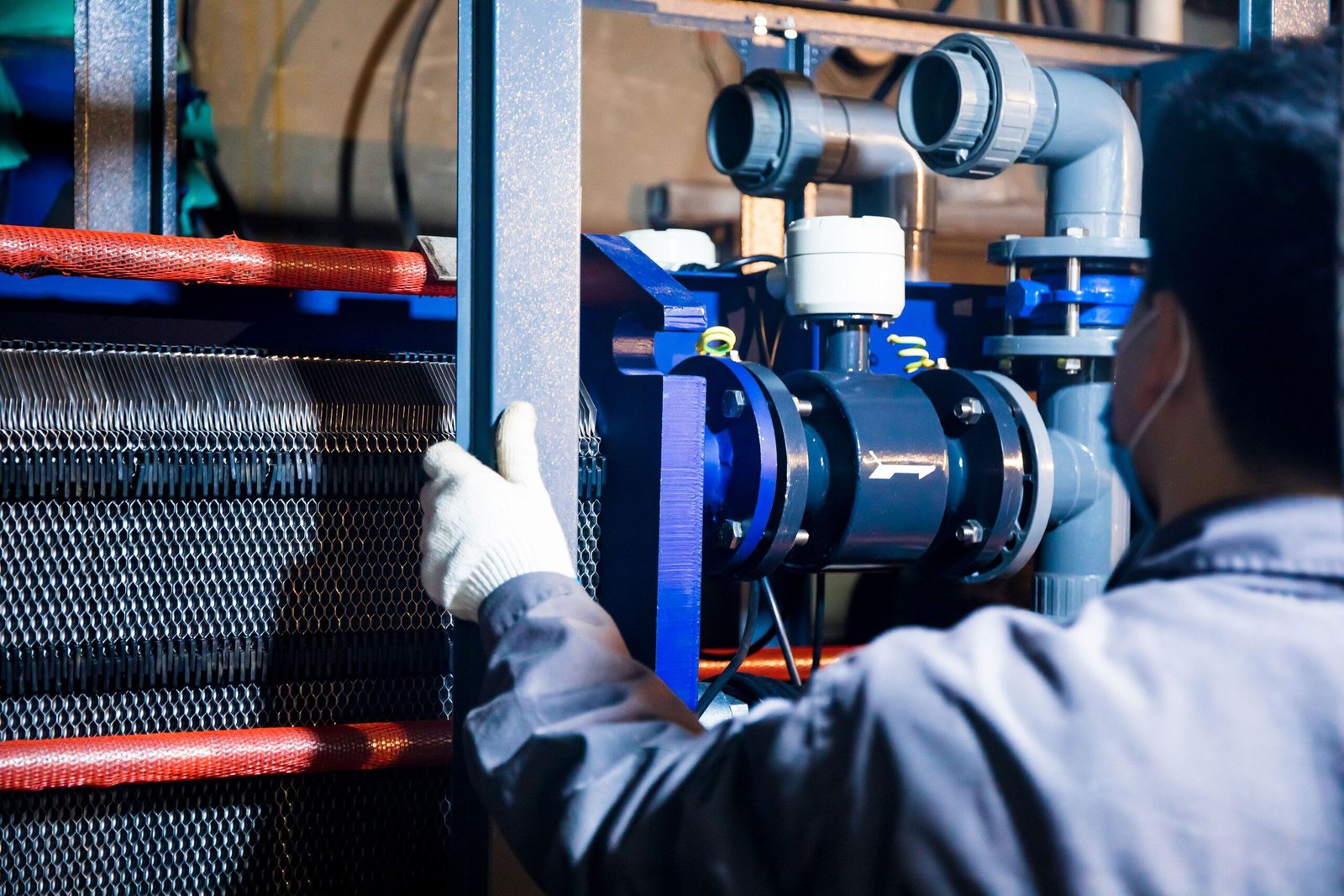
3. Regenerative Heat Exchangers
How it works: A thermal mass — metal, ceramic, or matrix — absorbs heat from the hot stream. Then the flow switches, or the mass rotates, and the stored heat is released to the cold stream.
Common types: Rotary regenerative air preheaters (Ljungström), switching regenerators, Cowper stoves, ceramic regenerators for RTOs.
Efficiency
Regenerative units typically achieve 70–90% effectiveness. They are very good for gas-gas heat recovery because the matrix provides a large surface area in a compact volume. Rotary air preheaters for power plants often reach 75–85% effectiveness.
Cost
Capital cost is medium to high. Rotary units have seals, motors, and bearings. Switching units have valves and controls. Operating cost is mainly fan power to overcome pressure drop across the matrix. Purge systems add a small amount of leakage and energy use.
Maintenance
Seals: Rotary regenerators have seals that wear. Seal replacement is a routine maintenance item. Leakage increases as seals wear.
Valves: Switching regenerators have valves that cycle. Valve reliability is critical.
Matrix cleaning: Dust and sticky deposits can plug the matrix. Soot blowing, water washing, or matrix replacement may be needed.
Bearings and drives: Rotary units have motors, gearboxes, and bearings that need lubrication and eventual replacement.
Purge system: If carryover must be minimized, the purge sector needs maintenance.
Lifespan
10–20 years. Rotary air preheaters often last 15–20 years with seal and bearing maintenance. Ceramic matrices can last many years but are brittle. Switching regenerators can last 20+ years if valves are maintained.
Choose regenerative when: You have gas-to-gas heat recovery. Temperatures are high. Flows are large. Space is limited. A small amount of leakage or carryover is acceptable or can be managed.
Side-by-side: efficiency, cost, maintenance, lifespan
| Factor | Indirect | Direct Contact | Regenerative |
|---|---|---|---|
| Effectiveness | 60–90% | 70–95% | 70–90% |
| Capital cost | Medium–High | Low–Medium | Medium–High |
| Operating cost | Medium | Medium–High (water) | Medium |
| Maintenance intensity | Medium | Medium–High | Medium–High |
| Maintenance access | Good | Moderate | Moderate |
| Leakage risk | Low (internal) | Always mixes | Medium–High |
| Fouling risk | High | Low on surfaces | Medium–High |
| Pressure drop | Medium–High | Low–Medium | Medium |
| Lifespan | 10–25 years | 10–20 years | 10–20 years |
| Best for | Clean, high pressure, no mixing | Dirty gas, low pressure, mixing OK | Gas-gas, high temp, large flow |
How to choose: the deciding factors
1. Can the fluids mix?
If no, direct contact is out. Use indirect, or regenerative with proper sealing and purge.
2. What is the pressure?
High pressure favors indirect. Low pressure and dirty gas often favor direct or regenerative.
3. What is the temperature?
Very high gas temperatures favor regenerative. Acid dew point and material limits matter in all types.
4. How dirty is the stream?
Dirty gas, dust, and sticky liquids favor direct contact or wide-gap indirect designs. Regenerative can handle some dirt but plugging is a risk.
5. What pressure drop can you afford?
A high-efficiency unit with high pressure drop can erase energy savings through fan power.
6. How much space do you have?
Regenerative units are compact for large gas flows. Indirect units can be large and heavy.
7. What is your maintenance capability?
If you cannot handle water treatment, avoid direct contact. If you cannot handle seals and rotating equipment, avoid rotary regenerators.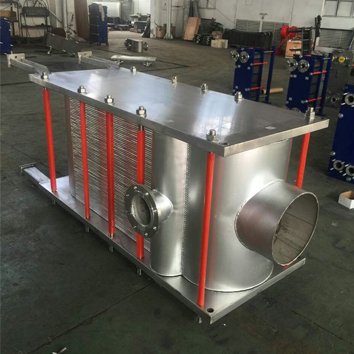
8. What is the true payback?
Compare capital cost, installation, fan power, water treatment, cleaning, downtime, and fuel savings. The cheapest unit is rarely the lowest-cost unit over ten years.
Common mistakes
Choosing on purchase price only.
Ignoring fouling and corrosion in the first year.
Forgetting acid dew point in flue gas service.
Underestimating leakage in rotary regenerators.
Accepting high pressure drop for a small temperature gain.
Using direct contact where streams must stay separate.
Skipping a proper data sheet and letting the supplier guess.
FAQ
Which type is most efficient?
Direct contact can be very efficient for gas-liquid duties. Regenerative is strong for gas-gas. Indirect is highly efficient when fluids are clean and the design is optimized. There is no universal winner.
Which has the lowest maintenance?
Indirect units with clean fluids and good access. Direct contact needs water treatment. Regenerative needs seals, valves, and matrix care.
Which lasts the longest?
Indirect shell-and-tube units in clean service can last 20–25 years. Direct contact and regenerative units typically last 10–20 years.
Can I switch types later?
It is possible but rarely simple. Ductwork, foundations, fan pressure, water treatment, and controls usually change. Select the right type at the front end.