Every industrial plant releases heat it does not use. Flue gas up the stack. Hot wastewater down the drain. Compressed air heat to the atmosphere. Steam condensate flashed and vented.
That heat cost money to create. Rejecting it wastes fuel, electricity, and water. In a time of high energy prices and carbon targets, waste heat is not just lost energy. It is lost profit.
Heat exchangers are the core of any waste heat recovery project. They capture heat from a hot stream and transfer it to a useful sink. This guide covers where waste heat comes from, how to select the right exchanger, and how to calculate whether the project pays.
What Is Industrial Waste Heat Recovery?
Waste heat recovery is capturing heat from a process stream that would otherwise be rejected, and using it elsewhere in the plant. The heat can:
Preheat combustion air or boiler feedwater
Preheat process feed
Generate steam or hot water
Drive an organic Rankine cycle (ORC) for power
Provide space heating
Dry products
The heat exchanger sits between the hot source and the cold sink. It is the hardware that makes recovery possible.
Where Waste Heat Comes From
Common industrial waste heat sources:
| Source | Typical temperature | Common recovery method |
|---|---|---|
| Flue gas from boilers and furnaces | 150–500°C | Economizer, air preheater |
| Exhaust from gas turbines and engines | 300–600°C | Waste heat boiler, ORC |
| Steam condensate | 80–150°C | Condensate return, flash recovery |
| Hot process streams | 60–300°C | Feed-effluent exchanger |
| Cooling water return | 30–50°C | Heat pump, low-grade preheat |
| Compressed air heat | 60–120°C | Air-to-water or air-to-air |
| Wastewater | 20–60°C | Heat pump, direct exchange |
| Drying and oven exhaust | 100–300°C | Air preheater, heat recovery wheel |
The higher the temperature, the more valuable the heat and the easier the recovery. Low-grade heat below 60°C is harder to use without a heat pump.
Why Waste Heat Recovery Matters
Energy cost. Every unit of recovered heat is a unit of fuel not burned. With steam costs often above $25–40 per tonne, savings add up quickly.
Carbon reduction. Less fuel burned means lower CO₂ emissions. Many plants have carbon targets that waste heat recovery directly supports.
Capacity increase. Recovered heat can free up boiler or chiller capacity, allowing more production without new equipment.
Compliance. Some regions regulate waste heat or require efficiency audits. Recovery helps meet those requirements.
Reliability. Preheating feedwater or combustion air stabilizes the process and reduces fuel swings.
Heat Exchanger Types for Waste Heat Recovery
Different sources need different exchangers. The choice depends on temperature, fluid, fouling, and the sink.
| Heat exchanger | Best for | Notes |
|---|---|---|
| Economizer | Boiler flue gas to feedwater | Finned tubes, corrosion risk at low temperature |
| Air preheater | Flue gas to combustion air | Recuperative or regenerative. Large space |
| Waste heat boiler | High-temperature exhaust to steam | Fire-tube or water-tube. Handles high heat |
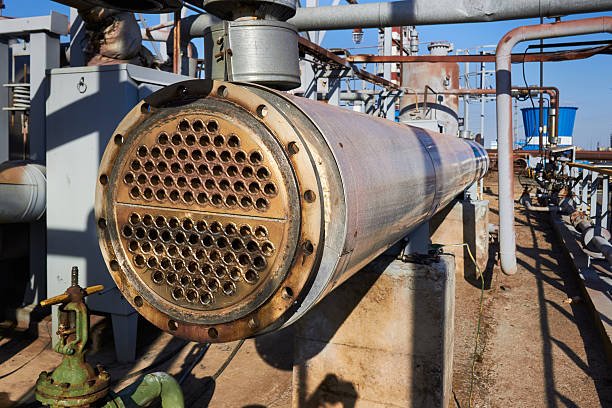
| Shell and tube | Liquid-to-liquid, steam generation | Rugged, high pressure, wide temperature range |
| Plate heat exchanger | Clean liquid-to-liquid | Compact, close approach, low ΔP |
| Plate and shell | High pressure, compact | Welded, no gaskets |
| Finned tube | Gas-to-liquid | Extended surface for low gas-side coefficient |
| Heat pipe | Air-to-air, remote transfer | Passive, no pump, good for exhaust |
| ORC evaporator | Low to medium temperature to power | Uses organic fluid, not water |
| Heat pump | Low-grade heat upgrade | Uses electricity to raise temperature |
The most common industrial retrofit is a finned tube economizer or air preheater on a boiler or furnace. The second is a feed-effluent exchanger on a process unit.
How to Select the Right Heat Exchanger
Selection is driven by the heat source and the sink. Get these wrong, and the project fails on fouling, corrosion, or pressure drop.
1. Temperature
High temperature (>400°C): Use alloy steels, ceramic coatings, or heat-resistant materials. Watch thermal expansion.
Medium (150–400°C): Standard carbon steel or stainless steel. Economizers and waste heat boilers fit here.
Low (<150°C): Stainless steel, titanium, or polymers depending on fluid. Heat pumps may be needed.
2. Fluid Type and Fouling
Flue gas: Contains soot, ash, and acid gases. Finned tubes with wide spacing resist fouling. Soot blowers help.
Liquid streams: Scale, solids, and corrosion. Plate heat exchangers foul in particulate service. Shell and tube with large tubes are better.
Clean gases: Compact plate or heat pipe units work well.
3. Acid Dew Point
This is critical for flue gas. If the metal surface drops below the acid dew point, sulfuric acid condenses and corrodes the exchanger.
The acid dew point depends on sulfur content and moisture.
For natural gas, it is around 60–80°C.
For heavy fuel oil or coal, it can be 120–150°C.
Keep the metal temperature above the dew point, or use corrosion-resistant materials.
4. Pressure Drop
Adding a heat exchanger adds pressure drop. On the flue gas side, this can affect draft and fan power. On the process side, it can affect pump energy.
Use low-ΔP designs for large gas flows.
Check that the existing fan or pump can handle the added resistance.
Sometimes a larger, lower-ΔP exchanger costs more upfront but saves energy over time.
5. Space and Layout
Waste heat exchangers are often retrofitted into tight spaces. Consider:
Available duct or pipe routing
Access for cleaning and maintenance
Structural support
Thermal expansion and vibration
6. Materials
Choose based on temperature, corrosion, and erosion.
Carbon steel for clean, dry, moderate-temperature gas
Stainless steel for acidic or wet gas
Corten or weathering steel for some flue gas
Titanium for seawater or chloride
Alloys for high-temperature or aggressive service
Polymer or coated tubes for low-temperature corrosive service
7. Cleaning and Maintenance
Waste heat exchangers foul. Design for cleaning.
Soot blowers for flue gas
Removable bundles
Bypass dampers for offline cleaning
Water washing connections
Access doors
Common Waste Heat Recovery Applications
Boiler Economizer
Flue gas leaves a boiler at 180–250°C. An economizer transfers that heat to boiler feedwater. Feedwater preheating reduces fuel use by 3–8%.
Key considerations:
Keep tube wall above acid dew point.
Use finned tubes for compactness.
Install soot blowers if firing oil or solid fuel.
Combustion Air Preheater
Preheating combustion air improves furnace efficiency and reduces fuel use. Every 20°C of air preheat can save 1–2% of fuel.
Types:
Recuperative: gas-to-air through a metal wall.
Regenerative: heat stored in a rotating matrix.
Air preheaters are common on furnaces, kilns, and boilers.
Feed-Effluent Exchanger
Hot process product preheats the cold feed. This reduces the duty on the fired heater or steam reboiler. Payback is often under a year.
Best for:
Distillation columns
Reactor feed
Drying processes
Pasteurization
Waste Heat Boiler
High-temperature exhaust (400–1,000°C) generates steam. Common on gas turbines, engines, incinerators, and cement kilns.
Types:
Fire-tube: simpler, lower pressure.
Water-tube: higher pressure, higher capacity.
Organic Rankine Cycle (ORC)
For lower-temperature heat (80–300°C), an ORC uses an organic fluid with a low boiling point to drive a turbine and generate electricity.
Suitable for:
Engine exhaust
Geothermal
Cement and steel waste heat
Biomass boilers
Heat Pumps
For low-grade heat below 60°C, a heat pump upgrades the temperature to a useful level. It uses electricity but can deliver 3–5 units of heat per unit of electricity.
Best for:
Wastewater heat recovery
Space heating
Low-temperature process preheat
How to Calculate Payback
Waste heat recovery must pay. Calculate the savings and the cost.
Step 1: Determine Available Heat
Q = m × Cp × ΔT
Where m is mass flow, Cp is specific heat, and ΔT is the temperature drop across the exchanger.
Example: 10 kg/s of flue gas, Cp = 1.1 kJ/kg·K, cooled from 250°C to 150°C.
Q = 10 × 1.1 × 100 = 1,100 kW
Step 2: Determine Usable Heat
Not all heat can be recovered. The sink temperature limits how much you can extract. If feedwater enters at 80°C, the flue gas cannot be cooled below 80°C plus the approach.
Usable heat = m × Cp × (T_hot_in − T_hot_out_min)
Step 3: Calculate Annual Savings
Savings = recovered heat (kW) × operating hours × fuel cost (/kWhor/GJ)
Example: 1,100 kW recovered, 8,000 hours/year, fuel cost $0.04/kWh.
Savings = 1,100 × 8,000 × 0.04 = $352,000 per year
Step 4: Estimate Installed Cost
Include:
Heat exchanger
Ducting and piping
Fans, pumps, and controls
Structural support
Installation labor
Bypass and cleaning systems
Step 5: Payback
Payback = installed cost / annual savings
If the installed cost is $500,000 and savings are $352,000, payback is 1.4 years.
Add maintenance, pressure drop energy cost, and any production impact. If payback is under three years, the project is usually strong. Under two years is excellent.
Common Pain Points and Fixes
Corrosion at low temperature
Keep surface temperature above acid dew point. Use corrosion-resistant materials. Add a bypass to control temperature.
Fouling and plugging
Use wide-spacing fins, soot blowers, and removable bundles. Clean regularly.
High pressure drop
Check fan or pump capacity. Use low-ΔP designs. Consider a larger exchanger.
Thermal expansion
Use expansion joints, floating tube sheets, or flexible connections.
Condensation and water carryover
Drain condensate properly. Use demister pads if needed.
Poor turndown
Flow and temperature vary. Design for the range, not just the design point. Use bypass control.
Space constraints
Consider compact plate, heat pipe, or modular designs.
Not enough heat sink
Match the source to a real demand. If no sink exists, consider ORC or heat pump.
FAQ
What is the best heat exchanger for waste heat recovery?
It depends on the source. Finned tube economizers for flue gas. Shell and tube or plate for liquid. Heat pipes for air-to-air. ORC for power generation.
How much can I save with waste heat recovery?
Typical savings are 5–20% of fuel use for boiler economizers, 10–30% for feed-effluent exchangers, and 20–40% for high-temperature exhaust recovery.
What is the acid dew point?
The temperature at which acid vapor in flue gas condenses. If the heat exchanger surface is below this, corrosion occurs. Keep metal temperature above it.
Can I recover heat from low-temperature waste streams?
Yes, with a heat pump. It upgrades low-grade heat to a useful temperature. The economics depend on electricity cost and the temperature lift.
How do I clean a flue gas heat exchanger?
Soot blowers, water washing, and mechanical cleaning. Design for access.
What is the payback for waste heat recovery?
Typically 1–4 years. High-temperature sources with a constant sink pay back fastest.
Can waste heat generate electricity?
Yes, with an ORC or steam turbine. ORC works for lower temperatures, typically 80–300°C.
Bottom Line
Industrial waste heat is a resource, not a waste. The right heat exchanger captures it and puts it back to work—preheating feedwater, combustion air, or process streams, generating steam, or producing power.
Start by identifying the source and the sink. Check temperature, fouling, acid dew point, and pressure drop. Select the exchanger that fits. Calculate the payback.
If you are planning a waste heat recovery project, send your hot stream conditions, flow rate, temperature, and the intended use of the recovered heat. We will help you select the right heat exchanger and estimate the savings.