OEM heat exchanger manufacturing allows equipment brands, industrial companies, HVAC contractors, system integrators, and distributors to source heat exchangers designed or configured for their products, projects, and target markets. Instead of developing every component and production process independently, buyers work with a manufacturing partner to produce equipment according to agreed technical, commercial, and branding requirements.
However, OEM manufacturing involves more than adding a company logo to a standard heat exchanger. Depending on the project, it may include application analysis, thermal design, mechanical engineering, material selection, connection customization, prototype evaluation, production planning, quality inspection, documentation, and export packaging.
Choosing the wrong manufacturing arrangement can lead to incompatible components, insufficient thermal performance, unclear intellectual property ownership, inconsistent product quality, or unexpected costs during production and delivery.
This guide explains how OEM heat exchanger manufacturing works, what can be customized, how buyers should evaluate manufacturing partners, and which technical and commercial details should be confirmed before placing an order.
It also explains how international sourcing and export companies can coordinate between overseas buyers and qualified heat exchanger manufacturers without being the direct manufacturer themselves.
Quick Answer: How Does OEM Heat Exchanger Manufacturing Work?
OEM heat exchanger manufacturing is a business arrangement in which a manufacturer produces heat exchangers or related components according to an agreed specification for another company’s products, systems, or brand.
The typical process includes:
- Requirement definition: The buyer provides application details, operating conditions, performance requirements, and commercial expectations.
- Technical evaluation: The manufacturer reviews thermal performance, materials, operating limits, and mechanical requirements.
- Design and customization: The parties agree on product configuration, dimensions, connections, materials, and other OEM features.
- Quotation and approval: Pricing, tooling costs, minimum order quantities, lead times, documentation, and responsibilities are confirmed.
- Prototype or sample evaluation: Where necessary, a sample or prototype is reviewed before mass production.
- Production and quality control: The manufacturer produces the agreed equipment and performs the specified inspections and tests.
- Documentation and delivery: Products are packaged, documented, and shipped according to the agreed export and delivery terms.
The exact process depends on whether the buyer is sourcing a standard product under a private label, modifying an existing design, or developing a substantially customized heat exchanger.
1. What Is OEM Heat Exchanger Manufacturing?
OEM stands for Original Equipment Manufacturer. In heat exchanger procurement, the term commonly describes an arrangement in which a manufacturer supplies equipment or components for another company’s product, system, or brand.
The buyer may integrate the heat exchanger into a larger machine, sell it under a private label, incorporate it into an HVAC or industrial system, or distribute it as part of a product portfolio.
The precise meaning of OEM can vary between industries and contracts. Buyers should therefore define the actual scope of manufacturing, customization, branding, and design ownership rather than relying on the term alone.
How Does OEM Differ From Standard Heat Exchanger Purchasing?
With standard purchasing, the buyer selects an existing model from a manufacturer’s product range. Customization may be limited to available materials, connections, capacities, or accessories.
OEM manufacturing can involve a broader scope, including:
- Private-label branding and product identification.
- Customized connection sizes and orientations.
- Adjusted dimensions or mounting arrangements.
- Product configurations tailored to an OEM system.
- Special materials or components.
- Customized technical documentation.
- Packaging designed for the buyer’s distribution channels.
- Engineering changes agreed upon for a specific application.
- Repeat production against an approved specification.
Not every OEM project requires a completely new design. Many projects begin with an existing product and introduce only the changes needed for integration, branding, or market requirements.
OEM vs. ODM vs. Private Label
These terms describe different commercial arrangements, although suppliers sometimes use them inconsistently.
| Business Model | Typical Arrangement | Buyer Involvement | Main Consideration |
|---|---|---|---|
| OEM manufacturing | A manufacturer produces equipment according to an agreed buyer specification or product requirement | Often provides requirements, drawings, or a product specification | Confirm design responsibility and ownership rights |
| ODM (Original Design Manufacturer) | A supplier offers an existing or supplier-developed design that the buyer may adapt and brand | Often selects and modifies an available design | Confirm customization limits and design ownership |
| Private label | An existing product is sold under the buyer’s brand | Usually focuses on branding, packaging, and product selection | Verify product suitability and brand-use rights |
| Standard OEM-compatible supply | A supplier provides components intended to fit an existing system or specification | Provides interface and compatibility requirements | Confirm dimensional and functional compatibility |
These categories are not universally standardized. A contract should describe the actual deliverables, responsibilities, and rights.
Which Heat Exchanger Products Can Be Sourced Through OEM Manufacturing?
Depending on the manufacturer’s capabilities, OEM arrangements may cover:
- Plate heat exchangers.
- Brazed plate heat exchangers.
- Shell-and-tube heat exchangers.
- Air-cooled heat exchangers.
- Liquid cooling heat exchangers.
- Heat exchanger plates, gaskets, and other spare parts.
- Heat transfer units and packaged systems.
- Custom heat exchangers for HVAC and industrial equipment.
The suitable manufacturing partner depends on the product category, thermal requirements, materials, operating conditions, and required level of customization.
2. How Does the OEM Heat Exchanger Manufacturing Process Work?
A successful OEM project begins with a clear specification and continues through technical approval, production, verification, and delivery.
The process should establish who is responsible for each decision, what constitutes an acceptable product, and which changes require written approval.
Step 1: Define the Application and Product Requirements
The buyer explains how the heat exchanger will be used and what the completed product must achieve.
For example, an HVAC equipment company may require a compact heat exchanger for a heat pump. An industrial equipment supplier may need a liquid cooling unit integrated into a machine with limited installation space.
The manufacturer needs enough information to determine whether an existing design is suitable or whether engineering changes are required.
Information to provide:
- Application and industry.
- Heat transfer duty.
- Hot-side and cold-side fluids.
- Flow rates and operating temperatures.
- Operating and design pressures.
- Allowable pressure drop.
- Required service life or operating conditions, where specified.
- Space, mounting, and connection requirements.
- Applicable standards and destination-market requirements.
- Expected annual demand and initial order quantity.
If the buyer does not know the required heat duty, providing reliable flow and temperature data can help the engineering team establish the thermal requirement.
Step 2: Review Thermal and Mechanical Feasibility
The manufacturing partner evaluates whether the proposed heat exchanger can meet the required thermal performance and mechanical operating limits.
For a plate heat exchanger, this may involve evaluating:
- Required heat transfer area.
- Plate geometry and flow arrangement.
- Overall heat transfer coefficient.
- Logarithmic mean temperature difference (LMTD).
- Fluid velocity and distribution.
- Pressure drop on both sides.
- Fouling allowance.
- Plate, gasket, frame, and connection materials.
For a shell-and-tube heat exchanger, the evaluation may involve tube dimensions, tube material, shell diameter, tube arrangement, baffles, flow arrangement, and mechanical design requirements.
Air-cooled and liquid cooling heat exchangers require their own application-specific thermal and hydraulic evaluations.
Important: A product’s nominal capacity does not establish its suitability for every application. The proposed design must be checked against the actual fluids, temperatures, flow rates, pressure limits, and operating conditions.
Step 3: Select Materials and Confirm the Product Configuration
Once feasibility is established, the buyer and manufacturing partner agree on the proposed construction and materials.
Depending on the product, decisions may include:
- Heat transfer surface material.
- Gasket or sealing material.
- Brazing material, where applicable.
- Frame, shell, tube, and connection materials.
- Connection type and dimensions.
- Mounting arrangement.
- Accessories and instrumentation.
- Surface treatment or protective coating, where appropriate.
- Product identification and branding.
Material compatibility is especially important when the equipment handles corrosive fluids, seawater, chemicals, glycol mixtures, oils, or fluids containing suspended solids.
For example, stainless steel 316L may be suitable for many industrial water applications but is not universally resistant to chloride-induced corrosion. Titanium may be appropriate for some seawater applications, subject to verification of the complete operating conditions and wetted materials.
The buyer should not approve a material based solely on a generic product description.
Step 4: Confirm Drawings, Specifications, and Design Changes
Before production, both parties should establish the approved product configuration.
Depending on project complexity, the approval package may include:
- Technical datasheet.
- General arrangement drawing.
- Connection and dimensional drawings.
- Bill of materials or material specification.
- Performance requirements.
- Inspection and testing requirements.
- Product identification and labeling details.
- Packaging specifications.
- Applicable standards and documentation requirements.
For customized equipment, drawing approval is particularly important.
A change to connection orientation, dimensions, plate configuration, materials, or operating conditions may affect performance, cost, tooling, or delivery time.
A documented change-control process helps prevent the buyer and manufacturer from working to different specifications.
Step 5: Produce Samples or Prototypes When Necessary
Not every OEM project requires a prototype. Standard products with limited customization may proceed directly to production after the required approvals.
Samples or prototypes are more useful when the project includes:
- New dimensions or connection arrangements.
- Integration into a larger machine.
- New tooling or manufacturing processes.
- Special materials.
- Unusual operating conditions.
- New branding or packaging requirements.
- Unverified interfaces with other equipment.
A sample review should follow agreed acceptance criteria.
Visual inspection alone cannot establish thermal performance, pressure integrity, or compliance with a technical specification. Where these characteristics matter, the project should define the required verification method.
Step 6: Manufacture and Perform Quality Control
After technical approval, the manufacturing partner produces the heat exchanger according to the agreed specification and production plan.
The actual manufacturing process varies by construction.
For example, a gasketed plate heat exchanger typically involves forming plates, preparing sealing arrangements, assembling the plate pack, and fitting it into the frame.
A brazed plate heat exchanger typically involves assembling formed plates and joining them through a controlled brazing process.
A shell-and-tube heat exchanger may require tube preparation, tube-to-tubesheet joining, shell fabrication, baffle installation, and assembly operations.
Quality-control activities should be defined for the specific product. Depending on the design and requirements, these may include dimensional inspection, material verification, assembly checks, pressure testing, leak testing, or other specified examinations.
Do not assume every inspection or test is included as standard. The buyer should confirm the scope and documentation before production begins.
Step 7: Complete Documentation, Packaging, and Delivery
The final stage covers product identification, approved documentation, packaging, and delivery.
For international orders, the parties should confirm:
- Product labels and nameplate information.
- Serial numbers or batch identification, where applicable.
- Technical datasheets and drawings.
- Material and inspection records, where required.
- Operation and maintenance documentation.
- Packaging and protection against transport damage.
- Shipping marks and packing lists.
- Export documentation.
- Delivery terms and destination requirements.
The buyer should also establish who is responsible for freight booking, insurance, customs-related documentation, and other logistics activities under the agreed commercial terms.
3. What Can Be Customized in an OEM Heat Exchanger?
OEM customization can range from simple branding to substantial engineering changes. The available options depend on the product, manufacturing partner, technical requirements, and commercial agreement.
Product Dimensions and Mechanical Interfaces
Buyers may need a heat exchanger to fit a specific machine, skid, cabinet, or piping system.
Potential customization includes:
- Overall dimensions.
- Mounting holes or support brackets.
- Connection sizes and orientations.
- Pipe or flange interfaces.
- Clearance for installation and maintenance.
- Accessory locations.
- Integration with existing control or monitoring equipment.
Mechanical compatibility must be checked alongside thermal performance. A heat exchanger that fits the available space but cannot achieve the required duty is not a successful OEM solution.
Thermal Performance and Operating Conditions
The design may need to accommodate specific flow rates, inlet and outlet temperatures, pressure-drop limits, or variable operating conditions.
However, thermal performance cannot always be modified independently of physical dimensions, material selection, pressure limits, and cost.
A request for greater heat transfer capacity may require additional heat transfer area, a different plate configuration, altered flow distribution, or a different product size.
Any performance change should be supported by an appropriate technical evaluation.
Materials and Corrosion Resistance
Depending on the design, OEM requirements may specify particular plate, tube, shell, frame, gasket, or brazing materials.
These choices should be based on:
- Fluid chemistry.
- Operating and cleaning temperatures.
- Pressure conditions.
- Corrosion mechanisms.
- Fouling and scaling tendencies.
- Required maintenance practices.
- Applicable standards.
Material substitutions should be approved rather than made informally during production.
Branding, Labeling, and Packaging
OEM buyers may request:
- Company logos.
- Product model numbers.
- Serial number formats.
- Custom nameplates.
- Private-label manuals.
- Branded packaging.
- Product-specific identification labels.
- Distributor or end-customer packaging requirements.
The agreement should clarify who owns the artwork, who approves final labels, and whether the manufacturer may supply the same product configuration to other customers.
Documentation and Compliance
Some OEM buyers require documentation that differs from a manufacturer’s standard package.
Depending on the project, this may include special datasheets, drawing formats, inspection records, material certificates, conformity documentation, or customer-specific quality records.
The buyer should identify these requirements early because they may affect supplier eligibility, engineering workload, production lead time, and price.
What Should You Avoid Customizing Without a Clear Reason?
Customization adds value when it solves a genuine technical, integration, commercial, or branding problem.
Unnecessary changes can increase tooling expenses, minimum order quantities, engineering effort, and lead time.
Before requesting a unique design, ask whether an existing model can meet the application requirements with fewer modifications.
4. How to Select the Right OEM Heat Exchanger Manufacturing Partner
A suitable OEM partner must be able to supply the required product and consistently meet the agreed specification. Price matters, but it should be evaluated alongside engineering capability, quality assurance, communication, and supply continuity.
Evaluate Technical Capability
The manufacturer should understand the intended application and be able to explain the technical basis for its proposed solution.
Ask whether the manufacturer has relevant experience with the required:
- Heat exchanger construction.
- Thermal duty and operating range.
- Fluid chemistry.
- Pressure and temperature requirements.
- Materials.
- Connection standards.
- Customization level.
- Industry-specific requirements.
Experience with a different type of heat exchanger does not automatically establish suitability for the product being sourced.
Review Quality-Control Arrangements
Ask the proposed manufacturing partner to explain how it controls the product characteristics that matter to your application.
Relevant questions include:
- How are incoming materials identified and verified?
- Which production stages have defined inspection points?
- How are dimensions and connections checked?
- Which pressure or leak tests are required?
- How are nonconforming products identified and handled?
- What records are retained?
- Can the supplier provide material traceability where required?
- How are design or production changes controlled?
Request evidence appropriate to the project rather than relying on broad statements about quality.
Confirm Production and Supply Arrangements
The manufacturer should explain its ability to handle the requested product, order quantity, and delivery schedule.
Review:
- Minimum order quantity.
- Production lead time.
- Material availability.
- Tooling or setup requirements.
- Sample availability.
- Repeat-order arrangements.
- Spare-part availability.
- Capacity to maintain the approved configuration.
- Procedures for managing supply interruptions.
For long-term OEM programs, consistency between batches may be as important as the quality of the initial sample.
Clarify Design Ownership and Intellectual Property
Custom engineering can create commercial and legal questions that should be resolved before work begins.
The contract should establish:
- Who owns pre-existing designs.
- Who owns newly developed drawings and specifications.
- Whether tooling is owned by the buyer or manufacturer.
- Whether the design can be transferred to another manufacturer.
- Whether the supplier may sell similar products to other customers.
- How confidential technical information will be protected.
- Who is authorized to approve design changes.
The answer depends on the agreement and applicable law. Do not assume that paying for customization automatically transfers all intellectual property rights.
Assess Communication and Project Management
OEM projects often involve several parties: the end customer, purchasing team, engineering team, manufacturer, quality inspector, and logistics provider.
A suitable partner should be able to coordinate questions, document decisions, communicate changes, and provide clear responses to technical and commercial inquiries.
For international buyers, clear written communication is particularly valuable because misunderstandings about dimensions, units, materials, or acceptance criteria can create expensive production errors.
5. OEM Heat Exchanger Manufacturing: Technical Specifications Buyers Must Prepare
The quality of the initial specification strongly influences the accuracy of the quotation and the efficiency of the engineering process.
A supplier may be able to help develop missing information, but the buyer should distinguish confirmed requirements from preliminary assumptions.
Technical Specification Checklist
| Parameter | Information to Provide | Why It Matters |
|---|---|---|
| Application | Heating, cooling, heat recovery, or another function | Defines the required duty |
| Product type | Plate, brazed plate, shell-and-tube, air-cooled, or liquid cooling | Establishes the design category |
| Hot-side fluid | Name, composition, and concentration | Determines thermal properties and material compatibility |
| Cold-side fluid | Name, composition, and concentration | Determines thermal properties and material compatibility |
| Flow rates | Normal, minimum, and maximum where relevant | Affects thermal performance and pressure drop |
| Inlet temperatures | Both fluid inlet temperatures | Defines the temperature driving force |
| Outlet temperatures | Required outlet temperatures for both sides | Establishes the thermal duty |
| Heat duty | kW or BTU/h, if known | Defines the required heat transfer rate |
| Operating pressure | Normal and maximum pressure on each side | Establishes operating conditions |
| Design pressure | Required mechanical design basis | Supports mechanical specification |
| Pressure drop | Allowable pressure drop on both sides | Helps determine hydraulic suitability |
| Materials | Required plate, tube, shell, gasket, or brazing materials | Addresses corrosion and compatibility |
| Fouling | Deposits, suspended solids, scaling, or cleaning requirements | Influences construction and maintenance |
| Connections | Type, size, orientation, and applicable standard | Ensures piping compatibility |
| Dimensions | Maximum envelope and installation clearances | Supports equipment integration |
| Standards | Applicable codes and market requirements | Establishes compliance obligations |
| Quality requirements | Inspections, tests, and records | Defines product acceptance |
| Branding | Logos, labels, model numbers, and packaging | Supports OEM product identity |
| Quantity | Initial order and estimated annual demand | Influences pricing and production planning |
| Destination | Country of import and delivery location | Affects documentation and logistics |
| Delivery | Required date and shipping terms | Supports production and transport planning |
What If the Buyer Does Not Have Complete Engineering Data?
The buyer should provide all available information and explicitly identify what remains unknown.
For example, an equipment designer may know the available space, required fluid connections, and maximum operating pressure but may not yet know the final heat transfer area.
In that situation, the manufacturer or its engineering team may be able to evaluate the thermal design after receiving reliable fluid and temperature data.
However, missing critical information should not be replaced with undocumented assumptions. The parties should agree on the design basis and obtain approval before production.
6. OEM Heat Exchanger Quality Control, Testing, and Compliance
Quality control should verify that the delivered product conforms to the approved specification. The required inspection and testing scope depends on the heat exchanger type, application, design conditions, and applicable regulations.
What Quality Checks May Be Required?
Depending on the product, the inspection plan may include:
- Material identification and verification.
- Dimensional inspection.
- Connection and interface checks.
- Visual inspection.
- Assembly verification.
- Pressure testing.
- Leak testing.
- Review of specified manufacturing records.
- Verification of product identification and documentation.
These activities are not interchangeable. For example, a pressure test does not by itself prove that the heat exchanger achieves the specified thermal duty.
Thermal performance may need to be established through design calculations, validated product data, or an agreed performance test, depending on the project requirements.
How Should Buyers Define Acceptance Criteria?
Before production, specify what constitutes an acceptable product.
Acceptance criteria may address:
- Required thermal performance.
- Maximum pressure drop.
- Pressure and temperature ratings.
- Materials and construction.
- Dimensional tolerances.
- Leakage requirements.
- Visual quality.
- Required documentation.
- Applicable inspection or testing standards.
For a repeated OEM program, the buyer should also define how deviations are approved and how nonconforming products are handled.
Are OEM Heat Exchangers Required to Have Certifications?
Certification requirements depend on the equipment design, application, destination market, and applicable legislation or contractual requirements.
Some projects may require conformity assessment or documentation under applicable pressure equipment regulations. Others may specify industry standards, customer approval processes, or particular material certificates.
Buyers should identify the relevant requirements before selecting a supplier.
A manufacturer should not be assumed to hold a particular certification merely because it produces similar equipment. Verify the applicable documents, scope, validity, and product coverage where certification is required.
 7. OEM Heat Exchanger Manufacturing Cost and Lead Time
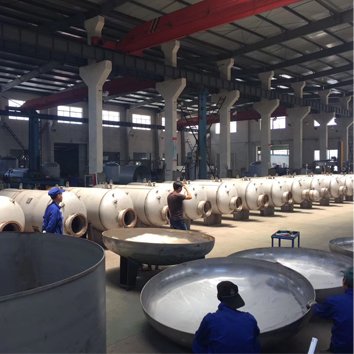 7. OEM Heat Exchanger Manufacturing Cost and Lead Time
OEM pricing depends on the product configuration, engineering workload, manufacturing process, order quantity, quality requirements, and delivery arrangements.
A customized product may cost more than a standard model, but the difference depends on the scope of changes rather than the OEM label itself.
What Factors Affect OEM Heat Exchanger Cost?
| Cost Factor | Potential Effect |
|---|---|
| Heat duty and size | Influences materials, heat transfer area, and product dimensions |
| Construction type | Different manufacturing processes have different costs |
| Material selection | Specialty alloys and specific gasket compounds may increase material costs |
| Operating pressure and temperature | May require different construction or design arrangements |
| Custom dimensions and connections | Can increase engineering and production complexity |
| Tooling and fixtures | May add initial project costs |
| Design and engineering | New or unusual requirements may need additional development work |
| Branding and packaging | Custom labels, artwork, and packaging may add costs |
| Testing and inspection | Additional verification may increase the total price |
| Documentation | Customer-specific records and drawings may require extra work |
| Order quantity | Setup costs may be distributed differently across order sizes |
| Spare parts | Dedicated spare-part requirements may affect commercial planning |
| Freight and export packaging | Influence delivered cost |
| Import duties and taxes | Depend on destination and applicable trade rules |
Why Minimum Order Quantities Matter
Some products can be supplied in small quantities, while others require minimum order volumes because of tooling, production setup, material purchasing, or manufacturing efficiency.
Ask whether the quoted minimum order quantity applies to the initial order, each model, each configuration, or each production batch.
For an OEM program, it is also useful to ask whether repeat orders can be placed in smaller quantities after the initial setup or production run.
What Determines OEM Production Lead Time?
Lead time may be affected by:
- Availability of standard components.
- Material procurement.
- Engineering and drawing approval.
- Tooling or prototype requirements.
- Production scheduling.
- Testing and inspection.
- Packaging and labeling approval.
- Documentation preparation.
- International shipping.
A quotation should distinguish estimated manufacturing lead time from the total delivery time to the destination.
If the project includes new tooling or engineering development, confirm which milestones must be completed before the production schedule begins.
Compare Total Cost, Not Just Unit Price
For recurring OEM orders, evaluate the full commercial arrangement, including:
- Initial engineering and tooling.
- Unit price.
- Quality-control and testing costs.
- Packaging.
- Freight and import costs.
- Spare parts.
- Warranty terms.
- Expected maintenance requirements.
- Costs associated with design changes.
- Risks associated with inconsistent quality or delayed supply.
The lowest initial quotation is not necessarily the most economical choice over the life of the OEM program.
8. Common Mistakes in OEM Heat Exchanger Manufacturing
Mistake 1: Treating OEM as a Branding-Only Service
What buyers do: Request a logo and private-label packaging without defining the technical requirements.
Why it causes problems: The standard product may not meet the intended application’s thermal, mechanical, or installation requirements.
What to do instead: Confirm the application, operating conditions, product specification, and required modifications before approving the OEM arrangement.
Mistake 2: Providing Incomplete Operating Data
What buyers do: Supply only the nominal heat duty or product dimensions.
Why it causes problems: The manufacturer may have insufficient information to verify thermal performance, pressure drop, or material suitability.
What to do instead: Provide fluid data, flow rates, inlet and outlet temperatures, operating pressure, allowable pressure drop, and relevant installation requirements.
Mistake 3: Assuming a Sample Represents Every Future Production Batch
What buyers do: Approve one sample without defining production acceptance criteria.
Why it causes problems: Repeat production may be evaluated against different assumptions, inspection methods, or component configurations.
What to do instead: Approve the specification, establish inspection requirements, and define how production changes and nonconformities are managed.
Mistake 4: Ignoring Tooling and Engineering Costs
What buyers do: Compare only unit prices.
Why it causes problems: Customization may involve separate tooling, setup, engineering, testing, or documentation costs.
What to do instead: Request a clear breakdown of non-recurring costs and recurring unit prices.
Mistake 5: Failing to Define Intellectual Property Rights
What buyers do: Assume that customized drawings and tooling automatically belong to the buyer.
Why it causes problems: Ownership, reuse, confidentiality, and transfer rights may not be established by the commercial quotation.
What to do instead: Put design ownership, tooling ownership, confidentiality, and permitted use into the written agreement.
Mistake 6: Changing Specifications After Production Approval
What buyers do: Modify dimensions, materials, or connections after drawings have been approved.
Why it causes problems: Changes can affect engineering work, tooling, product compatibility, price, and delivery.
What to do instead: Establish a formal change-control process and require written approval of revised specifications.
Mistake 7: Assuming One Manufacturer Can Supply Every Heat Exchanger Type
What buyers do: Select a supplier based on a broad product catalogue without checking the actual manufacturing capability.
Why it causes problems: Different heat exchanger constructions require different processes, engineering expertise, and quality-control arrangements.
What to do instead: Verify the manufacturing partner’s capability for the exact product category and operating requirements.
Mistake 8: Ignoring Destination-Market Requirements
What buyers do: Confirm the product specification but review compliance requirements only before shipment.
Why it causes problems: Required documentation, conformity assessment, or design changes may delay the project.
What to do instead: Identify destination-market requirements during the initial specification and quotation stage.
Mistake 9: Failing to Plan for Repeat Orders and Spare Parts
What buyers do: Focus exclusively on the first delivery.
Why it causes problems: Future production may be affected by component changes, material availability, or unclear product identification.
What to do instead: Agree on model identification, approved specifications, spare-part arrangements, and procedures for notifying the buyer of product changes.
9. OEM vs. Standard Heat Exchanger Manufacturing: Which Is Better?
OEM manufacturing is useful when the buyer needs branding, integration, customization, or repeat supply under a controlled specification. Standard purchasing is often more efficient when an existing product already meets the technical requirements.
| Factor | Standard Product | OEM Product |
|---|---|---|
| Initial engineering | Often limited | Depends on customization |
| Branding | Usually standard manufacturer branding | Can support agreed private labeling |
| Dimensions and connections | Selected from available configurations | May allow agreed modifications |
| Product development | Generally limited | Can include application-specific development |
| Tooling costs | Usually lower when no new tooling is needed | May apply to customized production |
| Minimum order quantity | Product-dependent | May be higher for some custom configurations |
| Lead time | Often shorter for available products | May increase with design approval and customization |
| Design ownership | Usually governed by the existing product arrangement | Must be explicitly agreed for custom work |
| Best suited for | Standard applications and straightforward replacements | OEM integration, branding, and controlled repeat supply |
The right choice depends on the technical need and business model. Buyers should avoid paying for customization when a standard model already meets all essential requirements.
10. How an International Sourcing Partner Supports OEM Heat Exchanger Projects
Overseas buyers do not always need to communicate directly with multiple manufacturing facilities. An international sourcing and export company can coordinate the commercial and technical communication between the buyer and qualified manufacturing partners.
The value of this arrangement depends on how responsibilities are defined and how effectively the parties manage the project.
Product Sourcing and Technical Coordination
An export partner can help clarify the required product type, gather operating data, communicate the buyer’s specification, and coordinate questions with the manufacturing partner.
For more complex projects, the buyer should confirm which party is responsible for engineering calculations, final design approval, and technical sign-off.
Customization and Quality Coordination
An export partner can coordinate branding requirements, drawing approval, packaging specifications, and agreed quality-control activities.
The manufacturing partner’s actual capabilities and the agreed scope of work should be verified for each project.
Commercial and Export Support
International orders may involve separate arrangements for manufacturing, inspection, packaging, freight, insurance, and import documentation.
A sourcing and export partner can help coordinate these activities under the agreed contract and delivery terms.
The buyer should understand which activities the export partner performs directly, which are performed by the manufacturer, and which remain the buyer’s responsibility.
What Should Buyers Confirm Before Placing an Order?
Ask the proposed export partner to clarify:
- Which company will manufacture the heat exchanger.
- Who is responsible for the final technical design.
- Which manufacturing and quality-control records will be available.
- Who approves drawings and specification changes.
- What testing and inspection activities are included.
- Which documents will accompany the shipment.
- How warranty claims and technical issues will be handled.
- Who is responsible for packaging, freight, and delivery coordination.
Clear responsibilities help reduce uncertainty throughout the OEM procurement process.
11. OEM Heat Exchanger Manufacturing: Buyer Checklist
Before requesting a quotation, use the following checklist to establish the scope of the project.
Technical Requirements
Application and intended use.
Required heat exchanger type.
Hot-side and cold-side fluid details.
Flow rates and operating ranges.
Inlet and required outlet temperatures.
Heat duty, if known.
Operating and design pressures.
Allowable pressure drop.
Fluid properties and corrosion concerns.
Fouling, scaling, and cleaning requirements.
Plate, tube, shell, gasket, or brazing material requirements.
Connection types, sizes, and orientations.
Maximum dimensions and installation constraints.
Applicable design codes and destination-market requirements.
OEM Requirements
Branding and logo files.
Product model and serial number requirements.
Labeling and nameplate specifications.
Packaging and private-label documentation.
Approved drawings and technical datasheets.
Prototype or sample requirements.
Quality-control and testing requirements.
Material traceability requirements, where applicable.
Design and tooling ownership terms.
Confidentiality and permitted-use arrangements.
Change-control and approval procedures.
Commercial and Delivery Requirements
Initial order quantity.
Expected annual demand.
Minimum order quantity.
Target purchase price or budget, if available.
Tooling and engineering costs.
Production lead time.
Required delivery date.
Spare-part and repeat-order requirements.
Destination country.
Packaging and shipping terms.
Required export and import documentation.
Warranty and after-sales arrangements.
A complete checklist helps the supplier identify missing information early, prepare a more accurate quotation, and reduce unnecessary revisions.
12. Frequently Asked Questions About OEM Heat Exchanger Manufacturing
1. What does OEM mean in heat exchanger manufacturing?
OEM heat exchanger manufacturing means that a manufacturer supplies equipment or components for another company’s product, system, or brand under an agreed commercial and technical arrangement. The scope may include standard products, private labeling, customized components, or application-specific engineering.
2. What is the difference between OEM and ODM heat exchangers?
OEM arrangements commonly involve production against buyer-defined requirements, while ODM arrangements commonly involve a supplier-developed design that the buyer selects or adapts. The terms are used differently across industries, so contracts should define design responsibility, customization, and intellectual property rights.
3. Can I sell OEM heat exchangers under my own brand?
Yes, if the manufacturing and branding agreement permits it. Confirm logo and labeling rights, product identification, packaging requirements, applicable regulatory obligations, and whether the manufacturer may supply the same or similar product to other customers.
4. Can OEM heat exchangers be customized?
Yes. Depending on the product and manufacturing partner, customization may include dimensions, connections, materials, thermal configuration, mounting, accessories, labels, and packaging. Each change must be checked for technical feasibility, cost, and delivery impact.
5. What information is required for an OEM heat exchanger quotation?
A supplier normally needs the application, heat duty or operating data, fluids, flow rates, temperatures, pressure limits, allowable pressure drop, materials, dimensions, connections, required standards, order quantity, branding requirements, and destination.
6. Do OEM heat exchangers require a minimum order quantity?
Sometimes. The minimum order quantity depends on the product, customization, tooling, material procurement, and manufacturing process. Some standard products may be available in small quantities, while customized projects may require larger production batches.
7. Does OEM heat exchanger manufacturing require tooling costs?
Not always. Existing products with limited customization may require no new tooling. Special dimensions, dedicated fixtures, or new manufacturing processes may create additional one-time costs. Buyers should confirm tooling ownership and whether tooling charges recur on future orders.
8. How long does OEM heat exchanger manufacturing take?
Lead time depends on design complexity, material availability, sample approval, tooling, production scheduling, inspection, documentation, and shipping. The supplier should provide a project-specific estimate that distinguishes manufacturing time from total delivery time.
9. Can a trading company supply OEM heat exchangers?
Yes. A trading or export company can coordinate sourcing, technical communication, customization, quality-control arrangements, and export support through qualified manufacturing partners. Buyers should verify the actual manufacturer and clarify which party is responsible for design, testing, documentation, and after-sales support.
10. How can I verify an OEM heat exchanger manufacturer’s capability?
Review the manufacturer’s experience with the relevant product type, technical documentation, production processes, quality-control arrangements, inspection records, and ability to meet the specified operating conditions. Request evidence relevant to the project rather than relying only on a catalogue or general capability statement.
11. Can OEM heat exchangers be supplied with material certificates and test reports?
Yes, where the manufacturing partner can provide the required documents and the project includes them in its scope. Availability depends on the materials, product, inspection requirements, and applicable standards. The required documents should be confirmed before the order is placed.
12. Who owns the design of a custom OEM heat exchanger?
Design ownership depends on the existing intellectual property, development arrangement, contract, and applicable law. Buyers should explicitly agree on ownership and permitted use of drawings, tooling, technical data, and newly developed designs before work begins.
13. What quality checks should be included in OEM manufacturing?
The inspection plan may include material verification, dimensional checks, assembly inspection, pressure or leak testing, and review of manufacturing records. The appropriate checks depend on the heat exchanger construction and project requirements. Acceptance criteria should be defined before production.
14. Can OEM heat exchangers be exported internationally?
Yes. International supply is common, but the product must meet the applicable technical, safety, and regulatory requirements for the destination market. Buyers should confirm documentation, packaging, shipping terms, and any required conformity assessment before production and shipment.
15. How do I reduce risks in an OEM heat exchanger project?
Provide a clear technical specification, verify the manufacturing partner, approve drawings before production, define inspection and acceptance criteria, clarify intellectual property rights, control specification changes, and establish documented warranty and delivery responsibilities.
13. Choosing an OEM Heat Exchanger Export Partner
An OEM project depends on more than manufacturing. The buyer also needs clear communication, reliable specification control, transparent commercial terms, and coordinated delivery.
When selecting a China-based OEM heat exchanger supplier or export partner, evaluate the actual manufacturing arrangement rather than assuming that the company handling the quotation owns the factory.
A professional trading and export company can work with qualified manufacturing partners and engineering teams to coordinate product sourcing, technical requirements, customization, quality-control arrangements, and international export support.
Before committing to an OEM program, confirm the following:
- Technical coordination: Can the supplier collect operating data, clarify missing information, and communicate technical requirements accurately?
- Manufacturing partner suitability: Can the actual manufacturer produce the required heat exchanger type and configuration?
- Quality control: Are inspection responsibilities and acceptance criteria documented?
- Material verification: Can required material identification or traceability records be provided?
- Testing: Are the required pressure, leakage, dimensional, or performance checks clearly specified?
- Documentation: Are drawings, datasheets, test records, and applicable conformity documents defined?
- Customization: Can the parties manage branding, packaging, connections, and approved engineering changes?
- Supply continuity: Are repeat orders, spare parts, and product revisions managed through a documented process?
- Export support: Are packaging, shipping, customs-related documents, and delivery responsibilities clear?
- After-sales service: Is there an agreed process for technical questions, warranty claims, and nonconforming products?
The objective is to establish a transparent working relationship in which the buyer, export partner, and manufacturing partner understand their responsibilities from initial specification through final delivery.
Need an OEM Heat Exchanger Manufacturing Partner?
If you are developing an OEM product, expanding your heat exchanger range, or sourcing customized equipment for an industrial project, the first step is to define your technical and commercial requirements.
Click here to schedule a consultation or send us your OEM heat exchanger requirements.
We work closely with qualified manufacturing partners and engineering teams to provide product sourcing, technical coordination, customization, quality-control arrangements, and international export support.
To help us assess your project, provide the following information where available:
- Heat exchanger type and application.
- Fluid details, flow rates, and operating temperatures.
- Required heat duty and pressure-drop limits.
- Material and connection requirements.
- Drawings, dimensions, or existing product references.
- Branding, packaging, and documentation requirements.
- Initial order quantity and estimated annual demand.
- Destination country and expected delivery schedule.
Our team can review the information provided, clarify outstanding requirements, and coordinate with manufacturing partners to identify suitable OEM supply options.