When replacing heat exchanger plates, gaskets, seals, tubes, or other components, industrial buyers face an important decision: purchase original equipment manufacturer (OEM) parts or use aftermarket alternatives?
OEM parts are supplied by the original equipment manufacturer or through its authorized supply channels, depending on the arrangement. Aftermarket parts are supplied by other manufacturers or suppliers and may be designed as replacements for existing equipment. Both options can be appropriate, but neither guarantees suitability without checking the actual specifications.
The wrong replacement part can cause leakage, reduced heat transfer performance, premature deterioration, installation difficulties, or unexpected downtime. At the same time, automatically choosing OEM components may increase purchasing costs or extend lead times when suitable alternatives are available.
The right decision depends on the component’s function, equipment design, operating conditions, compatibility requirements, documentation, and the consequences of failure. This guide explains the differences between OEM and aftermarket heat exchanger parts and provides a practical framework for selecting replacement components for industrial, HVAC, refrigeration, and process applications.
Quick Answer: Should You Choose OEM or Aftermarket Heat Exchanger Parts?
Choose OEM heat exchanger parts when manufacturer-specific compatibility, documented traceability, warranty conditions, or design requirements make original components the preferred option. Consider aftermarket parts when the supplier can demonstrate technical compatibility, suitable materials, acceptable quality, and compliance with applicable requirements at a competitive total cost.
Before purchasing either option, verify:
- Equipment model, serial number, and configuration
- Exact component dimensions and design
- Material and fluid compatibility
- Operating and design pressure and temperature
- Performance requirements
- Required inspection records and material documentation
- Warranty implications and applicable regulations
- Delivery time, lifecycle cost, and replacement availability
The key distinction is not simply original versus non-original. It is whether the replacement part is technically suitable, appropriately documented, and reliable for the intended service.
1. What Is the Difference Between OEM and Aftermarket Heat Exchanger Parts?
OEM and aftermarket heat exchanger parts differ primarily in their supply source, design relationship to the original equipment, documentation, and purchasing arrangements.
What Are OEM Heat Exchanger Parts?
OEM heat exchanger parts are original components supplied by the equipment manufacturer or through its designated supply channels.
Depending on the manufacturer and commercial arrangement, these parts may be produced by the OEM itself or sourced from an approved component manufacturer.
Examples include:
- Original plate heat exchanger plates
- Manufacturer-specified gasket sets
- Original shell-and-tube exchanger gaskets
- Specified replacement tubes
- OEM-approved seals and connection components
- Original accessories and model-specific assemblies
OEM components may offer advantages when the equipment has proprietary geometry, specific material requirements, or documented replacement procedures.
However, the OEM label alone does not eliminate the need to verify the part number, revision, material, and suitability for the equipment’s current operating conditions.
What Are Aftermarket Heat Exchanger Parts?
Aftermarket heat exchanger parts are supplied by companies other than the original equipment manufacturer or its designated original-parts channel.
They may include:
- Replacement gaskets for plate heat exchangers
- Compatible replacement plates
- Alternative seals and O-rings
- Replacement tubes for suitable shell-and-tube designs
- Third-party accessories and connection components
- Custom replacement parts made to an approved drawing or specification
Aftermarket components range from well-engineered, documented replacements to products with insufficient technical evidence. Their quality and compatibility must be assessed individually.
A reputable aftermarket supplier should be able to explain how the replacement matches the original component’s function, dimensions, materials, and operating requirements.
OEM vs Aftermarket: Key Differences
| Comparison factor | OEM parts | Aftermarket parts |
|---|---|---|
| Supply source | Original equipment manufacturer or designated channel | Independent manufacturer or supplier |
| Design reference | Original equipment design and specifications | Usually based on compatible equipment, drawings, samples, or specifications |
| Compatibility | Often supported by the OEM’s equipment records, but still requires correct part identification | Depends on the accuracy of the replacement design and verification |
| Material documentation | Depends on the component and OEM documentation package | Depends on the supplier and agreed purchasing requirements |
| Price | May be higher or lower depending on the component and supply arrangement | May offer competitive pricing, but this is not guaranteed |
| Lead time | Depends on stock, production, and distribution | Depends on stock, production, tooling, and sourcing |
| Customization | Depends on the OEM’s product and service policy | Some suppliers may offer greater flexibility for approved custom requirements |
| Warranty implications | May align more directly with OEM terms | May require separate review of equipment warranty and replacement-part terms |
| Long-term availability | Depends on product lifecycle and OEM support | Depends on supplier continuity and the availability of compatible designs |
| Best use case | Manufacturer-specific or highly controlled applications | Applications where technical equivalence can be demonstrated and accepted |
Important: Neither category is automatically superior. The correct decision depends on the part, the application, and the evidence available to support its use.
Problem: The Original Part Is Expensive or Difficult to Obtain
Why it happens: The equipment may be older, the original supplier may have long lead times, or the required part may be a low-volume item.
How to solve it: Ask the OEM for the exact part specification and investigate whether a technically acceptable aftermarket replacement exists. Compare not only the quoted price but also documentation, delivery, expected service life, and the consequences of failure.
What to provide to the supplier:
- Original part number
- Equipment manufacturer and model
- Drawings or dimensions
- Material requirements
- Operating conditions
- Required quantity and delivery date
Example: A maintenance team operating an older gasketed plate heat exchanger discovers that its original gasket set has a long lead time. The team evaluates an aftermarket option by checking gasket geometry, compound compatibility, temperature limits, and the supplier’s technical documentation before approving the purchase.
2. How Do OEM and Aftermarket Parts Affect Heat Exchanger Performance?
Heat exchanger performance depends on the complete thermal and mechanical system. A replacement component must preserve the functions required by the original design or an approved engineering modification.
A component that physically fits is not necessarily capable of delivering equivalent performance.
Plate Heat Exchanger Plates
Plate geometry influences fluid distribution, turbulence, heat transfer, and pressure drop.
Important design features include:
- Plate dimensions
- Corrugation pattern
- Port size and location
- Plate thickness
- Material
- Gasket arrangement
- Plate orientation
- Flow configuration
Different plate pressing patterns can produce different heat transfer and hydraulic characteristics, even when the plates appear similar.
An aftermarket plate that fits the frame but has different corrugation geometry may alter pressure drop or thermal performance. A different port arrangement or plate orientation can also create assembly problems.
Selection advice: For a plate replacement, verify the plate’s compatibility with the existing plate pack and intended operating conditions. If the replacement changes the original design, obtain a technical assessment of the resulting thermal duty and pressure drop.
Gaskets and Seals
Gaskets establish sealing between fluid channels or mating surfaces. Their suitability depends on geometry, material, temperature, pressure, and chemical exposure.
Common gasket materials include EPDM, NBR, FKM, and PTFE-based materials, but they are not interchangeable across all applications.
A gasket may fit the groove yet fail prematurely because the compound is unsuitable for the process fluid or cleaning chemicals. Incorrect dimensions or hardness can also affect sealing and assembly.
For gasketed plate heat exchangers, check the following:
- Gasket profile and dimensions
- Attachment method
- Material or compound specification
- Fluid compatibility
- Operating and cleaning temperatures
- Pressure conditions
- Manufacturer’s installation requirements
Do not assume that a replacement gasket has equivalent service life merely because its material family matches the original.
Shell-and-Tube Heat Exchanger Components
For shell-and-tube heat exchangers, replacement parts may include cover gaskets, channel gaskets, tube-side components, seals, and selected tubes.
Critical considerations include:
- Flange and cover dimensions
- Gasket thickness and material
- Tube outside diameter and wall thickness
- Tube material and mechanical properties
- Connection geometry
- Design pressure and temperature
- Applicable pressure-equipment requirements
A replacement tube must be suitable for the intended service and compatible with the equipment’s tube-to-tubesheet joint design. Substituting a different material or dimension may affect corrosion resistance, mechanical integrity, or the joining procedure.
Performance Verification by Component Type
| Component | Main performance concern | What to verify |
|---|---|---|
| Plate heat exchanger plate | Heat transfer, flow distribution, pressure drop | Plate geometry, material, orientation, and compatibility |
| Plate heat exchanger gasket | Leakage, chemical resistance, service life | Profile, compound, dimensions, and operating limits |
| Shell-and-tube gasket | Sealing and pressure-boundary integrity | Dimensions, material, temperature, pressure, and applicable requirements |
| Replacement tube | Heat transfer, corrosion, mechanical integrity | Dimensions, material, joint design, and design conditions |
| O-ring or seal | Leakage and compatibility | Size, compound, hardness where specified, and service conditions |
| Connection component | Mechanical fit and sealing | Connection standard, dimensions, material, and pressure rating |
What Information Should You Provide?
Provide the existing part specification, heat exchanger model, operating temperatures, pressures, fluid composition, expected performance, and any relevant drawings.
If the replacement changes the geometry, material, or operating limits, the supplier should identify the change and determine whether further engineering review is needed.
3. How Do You Verify the Quality of Aftermarket Heat Exchanger Parts?
Aftermarket part quality should be evaluated through technical compatibility, material suitability, manufacturing controls, inspection evidence, and traceability where required—not price or appearance alone.
A professional supplier should be able to explain the basis for recommending a replacement and provide documentation appropriate to the component’s criticality.
Check the Technical Specification
Start with a documented specification that identifies the part and defines its required characteristics.
Depending on the component, this may include:
- Part number or drawing reference
- Dimensions and tolerances
- Material grade or compound
- Operating temperature range
- Pressure requirements
- Surface finish or other relevant manufacturing characteristics
- Compatibility with the equipment
- Applicable standards or customer specifications
For straightforward consumables, a concise specification may be sufficient. Pressure-boundary components or safety-critical parts may require more extensive engineering review and documentation.
Review Material Documentation
Material documentation helps establish whether the delivered component matches the agreed specification.
Depending on the part and purchase requirements, relevant records may include:
- Material certificates
- Batch or lot identification
- Material declarations
- Dimensional inspection records
- Product conformity documentation
- Applicable test or inspection reports
Not every component requires every document. The requirements should be agreed before ordering and should reflect the equipment design, contractual specifications, and regulatory obligations.
A certificate should also be relevant to the supplied component and traceable to the applicable material or batch where traceability is required.
Verify Manufacturing and Inspection Arrangements
Ask the supplier how the replacement component is manufactured and inspected.
Useful questions include:
- Is the component produced against a controlled drawing or specification?
- How are dimensions and materials checked?
- Are critical characteristics identified before production?
- Can the supplier provide inspection records when required?
- How are nonconforming parts handled?
- Can repeat orders be matched to the approved specification?
- Is batch identification available where required?
A supplier’s response should be specific to the component. General statements about quality are less useful than clear acceptance criteria and relevant documentation.
Consider the Consequences of Failure
Quality verification should be proportional to risk.
A noncritical connection seal in a low-pressure auxiliary circuit may require a different inspection package from a gasket or component forming part of a high-pressure, high-temperature, or hazardous-fluid system.
Where failure could create significant safety, environmental, or production consequences, involve the responsible engineer and define acceptance requirements before procurement.
OEM vs Aftermarket Quality Checklist
| Verification item | Questions to ask |
|---|---|
| Identification | Is the part clearly identified by number, drawing, or specification? |
| Dimensional conformity | Are the critical dimensions verified? |
| Material suitability | Is the material appropriate for the actual fluid and operating conditions? |
| Operating limits | Are temperature and pressure requirements addressed? |
| Traceability | Can material or batch traceability be provided where required? |
| Inspection | Are appropriate inspection records available? |
| Design compatibility | Has the replacement’s suitability for the equipment been established? |
| Documentation | Are agreed certificates, reports, and instructions supplied? |
| Repeatability | Can future orders be produced to the same approved specification? |
| Corrective action | Is there a defined process for handling defects or discrepancies? |
Practical recommendation: Approve an aftermarket part against a written specification before placing a large or critical order. This reduces the risk of inconsistent replacements across future maintenance cycles.
4. How Do You Choose Between OEM and Aftermarket Parts for Different Applications?
The best sourcing approach depends on the equipment design, part function, operating environment, and consequences of failure.
A blanket policy requiring OEM parts for every application may increase costs without providing a meaningful benefit for every component. Conversely, selecting aftermarket parts purely because they are cheaper can introduce avoidable technical risk.
Industrial Process Heat Exchangers
Industrial process heat exchangers may handle hot fluids, corrosive chemicals, oils, or other demanding media.
For pressure-boundary components and parts exposed to severe operating conditions, prioritize documented material suitability, mechanical requirements, and engineering approval.
OEM parts may be preferable when the original design is proprietary, the replacement affects pressure-boundary integrity, or the equipment documentation requires a specific component.
An aftermarket part may be acceptable if its suitability is established and the equipment owner or responsible engineer approves its use.
HVAC and Chilled-Water Systems
HVAC heat exchangers commonly operate with water, chilled water, or water-glycol mixtures.
Potential replacement parts include gaskets, seals, connection components, sensors, and associated accessories.
Aftermarket parts may be practical for routine maintenance when their dimensions, materials, and operating limits are verified.
For systems serving critical buildings, sensitive processes, or freeze-protection applications, assess the operational consequences of leakage or loss of heat transfer before reducing inventory or changing component specifications.
Food and Beverage Processing
Food and beverage applications may have specific hygiene, cleanability, contamination-control, and material requirements.
A replacement component should meet the requirements applicable to the actual process and installation.
Do not assume that a material is acceptable merely because it is stainless steel or because a supplier describes it as food-grade. Where required, confirm the relevant material documentation, regulatory suitability, and compatibility with the cleaning and sanitation regime.
OEM parts may be useful when equipment-specific hygienic design or documentation is important. An aftermarket alternative should be assessed against the same applicable requirements.
Refrigeration and Liquid-Cooling Systems
Refrigeration and liquid-cooling applications can involve pressure conditions, coolant compatibility, leakage risks, and specialized connection designs.
The replacement component must suit the actual refrigerant or coolant, temperature range, pressure conditions, and equipment configuration.
For compact brazed plate heat exchangers, internal plate replacement is generally not a routine field maintenance option. Depending on the design and failure, replacing the complete exchanger may be more practical than attempting an internal repair.
Application-Based Decision Table
| Application | Recommended starting point | When aftermarket parts may be suitable | Key caution |
|---|---|---|---|
| High-pressure industrial process | OEM or documented, engineer-approved alternative | When equivalence and applicable requirements are established | Mechanical integrity and process safety |
| General HVAC | OEM or verified compatible replacement | Routine service parts with confirmed compatibility | Leakage, glycol compatibility, and system availability |
| Food and beverage | Parts meeting the application’s hygiene and material requirements | When equivalent requirements and documentation are demonstrated | Contamination and cleaning compatibility |
| Chemical processing | OEM or technically qualified alternative | Only after material and operating-condition review | Corrosion, chemical attack, and process hazards |
| Brazed plate heat exchanger | OEM-compatible accessories or a suitable replacement unit | External components and approved serviceable parts | Internal components are generally not individually field-replaceable |
| Older or discontinued equipment | Original part if available, otherwise a technically assessed alternative | When drawings, samples, and operating requirements support verification | Incomplete documentation and design changes |
What Should You Tell the Supplier?
Identify the application, fluid, temperature, pressure, required performance, equipment model, part number, and consequences of failure.
If the component is safety-critical or subject to specific regulatory requirements, state those requirements before the supplier proposes an alternative.
5. What Affects the Price of OEM and Aftermarket Heat Exchanger Parts?
OEM parts are not always more expensive, and aftermarket parts are not always cheaper. Actual pricing depends on the component, supply chain, production requirements, quantity, and delivery conditions.
Main Cost Factors
1. Component design
Custom plate patterns, proprietary geometry, specialized seals, and nonstandard components may require dedicated manufacturing or additional technical verification.
2. Material
Stainless steel, titanium, nickel alloys, specialized elastomers, and other materials have different raw-material costs and processing requirements. Material choice should be based on suitability rather than price alone.
3. Manufacturing and inspection
Precision machining, forming, special joining processes, controlled production, and additional inspection can affect the final cost.
4. Documentation and traceability
Material certificates, inspection records, batch traceability, and other specified documentation may add procurement cost.
5. Order quantity
Larger orders may reduce unit costs through purchasing or manufacturing efficiencies, but minimum order quantities and tooling costs can influence the result.
6. Availability and lead time
A stocked part may be available more quickly than a custom component. Urgent orders may require expedited manufacturing or transportation.
7. Shipping and import costs
Packaging, freight, insurance, customs handling, duties, taxes, and destination-specific requirements can affect the landed cost.
8. Expected service life
A lower purchase price may not produce a lower lifecycle cost if the component requires more frequent replacement or creates additional downtime.
How Should Buyers Compare Quotations?
Compare quotations against the same technical specification.
A practical comparison should include:
| Cost consideration | OEM quotation | Aftermarket quotation |
|---|---|---|
| Part identification | Confirm exact part number and revision | Confirm the replacement specification and compatibility basis |
| Material | Verify specified material | Verify the proposed material |
| Technical documentation | Confirm included records | Confirm included records |
| Inspection requirements | Confirm scope and cost | Confirm scope and cost |
| Delivery | Confirm stock and lead time | Confirm stock, manufacturing, and lead time |
| Warranty | Review applicable terms | Review supplier terms and equipment warranty implications |
| Freight and import | Calculate total landed cost | Calculate total landed cost |
| Future availability | Confirm product support | Confirm repeat-order capability |
| Downtime risk | Assess expected availability | Assess expected availability and replacement risk |
The comparison should separate verified facts from assumptions. For example, do not assume that a lower-priced gasket will have a shorter service life or that an OEM gasket will last longer without supporting evidence.
Calculate Total Cost of Ownership
For purchasing decisions, consider:
Total cost of ownership = Purchase cost + Logistics and import costs + Inspection and installation costs + Maintenance costs + Expected downtime-related costs
This is a simplified decision framework. The precise cost model depends on the facility and application.
For a critical heat exchanger, a modest saving on a replacement component may be outweighed by the consequences of an unexpected leak or delayed restart. For a noncritical unit with readily available parts, a verified aftermarket option may provide good value.
6. How to Source OEM and Aftermarket Heat Exchanger Parts from China
International buyers sourcing replacement components from China should evaluate technical suitability, supplier reliability, documentation, and export coordination together.
A supplier’s location does not determine whether a component is suitable. The relevant questions are whether the part meets the required specification, whether the supplier can demonstrate that conformity, and whether the purchasing arrangement provides adequate support.
Step 1: Identify the Exact Part
Provide the equipment nameplate, model, serial number, original part number, and available drawings or photographs.
For plates and gaskets, include dimensions and material information where available. For shell-and-tube components, provide the relevant drawings, connection details, and pressure-boundary requirements.
Photographs can support identification but should not replace dimensional or material verification when these affect suitability.
Step 2: Define the Acceptance Requirements
Before requesting a quotation, establish what the supplier must provide.
Depending on the component, the specification may include:
- Part dimensions and tolerances
- Material grade or compound
- Operating limits
- Required inspection
- Material certificates or traceability
- Applicable standards
- Packaging requirements
- Documentation and labeling
The requirements should be agreed before production or shipment, especially for custom parts.
Step 3: Confirm the Supply Arrangement
Clarify whether the quotation is for:
- Original OEM parts
- Parts sourced through an authorized channel
- Third-party aftermarket replacements
- Custom components manufactured against an approved specification
These categories should not be treated as interchangeable. The supplier should identify the actual supply arrangement and avoid describing a third-party replacement as an original OEM component.
Step 4: Review Quality and Documentation
Ask which inspections and records are available for the specific part.
For critical components, agree on the required inspection and acceptance process before production. Where material traceability or specific conformity documentation is required, confirm that it will be supplied with the order.
Step 5: Confirm Delivery and Export Details
Confirm:
- Manufacturing or stock availability
- Estimated dispatch date
- Packaging
- Shipping method
- Destination
- Required import documents
- Order quantity
- Delivery deadline
- Process for handling shortages or nonconforming items
For urgent maintenance, confirm the full delivery plan rather than relying on a general statement that a part is available.
Step 6: Establish Repeat-Order Control
If the part will be purchased regularly, retain the approved drawing, part number, material specification, inspection requirements, and supplier details.
For future orders, reference the approved specification and revision. This helps prevent accidental changes in dimensions, material, or manufacturing arrangements.
Working with a China-Based Export Partner
We work closely with qualified manufacturing partners and engineering teams to provide product sourcing, technical coordination, customization, quality control, and international export support.
Depending on the component and available documentation, this coordination can help international buyers:
- Compare OEM and aftermarket supply options.
- Clarify component specifications with manufacturing partners.
- Coordinate quotations for standard or custom parts.
- Discuss material and inspection documentation.
- Establish agreed purchasing specifications.
- Arrange packaging and export logistics.
The scope of technical verification and quality control depends on the product, manufacturing partner, and agreed requirements. Final approval for critical components should remain with the responsible engineer or equipment owner where required.
7. Common Mistakes When Choosing OEM vs Aftermarket Heat Exchanger Parts
Mistake 1: Assuming OEM Parts Are Always Better
Why it is a problem: The OEM designation identifies a supply relationship, not an unconditional guarantee that a specific part is suitable for every current operating condition.
What to do instead: Confirm the correct part number, revision, material, and operating requirements. OEM parts are often a sensible starting point, but the purchase should still be specification-driven.
Mistake 2: Choosing Aftermarket Parts Based Only on Price
Why it is a problem: A low-priced component may have incomplete specifications, uncertain material compatibility, or insufficient documentation.
What to do instead: Compare technical suitability, quality evidence, delivery, warranty terms, and total cost of ownership.
Mistake 3: Assuming Physical Fit Means Technical Compatibility
Why it is a problem: A gasket or plate may fit the assembly while having different material properties, flow characteristics, or sealing performance.
What to do instead: Verify dimensions, geometry, material, and function against the approved specification.
Mistake 4: Ignoring the Actual Operating Conditions
Why it is a problem: A component suitable for one fluid or temperature may not be suitable for another. Cleaning chemicals and pressure cycling can also affect service life.
What to do instead: Provide actual operating and cleaning conditions, fluid composition, and relevant design limits.
Mistake 5: Accepting Unsupported Equivalence Claims
Why it is a problem: A supplier may describe a component as equivalent without showing how the critical characteristics match.
What to do instead: Request the compatibility basis, technical drawings, material details, and inspection evidence appropriate to the application.
Mistake 6: Overlooking Warranty and Regulatory Requirements
Why it is a problem: A replacement may affect equipment warranty terms, contractual obligations, or compliance with applicable regulations.
What to do instead: Check the OEM’s terms, equipment documentation, project specifications, and applicable regulatory requirements before approving an alternative.
Mistake 7: Failing to Standardize Repeat Orders
Why it is a problem: Different suppliers or purchase orders may introduce unapproved changes in material, dimensions, or component design.
What to do instead: Maintain an approved parts register and reference the exact specification and revision on each order.
Mistake 8: Comparing Unit Prices Instead of Landed Costs
Why it is a problem: Freight, import charges, inspection, installation, and delivery delays may change the actual economic result.
What to do instead: Compare the full delivered cost and the expected operational consequences of each option.
Mistake 9: Ordering Critical Components Without an Approval Process
Why it is a problem: An alternative may be installed before its compatibility or suitability has been reviewed.
What to do instead: Define who approves critical replacements and what evidence is required before the part is released for installation.
Mistake 10: Ignoring Long-Term Availability
Why it is a problem: A low-cost component may be difficult to reproduce or source consistently in the future.
What to do instead: Ask about repeat-order capability, specification control, expected availability, and plans for discontinued components.
8. OEM vs Aftermarket Heat Exchanger Parts: Decision Framework
Use the following framework to make a consistent purchasing decision.
| Decision factor | Favors OEM parts when… | Aftermarket may be suitable when… |
|---|---|---|
| Equipment design | Geometry or design details are proprietary or highly specific | Compatibility can be verified against the original design |
| Safety and criticality | The original specification or project requirements mandate OEM components | A documented alternative is permitted and technically approved |
| Material requirements | The original material specification is critical and difficult to substitute | Equivalent material suitability is established |
| Documentation | OEM-specific traceability or documentation is required | The aftermarket supplier can provide the required documentation |
| Availability | OEM stock and delivery meet the maintenance schedule | OEM lead times are excessive and a qualified alternative is available |
| Cost | The OEM price is justified by technical or commercial requirements | A verified alternative offers a lower total cost |
| Warranty | OEM replacement is required by applicable warranty terms | The warranty owner confirms that the alternative is acceptable |
| Repeat purchases | The OEM provides stable long-term support | The alternative supplier can control the specification and support repeat orders |
| Customization | The OEM can meet the specific requirement | A qualified alternative supplier can produce an approved custom component |
| Failure consequences | The lowest-risk documented sourcing route is required | Engineering approval confirms acceptable risk |
A Simple Five-Step Decision Process
Step 1: Identify the component’s function. Determine whether it affects sealing, thermal performance, pressure-boundary integrity, control, or another critical function.
Step 2: Check the original specification. Confirm the correct part number, material, dimensions, and operating limits.
Step 3: Evaluate alternatives. Determine whether an aftermarket component can meet the same functional and technical requirements.
Step 4: Assess risk and total cost. Include delivery, inspection, maintenance, expected service life, and the consequences of failure.
Step 5: Document the decision. Record the approved component, supporting evidence, and any required engineering authorization.
If critical information is unavailable, do not assume equivalence. Obtain the missing documentation or seek a qualified technical assessment before purchase.
 9. OEM vs Aftermarket Heat Exchanger Parts: Buyer Checklist
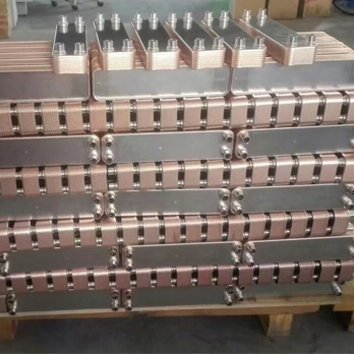 9. OEM vs Aftermarket Heat Exchanger Parts: Buyer Checklist
Use this checklist before requesting quotations or approving replacement components.
Equipment Identification
- Heat exchanger type
- Equipment manufacturer
- Model and serial number
- Equipment tag number
- Original part number
- Part revision, where applicable
- Nameplate photograph
- Technical drawing or parts list
Component Requirements
- Component name and function
- Dimensions and tolerances
- Material or compound specification
- Operating temperature
- Design and operating pressure, where relevant
- Fluid composition and cleaning chemicals
- Required performance
- Connection or assembly requirements
- Approved alternative-part requirements
Supplier and Quality Requirements
- OEM or aftermarket status clearly identified
- Compatibility basis provided
- Manufacturing source clarified where necessary
- Material documentation specified
- Inspection requirements agreed
- Traceability requirements defined
- Required standards and regulatory obligations identified
- Warranty implications checked
- Repeat-order requirements documented
Commercial and Delivery Requirements
- Quantity
- Unit price
- Total quotation value
- Manufacturing or stock lead time
- Packaging requirements
- Shipping method
- Delivery destination
- Import requirements
- Required delivery date
- Warranty and claims terms
- Spare parts availability for future orders
A well-defined request for quotation helps suppliers provide comparable offers and reduces the risk of purchasing a replacement that cannot be used.
10. Frequently Asked Questions About OEM and Aftermarket Heat Exchanger Parts
1. What is the difference between OEM and aftermarket heat exchanger parts?
OEM parts come from the original equipment manufacturer or its designated supply channel, while aftermarket parts come from other manufacturers or suppliers. The key purchasing difference is the source and basis of the replacement design. Suitability still depends on compatibility, materials, operating conditions, documentation, and applicable requirements.
2. Are aftermarket heat exchanger parts as good as OEM parts?
Aftermarket heat exchanger parts can be suitable when their technical compatibility, material quality, manufacturing controls, and performance requirements are adequately verified. Quality varies by supplier and component. Buyers should evaluate documented evidence rather than assume that all aftermarket parts are either equivalent or inferior to OEM parts.
3. Are OEM heat exchanger parts worth the extra cost?
OEM parts may justify a higher price when they provide necessary design compatibility, documentation, traceability, or warranty advantages. However, the price difference should be evaluated against the actual requirements. If a qualified aftermarket component meets the same applicable specifications and acceptance criteria, it may offer a commercially attractive alternative.
4. Can I use aftermarket gaskets in a plate heat exchanger?
Yes, aftermarket gaskets may be suitable for a plate heat exchanger if the gasket geometry, material, attachment method, and operating limits match the equipment requirements. Confirm compatibility with the process fluid, cleaning chemicals, temperature, and pressure. Physical fit alone does not establish equivalent sealing performance or service life.
5. Can aftermarket plates be used in a plate heat exchanger?
Aftermarket plates may be suitable if their geometry, material, flow characteristics, and assembly compatibility are verified. Different plate pressing patterns can affect heat transfer and pressure drop. If the replacement changes the original design, a technical assessment may be required before installation.
6. Do aftermarket parts affect a heat exchanger warranty?
They can affect warranty coverage, depending on the equipment manufacturer’s terms and the circumstances of the replacement. Check the applicable warranty documentation before using non-OEM components. For critical equipment, obtain written clarification from the relevant warranty provider or equipment owner when necessary.
7. How can I verify the quality of aftermarket heat exchanger parts?
Verify the component specification, dimensions, material, operating limits, and compatibility with the equipment. Request appropriate inspection records, material certificates, and traceability documentation where required. For critical components, define acceptance criteria before production and obtain the responsible engineer’s approval where necessary.
8. Why are some OEM heat exchanger parts more expensive?
OEM pricing can reflect proprietary designs, dedicated tooling, supply-channel costs, low production volumes, documentation, distribution arrangements, or limited availability. However, pricing varies by product and supplier. Compare actual quotations against the same technical specification instead of assuming a universal OEM price premium.
9. Can aftermarket parts replace discontinued OEM components?
Aftermarket parts may provide a solution for discontinued components if a suitable replacement can be identified and verified. The supplier may need original drawings, dimensions, material specifications, or a sample. For safety-critical or pressure-boundary components, confirm the replacement’s technical suitability and obtain the required approval before use.
10. What information should I provide when requesting a quotation for replacement parts?
Provide the equipment manufacturer, model, serial number, original part number, component description, drawings or photographs, material requirements, operating conditions where relevant, quantity, and destination country. State whether OEM parts are mandatory or whether technically verified aftermarket alternatives can be considered.
11. Is it safe to mix OEM and aftermarket parts in the same heat exchanger?
Mixing OEM and aftermarket parts can be acceptable when each replacement is compatible with the equipment and the combination meets the applicable design requirements. However, compatibility must be checked for the complete assembly, particularly for plate packs, gasket systems, and pressure-boundary components. Do not mix components solely because their dimensions appear similar.
12. Which is better for industrial heat exchangers: OEM or aftermarket parts?
Neither option is universally better for every industrial heat exchanger. OEM parts may be preferable for proprietary designs, strict documentation requirements, or applications where original components are specified. Aftermarket parts may be suitable when their technical equivalence is demonstrated and approved. The correct choice depends on application risk, compatibility, availability, and total cost.
13. Can a trading company supply OEM and aftermarket heat exchanger parts?
A trading or export company can coordinate the sourcing of OEM or aftermarket parts through appropriate supply channels and manufacturing partners, depending on availability and the supplier arrangement. Buyers should confirm the actual source, part status, technical documentation, warranty terms, and responsibility for quality acceptance before ordering.
11. Choosing a Reliable Heat Exchanger Parts Supplier
The right supplier should help you establish what is being purchased, why it is suitable, and what evidence supports that conclusion.
For OEM parts, confirm the source and whether the supplier is authorized where authorization is required. For aftermarket parts, confirm the manufacturer’s identity where relevant, the replacement specification, and the basis for compatibility.
A professional supplier or export partner should be able to coordinate:
- Technical communication: Clarifying model numbers, drawings, materials, and operating conditions.
- Product sourcing: Identifying OEM supply options or potentially suitable aftermarket alternatives.
- Manufacturing coordination: Communicating the approved specification to qualified manufacturing partners.
- Quality control: Arranging agreed inspection activities and reviewing relevant documentation.
- Traceability: Coordinating material or batch records where required.
- Customization: Discussing custom components against approved drawings and specifications.
- Export support: Coordinating packaging, shipping, and required commercial documentation.
- After-sales communication: Helping address discrepancies, claims, and repeat-order requirements.
We work closely with qualified manufacturing partners and engineering teams to provide product sourcing, technical coordination, customization, quality control, and international export support.
Our role is to help international buyers clarify their requirements and coordinate suitable supply options. The actual technical suitability, manufacturing scope, inspection arrangements, and documentation available depend on the component and the relevant manufacturing partner.
Before approving an order, request a clear quotation identifying the part status, specification, quantity, delivery terms, and required documents. For critical components, make sure the replacement has been reviewed and approved by the responsible engineer or equipment owner where necessary.