Building a private label heat exchanger brand allows distributors, HVAC companies, industrial equipment suppliers, and system integrators to sell products under their own business identity without operating a manufacturing facility. Instead of investing in production equipment and an entire engineering infrastructure, businesses can work with established heat exchanger manufacturers to source products, customize specifications, and develop a branded product portfolio.
However, private labeling industrial equipment involves more than adding a logo to a standard product. Heat exchangers must meet application requirements for thermal performance, pressure, temperature, fluid compatibility, mechanical integrity, and applicable regulations. Poor supplier selection, unclear technical specifications, or inadequate quality control can lead to product failures, warranty disputes, and damage to your brand reputation.
A successful private label strategy combines the right products, qualified manufacturing partners, clear technical documentation, consistent quality requirements, and a reliable supply chain. This guide explains how to develop a private label heat exchanger business, evaluate suppliers, customize products, control costs, and prepare for international markets.
Quick Answer: How Do You Build a Private Label Heat Exchanger Brand?
To build a private label heat exchanger brand, select a defined target market, identify suitable products, establish relationships with qualified manufacturers, agree on technical specifications and branding requirements, implement quality control, and create a repeatable sales and after-sales process.
The main steps are:
- Choose a target market: Identify the industries, applications, and customer types your brand will serve.
- Select a product range: Start with heat exchangers that match your customers’ needs and your ability to support them.
- Evaluate manufacturing partners: Assess engineering support, manufacturing processes, quality controls, traceability, and delivery reliability.
- Define the private label arrangement: Agree on branding, nameplates, packaging, documentation, customization, and intellectual property.
- Establish quality requirements: Define inspection methods, testing, acceptance criteria, and required records before production.
- Validate the products: Review technical documents, inspect samples or initial production units where appropriate, and verify application suitability.
- Build the commercial system: Prepare quotations, technical data sheets, sales materials, warranty terms, spare-parts arrangements, and export procedures.
A trading or export company can coordinate this process without owning a factory. Its value comes from selecting appropriate manufacturing partners, communicating technical requirements, coordinating quality control, and managing international purchasing and delivery.
1. What Are Private Label Heat Exchangers?
Private label heat exchangers are products manufactured by one company and sold by another company under its own brand name. The brand owner typically manages the customer relationship, market positioning, pricing, distribution, and commercial support, while a manufacturing partner produces the equipment according to an agreed specification.
The level of customization depends on the business arrangement. Some private label programs use existing standard products with new branding. Others involve modified dimensions, connections, materials, accessories, or application-specific designs.
Private Label vs. OEM vs. ODM: What Is the Difference?
These terms are often used interchangeably in international trade, but they can describe different arrangements.
| Business model | Typical arrangement | Customization level | Suitable for |
|---|---|---|---|
| Private label | An existing product is sold under the buyer’s brand | Usually low to moderate | Distributors and businesses entering a market |
| OEM | A product is produced to customer-defined specifications, designs, interfaces, or branding requirements | Moderate to high, depending on the contract | Equipment companies and established industrial brands |
| ODM | A supplier provides an existing or independently developed design that the buyer may customize and brand | Low to high, depending on the agreement | Companies seeking to reduce initial engineering work |
| Custom manufacturing | A product is engineered or modified for a particular application or project | Potentially high | System integrators and specialized industrial buyers |
Private labeling does not automatically mean the buyer owns the product design. Design ownership, engineering responsibilities, tooling rights, exclusivity, and permitted modifications should be specified in the contract.
For example, a distributor may sell a standard brazed plate heat exchanger under its own brand, with an agreed nameplate and packaging. A different business may require a customized shell-and-tube heat exchanger with specified connection locations and materials. The second arrangement needs more extensive engineering coordination and verification.
Which Heat Exchangers Can Be Private Labeled?
The appropriate product range depends on the target market and the capabilities of the selected manufacturing partners.
| Product category | Typical applications | Private label considerations |
|---|---|---|
| Plate heat exchangers | HVAC, chilled water, industrial heating and cooling | Plate material, gasket compatibility, frame configuration, connection sizes |
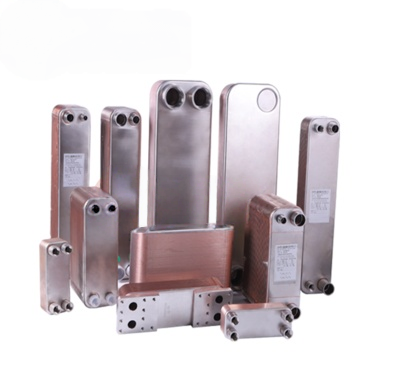
| Brazed plate heat exchangers | Refrigeration, heat pumps, compact heating and cooling systems | Brazing process, refrigerant or fluid compatibility, pressure and temperature limits |
| Shell-and-tube heat exchangers | Process industries, oil and gas applications, industrial utilities | Design conditions, tube and shell materials, joint construction, applicable pressure equipment codes |
| Air-cooled heat exchangers | Industrial cooling, process heat rejection | Ambient conditions, fin and tube materials, fan and motor specifications where included |
| Liquid cooling heat exchangers | Power electronics, battery systems, industrial equipment | Coolant compatibility, thermal requirements, pressure drop, leak prevention |
| Heat exchanger spare parts | Maintenance and replacement markets | Model compatibility, dimensions, materials, traceability |
| Heat transfer units and systems | HVAC, district heating, industrial process systems | System integration, controls, pumps, piping interfaces, installation requirements |
Not every manufacturer is suitable for every product category. A supplier experienced in brazed plate heat exchangers may not have the engineering capability or applicable approvals needed for a specialized pressure vessel.
Practical recommendation: Begin with a focused product portfolio. It is generally easier to develop reliable sourcing, documentation, and after-sales support for a small number of well-defined product families than to launch a broad catalog immediately.
What Problem Does Private Labeling Solve?
Problem: A distributor wants to expand its industrial equipment business but does not want to establish its own manufacturing operation.
Why it happens: Building a factory requires substantial capital, technical personnel, production equipment, quality systems, and ongoing operational management.
How to solve it: Work with qualified manufacturers that can supply suitable products under an agreed private label arrangement. Retain control of the brand, customer relationships, commercial strategy, and the quality requirements applied to purchased products.
What to provide to a potential supplier:
- Target product categories
- Intended applications
- Target countries and customer types
- Expected initial order and future demand
- Branding and packaging requirements
- Required technical specifications
- Applicable standards and conformity requirements
- Expected delivery schedule
A private label model can reduce the investment required to enter a market, but it does not eliminate responsibility for product selection, supplier oversight, contractual obligations, or customer support.
2. How Do You Choose the Right Private Label Heat Exchanger Products?
The best starting product is not necessarily the one with the lowest purchase price or the largest potential market. It is the product for which you can identify customers, communicate the technical requirements accurately, source consistently, and provide dependable support after delivery.
Start With a Specific Customer Group
Different customers purchase heat exchangers for different reasons.
- HVAC distributors may prioritize product availability, standard connections, documentation, and compatibility with established systems.
- Refrigeration and heat pump companies may need application-specific thermal performance, refrigerant compatibility, operating pressure limits, and reliable leak control.
- Industrial equipment manufacturers may require OEM interfaces, repeatable specifications, controlled design changes, and consistent production quality.
- Maintenance contractors may prioritize replacement compatibility, lead time, spare parts, and assistance identifying an existing model.
- System integrators may need engineering coordination, dimensional drawings, performance data, and documentation suitable for the complete system.
- Industrial importers may prioritize landed cost, supplier communication, packaging, documentation, and repeat-order consistency.
Choosing a target customer group first helps determine which products, features, and services your brand needs.
Build a Product Portfolio in Stages
A practical private label product strategy can use three stages.
Stage 1: Standard products
Start with established product configurations that meet clearly defined applications. The initial objective is to validate demand, supplier reliability, documentation quality, and the sales process.
Stage 2: Configurable products
Introduce options such as alternative connections, approved material choices, different gasket compounds, mounting arrangements, accessories, and branding packages.
Stage 3: Application-specific products
Develop more customized solutions when customer demand justifies the engineering effort. These may require application calculations, design reviews, additional testing, or conformity assessments.
This staged approach limits unnecessary complexity while allowing the brand to expand as its technical and commercial capabilities develop.
How Should You Evaluate Product Opportunities?
Use a structured evaluation rather than relying on market size alone.
| Evaluation factor | Questions to ask | Why it matters |
|---|---|---|
| Customer demand | Are buyers actively purchasing this product? | Reduces the risk of investing in an unwanted product range |
| Application clarity | Can customers explain their operating conditions? | Supports accurate selection and quotation |
| Product standardization | Can the same model serve multiple customers? | May simplify purchasing and inventory |
| Supplier availability | Are qualified manufacturing partners available? | Affects sourcing flexibility and continuity |
| Technical complexity | How much engineering support is required? | Determines sales and support workload |
| Regulatory requirements | Which codes or conformity rules apply? | Affects design, documentation, testing, and market access |
| Competition | How do existing suppliers differentiate themselves? | Helps define the brand’s commercial position |
| After-sales requirements | Are replacement parts and troubleshooting support available? | Influences long-term customer retention |
| Working capital | How much money is tied up in inventory and receivables? | Affects the sustainability of the business |
Example: Entering the HVAC Distribution Market
Consider a distributor planning to introduce branded plate heat exchangers for commercial HVAC applications.
Rather than launching every available model, the distributor could first identify common system requirements, determine which standard configurations suit those applications, and confirm the availability of appropriate technical documentation and replacement parts.
Before offering a model, the distributor should verify its intended operating conditions, connection requirements, pressure and temperature limits, materials, and applicable local requirements. Actual selection must be based on the customer’s system conditions rather than a general product description.
What to provide to a manufacturing partner: A prioritized product list, target applications, preliminary technical requirements, estimated demand, branding needs, and the countries in which the products will be sold.
3. How Do You Find and Evaluate Private Label Heat Exchanger Manufacturers?
Selecting a manufacturing partner is one of the most consequential decisions in a private label business. The manufacturer affects product quality, lead time, technical responsiveness, customization options, and the consistency of repeat orders.
A professional sourcing process should evaluate actual capabilities and supporting evidence rather than relying only on catalog images, quotations, or general claims.
What Should You Check Before Selecting a Supplier?
1. Relevant manufacturing experience
Ask whether the supplier regularly produces the specific type of heat exchanger you intend to sell.
For example, the relevant processes for a gasketed plate heat exchanger differ from those for a shell-and-tube unit. Depending on the product, you may need to understand plate forming, gasket installation, controlled brazing, tube-to-tubesheet joining, welding, pressure testing, or other specialized processes.
Request relevant product documentation and examples of comparable configurations where the supplier can legitimately share them.
2. Engineering and technical support
Confirm whether the supplier can review operating conditions, discuss material compatibility, provide dimensional drawings, and explain product limitations.
For a customized product, establish who is responsible for thermal design, mechanical design, drawing approval, and verifying compliance with the specified code.
A supplier should not be expected to select a safe and suitable heat exchanger from an incomplete description of the application.
3. Quality management and traceability
Review the supplier’s documented procedures for:
- Incoming material inspection
- Material identification and traceability
- Manufacturing process control
- Inspection and testing
- Nonconformance handling
- Corrective actions
- Engineering changes
- Final product release
- Subcontractor control, where applicable
Where a quality management certification is required, verify its scope, validity, and relevance. A certificate alone does not establish that every product will meet your specifications.
4. Testing and inspection arrangements
Ask which inspections and tests are appropriate for the product and can be performed or coordinated under the agreed quality plan.
Depending on the design and requirements, these may include dimensional inspection, visual inspection, pressure testing, leak testing, nondestructive examination, or thermal performance testing.
Do not assume that every heat exchanger requires the same tests or that a standard test pressure applies to every design.
5. Documentation and repeat-order control
The supplier should be able to work with an agreed document package that may include approved drawings, bills of materials, material certificates, inspection records, test reports, product markings, and operating instructions, as applicable.
The exact records required should be agreed before the purchase order is placed.
6. Communication and delivery management
Evaluate how the supplier responds to technical questions, communicates delays, manages revisions, and resolves discrepancies.
A supplier who offers a low initial price but cannot reliably communicate changes may create greater commercial risk than a slightly more expensive supplier with clear procedures.
Manufacturer vs. Trading and Export Partner
A manufacturing company and a trading/export company can perform complementary roles.
| Responsibility | Manufacturing partner | Trading/export partner |
|---|---|---|
| Manufacturing processes | Executes the agreed production processes | Coordinates requirements and production communication |
| Engineering design | Performs or supports design within its agreed scope | Communicates customer requirements and coordinates technical reviews |
| Material procurement | Procures or controls materials as agreed | Confirms agreed material and documentation requirements |
| Factory quality control | Performs production inspection and testing within its scope | Coordinates inspection arrangements and follows up on agreed records |
| Branding | Applies approved branding where contracted | Coordinates brand files, labels, and packaging requirements |
| Export coordination | Provides product and shipping information | Coordinates export documentation, shipping, and communication |
| Customer relationship | Supports technical matters within its agreed role | Manages the commercial relationship and customer communication |
| Warranty and corrective action | Investigates manufacturing-related issues within the agreed process | Coordinates customer claims and communication with the manufacturer |
The precise division of responsibilities must be defined contractually. The trading/export partner should not represent itself as the manufacturer or claim to have performed tests that were actually performed by another party.
How Can You Reduce Supplier Risk?
Before committing to a large order:
- Request relevant technical documentation.
- Verify the supplier’s legal identity and actual role in the supply chain.
- Review the manufacturing and quality processes relevant to your product.
- Agree on the technical specification and acceptance criteria.
- Assess sample or initial production units where appropriate.
- Define change-control and nonconformance procedures.
- Confirm production lead time, packaging, warranty, and spare-parts arrangements.
- Establish a process for periodic supplier review.
For safety-critical, regulated, or highly customized products, independent technical review or third-party inspection may be appropriate.
4. How Do You Customize and Brand Heat Exchangers?
Private label customization should make the product easier for customers to identify, purchase, install, maintain, and reorder. Branding should not obscure technical identification or replace mandatory product information.
What Can Be Customized?
The available options depend on the product design and the manufacturing partner’s capabilities.
| Customization area | Possible options | Important considerations |
|---|---|---|
| Brand identity | Logo, brand name, product family name | Artwork approval and trademark rights |
| Nameplate and labels | Model number, serial number, ratings, identification details | Required technical and regulatory information must remain accurate |
| Packaging | Branded cartons, crates, labels, inserts | Protection during transport and compliance with shipping requirements |
| Documentation | Branded data sheets, manuals, catalogs | Technical data must match the approved product |
| Connections | Connection size, type, or location where feasible | Must match system interfaces and design constraints |
| Materials | Approved plate, tube, shell, or gasket materials | Compatibility and pressure/temperature limits must be verified |
| Accessories | Mounting hardware, insulation, controls, or related components where available | Confirm scope, interfaces, and responsibility |
| Product configuration | Dimensions, frame arrangement, mounting, or other design details | May require engineering review and validation |
Not all options are feasible for every model. A change that appears cosmetic may affect identification, heat transfer, pressure containment, installation, or compliance.
How Should You Prepare Branding Files?
Prepare a consistent brand package containing:
- Vector logo files where available
- Brand colors and typography
- Preferred logo placement
- Product naming conventions
- Model-number structure
- Label and nameplate layout
- Packaging artwork
- Document templates
- Required languages
- Contact and warranty information, where appropriate
Ask the manufacturer or export partner to confirm which elements can be customized and which must follow an established design or regulatory format.
Why Model Numbers Matter
A consistent model-number system helps customers identify the correct product and supports repeat purchasing, spare-parts management, warranty handling, and technical communication.
For example, a brand may use separate product-family codes for plate, brazed plate, and shell-and-tube heat exchangers, followed by configuration identifiers. The coding system should be designed around real product distinctions rather than arbitrary marketing labels.
Do not use the same model number for products with materially different pressure ratings, materials, connections, or other important specifications.
Who Owns the Brand and Product Design?
The private label agreement should distinguish between:
- Your trademarks and brand artwork
- The manufacturer’s pre-existing designs and intellectual property
- Customer-specific drawings or specifications
- Custom tooling and development costs
- Rights to reuse or modify designs
- Territory or channel exclusivity, if agreed
- Confidentiality and restrictions on disclosure
Problem: A brand owner invests in product development but has no written agreement explaining whether the manufacturing partner can supply the same design to other customers.
Why it happens: The parties focus on the first purchase order rather than the longer-term commercial relationship.
How to solve it: Define ownership, licensing, exclusivity, confidentiality, and permitted use in the contract. Do not assume that paying for a custom product automatically transfers all design rights.
What to provide to the supplier: Brand files, product identification requirements, approved drawings, customization priorities, and proposed intellectual property terms.
5. How Do You Control Quality in Private Label Heat Exchanger Production?
Quality control is essential because your brand remains visible to the customer even when another company manufactures the product. A consistent quality process should begin before production and continue through inspection, documentation, final release, and shipment.
Establish a Product-Specific Quality Plan
A quality plan or Inspection and Test Plan (ITP) should define what will be checked, when it will be checked, who is responsible, and what constitutes acceptance.
Depending on the project, the plan may include:
- Approved drawings and specifications
- Material grades and traceability requirements
- Manufacturing process controls
- Inspection and testing stages
- Applicable acceptance criteria
- Required records and reports
- Hold points, witness points, and document-review points
- Nonconformance and corrective-action procedures
- Final release and packaging requirements
A hold point generally requires an agreed approval before work proceeds beyond a specified stage. A witness point gives a designated party the opportunity to witness an inspection or test under the agreed procedure. A review point requires examination of specified documents or records.
The contract should state how these points are managed if a buyer or inspector cannot attend as planned.
Which Quality Checks Are Relevant?
The appropriate inspection scope depends on the heat exchanger type, design, service conditions, applicable code, and purchase specification.
| Quality control stage | What may be checked | Why it matters |
|---|---|---|
| Specification review | Thermal duty, pressure, temperature, materials, connections, code requirements | Prevents production against incomplete or conflicting requirements |
| Incoming materials | Grade, dimensions, condition, certificates, identification | Reduces the risk of incorrect or unsuitable materials |
| Manufacturing | Critical dimensions, assembly, joints, process records | Detects problems before the product is completed |
| In-process inspection | Workmanship, alignment, joining, component installation | Enables earlier correction of defects |
| Final inspection | Identification, dimensions, appearance, completeness | Confirms that the supplied unit matches the agreed requirements |
| Pressure or leak testing | Test boundaries, approved procedure, acceptance criteria | Checks relevant aspects of pressure integrity or leakage |
| Documentation review | Certificates, test records, drawings, traceability | Provides evidence for acceptance and future maintenance |
| Packaging inspection | Protection, markings, restraints, shipping documents | Reduces the risk of transport damage and identification errors |
Material Traceability
Material certificates can help verify the supplied material against contractual requirements, but documentation must be linked to the actual components where traceability is required.
Depending on the specification, requirements may include material grade, heat or lot number, dimensional verification, and material certificates such as EN 10204 Type 3.1. These should be specified when applicable rather than assumed for every order.
Positive material identification (PMI) may be appropriate for certain alloy materials or risk profiles, but it is not a universal requirement. The inspection method should match the material, project requirements, and applicable procedures.
Pressure Testing and Leak Testing
Pressure testing and leak testing serve related but different purposes.
- Pressure testing evaluates pressure-boundary integrity under an approved procedure.
- Leak testing checks whether leakage exceeds the specified acceptance limit under the defined test conditions.
- Thermal performance testing evaluates heat transfer performance under specified operating conditions and is separate from pressure or leak testing.
A heat exchanger with two separate fluid circuits may require separate test boundaries and, where relevant, checks for leakage or communication between circuits.
The test medium, pressure, duration, temperature, isolation boundaries, and acceptance criteria must be established by the applicable design code, contract, and approved test procedure. They should never be guessed from a generic checklist.
Pneumatic testing requires particular care because compressed gas stores substantially more energy than a comparable volume of liquid. It should only be conducted under an appropriate, approved risk-controlled procedure.
What Happens When a Product Fails Inspection?
The supplier should have a documented nonconformance process.
A typical process is:
- Identify and record the discrepancy.
- Segregate or otherwise control the affected product.
- Determine the proposed disposition: repair, rework, rejection, or use-as-is where formally authorized.
- Obtain required customer or engineering approval.
- Re-inspect or retest after corrective work where applicable.
- Record the final disposition and relevant corrective actions.
A deviation should not be concealed simply because it appears minor. Changes affecting safety, performance, compliance, interchangeability, or contractual acceptance require the appropriate review and authorization.
Example: A Missing Pressure Requirement
Consider a hypothetical OEM buyer who provides a drawing and connection dimensions but does not specify design pressure, material grade, test criteria, or the applicable design code.
The correct response is to clarify these requirements before committing to material procurement or production. Proceeding without them may result in an unsuitable design, costly rework, failed inspection, or safety risks.
This is where a capable export partner can add value by coordinating the buyer’s requirements with the manufacturing and engineering teams before production begins.
 6. What Affects the Cost of Private Label Heat Exchangers?
 6. What Affects the Cost of Private Label Heat Exchangers?
Private label heat exchanger costs include more than the manufacturer’s unit price. Branding, engineering, inspection, packaging, logistics, inventory, and after-sales support can all affect the total cost of building and operating the brand.
Main Cost Factors
| Cost factor | How it affects cost | Questions to ask |
|---|---|---|
| Product type and size | Larger or more complex units may require more material and manufacturing work | Can a standard configuration meet the application? |
| Materials | Alloy selection and specialized materials can affect procurement and fabrication costs | Are the materials necessary for the actual fluid and operating conditions? |
| Thermal requirements | Heat duty, temperature approach, and operating conditions influence design | Are the process conditions complete and verified? |
| Pressure and temperature ratings | Mechanical design requirements can affect construction and testing | Which design conditions and codes apply? |
| Customization | Unique connections, dimensions, tooling, or design changes add complexity | Which modifications provide genuine customer value? |
| Branding | Nameplates, labels, packaging, and document preparation require coordination | Can the same branding package be reused across orders? |
| Quality control | Additional inspection, traceability, NDE, and testing can add cost | Which checks are required by the application and contract? |
| Documentation | Specialized technical files or conformity documentation may require additional work | Which documents are mandatory, and which are optional? |
| Order quantity | Batch size can influence setup, purchasing, and unit cost | What is the practical minimum order quantity? |
| Logistics | Crating, shipping mode, cargo dimensions, and destination affect landed cost | What is the estimated delivered cost? |
| Inventory and working capital | Stocking products ties up funds and creates obsolescence risk | Which models justify holding inventory? |
| After-sales support | Spare parts, technical assistance, and warranty handling require resources | How will claims and replacements be managed? |
Standard Products vs. Customized Products
| Factor | Standard private label product | Customized private label product |
|---|---|---|
| Initial engineering | Often more limited | May require additional design work |
| Branding | Usually straightforward | Requires coordination with design and product changes |
| Lead time | May be more predictable, subject to availability | Can be longer because of engineering and validation |
| Unit cost | May benefit from established production configurations | Depends on materials, complexity, and order size |
| Application fit | Suitable when standard specifications meet the need | Can address specific interfaces or operating requirements |
| Quality planning | Based on the standard product and order requirements | May need additional verification and inspection |
| Commercial risk | Risk of selecting an unsuitable standard model | Risk of design changes, validation delays, and low-volume costs |
A standard product is not automatically less expensive in every case, and a customized product is not automatically better. The right choice depends on the application, quantity, delivery schedule, and commercial value of customization.
How Can You Control Costs Without Compromising Quality?
Use the following practices:
- Standardize where possible. Reduce unnecessary variations in connections, packaging, and model configurations.
- Separate essential requirements from preferences. Mandatory operating conditions and compliance requirements take priority over cosmetic changes.
- Agree on quality requirements early. Late changes to materials, tests, drawings, or documentation can delay production.
- Use risk-based inspection. Apply the checks required by the product, contract, code, and service risk instead of adding unrelated tests.
- Compare total landed cost. Include freight, insurance where applicable, duties, local handling, storage, and other relevant charges.
- Plan repeat orders. Consistent specifications and controlled revisions can reduce rework and purchasing uncertainty.
The lowest quotation may not represent the lowest total cost if it excludes required tests, suitable materials, documentation, or adequate packaging.
7. How Do You Sell Private Label Heat Exchangers Internationally?
International distribution requires more than an attractive product catalog. Buyers need confidence that the product is suitable for their application, can be delivered with the correct documentation, and can be supported after purchase.
Confirm the Requirements of Each Target Market
Applicable requirements depend on the product design, pressure and temperature conditions, intended use, and destination country.
For example, some pressure equipment placed on the European market may fall within the scope of the Pressure Equipment Directive (PED). Depending on the equipment and circumstances, other standards or conformity routes may apply. In the United States, certain applications may require consideration of the ASME Boiler and Pressure Vessel Code or other relevant rules. Neither framework automatically applies to every heat exchanger.
Before offering a product in a new market, confirm:
- Applicable product and pressure equipment regulations
- Relevant design codes and standards
- Required conformity assessment and documentation
- Product marking and identification requirements
- Language requirements for instructions and safety information
- Import, customs, and shipping documentation
- Any industry-specific requirements
The appropriate code and conformity route should be confirmed with qualified engineering and regulatory expertise. Do not advertise a product as compliant or certified unless the claim is supported by valid, relevant evidence.
Prepare a Professional Product Documentation Package
Depending on the product and contract, your private label documentation package may include:
- Product data sheet
- Approved dimensional drawing
- Operating limits
- Materials information
- Installation and maintenance instructions
- Spare-parts list
- Inspection and test records
- Applicable material certificates
- Applicable conformity documentation
- Warranty terms
- Model and serial-number identification
Keep the documents consistent with the supplied product. A branded data sheet should not contain performance figures or operating limits that have not been verified for the specific configuration.
Build a Repeatable Sales Process
A practical B2B sales process can follow these steps:
- Identify a customer segment and its common applications.
- Publish clear product pages with relevant specifications and limitations.
- Provide downloadable technical data sheets where available.
- Collect application information before recommending a model.
- Coordinate technical review with the manufacturing partner.
- Submit a quotation with a clear scope of supply and exclusions.
- Confirm drawings, specifications, branding, and acceptance criteria.
- Coordinate production, inspection, documentation, and shipping.
- Follow up after delivery and record feedback for future orders.
For SEO and content marketing, focus on customer questions such as product selection, replacement compatibility, material choice, operating limits, maintenance, and differences between product types. Technical content should help customers make decisions rather than simply repeat catalog descriptions.
What Should Your Brand Promise?
A credible industrial brand should make commitments it can consistently support.
Examples include:
- Clear product specifications
- Transparent communication about technical limitations
- Consistent model identification
- Documented inspection and testing where agreed
- Defined order and change-control procedures
- Reliable coordination with manufacturing partners
- Accessible warranty and after-sales processes
Avoid unsupported claims about manufacturing ownership, certifications, performance, or production capacity. In industrial markets, accurate information and predictable service are more valuable than exaggerated marketing language.
8. Common Mistakes When Building a Private Label Heat Exchanger Brand
Private label businesses often encounter avoidable problems when commercial decisions are made before technical and supply-chain requirements are clear.
| Common mistake | Why it causes problems | What to do instead |
|---|---|---|
| Choosing a supplier based only on price | A low quotation may exclude required documentation, testing, or suitable materials | Compare the complete scope, evidence, quality controls, and landed cost |
| Launching too many products at once | A broad catalog increases sourcing complexity and makes technical support harder | Start with a focused range and expand after validating demand |
| Treating branding as the entire customization process | A logo does not resolve technical suitability, product identification, or compliance | Define branding, technical requirements, and documentation separately |
| Using incomplete specifications | Missing operating conditions can result in an unsuitable design or quotation | Establish a complete technical data sheet before production |
| Assuming every manufacturer can make every product | Different product types require different processes and engineering expertise | Evaluate capabilities for the exact product category and application |
| Skipping initial product verification | Errors may be repeated across multiple orders | Use sample, first-article, or initial production verification where appropriate |
| Failing to control engineering changes | A revised component or drawing may make the product incompatible with the approved specification | Establish documented revision and approval procedures |
| Ignoring material traceability | The brand owner may be unable to demonstrate that specified materials were used | Agree on traceability and certificate requirements before ordering |
| Making unsupported compliance claims | Products may not meet the rules applicable to the destination market | Verify applicable requirements and retain supporting documentation |
| Offering no spare-parts plan | Customers may struggle to maintain equipment or identify replacement parts | Establish product identification, compatibility information, and sourcing procedures |
| Promising exclusivity without a contract | Commercial expectations may conflict with the supplier’s existing rights and commitments | Define territory, product scope, duration, and exceptions in writing |
| Stocking products before validating demand | Inventory can tie up working capital and become obsolete | Test demand and prioritize standard configurations before expanding stock |
The Most Important Principle
Build the product and supply process before building an extensive catalog.
A small range with verified specifications, consistent quality controls, and dependable after-sales support is generally a stronger foundation than a large catalog whose products have not been adequately evaluated.
9. Private Label Heat Exchanger Buyer Checklist
Use this checklist before requesting quotations or placing an initial order.
A. Business and Market Requirements
Target industry and customer type identified
Target countries and distribution channels defined
Initial product range selected
Expected order quantity estimated
Branding and packaging requirements prepared
Preferred delivery terms and schedule identified
Warranty and after-sales expectations defined
B. Technical Requirements
Heat exchanger type identified
Application and process conditions documented
Required heat duty specified, where applicable
Fluid types and relevant properties identified
Inlet and required outlet temperatures provided
Flow rates provided
Operating and design pressure identified
Operating and design temperatures identified
Allowable pressure drop defined, where relevant
Material and corrosion requirements reviewed
Connection sizes, types, and locations confirmed
Installation space and interface requirements checked
Applicable codes and regulations identified
C. Quality and Documentation
Approved drawings and specifications agreed
Inspection and Test Plan defined where appropriate
Material certificates and traceability requirements specified
Pressure and leak testing requirements agreed
Additional inspection or NDE requirements defined where applicable
Required test reports and technical records listed
Product markings and serial-number system agreed
Nonconformance and change-control procedures established
Final acceptance and release requirements documented
D. Commercial and Export Requirements
Unit price and scope of supply confirmed
Engineering or customization charges identified
Minimum order quantity and production lead time confirmed
Packaging and shipping dimensions reviewed
Export documentation requirements confirmed
Delivery terms and responsibility for costs agreed
Payment terms established
Warranty and spare-parts arrangements documented
Brand and design ownership terms reviewed
Repeat-order and product-revision procedures established
Not every item applies to every product. The checklist should be adapted to the product type, service risk, applicable requirements, and commercial agreement.
10. Frequently Asked Questions About Private Label Heat Exchangers
1. What is a private label heat exchanger?
A private label heat exchanger is manufactured by one company and sold by another under the seller’s own brand. The arrangement may involve simple relabeling of an established product or more extensive customization, depending on the agreement.
2. Can I sell heat exchangers under my own brand without owning a factory?
Yes. You can work with qualified manufacturing partners that produce agreed products under your brand. You still need to manage product selection, technical specifications, quality requirements, branding, customer communication, and applicable commercial and regulatory responsibilities.
3. What is the difference between private label and OEM heat exchangers?
Private labeling commonly involves selling an existing product under your brand, while OEM production may involve manufacturing to customer-defined designs, specifications, interfaces, or other requirements. The exact meaning depends on the agreement, so define customization, design responsibility, and intellectual property in writing.
4. What is the minimum order quantity for private label heat exchangers?
The minimum order quantity depends on the product, manufacturer, branding method, customization level, and production arrangement. Standard products may allow more flexible purchasing than highly customized units. Request a quotation that separates product pricing, setup costs, tooling, and any minimum order requirements.
5. Can I put my logo on a standard heat exchanger?
Often, yes, if the manufacturer supports private labeling and the arrangement permits it. Logo placement, nameplates, packaging, and documentation should be approved in advance. Branding must not obscure required product identification, safety information, or regulatory markings.
6. Can private label heat exchangers be customized?
Yes, customization may include materials, connections, dimensions, accessories, branding, packaging, or other features. The available options depend on the design and manufacturing partner. Changes affecting thermal performance, pressure containment, compatibility, or regulatory compliance require appropriate technical review.
7. How do I ensure the quality of private label heat exchangers?
Define the product specification, acceptance criteria, inspection requirements, test procedures, documentation, and change-control process before production. Verify the manufacturing partner’s relevant processes and use appropriate material checks, in-process inspection, and final testing. The required scope depends on the product and application.
8. Do private label heat exchangers need certifications?
Some products and applications require specific conformity assessments, certifications, or code compliance, while others may not. Requirements depend on product design, operating conditions, intended use, and destination market. Confirm the applicable rules before making compliance claims or placing an order.
9. How long does it take to develop a private label heat exchanger?
Lead time depends on whether you are using an existing product or developing a customized design. Standard-product branding may involve fewer development steps, while custom engineering, tooling, sample verification, testing, and conformity assessment can add time. Obtain a project-specific schedule from the manufacturing partner.
10. Are private label heat exchangers cheaper than branded products?
They can offer a different cost structure, but lower pricing is not guaranteed. Costs depend on product design, materials, quantity, branding, engineering, inspection, logistics, and commercial arrangements. Compare equivalent technical specifications and total landed cost rather than brand name or unit price alone.
11. Can I sell private label heat exchangers in Europe and North America?
Potentially, yes, provided the products meet the requirements applicable to their intended use and destination. These may include pressure equipment rules, design codes, labeling, documentation, and other conformity requirements. Confirm the correct regulatory route for each product before offering it in a market.
12. Who is responsible if a private label heat exchanger fails?
Responsibility depends on the contracts, product design, applicable law, and cause of failure. Manufacturing defects, incorrect application selection, installation errors, and operation outside specified limits may involve different parties. Establish warranty terms, evidence requirements, claim procedures, and responsibilities with your manufacturing partner before selling the product.
13. Can I obtain exclusive rights to a private label heat exchanger?
Exclusivity may be negotiated, but it is not automatic. The agreement should specify the product scope, territory, sales channels, duration, performance conditions, exceptions, and intellectual property rights. Confirm that the manufacturing partner has the rights needed to grant the proposed exclusivity.
14. What documents should I request from a heat exchanger supplier?
Depending on the product and agreement, relevant documents may include approved drawings, product data sheets, material certificates, inspection reports, pressure or leak test reports, applicable conformity documentation, operating instructions, and spare-parts information. Specify the required documents in the purchase order rather than assuming they are included.
15. Should I start with standard or customized heat exchangers?
Standard products are often a practical starting point because they can reduce initial engineering complexity. Customized products become more attractive when a clear customer requirement justifies the additional design, verification, and commercial effort. Choose based on application suitability, demand, supplier capability, and total cost.
11. How to Choose a Reliable Private Label Heat Exchanger Export Partner
A private label program depends on coordination between your business, the manufacturing partner, and the end customer. The export partner should help establish a clear process for technical communication, purchasing, quality requirements, and international delivery.
When evaluating a sourcing or export partner, look for the ability to coordinate the following:
Technical communication: Requirements should be translated into clear specifications that engineering and manufacturing teams can review.
Product selection support: Recommendations should be based on actual operating conditions, fluid compatibility, performance requirements, and mechanical limits rather than product appearance alone.
Manufacturing partner evaluation: The sourcing process should consider relevant production processes, quality controls, documentation, and the suitability of the partner for the specific product.
Quality coordination: Inspection scope, test requirements, acceptance criteria, and required records should be agreed before production.
Branding and customization: Model identification, labels, packaging, and approved technical documents should be coordinated with the manufacturing partner.
Documentation and export: Product records, packaging requirements, shipping arrangements, and export documents should be handled according to the agreed scope.
After-sales communication: Warranty claims, replacement parts, technical questions, and nonconformance issues should follow a documented process.
Transparent responsibilities: The parties should understand who is responsible for design, manufacturing, inspection, conformity documentation, product release, and customer support.
A professional trading/export company can help coordinate these activities without claiming to own the factory or directly perform every manufacturing operation.
We work closely with qualified manufacturing partners and engineering teams to provide product sourcing, technical coordination, customization, quality control, and international export support. The appropriate scope depends on the product and the customer’s requirements.
Build a Brand Customers Can Reorder With Confidence
A sustainable private label heat exchanger business is built on repeatable processes: clearly defined products, qualified manufacturing partners, accurate technical information, consistent quality requirements, and responsive commercial support.
Start with a manageable product range, establish the required documentation and quality controls, and expand as you develop reliable customer demand. This approach helps reduce avoidable sourcing risks while creating a stronger foundation for long-term distribution and OEM relationships.