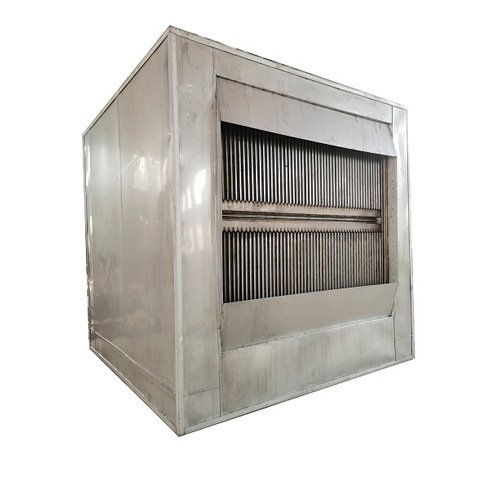
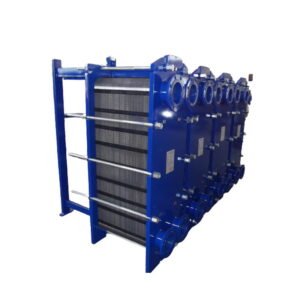
| Product Features | Application Conditions | Plate-type gas heat exchangers are particularly suitable for heat exchange between gas media with high corrosion, high dust content, and high humidity. |
| Main Features – Cleaning | The heat exchange plate surface is smooth with strong self-cleaning ability, making cleaning convenient. The interior of the equipment can be flushed and back-flushed with clean water, leaving little foreign matter residue, making cleaning convenient and fast. |
| Main Features – Modes | Multiple process heat exchange modes are optional to adapt to different working conditions. |
| Main Features – Capacity | Large processing capacity; can reach about ten cubic meters to thousands of cubic meters, and is widely used in waste heat recovery. |
| Main Features – Anti-clogging | Not easy to clog; the channel between plates is large with few contact points, making it difficult for impurities to precipitate. The stainless steel heat exchange surface is smooth with few corrosion attachments, making it hard to scale. |
| Main Features – Reliability | Reliable quality; the plates adopt advanced welding equipment and technology. Resistance welding is used between plates, combined with manual welding to ensure the welds are not easy to crack. |
| Highlighted Features | Easy to clean; Large processing capacity; High temperature resistance; Corrosion resistance. |
| Application Areas | Food Industry | Heating, cooling, evaporation, sterilization, and crystallization in the processing of various foods, beverages, fruit juices, beer, etc. |
| Petroleum Industry | Heat recovery and cooling during seawater cooling cycles or ethylene glycol crude oil cooling, desalination units, fresh water distillation, and triethylene glycol dehydration on offshore and drilling platforms. |
| Paper Industry | Many processes in paper mills can use our plate-type gas heat exchangers because they occupy a small area and have high heat recovery and utilization rates. |
| Textile Industry | Heat recovery from various waste liquids in textile mills, cooling of boiling phosphated fibers, cooling of viscose liquid, cooling of acetic acid and acetic anhydride, cooling of alkaline aqueous solutions, and heating and cooling of viscose filaments. |



Reviews
There are no reviews yet.