A rear door heat exchanger (RDHx) removes heat from server exhaust air at the rear of a data center rack and transfers that heat to a liquid cooling loop. It is a practical option for increasing rack cooling capacity without replacing every server with direct-to-chip liquid cooling.
The correct rear door heat exchanger must be selected according to rack heat load, airflow, coolant flow rate, supply and return temperatures, temperature approach, pressure drop, materials, condensation risk, maintenance access, and available facility water conditions. This guide explains how RDHx systems work, how to size them, when to choose passive or active designs, and how to evaluate cost, fouling, reliability, and replacement requirements.
Table of Contents
- Quick Answer: What Is a Rear Door Heat Exchanger?
- How Does a Rear Door Heat Exchanger Work?
- Which Rear Door Heat Exchanger Design Should You Choose?
- How Do You Size a Rear Door Heat Exchanger?
- How Do Temperature, Airflow, and Pressure Drop Affect Selection?
- How Do You Select Materials and Control Fouling and Condensation?
- Step-by-Step Rear Door Heat Exchanger Selection
- How Much Does a Rear Door Heat Exchanger Cost?
- What Are the Common Problems and Maintenance Requirements?
- Rear Door Heat Exchanger Selection Checklist
- Common Mistakes
- FAQ
- Key Takeaways
Quick Answer: What Is a Rear Door Heat Exchanger?
A rear door heat exchanger is a liquid-cooled heat exchanger mounted at the rear of a server rack that captures heat from server exhaust air before it enters the data center room.
The basic heat-transfer path is:
Server → hot exhaust air → rear door heat exchanger → coolant → facility cooling system
RDHx systems are useful when rack power density has increased beyond what the existing room-level air-conditioning system can efficiently handle.
What Problems Does an RDHx Solve?
A rear door heat exchanger can help address:
- High rack heat density
- Hot spots around server racks
- Limited room cooling capacity
- Increasing AI and GPU server loads
- Existing data center infrastructure that cannot easily be replaced
- Higher cooling requirements without completely converting to direct-to-chip cooling
Quick Selection Parameters
| Parameter | Why It Matters |
|---|---|
| Rack heat load | Determines required heat-transfer capacity |
| Rack width and height | Determines physical fit |
| Server airflow | Determines air-side heat-transfer duty |
| Coolant flow | Determines liquid-side heat-transfer performance |
| Coolant supply temperature | Affects heat-transfer capacity and condensation risk |
| Coolant return temperature | Determines liquid-side heat gain |
| Air inlet/outlet temperature | Determines air-side duty |
| Air-side pressure drop | Affects server fan performance |
| Liquid-side pressure drop | Determines pump requirements |
| Temperature approach | Determines heat exchanger size |
| Material | Determines corrosion resistance and durability |
| Condensation control | Prevents moisture around IT equipment |
| Door weight | Affects rack compatibility |
| Maintenance access | Determines serviceability |
How Does a Rear Door Heat Exchanger Work?
A rear door heat exchanger replaces or attaches to the rear rack door and uses a liquid circuit to absorb heat from the server exhaust air.
What Happens Inside the Heat Exchanger?
Hot air leaving the servers passes through a heat-transfer coil or plate-fin structure.
At the same time, coolant flows through the liquid-side channels.
Heat moves through the heat-transfer surface:
Hot server air → metal heat-transfer surface → coolant
The cooled air then returns to the data center space.
The coolant carries the absorbed heat to:
- A CDU
- Chilled-water system
- Dry cooler
- Cooling tower system
- Other facility heat-rejection equipment
Passive vs Active Rear Door Heat Exchanger
The two main configurations are passive and active rear door heat exchangers.
| Feature | Passive RDHx | Active RDHx |
|---|---|---|
| Fan assistance | Uses server airflow | Uses integrated fans |
| Server fan dependence | Higher | Lower |
| Airflow control | Mainly controlled by server | Can be controlled by door |
| Rack compatibility | Good where airflow is sufficient | Broader operating flexibility |
| Power consumption | Lower door-side power | Higher due to fans |
| Control | Simpler | More advanced |
| Maintenance | Generally simpler | Fans add service requirements |
| Typical application | Stable server airflow | Variable or high-density loads |
When Is a Passive RDHx Suitable?
Passive systems are attractive when server fans already provide enough airflow to push exhaust air through the heat exchanger.
They can reduce the amount of additional electrical equipment required.
However, the air-side pressure drop must remain compatible with the server fan system.
When Is an Active RDHx Better?
An active design can be useful when:
- Rack airflow varies substantially
- Higher heat density is required
- Additional airflow assistance is necessary
- More precise airflow control is desired
- Server fan capability is insufficient
The added fans introduce additional electrical consumption, noise, controls, and maintenance requirements.
Which Rear Door Heat Exchanger Design Should You Choose?
The best RDHx configuration depends on rack dimensions, heat density, server airflow, coolant conditions, and the cooling capacity required per rack.
Rear Door Heat Exchanger vs Other Data Center Cooling Methods
| Cooling Method | Heat Removal Location | Retrofit Potential | High-Density Capability | Main Consideration |
|---|---|---|---|---|
| Room air cooling | Room level | High | Limited at high density | Air distribution |
| In-row cooling | Row level | Moderate/high | Medium to high | Additional floor equipment |
| Rear door heat exchanger | Rack exhaust | High | High | Door integration |
| Direct-to-chip | CPU/GPU | Moderate | Very high | Server modification |
| Single-phase immersion | Entire server | Lower | Very high | Fluid and service process |
When Is Rear Door Cooling Better Than Direct-to-Chip?
RDHx can be attractive when:
- Existing servers are primarily air-cooled
- Rack infrastructure must remain largely unchanged
- The operator wants a relatively straightforward retrofit
- Heat must be removed at rack level
- Server modifications are undesirable
Direct-to-chip cooling can achieve a more direct thermal path, but it requires compatible servers, cold plates, manifolds, and liquid distribution infrastructure.
Rear Door Heat Exchanger vs In-Row Cooling
An RDHx removes heat directly at the rack exhaust, while an in-row cooling unit handles air within the rack row.
| Factor | Rear Door Heat Exchanger | In-Row Cooling |
|---|---|---|
| Heat capture | Directly at rack rear | Near rack row |
| Rack-level cooling | Excellent | Good |
| Floor space | Low | Requires equipment space |
| Retrofit | Often attractive | Also suitable |
| Air path | Through rack exhaust | Room/row airflow |
| Liquid connection | At rack | At cooling unit |
| Maintenance | Door-level access | Dedicated unit access |
| Scalability | Rack by rack | Row by row |
How Do You Size a Rear Door Heat Exchanger?
RDHx sizing starts with rack heat load and then checks air flow, liquid flow, temperature conditions, pressure drop, and physical compatibility.
Step 1: Determine Rack Heat Load
For a first estimate:
[
Q_{rack} \approx P_{IT}
]
where:
- Qrack = rack heat load
- PIT = electrical power consumed by IT equipment
For a rack consuming 30 kW of electrical power, the thermal load can often be treated as approximately 30 kW for preliminary cooling design because most electrical energy ultimately becomes heat.
The actual design basis should be confirmed from the equipment and facility requirements.
Step 2: Calculate Required Airflow
For air-side sensible heat removal:
[
Q = \dot{m}{air} C{p,air} \Delta T_{air}
]
Where:
- Q = heat removal
- ṁair = air mass flow
- Cp,air = specific heat of air
- ΔTair = air temperature difference
For approximate volumetric airflow calculations, air density and operating temperature must be considered.
Example
Assume:
- Rack heat load = 30 kW
- Air inlet to RDHx = 40°C
- Air outlet = 25°C
- Air temperature difference = 15 K
A preliminary airflow calculation can estimate the required volumetric airflow based on air density and specific heat.
The final selection should use the actual server airflow and pressure characteristics rather than relying only on theoretical airflow.
Step 3: Calculate Coolant Flow
For water:
[
Q(kW)=1.163\times Flow(m^3/h)\times\Delta T(°C)
]
Therefore:
[
Flow=\frac{Q}{1.163\times\Delta T}
]
For a 30 kW rack with a 10°C coolant temperature rise:
[
Flow=\frac{30}{1.163\times10}
]
[
Flow\approx2.58,m^3/h
]
So the approximate water flow is 2.58 m³/h.
Step 4: Check Heat Exchanger Area
The basic heat-transfer relationship is:
[
Q=UA\Delta T_{lm}
]
The required area depends on:
- Overall heat-transfer coefficient
- Air-side heat-transfer coefficient
- Liquid-side heat-transfer coefficient
- Fin geometry
- Surface area
- Flow velocity
- Temperature approach
- Fouling resistance
Step 5: Check Pressure Drop
The RDHx must be checked on both sides.
Air side:
[
\Delta P_{air}
]
must remain compatible with server fan capability.
Liquid side:
[
\Delta P_{liquid}
]
must remain within the available pump head.
A heat exchanger with very high thermal performance may not be suitable if it creates excessive pressure drop.
How Do Temperature, Airflow, and Pressure Drop Affect Selection?
RDHx performance is controlled by the relationship between air temperature, airflow, coolant temperature, coolant flow, heat-transfer area, and pressure drop.
Why Is Coolant Supply Temperature Important?
Coolant supply temperature affects both heat-transfer performance and condensation risk.
If coolant temperature is too low relative to the surrounding air dew point, condensation can form on:
- Heat exchanger surfaces
- Pipes
- Connections
- Valves
- Nearby components
This creates an unacceptable moisture risk around electronic equipment.
Therefore, the cooling system should evaluate:
Coolant temperature + room temperature + relative humidity + dew point
rather than selecting the lowest possible coolant temperature.
What Is Temperature Approach?
The temperature approach is the difference between the relevant hot and cold stream temperatures at a heat exchanger terminal.
A smaller approach generally requires:
- More heat-transfer area
- Higher equipment cost
- More precise design
- Potentially lower coolant temperature
A larger approach can reduce equipment size but may limit the amount of heat that can be removed.
Air-Side Pressure Drop
Air-side pressure drop is particularly important for RDHx applications because server fans must overcome the additional resistance.
Excessive pressure drop can cause:
- Reduced server airflow
- Higher fan power
- Higher operating temperature
- Increased acoustic noise
- Potential server performance problems
Liquid-Side Pressure Drop
Liquid pressure drop affects:
- Pump size
- Pump energy
- Flow distribution
- System operating cost
The heat exchanger should therefore be selected within the available pump head.
Thermal vs Hydraulic Optimization
| Design Priority | Result |
|---|---|
| More heat-transfer surface | Higher capacity or lower approach |
| Higher air velocity | Better heat transfer but higher air pressure drop |
| Higher liquid velocity | Better liquid-side heat transfer but higher liquid pressure drop |
| Larger channels | Lower liquid pressure drop but potentially lower heat-transfer coefficient |
| More compact design | Potentially higher pressure drop |
| Lower pressure drop | May require larger heat exchanger |
How Do You Select Materials and Control Fouling and Condensation?
Material selection should account for coolant chemistry, pressure, temperature, corrosion, thermal cycling, and the possibility of condensation.
Common Materials
| Material | Advantages | Main Consideration |
|---|---|---|
| Copper | High thermal conductivity | Coolant compatibility and corrosion |
| Aluminum | Lightweight and good thermal performance | Requires careful coolant compatibility |
| Stainless steel | Corrosion resistance | Higher material cost |
| 316L stainless steel | Strong corrosion resistance | Higher cost than standard steel |
| Copper alloys | Good conductivity | Water chemistry must be evaluated |
| Titanium | Excellent corrosion resistance | High cost |
The correct choice depends on the complete fluid chemistry and system design.
Gasket and Seal Selection
If the liquid circuit uses gasketed components, gasket materials should be checked against:
- Water
- Glycol
- Corrosion inhibitors
- Cleaning chemicals
- Operating temperature
- Pressure
- Thermal cycling
A gasket suitable for water is not automatically suitable for every coolant formulation.
Does Fouling Affect an RDHx?
Yes. Air-side and liquid-side fouling can both reduce performance.
Air-side fouling
Potential sources include:
- Dust
- Fibers
- Particles
- Poor room filtration
Fouling can reduce airflow and increase pressure drop.
Liquid-side fouling
Potential sources include:
- Scale
- Corrosion products
- Suspended solids
- Biological contamination
Liquid-side fouling can reduce heat transfer and increase pressure drop.
How Can Fouling Be Controlled?
Practical measures include:
- Proper air filtration
- Liquid filtration
- Water treatment
- Corrosion control
- Differential-pressure monitoring
- Regular inspection
- Planned cleaning
How Do You Prevent Condensation?
Condensation occurs when a surface temperature falls below the surrounding air dew point.
A simplified design condition is:
[
T_{surface}>T_{dewpoint}
]
with an appropriate engineering margin.
The system should therefore control:
- Coolant supply temperature
- Room temperature
- Relative humidity
- Dew point
- Insulation where appropriate
This is one of the most important differences between ordinary chilled-water cooling and liquid cooling installed near sensitive IT equipment.
Step-by-Step Rear Door Heat Exchanger Selection
A reliable RDHx selection process starts with rack data and ends with verified thermal, hydraulic, mechanical, and maintenance requirements.
Step 1: Record Rack Dimensions
Confirm:
- Rack width
- Rack height
- Rack depth
- Door mounting arrangement
- Door swing requirements
- Rear clearance
- Weight limitations
Step 2: Determine Rack Heat Load
Record:
- Average rack power
- Maximum rack power
- Number of servers
- CPU/GPU configuration
- Future power growth
Step 3: Determine Server Airflow
Obtain:
- Server airflow
- Air inlet temperature
- Exhaust temperature
- Minimum and maximum airflow
- Fan control characteristics
Step 4: Define Coolant Conditions
Record:
- Coolant type
- Supply temperature
- Return temperature
- Flow rate
- Maximum pressure
- Minimum pressure
- Fluid chemistry
- Glycol concentration if applicable
Step 5: Calculate Thermal Duty
Use:
[
Q_{air}=\dot{m}_{air}C_p\Delta T
]
and:
[
Q_{liquid}=\dot{m}_{liquid}C_p\Delta T
]
The two sides should provide consistent heat balances.
Step 6: Set Pressure-Drop Limits
Define acceptable:
- Air-side pressure drop
- Liquid-side pressure drop
These values should come from server fan capability and available pump head.
Step 7: Select Heat Exchanger Construction
Compare:
- Fin-and-tube
- Plate-fin
- Microchannel or other compact designs
- Custom coil assemblies
The actual construction should be selected based on thermal duty, fluid, pressure, corrosion, maintenance, and available space.
Step 8: Evaluate Condensation Risk
Calculate the room dew point and compare it with the coldest heat exchanger and piping surfaces.
Step 9: Check Mechanical Integration
Verify:
- Door weight
- Rack compatibility
- Hinges
- Quick connections
- Flexible hoses
- Piping arrangement
- Drainage
- Service clearance
Step 10: Evaluate Maintenance
Confirm:
- Air-side cleaning access
- Liquid-side cleaning method
- Filter access
- Leak inspection
- Valve isolation
- Drain and refill procedure
- Spare parts
Step 11: Check Controls
Consider:
- Supply temperature sensors
- Return temperature sensors
- Flow sensors
- Differential pressure sensors
- Leak detection
- Fan control
- Valve control
- Alarm functions
Step 12: Compare Lifecycle Cost
Evaluate:
Purchase cost + installation + pumping/fan energy + maintenance + spare parts + downtime risk
rather than equipment price alone.
How Much Does a Rear Door Heat Exchanger Cost?
RDHx cost depends on cooling capacity, rack dimensions, heat exchanger construction, coolant conditions, materials, controls, active fans, and customization.
Main Cost Factors
| Cost Factor | Effect on Cost |
|---|---|
| Cooling capacity | Larger heat-transfer area increases cost |
| Rack size | Larger doors require more material and heat-transfer area |
| Airflow | Higher airflow requirements can increase coil size |
| Temperature approach | Smaller approach may require more area |
| Pressure drop target | Low pressure drop may require a larger heat exchanger |
| Copper/aluminum/stainless steel | Material choice changes cost |
| Gasketed connections | May increase serviceability and component cost |
| Active fans | Add fans, motors, controls, and maintenance |
| Sensors | More monitoring increases system cost |
| Condensation control | May require additional controls and insulation |
| OEM customization | Custom dimensions and connections increase engineering cost |
| Redundancy | Additional equipment increases capital cost |
Lead Time Factors
Lead time can increase when the project requires:
- Custom rack dimensions
- Special heat-transfer coils
- Non-standard materials
- Special quick-connect fittings
- Custom controls
- Integrated sensors
- Third-party inspection
- Special packaging
- OEM documentation
Standard components generally have a shorter procurement cycle than highly customized RDHx assemblies.
Certification and Documentation
The exact requirements depend on the destination, installation environment, electrical configuration, pressure classification, and project specifications.
Possible documentation may include:
- Technical datasheet
- General arrangement drawing
- Pressure test records
- Material documentation
- Performance data
- Electrical documentation
- Installation manual
- Maintenance manual
- Applicable conformity documentation
Do not assume that one certification package applies to every country or project.
What Are the Common Problems and Maintenance Requirements?
RDHx reliability depends mainly on maintaining clean air and coolant, controlling pressure drop, preventing condensation, and monitoring thermal performance.
Common Problems
| Problem | Possible Cause | Recommended Check |
|---|---|---|
| Rack temperature too high | Insufficient cooling capacity | Check load, airflow, coolant flow |
| High air pressure drop | Dirty coil or restrictive design | Inspect coil and airflow |
| High liquid pressure drop | Fouling or excessive flow | Check filters and heat exchanger |
| Condensation | Coolant below dew point | Check room humidity and coolant temperature |
| Reduced cooling capacity | Fouling or low flow | Compare historical performance |
| Uneven cooling | Poor airflow distribution | Check server and door airflow |
| Water leakage | Connection, seal, or hose problem | Inspect liquid circuit |
| Corrosion | Poor fluid chemistry | Test coolant |
| Fan failure | Motor or control problem | Check fan and controller |
| High pump energy | Excessive liquid pressure drop | Review hydraulic design |
What Should Be Monitored?
Important operating parameters include:
- Rack inlet temperature
- Rack exhaust temperature
- Coolant supply temperature
- Coolant return temperature
- Coolant flow rate
- Airflow
- Air-side pressure drop
- Liquid-side pressure drop
- Relative humidity
- Dew point
- Leak detection status
How Do You Know When an RDHx Needs Cleaning?
A combination of these changes can indicate fouling:
- Increasing air-side pressure drop
- Increasing liquid-side pressure drop
- Higher rack outlet temperature
- Reduced temperature difference
- Reduced heat-removal capacity
Cleaning should be based on actual operating conditions and performance data rather than an arbitrary calendar interval.
Maintenance Requirements
A practical maintenance program can include:
Continuous monitoring
- Temperatures
- Flow
- Pressure
- Humidity
- Leak alarms
Periodic inspection
- Air-side surfaces
- Filters
- Liquid connections
- Hoses
- Valves
- Fans
Planned maintenance
- Coil cleaning
- Filter replacement
- Coolant-quality testing
- Gasket and seal inspection
- Fan inspection
- Sensor calibration
 Rear Door Heat Exchanger Selection Checklist
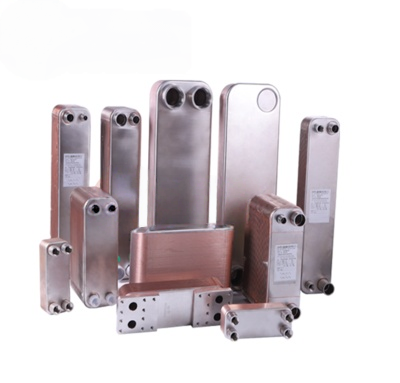 Rear Door Heat Exchanger Selection Checklist
Use this checklist before approving an RDHx design or requesting an OEM quotation.
Rack
Rack width confirmed
Rack height confirmed
Rack depth confirmed
Door mounting confirmed
Door weight limit confirmed
Service clearance confirmed
Thermal
Rack heat load confirmed
Peak load confirmed
Air inlet temperature confirmed
Air outlet temperature target defined
Server airflow confirmed
Coolant supply temperature defined
Coolant return temperature defined
Temperature approach checked
Hydraulic
Coolant flow rate calculated
Air-side pressure drop checked
Liquid-side pressure drop checked
Available pump head confirmed
Server fan capability checked
Materials
Heat exchanger material confirmed
Coolant compatibility verified
Gasket material verified
Hose material verified
Corrosion risk evaluated
Condensation
Room temperature confirmed
Relative humidity confirmed
Dew point calculated
Minimum coolant temperature checked
Condensation prevention strategy defined
Maintenance
Air-side cleaning access confirmed
Liquid-side service access confirmed
Filters accessible
Isolation valves included
Drainage available
Spare parts identified
Replacement procedure defined
Procurement
Technical datasheet approved
Performance data reviewed
Drawings approved
Testing requirements confirmed
Certification requirements confirmed
Lead time confirmed
Export packaging requirements confirmed
Common Mistakes
Most RDHx selection problems come from treating the rear door as a simple radiator instead of a complete thermal and hydraulic component of the data center system.
1. Selecting Only by Rack Power
A 30 kW rack does not automatically require the same RDHx design under every airflow and coolant condition.
Avoid it: Specify rack power, airflow, temperatures, and pressure-drop limits together.
2. Ignoring Server Fan Capability
An RDHx with excessive air-side pressure drop can restrict server airflow.
Avoid it: Check the complete server fan operating envelope.
3. Using an Excessively Low Coolant Temperature
Lower coolant temperature can increase cooling potential but may create condensation risk.
Avoid it: Compare the coldest surface temperature with the room dew point.
4. Ignoring Coolant Chemistry
Material compatibility cannot be determined by temperature alone.
Avoid it: Check pH, glycol concentration, additives, corrosion inhibitors, chlorides, and cleaning chemicals.
5. Oversizing the Heat Exchanger Without Checking Hydraulics
A larger unit may solve thermal capacity but increase cost and complexity.
Avoid it: Optimize heat-transfer area and pressure drop together.
6. Neglecting Air-Side Fouling
Dust can accumulate on heat-transfer surfaces and reduce airflow.
Avoid it: Maintain room filtration and establish a cleaning plan.
7. Ignoring Liquid-Side Fouling
Facility-water contamination can increase pressure drop and reduce thermal performance.
Avoid it: Use appropriate filtration and coolant management.
8. Forgetting Door Weight and Mechanical Compatibility
A technically efficient heat exchanger may be unsuitable if the rack cannot support its weight.
Avoid it: Check hinges, mounting points, door swing, and rack structure before ordering.
9. Comparing Quotations Only by Cooling Capacity
Two RDHx units rated for the same kW may have very different pressure drops, materials, dimensions, and maintenance requirements.
Avoid it: Compare complete technical specifications.
10. Treating Condensation as a Secondary Issue
Water near IT equipment can create serious operational risk.
Avoid it: Design around dew point from the beginning, not after installation.
FAQ
1. What is a rear door heat exchanger?
A rear door heat exchanger is a liquid-cooled heat exchanger installed at the rear of a server rack to remove heat from server exhaust air and transfer it to a liquid cooling circuit.
2. How does a rear door heat exchanger work?
Hot air from the servers passes through the heat exchanger while coolant flows through the liquid-side circuit. Heat moves from the air through the heat-transfer surface into the coolant.
3. How much heat can a rear door heat exchanger remove?
The capacity depends on rack airflow, air temperature difference, coolant flow, coolant temperature, heat-transfer area, and allowable pressure drop. The final capacity should be calculated for the actual operating conditions rather than selected from rack power alone.
4. Is a rear door heat exchanger suitable for AI and GPU servers?
Yes. RDHx systems can be used for high-density racks, including AI and GPU applications, when the rack airflow, heat load, coolant conditions, and pressure-drop requirements are within the design range.
5. What is the difference between passive and active rear door heat exchangers?
A passive RDHx relies primarily on server fans to move air through the heat exchanger. An active RDHx uses integrated fans to provide additional or controlled airflow. Active designs provide more airflow flexibility but add power consumption and maintenance requirements.
6. What coolant is used in a rear door heat exchanger?
Water and water-glycol mixtures are common in many liquid cooling systems, but the actual coolant depends on the facility design and equipment requirements. Material and gasket compatibility must be verified for the selected fluid.
7. How do you calculate rear door heat exchanger capacity?
The basic thermal calculation is:
[
Q=\dot{m}C_p\Delta T
]
Both the air side and liquid side should be checked. Heat exchanger area is then evaluated using the overall heat-transfer relationship and the required temperature approach.
8. What pressure drop should a rear door heat exchanger have?
There is no universal pressure-drop value. The air-side pressure drop must be compatible with server fan capability, while the liquid-side pressure drop must remain within the available pump head.
9. Can a rear door heat exchanger cause condensation?
Yes. Condensation can occur when the heat exchanger surface temperature falls below the surrounding air dew point. The coolant supply temperature, room temperature, and relative humidity must therefore be considered together.
10. Which is better: rear door cooling or direct-to-chip cooling?
Neither is universally better. Rear door cooling is attractive for many air-cooled server retrofits, while direct-to-chip cooling provides a more direct thermal path for extremely high-density CPU and GPU loads. The decision depends on IT equipment, rack density, infrastructure, and project objectives.
11. How do I choose a replacement rear door heat exchanger?
Confirm rack dimensions, cooling capacity, airflow, coolant flow, supply and return temperatures, air-side and liquid-side pressure drops, materials, connections, door weight, and condensation requirements. Physical dimensions alone are not enough.
12. Can a rear door heat exchanger be customized for an OEM application?
Yes. OEM RDHx assemblies can be customized for rack dimensions, cooling capacity, coolant connections, materials, flow rates, pressure-drop requirements, sensors, controls, and installation constraints.
Key Takeaways
- A rear door heat exchanger removes server exhaust heat at the rack level and transfers it to a liquid cooling loop.
- RDHx systems are particularly useful when rack heat density exceeds practical room-level air-cooling capacity.
- Sizing requires rack heat load, server airflow, coolant flow, supply and return temperatures, temperature approach, and pressure-drop limits.
- Air-side pressure drop is critical because excessive resistance can increase server fan power or restrict airflow.
- Coolant temperature must be selected with room humidity and dew point to prevent condensation around IT equipment.
- Material, gasket, coolant, and water-quality compatibility are essential for long-term reliability.
- Fouling on both air and liquid sides can reduce heat-transfer performance and increase pressure drop.
- For OEM and replacement projects, thermal, hydraulic, mechanical, and maintenance compatibility should all be verified—not just physical dimensions.