The wrong heat exchanger type costs more than it saves.
It can foul in weeks, corrode through in months, leak across streams, or force you to oversize fans and pumps for years. The three main families — recuperative, direct contact, and regenerative — solve different problems. The right choice depends on your fluids, pressure, temperature, fouling risk, and whether the streams can mix.
Here is how to choose without guessing.
Quick answer
| Type | How it works | Best for | Main risk |
|---|---|---|---|
| Recuperative / wall-type | Hot and cold fluids are separated by a solid wall | High pressure, clean fluids, no mixing allowed | Fouling, corrosion, larger footprint |
| Direct contact / mixing | Hot and cold fluids touch and mix | Dirty gas, low pressure, mixing is acceptable | Streams cannot be separated afterward |
| Regenerative | Heat is stored in a mass, then released to the other stream | Gas-gas heat recovery, high flow, high temperature | Leakage, cross-contamination, moving parts |
If the fluids cannot mix, direct contact is out. If you need high pressure and clean separation, start with recuperative. If you have large gas flows and high temperatures, look hard at regenerative.
1. Recuperative / wall-type heat exchangers
This is the most common type in industrial plants.
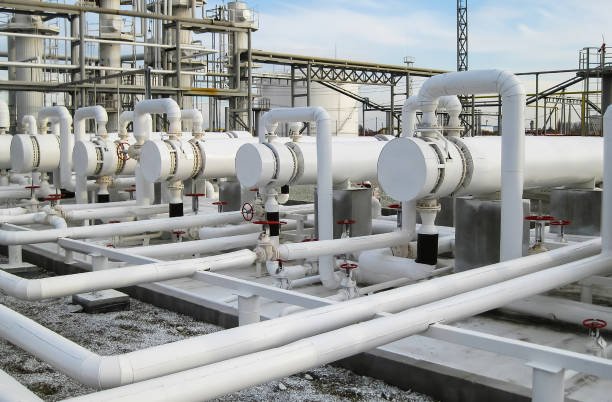
Hot fluid flows on one side. Cold fluid flows on the other. A solid wall — tube, plate, or fin — transfers heat between them. The streams never touch.
Typical examples:
Shell-and-tube heat exchangers
Plate heat exchangers
Finned-tube heat exchangers
Tubular air preheaters
Economizers
Choose recuperative when:
The fluids must not mix.
One side is at high pressure.
You need a well-known, code-friendly design.
The streams are relatively clean or can be cleaned.
You need predictable performance and easy inspection.
Watch for:
Fouling on the wall. Dirty flue gas, slurry, or sticky process fluids can cut performance fast.
Acid dew point corrosion in flue gas service. If the metal surface drops below the acid dew point, you get corrosion.
Pressure drop. Adding surface area to improve heat recovery often increases fan or pump power.
Thermal expansion. High temperature differences can crack tubes or plates if the design is too rigid.
Recuperative units are often the safest choice. They are not always the cheapest or most compact.
2. Direct contact / mixing heat exchangers
In a direct contact heat exchanger, hot and cold fluids meet directly. Heat transfers by contact. In many cases, mass transfer happens too — evaporation, condensation, or humidification.
Typical examples:
Cooling towers
Jet condensers
Spray towers
Quench coolers
Direct contact scrubbers
Choose direct contact when:
The fluids can mix, or they are the same fluid.
You have dirty gas that would foul a metal wall.
You want very high heat transfer with low capital cost.
You can tolerate low pressure and a larger physical footprint.
You need to cool or condense gas quickly.
Watch for:
You cannot recover the two streams separately.
Water treatment and drift can become a problem.
The gas may become saturated with vapor.
Corrosion can move from the heat exchanger to downstream ducts and stacks.
Environmental rules may limit what can be mixed or discharged.
Direct contact is simple and effective, but it is not a drop-in replacement for a shell-and-tube or plate unit. It changes the process.
3. Regenerative heat exchangers
Regenerative heat exchangers use a store-then-release principle. A thermal mass — metal, ceramic, or another matrix — absorbs heat from the hot stream. Then the flow switches, or the mass rotates, and the stored heat is released to the cold stream.
Typical examples:
Rotary regenerative air preheaters, such as Ljungström designs
Static regenerators with switching valves
Cowper stoves in blast furnaces
Ceramic regenerators for high-temperature gas
Choose regenerative when:
You have gas-to-gas heat recovery.
Flows are large and temperatures are high.
You need a compact unit for the duty.
A small amount of carryover is acceptable, or you can add a purge sector.
You want high effectiveness without a huge tubular surface area.
Watch for:
Leakage. Rotary units have seals. Air can leak into flue gas, or flue gas can leak into air.
Cross-contamination. Carryover can transfer odors, moisture, or pollutants.
Moving parts. Motors, seals, and bearings need maintenance.
Pressure drop. The matrix can plug if the gas is dirty or sticky.
Control. Flow switching or rotation speed must match the process.
In power plants, the rotary regenerative air preheater is common because it recovers heat from flue gas to combustion air in a small space. That heat goes back to the boiler instead of up the stack. The result is lower fuel use and higher boiler efficiency. But if leakage is not acceptable, a tubular recuperative air preheater may be the better choice.
How to choose: ask these 10 questions
Can the fluids mix?
If no, direct contact is eliminated. Use recuperative or regenerative with proper sealing.What are the phases?
Gas-gas, liquid-liquid, gas-liquid, or condensing? Each points to different designs.What is the pressure?
High pressure favors recuperative. Low pressure and dirty gas often favor direct contact or regenerative.What is the temperature?
Very high gas temperatures can favor regenerative. Acid dew point and material limits matter in every type.How dirty is the stream?
Fouling is the number one reason heat exchangers fail to meet payback. Dirty flue gas, dust, soot, and sticky liquids change the selection.What pressure drop can you afford?
A high-efficiency exchanger with high pressure drop can wipe out energy savings through fan or pump power.How much space do you have?
Regenerative units are often compact for large gas flows. Recuperative units can be large and heavy.What is the turndown?
Will the plant run at 100% all year, or swing between 30% and 100%? Some designs lose effectiveness at low load.What is the maintenance plan?
Can you clean tubes, plates, or matrix? Can you replace seals? Can you isolate one unit without stopping the plant?What is the true payback?
Compare capital cost, installation, fan power, cleaning, downtime, and fuel savings. The cheapest unit is rarely the lowest-cost unit over ten years.
Where each type wins in real plants
Power plant air preheaters
For large boilers, regenerative rotary air preheaters are usually the default. They recover flue gas heat and send it to combustion air. That cuts fuel cost and boosts boiler efficiency. If cross-contamination or leakage is a hard limit, choose a recuperative tubular air preheater.
Flue gas waste heat recovery
If the flue gas is dirty, hot, and high-flow, regenerative or direct contact designs can handle it. If the gas is cleaner and you need separate streams, use a recuperative economizer or air preheater. Always check acid dew point and material selection.
Chemical and pharmaceutical processes
Recuperative plate or shell-and-tube units are common because contamination is not allowed. Sanitary, high-pressure, and corrosive duties often need special materials and cleanable designs.
HVAC and cooling
Direct contact cooling towers and spray chambers are standard. They are simple and low cost, but water treatment and drift control are part of the design.
Common selection mistakes
Choosing on purchase price only.
Ignoring fouling and corrosion during the first year.
Forgetting acid dew point in flue gas service.
Underestimating leakage in rotary regenerative units.
Accepting high pressure drop to gain a small temperature improvement.
Not checking turndown and part-load performance.
Using a direct contact unit where streams must stay separate.
Skipping a proper data sheet and letting the supplier guess.
FAQ
Which heat exchanger is most efficient?
There is no single winner. Direct contact can be very efficient for gas-liquid duties. Regenerative units can be very efficient for gas-gas duties. Recuperative units can be highly efficient when the fluids are clean and the design is optimized.
Can a regenerative heat exchanger handle dirty flue gas?
Yes, often better than a tubular unit in terms of space and cost. But you must manage plugging, seals, and leakage. A purge sector helps reduce carryover.
When should I choose direct contact?
When the fluids can mix, when the gas is dirty, or when low capital cost and high heat transfer matter more than separating the streams.
What is best for a boiler air preheater?
For large power boilers, rotary regenerative air preheaters are common. For smaller boilers or where leakage is unacceptable, recuperative tubular air preheaters are often used.
Can I switch from one type to another later?
It is possible, but rarely simple. Ductwork, foundations, fan pressure, water treatment, and controls usually change. Select the right type at the front end.