Heat exchanger gaskets play a critical role in keeping industrial heat transfer systems leak-free. In gasketed plate heat exchangers, these components seal the channels between adjacent plates, prevent fluid mixing, and direct each process fluid through its intended flow path.
Over time, heat, pressure fluctuations, chemical exposure, compression, and repeated maintenance can cause gaskets to harden, crack, deform, or lose their sealing ability. If the problem is not addressed promptly, a small leak can develop into unplanned downtime, product contamination, equipment damage, or a safety hazard.
However, not every heat exchanger leak means the gasket must be replaced, and not every damaged gasket is visibly obvious. Incorrect plate-pack tightening, damaged plates, poor gasket installation, and unsuitable operating conditions can produce similar symptoms.
This guide explains the main signs of heat exchanger gasket failure, how to distinguish gasket problems from other faults, when replacement is necessary, and what information to prepare when sourcing replacement gaskets.
Quick Answer: What Are the Signs of a Heat Exchanger Gasket Failure?
The most common signs that a gasket in a gasketed plate heat exchanger needs replacement include:
- External leakage: Process fluid escapes from the plate pack, gasket edges, or port areas.
- Fluid cross-contamination: One process fluid enters the other fluid circuit.
- Unexpected pressure loss: The system cannot maintain its normal operating pressure.
- Reduced heat transfer performance: The heat exchanger no longer reaches its required outlet temperatures.
- Visible gasket damage: Gaskets show cracks, hardening, swelling, flattening, tearing, or permanent deformation.
- Repeated leakage after tightening: The leak returns even after the plate pack is correctly tightened according to the manufacturer’s procedure.
- Frequent maintenance problems: Gaskets repeatedly fail because of ageing, chemical incompatibility, temperature excursions, or installation errors.
Replace a gasket when it is damaged, chemically degraded, permanently deformed, incompatible with the process conditions, or unable to maintain a reliable seal. Before replacement, confirm the cause of the failure and check whether the plates, gasket grooves, plate-pack dimensions, and operating conditions are also contributing to the problem.
These signs apply primarily to gasketed plate heat exchangers. Brazed plate heat exchangers generally do not have field-replaceable plate-to-plate gaskets, so their leakage and repair procedures are different.
1. External Leakage Around the Plate Pack
Problem: Fluid Appears Between the Plates or Around the Frame
External leakage is one of the clearest signs of a potential gasket sealing problem.
In a gasketed plate heat exchanger, each plate has a gasket arranged around its sealing perimeter and port areas. These gaskets prevent process fluids from escaping and keep the hot and cold circuits separated.
If a gasket loses its elasticity, becomes damaged, or no longer fits its groove correctly, fluid may escape from the plate pack.
Common symptoms include:
- Drops or streams of liquid emerging from the plate edges.
- Wet areas around the gasket perimeter.
- Fluid collecting beneath the heat exchanger.
- Leakage near port connections or the corners of the plate pack.
- Leaks that appear only after the system reaches operating temperature or pressure.
The fluid may be water, glycol solution, oil, chemicals, refrigerant in a suitable gasketed system, or another process medium. The seriousness of a leak depends on the fluid’s properties, temperature, pressure, and surrounding environment.
Why Does External Leakage Occur?
Several conditions can cause a gasket to lose its sealing ability.
1. Gasket ageing
Elastomers gradually change as they are exposed to heat, oxygen, chemicals, and repeated compression. Aged gaskets may harden, lose resilience, crack, or develop permanent compression set.
2. Incorrect operating conditions
If the operating temperature or pressure exceeds the gasket’s approved limits, the material may deteriorate faster than expected.
3. Incorrect plate-pack tightening
A plate pack that is insufficiently tightened may not compress the gaskets enough to seal. Excessive tightening can also damage gaskets or plates.
4. Damaged sealing surfaces
Corrosion, scratches, deformation, deposits, or foreign particles in a gasket groove can prevent proper sealing even when the gasket itself is new.
5. Installation errors
A twisted gasket, an incorrectly positioned gasket, an unsuitable adhesive, or a gasket that does not match the groove can create a leakage path.
How to Solve It
If leakage occurs, follow the equipment manufacturer’s safety and maintenance procedures.
- Identify the leaking location and, where safe, record the operating temperature and pressure.
- Stop the equipment if necessary and isolate the affected circuits.
- Depressurize, drain, and allow the equipment to cool before opening it.
- Inspect the gasket, gasket groove, and adjacent plate surfaces.
- Check the plate-pack tightening dimension, often called the A-dimension, against the manufacturer’s specification.
- Replace damaged or unsuitable gaskets and correct any underlying installation or operating problem.
Never tighten a plate pack or open a heat exchanger while it is pressurized. Follow the manufacturer’s isolation, lockout/tagout, and personal protective equipment requirements.
What to provide to a supplier: Equipment manufacturer, model, serial number, plate designation, gasket part number if available, fluid type, operating temperature, operating pressure, and photographs of the leakage location.
Practical Example
Consider an industrial cooling-water system that begins leaking around the lower edge of a plate heat exchanger after several years of service.
The maintenance team initially suspects a loose plate pack. Inspection, after safe isolation and disassembly, reveals hardened gaskets and deposits in several gasket grooves.
Simply tightening the plate pack may not restore reliable sealing. The appropriate response is to assess the gaskets and sealing surfaces, clean the grooves using an approved procedure, and replace the affected gaskets with compatible parts.
2. Fluid Mixing or Cross-Contamination Between Circuits
Problem: The Two Process Fluids Are No Longer Properly Separated
Fluid cross-contamination is one of the most serious possible consequences of plate heat exchanger gasket failure.
In a correctly assembled gasketed plate heat exchanger, the plate-and-gasket arrangement separates the two process fluids. A failed gasket, damaged plate, or incorrect assembly can create an unintended connection between the circuits.
Potential warning signs include:
- Unexpected changes in fluid colour, odour, or composition.
- Abnormal conductivity, pH, or other fluid-analysis results.
- Contamination detected in a cooling-water, process-water, or product circuit.
- Unexpected pressure changes between the two sides.
- Changes in tank levels or fluid consumption that cannot be explained by normal operation.
These symptoms do not prove that a gasket has failed. A cracked or perforated plate can also allow fluid to pass between circuits.
Why Does Cross-Contamination Occur?
A gasket may deteriorate because of incompatible chemicals, excessive temperature, pressure cycling, or long-term ageing.
The exact failure path depends on the plate and gasket design. Leakage may occur externally, internally between the circuits, or toward a designated leak-detection area in plate designs that incorporate one.
A gasket failure can also be aggravated by an incorrect replacement gasket or improper plate arrangement.
For example, a gasket with the wrong port configuration may fail to direct fluid correctly even if its overall shape looks similar to the original component.
How to Solve It
If cross-contamination is suspected:
- Assess the potential safety and product-quality consequences.
- Isolate the heat exchanger according to the system’s safety procedures.
- Sample and test the fluids using appropriate methods.
- Inspect the plates and gaskets for damage.
- Check whether the installed plate types, gasket arrangements, and flow configuration match the equipment design.
- Confirm the pressure relationship between the circuits and investigate any abnormal operating conditions.
Where fluid mixing could create a hazardous reaction, contaminate food or pharmaceutical products, or damage downstream equipment, treat the situation as a potentially serious process-integrity problem.
Replacing the gasket alone may not be sufficient if the plate itself is damaged or the underlying pressure conditions remain unsuitable.
What to provide to a supplier: Both process-fluid descriptions, operating pressures on each side, temperature ranges, contamination symptoms, equipment identification, and any available inspection findings.
Why Pressure Differences Matter
Where two circuits operate at different pressures, the direction of leakage through a failed boundary may depend on the instantaneous pressure difference.
A gasket failure does not always cause the higher-pressure fluid to enter the lower-pressure circuit in the same way under every operating condition. Pressure can fluctuate during startup, shutdown, valve operation, or process disturbances.
For critical applications, the equipment’s design, pressure differential limits, and required contamination controls should be reviewed by qualified engineering personnel.
3. Visible Gasket Damage, Hardening, Swelling, or Deformation
Problem: The Gasket Looks Different From a Healthy Replacement Part
A gasket may require replacement even before an obvious leak develops.
During scheduled maintenance, inspect accessible gasket surfaces for physical changes such as:
- Cracks or splits.
- Hardened or brittle areas.
- Swelling or excessive softness.
- Sticky, tacky, or deteriorated surfaces.
- Flattened sealing lips.
- Torn sections around corners or port openings.
- Permanent deformation.
- Separation from the gasket groove.
- Uneven compression or localised damage.
These conditions can indicate that the gasket has lost its original sealing properties.
However, the appearance of a gasket must be interpreted in the context of its material, design, service history, and manufacturer’s inspection criteria.
What Causes Gasket Deterioration?
Three factors are especially important.
Temperature exposure
Elastomer properties depend on temperature. Excessive operating temperatures or repeated temperature excursions can accelerate hardening, cracking, or permanent deformation.
A gasket that performs well in a low-temperature chilled-water system may not be suitable for a hotter industrial process.
Chemical incompatibility
Different elastomers respond differently to oils, solvents, acids, alkalis, cleaning agents, and other process chemicals.
An incompatible fluid may cause swelling, softening, shrinkage, embrittlement, or loss of mechanical strength.
Compression set and ageing
Gaskets are compressed to establish a seal. Over time, some materials lose their ability to recover their original shape after compression.
This behaviour, known as compression set, can reduce sealing force and contribute to leakage.
Common Heat Exchanger Gasket Materials
| Gasket material | Typical characteristics | Important selection considerations |
|---|---|---|
| EPDM | Commonly used for water-based services and many chilled-water applications | Compatibility with oils, hydrocarbons, chemicals, and actual operating temperatures must be verified |
| NBR | Commonly used in certain oil and hydrocarbon-related services | Suitability depends on the specific oil, additives, temperature, and NBR formulation |
| HNBR | Offers improved properties for certain demanding services compared with conventional NBR | Verify compatibility and the manufacturer’s temperature and pressure limits |
| FKM | Used in selected higher-temperature or chemically demanding applications | Chemical resistance varies by formulation; it is not universally compatible with every chemical |
| Silicone | Offers useful temperature flexibility in selected applications | Mechanical strength, wear, fluid compatibility, and application requirements must be assessed |
This table is a preliminary guide, not a material approval list. The exact compound and the equipment manufacturer’s specifications take precedence over a generic material name.
How to Solve It
When a gasket shows signs of deterioration:
- Record the observed damage and the location of the affected gasket.
- Compare the gasket with the manufacturer’s replacement specifications.
- Review the fluid composition, operating temperatures, cleaning chemicals, and pressure history.
- Determine whether the problem affects one gasket or indicates a broader material-selection issue.
- Replace unsuitable or damaged gaskets with the correct type and verify the sealing surfaces before reassembly.
What to provide to a supplier: Existing gasket material if known, original part number, process-fluid composition, cleaning chemicals, normal and maximum temperatures, operating pressure, and photographs of the gasket and groove.
A Key Purchasing Point
Do not select a replacement gasket based only on its colour, flexibility, or appearance.
Two gaskets may look almost identical while using different elastomer compounds, dimensions, or groove designs. A visually similar replacement may fit poorly or deteriorate rapidly in service.
4. Repeated Leakage After Maintenance or Tightening
Problem: The Heat Exchanger Leaks Again Shortly After Repair
Repeated leakage is a strong indication that the underlying problem has not been resolved.
If a gasketed plate heat exchanger begins leaking again soon after maintenance, the cause may be more than normal gasket ageing.
Potential causes include:
- Incorrect gasket dimensions or material.
- Incorrect gasket installation.
- Damaged or contaminated gasket grooves.
- Warped or damaged plates.
- Incorrect plate sequence or orientation.
- An incorrect plate-pack tightening dimension.
- Operating pressure or temperature outside the approved range.
- Incorrect tightening procedures.
Repeatedly tightening the plate pack without identifying the cause can make the situation worse.
Why Tightening Is Not Always the Answer
Plate heat exchangers are designed to operate with a specified plate-pack compression dimension. This dimension is commonly identified as the A-dimension, although terminology and measurement methods can vary by manufacturer and model.
If the plate pack is too loose, gaskets may not seal correctly.
If it is tightened below the permitted minimum dimension, the plates or gaskets may be damaged, and the equipment may no longer operate as designed.
The correct dimension must be obtained from the equipment manufacturer’s documentation. There is no single universal tightening dimension for all plate heat exchangers.
How to Solve It
Before installing another set of gaskets:
- Verify the gasket part number and compatibility with the plate model.
- Confirm the gasket is correctly seated and not twisted.
- Inspect the plate surfaces and gasket grooves.
- Check plate sequence and orientation against the manufacturer’s assembly instructions.
- Measure the plate pack according to the manufacturer’s procedure.
- Investigate abnormal pressure, temperature, or fluid conditions.
If the heat exchanger has been assembled with a mixture of plate types or unverified replacement components, a full compatibility review may be necessary.
What to provide to a supplier: The original equipment details, replacement gasket identification, maintenance history, plate-pack dimension, photographs, and a description of when the leak reappears.
Practical Diagnostic Table
| Symptom | Possible cause | Recommended investigation |
|---|---|---|
| Leakage immediately after reassembly | Incorrect gasket installation, unsuitable gasket, damaged groove, or incorrect compression | Inspect assembly and verify dimensions |
| Leakage only at high operating temperature | Thermal expansion, temperature-related material limitations, or pressure changes | Review operating conditions and gasket specifications |
| Leakage returns after repeated tightening | Damaged plates, aged gaskets, wrong gasket, or incorrect plate-pack dimension | Inspect the complete sealing system |
| Leakage concentrated around one port | Port-ring damage, incorrect gasket, or local plate damage | Check port geometry and gasket seating |
| Several locations leak simultaneously | General gasket ageing, incorrect compression, or unsuitable operating conditions | Review the entire plate pack and operating history |
The table provides diagnostic starting points. The actual cause must be confirmed through inspection and, where appropriate, engineering assessment.
5. Reduced Heat Transfer Performance and Unexpected Pressure Changes
Problem: The Heat Exchanger No Longer Meets Its Design Conditions
A failing gasket does not always produce an obvious external leak. In some cases, gasket damage or incorrect assembly changes the intended flow distribution through the plate pack.
Potential symptoms include:
- Process outlet temperatures moving away from their normal values.
- Increased difficulty maintaining the required cooling or heating capacity.
- Unexpected changes in pressure drop.
- Abnormal flow rates.
- Changes in the relationship between the two process circuits.
- Repeated alarms or process instability.
These symptoms can be associated with gasket problems, but they are not specific to gasket failure.
Fouling, scaling, insufficient flow, air trapped in the system, control-valve problems, incorrect instrumentation, and changes in inlet conditions can cause similar performance changes.
How Can Gasket Problems Affect Heat Transfer?
In a gasketed plate heat exchanger, the gasket arrangement directs each fluid through designated channels.
If a gasket is incorrectly installed, damaged, or unsuitable for the plate design, the fluid distribution may deviate from the intended configuration. A wrong replacement gasket can also obstruct a port or create an unintended flow path.
However, ordinary gasket ageing does not automatically reduce heat transfer performance. A performance decline should be investigated rather than attributed to the gasket without evidence.
How to Solve It
Start by comparing current operating data with the heat exchanger’s normal or design conditions.
Record:
- Hot-side inlet and outlet temperatures.
- Cold-side inlet and outlet temperatures.
- Flow rate on both sides.
- Operating pressure on both sides.
- Pressure drop across each circuit.
- Any recent changes in fluid composition or process demand.
Check the temperature and pressure instruments before drawing conclusions. Then inspect for fouling, flow restrictions, control issues, leakage, and incorrect assembly.
If gasket failure is confirmed, replace the affected gaskets and verify that the plate pack has been assembled to the correct specification.
What to provide to a supplier: Original design conditions, current operating data, process-fluid details, heat exchanger model, recent maintenance history, and any known changes in capacity or pressure drop.
Do Not Confuse Gasket Failure With Fouling
The following comparison can help guide the investigation.
| Observation | Gasket-related problem | Fouling or scaling |
|---|---|---|
| Visible fluid leakage | Possible | Not usually a direct symptom |
| Fluid cross-contamination | Possible | Not usually caused by deposits alone |
| Gradually declining thermal performance | Possible if flow distribution is affected, but not conclusive | Common |
| Increasing pressure drop | Possible in some fault conditions | Common |
| Deposits on plate surfaces | May coexist with gasket problems | Strong indication |
| Cracked or hardened gasket | Direct evidence of gasket deterioration | Not explained by fouling alone |
More than one problem may exist at the same time. A heat exchanger may have both aged gaskets and fouled plates.
6. Gasket Ageing, Service Life, and Preventive Replacement
Problem: The Gaskets Have Been in Service for Years
Even if a heat exchanger is not leaking, ageing gaskets may warrant closer inspection.
There is no universal replacement interval that applies to every plate heat exchanger. Gasket service life depends on the elastomer compound, temperature, fluid chemistry, pressure cycling, operating hours, cleaning practices, installation quality, and storage conditions.
A gasket operating continuously in a stable, compatible water service may last much longer than one exposed to aggressive chemicals or frequent temperature changes.
Should You Replace Gaskets on a Fixed Schedule?
Use the equipment manufacturer’s maintenance recommendations and the actual service condition to determine the replacement interval. A fixed calendar interval may be useful for planning, but it should not replace inspection and operating-history analysis.
Consider preventive replacement when:
- Gaskets show visible deterioration.
- Leakage has occurred repeatedly.
- The heat exchanger is approaching a planned major overhaul.
- The manufacturer recommends replacement after a defined service period or maintenance event.
- The existing material is unsuitable for the current process conditions.
- Spare-part availability is becoming a concern for an older model.
If the heat exchanger is operating reliably and the gaskets remain within the manufacturer’s acceptance criteria, unnecessary disassembly can introduce new risks, including installation errors and plate damage.
How to Establish a Practical Maintenance Plan
A useful maintenance plan should include:
- Operating records: Log temperature, pressure, flow, and known process disturbances.
- Leak inspection: Record leakage location, frequency, and severity.
- Maintenance history: Document gasket replacements, plate repairs, cleaning, and tightening measurements.
- Material review: Reassess gasket compatibility if fluids, cleaning agents, or operating conditions change.
- Spare-parts planning: Confirm the correct gasket identification and availability before a shutdown.
- Inspection criteria: Follow the manufacturer’s instructions for accepting or replacing gaskets and plates.
For critical production systems, plan replacement activities around scheduled maintenance windows where practical.
What to provide to a supplier: Equipment age, gasket installation date if known, operating hours, maintenance history, failure frequency, process conditions, and planned shutdown date.
7. How to Choose the Correct Replacement Heat Exchanger Gasket
Replacing a damaged gasket is only effective if the replacement is compatible with the equipment and its operating conditions.
A gasket that fits the outline of the plate but uses the wrong compound or groove geometry may fail prematurely.
Step 1: Identify the Heat Exchanger
Record the information on the equipment nameplate and in the original documentation:
- Manufacturer.
- Model or type designation.
- Serial number.
- Plate designation or part number.
- Original gasket part number.
- Drawing or assembly number, if available.
These details are usually more reliable than attempting to identify a gasket from its appearance alone.
If the original manufacturer no longer supplies the component, provide the available drawings, dimensions, and an undamaged reference sample for technical review.
Step 2: Confirm the Gasket Design
Plate heat exchanger gaskets may use different attachment and sealing arrangements, including clip-on, snap-in, and glue-on designs.
Check:
- Overall gasket shape.
- Gasket cross-section and thickness.
- Port-ring configuration.
- Gasket groove geometry.
- Attachment method.
- Corner and port details.
- Compatibility with the exact plate type.
A replacement gasket must match the intended sealing geometry, not merely the plate’s approximate length and width.
Step 3: Verify the Elastomer Material
Select the material based on the actual process conditions.
Review:
- Fluid composition.
- Normal and maximum operating temperatures.
- Operating pressure and pressure fluctuations.
- Cleaning and sanitising chemicals.
- Exposure to oils, solvents, or other potentially aggressive substances.
- Applicable hygiene or regulatory requirements.
A material name alone may not be enough. Different compounds within the same elastomer family can have different performance characteristics.
Step 4: Check the Operating Limits
Confirm that the replacement gasket is approved for the intended service.
Temperature and pressure limits must be considered together with the fluid, gasket design, plate model, and manufacturer’s restrictions. A gasket’s standalone material rating does not automatically establish the allowable operating conditions of the assembled heat exchanger.
Step 5: Confirm Documentation and Traceability
For industrial applications, ask the supplier what documentation is available for the proposed gasket, such as:
- Part identification and compatibility confirmation.
- Material specification.
- Applicable material or batch documentation.
- Relevant compliance documents, where required.
- Storage and installation recommendations.
The availability and scope of documentation depend on the product, supplier, and application.
Replacement Gasket Decision Table
| Factor | Why it matters | What to verify |
|---|---|---|
| Heat exchanger model | Establishes compatibility with the equipment | Model, serial number, nameplate, drawings |
| Plate type | Determines the gasket’s sealing geometry | Plate code and part number |
| Gasket design | Affects fit and installation | Clip-on, snap-in, glue-on, or other specified design |
| Elastomer material | Determines resistance to fluids and temperature | Exact material compound and compatibility |
| Temperature | Affects material ageing and sealing performance | Normal, minimum, maximum, and transient temperatures |
| Pressure | Influences sealing requirements and operating limits | Normal and maximum pressure, pressure fluctuations |
| Fluid chemistry | Determines chemical compatibility | Full fluid description and cleaning chemicals |
| Port configuration | Affects circuit separation and flow paths | Port layout and gasket-ring configuration |
| Installation method | Affects sealing reliability | Manufacturer-approved assembly instructions |
| Documentation | Supports purchasing and quality requirements | Material records and applicable compliance documents |
Exact OEM Replacement vs. Alternative Gasket
| Consideration | Exact OEM replacement | Compatible alternative |
|---|---|---|
| Identification | Uses the original specified part | Requires a verified cross-reference or technical assessment |
| Fit | Designed for the specified equipment | Must be confirmed against the exact plate and groove |
| Material | Follows the original specification, subject to the exact part supplied | Must meet the application requirements and approved limits |
| Documentation | Depends on the OEM’s supply and documentation policy | Depends on the alternative supplier’s available records |
| Purchasing | May have limited availability or longer lead times | May offer another sourcing route if compatibility is established |
| Main risk | Incorrect ordering or changes in the original specification | Assuming that a similar-looking gasket is interchangeable |
An alternative gasket can be appropriate when the original part is unavailable, but compatibility should be verified before purchase. Do not substitute a gasket solely because its dimensions appear similar.
 8. Common Mistakes When Replacing Heat Exchanger Gaskets
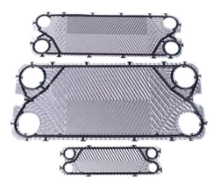 8. Common Mistakes When Replacing Heat Exchanger Gaskets
Several avoidable purchasing and maintenance errors can cause repeat leakage or shorten gasket service life.
Mistake 1: Replacing the Gasket Without Finding the Root Cause
Why it causes problems: A new gasket may fail again if the real cause is excessive temperature, chemical incompatibility, a damaged plate, or incorrect tightening.
What to do instead: Investigate the failure mechanism and operating conditions before selecting a replacement.
Mistake 2: Choosing a Gasket Based Only on Appearance
Why it causes problems: Similar-looking gaskets can differ in material, thickness, groove profile, port geometry, and attachment method.
What to do instead: Confirm the equipment model, plate designation, and original gasket part number whenever possible.
Mistake 3: Selecting the Wrong Elastomer
Why it causes problems: Chemical attack or temperature-related deterioration can cause swelling, cracking, hardening, or loss of sealing force.
What to do instead: Verify compatibility with the actual process fluid and cleaning chemicals, including temperature and pressure conditions.
Mistake 4: Ignoring the Plate Gasket Groove
Why it causes problems: Deposits, scratches, corrosion, and deformation can prevent the gasket from seating correctly.
What to do instead: Inspect and clean the groove using the manufacturer’s approved procedure. Replace damaged plates where necessary.
Mistake 5: Overtightening the Plate Pack
Why it causes problems: Excessive compression can damage plates or gaskets and may compromise equipment integrity.
What to do instead: Follow the specified plate-pack dimension and tightening sequence. Do not use additional tightening as a substitute for diagnosis.
Mistake 6: Mixing Incompatible Plate or Gasket Types
Why it causes problems: A plate pack may contain different plate patterns, port configurations, or gasket designs. Incorrect combinations can affect sealing and flow distribution.
What to do instead: Verify component compatibility and the original assembly configuration before installation.
Mistake 7: Neglecting Storage Conditions
Why it causes problems: Incorrect storage, including unsuitable temperatures, exposure to sunlight or ozone, and contact with incompatible substances, can degrade elastomers before installation.
What to do instead: Follow the gasket manufacturer’s storage requirements and stock-rotation recommendations.
Mistake 8: Ignoring the Consequences of Fluid Cross-Contamination
Why it causes problems: A small internal leak may contaminate a product, damage equipment, or create a hazardous process condition.
What to do instead: Investigate unexplained changes in fluid quality promptly and assess the risks associated with both circuits.
Mistake 9: Replacing Only the Most Obviously Damaged Gasket Without Assessing the Others
Why it causes problems: If multiple gaskets have experienced the same temperature, chemical, or ageing conditions, replacing only one may leave other deteriorated seals in service.
What to do instead: Inspect the plate pack systematically and decide whether individual replacement or a broader gasket replacement is appropriate under the manufacturer’s recommendations.
Mistake 10: Opening the Heat Exchanger Before Safe Isolation
Why it causes problems: Residual pressure, hot fluids, corrosive chemicals, or hazardous process media can cause serious injury.
What to do instead: Isolate, depressurize, drain, and cool the equipment, then follow the manufacturer’s safety procedures before disassembly.
9. What Affects the Cost of Heat Exchanger Gasket Replacement?
The cost of replacing heat exchanger gaskets depends on more than the price of an individual gasket.
Main Cost Factors
1. Gasket material
The required elastomer compound, chemical resistance, and operating-temperature capability influence the price.
2. Equipment model and availability
Common replacement parts may be easier to source than discontinued or specialised gasket designs.
3. Quantity
Replacing several gaskets or an entire gasket set can affect the unit price and total order value.
4. Gasket design
Complex port arrangements, specialised profiles, and particular attachment systems can affect manufacturing and sourcing requirements.
5. Technical identification
If the original part number is unavailable, the supplier may need drawings, sample inspection, dimensional verification, or additional engineering coordination.
6. Documentation and compliance
Specific material records, traceability, or application-related compliance documentation may affect the quotation.
7. Shipping and delivery
International freight, packaging, customs requirements, and delivery urgency influence the landed cost.
8. Maintenance labour and downtime
Labour, equipment shutdowns, process interruption, and subsequent testing can exceed the cost of the gasket itself.
How to Compare Quotations Properly
When evaluating suppliers, compare:
- Confirmed compatibility with the equipment model.
- Gasket material and specification.
- Quantity and scope of supply.
- Documentation included.
- Lead time and shipping method.
- Packaging and storage requirements.
- Warranty terms, where offered.
- Technical support for identification and installation.
A lower purchase price does not necessarily represent a lower total cost if the gasket is unsuitable or its identification is uncertain.
For international buyers, it is also useful to confirm whether the quotation covers the gaskets only or includes other spare parts, documentation, packaging, and shipping.
10. Heat Exchanger Gasket Replacement Checklist
Before requesting a quotation, prepare as much of the following information as possible.
Equipment Identification
- Heat exchanger manufacturer.
- Model and serial number.
- Plate type or plate part number.
- Original gasket part number, if available.
- Equipment nameplate photograph.
- Relevant drawings or maintenance documents.
Gasket Information
- Existing gasket material, if known.
- Gasket design and attachment method.
- Required quantity.
- Photographs of the gasket and gasket groove.
- Details of visible cracks, swelling, hardening, or deformation.
- Whether the gasket is an original part or an alternative replacement.
Operating Conditions
- Process fluid on each side.
- Normal operating temperature.
- Minimum and maximum temperatures.
- Normal and maximum operating pressure.
- Pressure fluctuations or unusual operating events.
- Cleaning agents and maintenance chemicals.
- Any fluid contamination or unexplained performance changes.
Purchasing Requirements
- Required delivery date.
- Delivery destination.
- Quantity and packaging requirements.
- Material documentation requirements.
- Applicable industry or regulatory requirements.
- Preference for an exact OEM replacement or a technically verified alternative.
The most useful starting point is usually the heat exchanger model and original gasket part number. If these are unavailable, provide clear photographs, an undamaged sample where practical, plate identification details, and the operating conditions. A supplier can then determine whether the component can be identified reliably or whether further engineering review is required.
11. Frequently Asked Questions About Heat Exchanger Gasket Replacement
1. How do I know if my heat exchanger gasket needs replacing?
Common signs include external leakage, visible cracks, hardening, swelling, permanent deformation, or fluid cross-contamination. Repeated leakage after correct assembly also warrants investigation. Confirm the cause before replacing the gasket, because damaged plates, incorrect tightening, and unsuitable operating conditions can produce similar symptoms.
2. How long do plate heat exchanger gaskets last?
There is no universal service life for plate heat exchanger gaskets. Longevity depends on the elastomer material, operating temperature, process-fluid chemistry, pressure cycling, cleaning methods, storage, and installation quality. Follow the equipment manufacturer’s recommendations and use inspection findings and maintenance history to plan replacement.
3. Can a leaking heat exchanger gasket be repaired instead of replaced?
A damaged or deteriorated gasket is generally replaced rather than repaired. Adhesives, sealants, or improvised patches should not be used unless the equipment manufacturer explicitly approves the method for the specific application. Temporary measures can create additional risks if they interfere with the designed sealing arrangement.
4. Can I replace only one damaged gasket?
Yes, individual gasket replacement may be possible if the manufacturer permits it and the remaining gaskets are in acceptable condition. However, widespread ageing or repeated failures may justify replacing a larger portion of the gasket set. The decision should consider the condition of the entire plate pack and the cost of future downtime.
5. Which gasket material is best for a plate heat exchanger?
There is no single best gasket material for every application. EPDM is common in many water-based services, NBR is used in certain oil-related applications, and FKM is selected for some demanding chemical or temperature conditions. The correct choice depends on the exact elastomer formulation, fluid chemistry, temperature, pressure, and equipment specification.
6. Can I use an EPDM gasket instead of an NBR gasket?
Only if the proposed EPDM compound is compatible with the process conditions and approved for the exact equipment. EPDM and NBR have different chemical-resistance characteristics, so they are not automatically interchangeable. Confirm the fluid composition, temperature range, gasket geometry, and manufacturer’s requirements before substituting materials.
7. Why does my heat exchanger leak after replacing the gaskets?
Possible causes include incorrect gasket installation, an incompatible replacement gasket, damaged plates, contaminated gasket grooves, incorrect plate sequence, or an improper plate-pack tightening dimension. Excessive temperature or pressure can also contribute. Inspect the entire sealing system rather than repeatedly tightening the plate pack.
8. Can an incorrect gasket reduce heat exchanger efficiency?
Yes, an incorrect gasket can interfere with intended flow distribution or create an unintended flow path, potentially affecting thermal or hydraulic performance. However, reduced heat transfer can also result from fouling, insufficient flow, air, or control problems. Investigate operating data and inspect the equipment before attributing the problem to the gasket.
9. How do I identify the correct replacement gasket without the original part number?
Start with the heat exchanger manufacturer’s name, model, serial number, plate designation, and available drawings. Clear photographs and an undamaged sample can help with identification. The supplier may need to verify the gasket profile, groove geometry, attachment method, and material requirements before confirming compatibility.
10. Should I replace all gaskets during a plate heat exchanger overhaul?
Not necessarily. The decision depends on gasket condition, service history, operating severity, maintenance recommendations, and the consequences of an unexpected leak. If multiple gaskets show similar ageing or deterioration, replacing the full set may be more practical than replacing individual failed components.
11. Why does a new heat exchanger gasket fail quickly?
Premature failure may result from an unsuitable elastomer, incorrect installation, damaged sealing surfaces, improper storage, excessive compression, or operating conditions outside the gasket’s approved limits. Chemical incompatibility and repeated temperature excursions are also possible causes. Review the original failure and installation conditions before ordering another replacement.
12. Can I replace a gasket while the heat exchanger is operating?
No. A gasketed plate heat exchanger must be safely isolated and prepared for maintenance before disassembly. Follow the manufacturer’s procedure to isolate, depressurize, drain, and cool the equipment, and apply the required lockout/tagout and personal protective measures.
13. Do brazed plate heat exchangers have replaceable gaskets?
Most brazed plate heat exchangers do not use field-replaceable plate-to-plate gaskets. Their plates are permanently joined by a brazing process. If a brazed unit develops an internal or external leak, the appropriate response depends on the design, failure mechanism, and manufacturer’s repair policy; unit replacement may be necessary.
14. What information should I send when requesting a gasket quotation?
Provide the heat exchanger model, serial number, plate designation, original gasket part number if available, gasket quantity, process-fluid details, operating temperature, pressure, and delivery destination. Photographs, drawings, maintenance records, and material-documentation requirements can help the supplier identify the correct component and prepare a more accurate quotation.
15. Is an aftermarket heat exchanger gasket safe to use?
An aftermarket gasket can be suitable if its material, dimensions, sealing geometry, and operating limits are verified for the specific heat exchanger and application. Do not assume that a visually similar component is interchangeable. Request clear identification, compatibility information, and relevant documentation before approving the replacement.
12. How to Choose a Reliable Heat Exchanger Gasket Supplier
Selecting the correct gasket requires accurate product identification, material compatibility, and clear communication between the buyer, supplier, and manufacturing partner.
A suitable supplier should be able to discuss the following areas.
Technical Identification and Communication
The supplier should request the equipment model, plate type, gasket identification, and operating conditions rather than recommending a replacement based only on a photograph.
If the original part number is unavailable, ask how the supplier intends to verify the gasket’s dimensions, material, and compatibility.
Manufacturing and Sourcing Capability
Confirm whether the supplier can obtain the required original component or coordinate a technically verified alternative through an appropriate manufacturing partner.
For discontinued or specialised gaskets, ask whether additional drawings, samples, or engineering review will be necessary.
Material Information and Quality Control
Request the available material specification and relevant batch or traceability documentation where applicable.
For demanding applications, verify that the proposed gasket is suitable for the actual fluid chemistry, temperature, pressure, and cleaning conditions.
Documentation and International Delivery
International buyers should confirm:
- Product identification and quotation scope.
- Available material and compliance documentation.
- Packaging and storage requirements.
- Estimated lead time.
- Shipping arrangements and destination requirements.
- Technical communication during order processing.
- Available support if a compatibility question arises.
The level of documentation and technical support should be agreed upon before placing the order.
Working With an International Sourcing and Export Partner
A trading and export company can help coordinate product identification, supplier communication, quotation preparation, customization requests, quality-control arrangements, documentation, and international shipping.
We work closely with qualified manufacturing partners and engineering teams to support heat exchanger spare-part sourcing and related industrial heat transfer requirements.
For replacement gaskets, the priority is to establish the correct equipment identification and application conditions before recommending a product. Where information is incomplete, the proposed replacement should remain subject to technical verification rather than being treated as a confirmed match.
Need Help Identifying the Correct Replacement Gasket?
A replacement gasket must match the heat exchanger’s sealing design, material requirements, and operating conditions. Choosing the wrong component can lead to repeat leakage, unexpected maintenance, and unnecessary downtime.