Welding and fabrication standards play a critical role in the safety, reliability, and service life of custom heat exchangers. For industrial equipment buyers, selecting a suitable heat exchanger involves more than confirming heat transfer capacity, operating temperature, and pressure. The manufacturing process must also produce sound welds, maintain dimensional accuracy, control material quality, and satisfy applicable inspection and regulatory requirements.
Different heat exchanger designs require different fabrication methods. Plate heat exchangers, shell-and-tube heat exchangers, air-cooled heat exchangers, and customized liquid cooling systems may involve welding, brazing, forming, tube expansion, machining, or a combination of processes. The applicable standards depend on the equipment design, pressure classification, materials, operating conditions, installation location, and intended application.
For international buyers sourcing custom heat exchangers from China, understanding these requirements helps prevent specification gaps, production delays, rejected equipment, and unexpected compliance costs. It also makes it easier to compare suppliers on technical capability and quality assurance rather than price alone.
This guide explains the major welding and fabrication standards relevant to custom heat exchangers, how to evaluate manufacturing and inspection requirements, and what information buyers should provide when requesting a quotation.
Quick Summary: Which Welding and Fabrication Standards Apply to Custom Heat Exchangers?
The applicable welding and fabrication standards depend on the heat exchanger’s design, pressure requirements, materials, application, and destination market. There is no single welding standard that automatically applies to every heat exchanger.
Buyers should establish the following requirements before production:
- Equipment design code: Determine whether the heat exchanger must comply with a code such as ASME BPVC Section VIII, EN 13445, or another applicable pressure-equipment standard.
- Welding procedure qualification: Confirm whether welding procedures must be qualified under ASME Section IX, ISO 15614, or another specified framework.
- Welder qualification: Identify the applicable qualification requirements, such as ASME Section IX or ISO 9606.
- Material requirements: Specify approved material grades, product forms, material certificates, and traceability requirements where necessary.
- Fabrication controls: Define requirements for welding, forming, machining, tube-to-tubesheet joints, dimensional tolerances, and corrosion protection.
- Inspection and testing: Establish visual inspection, nondestructive examination, pressure testing, leak testing, and acceptance criteria as applicable.
- Regulatory compliance: Confirm the legal requirements for the equipment’s intended market, including applicable pressure-equipment legislation and conformity assessment.
- Documentation: Agree on the inspection and test plan, material records, welding documentation, examination reports, and final equipment dossier.
The most important principle is to establish the governing design code and contractual specifications before manufacturing begins. A supplier’s general statement that its products meet international standards is not a substitute for identifying the exact requirements applicable to a particular heat exchanger.
1. Which Welding and Fabrication Standards Apply to Custom Heat Exchangers?
Custom heat exchangers may be subject to several standards covering different aspects of design, manufacturing, welding, inspection, and regulatory compliance. These standards serve different purposes and should not be treated as interchangeable.
Major Standards and Their Applications
| Standard or Regulatory Framework | Main Scope | Relevance to Heat Exchangers |
|---|---|---|
| ASME Boiler and Pressure Vessel Code (BPVC), Section VIII | Construction of pressure vessels within the applicable code scope | May govern shell-and-tube heat exchanger pressure boundaries and other pressure-containing equipment |
| ASME BPVC Section IX | Qualification of welding, brazing, and related joining procedures and personnel within its scope | Used where the applicable construction code or contract requires ASME Section IX qualification |
| EN 13445 | Unfired pressure vessels | Relevant to heat exchangers designed and manufactured under the applicable European pressure-vessel framework |
| EN 13480 | Metallic industrial piping | May apply to connected industrial piping systems, depending on project scope |
| ISO 15614 series | Qualification of welding procedures | Used to qualify welding procedures under the applicable ISO framework |
| ISO 9606 series | Qualification testing of welders | Used to qualify welders for specified welding processes and conditions |
| ISO 3834 series | Quality requirements for fusion welding of metallic materials | Provides a framework for welding quality management |
| ISO 5817 | Quality levels for imperfections in fusion-welded joints in steel, nickel, titanium, and their alloys, within its scope | May be used to define weld quality acceptance levels when specified |
| ISO 9712 | Qualification and certification of personnel performing industrial nondestructive testing | Relevant when the project requires appropriately qualified NDT personnel under this framework |
| ISO 9001 | Quality management systems | May support general manufacturing quality management but does not by itself establish pressure-equipment compliance |
| EU Pressure Equipment Directive (PED), 2014/68/EU | Regulatory framework for pressure equipment placed on the EU market within its scope | Determines applicable conformity assessment obligations for covered equipment |
| TEMA standards | Mechanical design and construction recommendations for shell-and-tube heat exchangers | Commonly specified for shell-and-tube equipment where the project adopts the relevant edition and requirements |
| API 660 | Shell-and-tube heat exchangers for specified petroleum, petrochemical, and natural gas service | Relevant to projects that specify API 660 and its applicable scope |
The exact edition, applicability, exclusions, and contractual requirements must be verified for each project. A standard may be referenced by a design code, purchaser specification, industry practice, or regulatory framework without being universally mandatory.
What Is the Difference Between a Design Code and a Welding Standard?
A design code establishes requirements for the equipment within its scope, potentially including design calculations, materials, fabrication, inspection, testing, and certification.
A welding qualification standard addresses whether a welding procedure or welder has been qualified for specified conditions. It does not independently establish that the complete heat exchanger complies with its governing construction code.
For example, a heat exchanger may be designed under ASME Section VIII while its welding procedures and personnel are qualified under ASME Section IX. The construction code and welding qualification requirements work together, but they perform different functions.
Similarly, EN 13445 and ISO 15614 address different aspects of equipment construction and welding qualification. Their requirements should be coordinated rather than assumed to be interchangeable.
Practical Problem: A Buyer Requests an ASME-Compliant Heat Exchanger but Does Not Define the Required Scope
Why it happens
The supplier may interpret the request as a general preference for ASME-related manufacturing practices, while the purchaser expects a complete code-compliant pressure vessel with the applicable inspection, documentation, and certification arrangements.
These are materially different commercial and technical requirements.
How to solve it
Specify the governing construction code, applicable edition, required certification scope, inspection requirements, and whether third-party inspection or authorized inspection is necessary.
Where ASME certification is required, verify the applicable certification scope and responsibilities rather than relying on a supplier’s use of the term “ASME standard.”
What to provide to the supplier
- Heat exchanger type and service
- Design code and edition
- Design pressure and temperature
- Applicable material specifications
- Required welding qualification framework
- Nondestructive examination requirements
- Pressure and leak testing requirements
- Certification and nameplate requirements
- Destination country and applicable regulations
Example
A purchaser requiring an ASME-stamped shell-and-tube heat exchanger may need a manufacturer holding the appropriate authorization and working within the applicable certification scope. A supplier that can provide components manufactured using ASME-related procedures is not necessarily authorized to deliver a complete ASME-certified pressure vessel.
2. How Do Welding Procedure Qualifications and Welder Qualifications Work?
Welding procedure qualification and welder qualification are separate controls used to demonstrate that welding can be performed under specified conditions and that personnel can produce acceptable welds within their qualified range.
The required qualification framework depends on the governing construction code, project specifications, welding process, material, joint configuration, and other applicable variables.
Welding Procedure Specification and Procedure Qualification Record
A Welding Procedure Specification (WPS) describes how a welding operation is to be performed.
Depending on the applicable framework, a WPS may identify:
- Base materials and permitted material groupings
- Welding process
- Filler metal classification
- Joint design
- Welding position
- Preheat requirements
- Interpass temperature limits
- Shielding gas, where applicable
- Electrical parameters and other essential variables
- Post-weld heat treatment requirements, where applicable
A Procedure Qualification Record (PQR), where required, records the conditions and results of a procedure qualification test.
The PQR provides evidence that the tested procedure met the applicable qualification requirements. It does not automatically qualify every material, thickness, joint, or welding condition.
Welder Qualification
Welder qualification demonstrates that a person can perform a specified welding task within the range covered by the qualification.
The qualification may be limited by factors such as:
- Welding process
- Material group
- Product type
- Thickness or diameter range
- Welding position
- Joint configuration
- Other variables defined by the applicable qualification standard
A welder qualified for one process or joint configuration should not automatically be assumed qualified for all heat exchanger welding operations.
Welding Quality Management
For projects involving extensive welding, buyers may also specify a welding quality management framework, such as ISO 3834.
Such requirements can support control over welding coordination, documentation, personnel qualifications, consumables, equipment, inspection, and corrective actions.
However, ISO 3834 is not a substitute for the governing equipment design code or required regulatory conformity assessment.
Practical Problem: Weld Quality Varies Between Production Batches
Why it happens
Variation may result from inconsistent joint preparation, changes in welding parameters, inadequate fit-up, poorly controlled consumables, insufficient supervision, or welding outside the qualified procedure.
Even a qualified welding procedure can produce unacceptable welds if production controls are inadequate.
How to solve it
Require the applicable WPS and supporting qualification records where required. Establish how the manufacturer controls procedure revisions, welder qualifications, welding consumables, joint preparation, and production inspection.
For critical equipment, review the inspection and test plan before fabrication begins.
What to provide to the supplier
- Governing construction code
- Base material specifications
- Welding process requirements, if specified
- Required WPS and PQR documentation
- Welder qualification requirements
- Heat treatment requirements
- Inspection and acceptance criteria
- Documentation and traceability requirements
Example
A stainless steel heat exchanger may require different welding controls from a carbon steel unit because the material’s metallurgical behavior, corrosion requirements, filler metal selection, and thermal history can differ. The approved procedure should address the actual material and joint conditions.
3. Which Fabrication Requirements Matter for Different Heat Exchanger Types?
Heat exchanger fabrication is not limited to welding. Depending on the design, it may include forming, machining, tube expansion, brazing, tube-to-tubesheet joining, fin attachment, assembly, and surface treatment.
The fabrication process must preserve both mechanical integrity and thermal performance.
Shell-and-Tube Heat Exchangers
Shell-and-tube heat exchangers commonly include a shell, tubes, tubesheets, channel components, flanges, baffles, and nozzles.
Fabrication controls may cover:
- Shell and channel forming
- Longitudinal and circumferential welds
- Tubesheet machining
- Tube-hole dimensions
- Tube-to-tubesheet joint preparation
- Tube expansion or welding, as specified
- Baffle positioning and tube support
- Nozzle orientation
- Dimensional inspection
- Pressure and leak testing
Tube-to-tubesheet joints deserve particular attention because their integrity affects fluid separation, leakage risk, and equipment reliability.
The specified joint method may involve expansion, seal welding, strength welding, or a combination, depending on the design and applicable requirements.
Plate Heat Exchangers
Conventional plate heat exchangers use formed plates and gaskets or other joining arrangements to create separate fluid passages.
Gasketed plate heat exchangers generally rely on formed plates, a frame, and elastomeric gaskets rather than extensive pressure-boundary welding during routine assembly.
Brazed plate heat exchangers use a brazing process to join plate assemblies. The applicable brazing controls, material compatibility, furnace or joining process, and quality verification depend on the product design.
Welded plate heat exchangers use welding in the plate assembly or pressure-boundary construction as required by their design.
A purchaser should therefore identify the exact plate heat exchanger construction type before specifying welding requirements.
Air-Cooled Heat Exchangers
Air-cooled heat exchangers may include tube bundles, headers, fins, structural supports, fans, and associated piping.
Depending on the design, fabrication may involve:
- Tube-to-header connections
- Header and nozzle welding
- Fin attachment
- Structural welding
- Dimensional control of tube bundles
- Fan and drive alignment
- Corrosion protection
- Inspection of pressure-containing components
The requirements for pressure-boundary welds should be distinguished from those for structural welds because their design functions and acceptance criteria may differ.
Customized Liquid Cooling Systems
Custom liquid cooling equipment may include cold plates, manifolds, distribution blocks, channels, and welded or brazed assemblies.
Potential fabrication requirements include:
- Channel machining or forming
- Joining-process qualification
- Internal cleanliness
- Sealing-surface accuracy
- Pressure integrity
- Leak testing
- Coolant compatibility
- Verification of flow passages
Some cold plates are machined from a single block, while others use welded, brazed, or bonded constructions. The suitable method depends on heat load, channel geometry, pressure requirements, materials, and production economics.
Heat Exchanger Fabrication Comparison
| Heat Exchanger Type | Typical Fabrication Processes | Key Quality Concerns |
|---|---|---|
| Shell-and-tube | Welding, tube expansion, machining, forming | Pressure integrity, tube-to-tubesheet joints, dimensional accuracy |
| Gasketed plate | Plate forming, frame fabrication, machining, assembly | Plate condition, gasket compatibility, frame alignment |
| Brazed plate | Plate forming, brazing, finishing, inspection | Brazed joint integrity, material compatibility, internal cleanliness |
| Welded plate | Forming, welding, machining, inspection | Weld integrity, distortion, sealing, pressure capability |
| Air-cooled | Tube and header fabrication, welding, fin attachment, structural assembly | Tube-to-header joints, alignment, corrosion protection |
| Custom liquid cooling | Milling, drilling, welding or brazing where applicable, cleaning | Channel integrity, leak prevention, pressure drop, cleanliness |
Practical Problem: Applying One Welding Specification to Every Heat Exchanger Type
Why it happens
Purchasing specifications may be copied from a previous project without considering the new equipment’s construction method.
This can lead to irrelevant inspection requirements, missing controls, or unnecessary costs.
How to solve it
Identify the pressure boundary, joining methods, critical joints, and governing design code for the specific equipment. Apply welding requirements only where relevant, while separately defining brazing, tube expansion, gasket, machining, or assembly controls.
What to provide to the supplier
- Equipment type and construction design
- General arrangement drawing
- Pressure-boundary definition
- Joining methods
- Materials and thicknesses
- Critical joint details
- Inspection and test plan
- Applicable construction and regulatory requirements
Example
A gasketed plate heat exchanger and a welded shell-and-tube unit require different fabrication and quality-control plans. Applying the same weld inspection requirements to both would not address their actual construction risks.
4. How Are Weld Quality and Heat Exchanger Integrity Inspected?
Weld inspection verifies whether fabricated joints meet the specified acceptance criteria. The inspection method should be selected according to the joint type, material, defect risks, equipment design code, and required level of assurance.
No single inspection method detects every type of defect.
Visual Testing
Visual testing (VT) is commonly used to examine accessible weld surfaces.
It can identify visible issues such as:
- Surface cracks
- Undercut
- Excessive reinforcement
- Surface porosity
- Incomplete visible fusion
- Misalignment
- Weld profile irregularities
Visual inspection cannot reliably detect every internal defect. Acceptance depends on the applicable standard, joint type, and project specification.
Radiographic Testing
Radiographic testing (RT) uses radiation to produce an image of internal features within a component or weld.
It may be used to detect certain volumetric defects and other discontinuities, subject to geometry, material thickness, access, technique, and interpretation limitations.
Radiographic testing requires appropriate safety controls and qualified personnel.
Ultrasonic Testing
Ultrasonic testing (UT) uses sound waves to examine material or weld integrity.
It can be useful for detecting and locating certain internal discontinuities, depending on the examination technique, material, geometry, thickness, and defect orientation.
Conventional UT and advanced methods such as phased-array ultrasonic testing have different capabilities and limitations.
Liquid Penetrant and Magnetic Particle Testing
Liquid penetrant testing (PT) is used to detect surface-breaking discontinuities in nonporous materials.
Magnetic particle testing (MT) is used to detect surface and certain near-surface discontinuities in ferromagnetic materials.
The choice depends on the material and the defect types of concern.
Pressure Testing and Leak Testing
Pressure testing and leak testing are not interchangeable.
A pressure test evaluates a component or assembly under specified pressure conditions. A leak test is intended to identify leakage using an appropriate test method.
The required test medium, pressure, duration, sequence, acceptance criteria, and safety precautions must be established under the governing code and approved procedure.
A hydrostatic test may be specified for some equipment. Pneumatic testing may be used where permitted and appropriately controlled, but stored-energy hazards require particular attention.
Neither a pressure test nor a leak test replaces all other required examinations.
Inspection Methods and Their Uses
| Inspection Method | Typical Purpose | Important Limitations |
|---|---|---|
| Visual testing (VT) | Examine visible weld surfaces and profiles | Cannot establish the absence of internal defects |
| Radiographic testing (RT) | Examine internal features using radiographic images | Results depend on geometry, defect orientation, access, and technique |
| Ultrasonic testing (UT) | Detect certain internal discontinuities | Requires suitable technique, calibration, and qualified personnel |
| Liquid penetrant testing (PT) | Detect surface-breaking discontinuities | Limited to discontinuities open to the surface of suitable materials |
| Magnetic particle testing (MT) | Detect surface and near-surface discontinuities in ferromagnetic materials | Not suitable for nonferromagnetic materials |
| Hydrostatic pressure testing | Verify pressure integrity under specified conditions | Does not independently establish long-term service life or eliminate all defect risks |
| Leak testing | Check for leakage using an agreed method | Sensitivity and suitability depend on the method and acceptance criteria |
The required examination extent may range from visual inspection to specified combinations of nondestructive examination and pressure or leak testing. It should be established by the governing code, design, risk assessment, and contract.
Practical Problem: The Supplier Offers a Pressure Test but No Weld Examination Records
Why it happens
The supplier may treat successful pressure testing as sufficient evidence of weld quality.
However, a pressure test does not necessarily detect every relevant defect, and it may not satisfy the inspection requirements of the applicable construction code.
How to solve it
Compare the proposed inspection plan with the governing code and purchaser specification. Confirm the required examination methods, examination extent, acceptance criteria, and reporting requirements before production.
What to provide to the supplier
- Applicable construction code
- Weld map or joint identification system, where required
- Required NDT methods and examination extent
- Acceptance criteria
- Personnel qualification requirements
- Pressure and leak test procedures
- Required inspection records
Example
A project may require radiographic or ultrasonic examination of specified pressure-boundary welds in addition to pressure testing. Whether these examinations are required, and to what extent, depends on the applicable construction rules and project requirements.
5. How Do Material Selection, Weldability, and Corrosion Control Affect Fabrication?
Material selection influences welding procedures, joint design, heat treatment, corrosion resistance, and fabrication cost.
The material that performs well under operating conditions must also be suitable for the specified manufacturing process.
Carbon Steel
Carbon steel is used in many industrial pressure-containing components.
Fabrication controls may include material verification, preheat where required, welding procedure qualification, control of hydrogen-related cracking risks, and post-weld heat treatment where applicable.
The exact requirements depend on material grade, thickness, restraint, welding process, service conditions, and governing code.
Stainless Steel
Stainless steel fabrication requires attention to material identification, contamination control, heat input, distortion, and corrosion performance.
Potential concerns include:
- Cross-contamination from carbon steel tooling
- Incorrect filler metal selection
- Excessive heat input
- Uncontrolled heat tint or oxide formation
- Inadequate cleaning or pickling where specified
- Unsuitable welding details that create crevices
Weld cleaning and passivation requirements should be specified according to the material, intended service, and applicable procedures. Passivation does not correct every form of weld damage or unsuitable design.
Titanium and Other Specialized Alloys
Titanium and other specialized alloys may be used in demanding corrosive environments.
These materials can require strict control of shielding, contamination, joint preparation, and welding procedures. Their suitability depends on the actual chemical environment and operating conditions.
The use of a corrosion-resistant alloy should be supported by an appropriate engineering review rather than a general assumption that a more expensive material is always better.
Practical Problem: Corrosion Appears Near a Weld
Why it happens
Possible causes include unsuitable material selection, contamination, unfavorable joint geometry, inadequate post-weld cleaning, or a service environment that exceeds the material’s corrosion resistance.
For stainless steel, weld-related discoloration or surface oxidation may indicate that cleaning and surface restoration requirements need review, depending on the application.
How to solve it
Review the base material, filler metal, welding procedure, cleaning method, joint design, and actual fluid chemistry. Establish whether the problem is localized surface contamination, a fabrication issue, or a broader material-compatibility problem.
What to provide to the supplier
- Base material and filler metal specifications
- Fluid composition and concentration
- Operating and cleaning temperatures
- Corrosion observations
- Applicable cleaning and passivation requirements
- Material traceability records, where required
- Photographs and inspection findings, if investigating a failure
Example
A stainless steel heat exchanger operating with a chloride-containing fluid may experience localized corrosion under certain temperature and crevice conditions. Specifying a stainless steel grade without evaluating the complete environment may not provide adequate protection.
6. How Do Dimensional Accuracy, Distortion, and Fabrication Sequence Affect Performance?
Welding introduces localized heat into a component. Uneven heating and cooling can cause shrinkage, residual stress, angular distortion, and changes in dimensional relationships.
These effects can interfere with assembly, sealing, alignment, and, in some designs, flow distribution.
Common Fabrication Distortion Risks
Potential issues include:
- Flange faces becoming distorted
- Nozzles moving away from their specified orientation
- Tubesheets losing flatness
- Shells developing out-of-roundness
- Tube bundles becoming misaligned
- Machined surfaces changing position relative to welded features
- Weld shrinkage affecting final dimensions
The severity depends on material properties, component geometry, thickness, joint arrangement, heat input, restraint, and fabrication sequence.
How Fabrication Teams Control Distortion
Controls may include:
- Selecting a suitable welding sequence.
- Using fixtures and restraints where appropriate.
- Controlling heat input and interpass temperature.
- Applying balanced welding sequences where suitable.
- Planning machining operations around welding and heat treatment.
- Measuring critical dimensions at defined production stages.
- Performing final dimensional inspection after relevant fabrication operations.
These methods must be selected according to the design. Excessive restraint can introduce other problems, so fixturing and welding sequence should be evaluated by the manufacturing team.
Why Machining Sequence Matters
Some components require machining before welding, while others require final machining after welding or heat treatment.
For example, a flange may be rough-machined before assembly and finish-machined after welding if distortion could affect its final sealing face. Whether this sequence is appropriate depends on the drawing, material, geometry, and process plan.
The purchaser should identify final functional dimensions rather than dictate a manufacturing sequence without understanding its implications.
Practical Problem: A Heat Exchanger Passes Weld Inspection but Fails Assembly
Why it happens
Welds may meet their acceptance criteria while fabrication distortion causes a flange, nozzle, tube bundle, or mounting interface to fall outside its dimensional tolerance.
Weld quality and dimensional conformity are related but separate quality requirements.
How to solve it
Include critical overall dimensions, nozzle orientations, flange alignment, flatness, and mounting interfaces in the inspection plan. Identify when these dimensions must be checked during fabrication and after final welding.
What to provide to the supplier
- General arrangement drawing
- Critical dimensions and tolerances
- Nozzle orientation requirements
- Flange alignment requirements
- Assembly interface details
- Required inspection stages
- Any specified post-weld heat treatment or final machining requirements
Example
A shell-and-tube heat exchanger may have acceptable circumferential welds but still require rework if a connecting nozzle is outside its permitted orientation. Final dimensional inspection helps identify this problem before shipment.
7. How Do Fabrication Standards Affect Heat Exchanger Cost and Delivery?
Welding and fabrication standards affect cost through material requirements, qualification work, inspection, testing, documentation, equipment authorization, and production controls.
The most economical compliant solution is not necessarily the one with the fewest inspections. It is the solution that meets the actual service, contractual, and regulatory requirements without unnecessary scope.
Major Cost Factors
| Factor | Effect on Cost | Buyer Recommendation |
|---|---|---|
| Governing design code | May impose specific design, fabrication, inspection, and documentation requirements | Define the required code and edition before quotation |
| Material specification | Alloy availability, product form, thickness, and traceability affect cost | Confirm exact grades and documentation |
| Welding procedure qualification | May require procedure development, testing, and supporting records | Confirm which qualifications are required and already available |
| Welder qualifications | May require qualification testing or verification | Define applicable qualification requirements |
| Nondestructive examination | Adds inspection time, personnel, equipment, and reporting | Specify examination methods and extent |
| Pressure and leak testing | Requires procedures, equipment, preparation, and documentation | Establish the test method and acceptance criteria |
| Heat treatment | May require controlled processing and additional inspection | Confirm whether the design code or specification requires it |
| Third-party inspection | May add coordination, witness points, and hold points | Define the inspection agency’s scope and schedule |
| Documentation | Material records, weld maps, examination reports, and final dossiers require preparation | Specify required deliverables before production |
| Customization | Nonstandard geometry may require additional engineering and fabrication work | Review design feasibility early |
| Packaging and export | Special protection, crating, and shipment arrangements add cost | Define destination and transport requirements |
Why Certification Requirements Must Be Confirmed Early
Certification and conformity assessment can influence the selection of a manufacturing partner, the applicable inspection process, documentation, and delivery schedule.
For example, equipment placed on the EU market may fall within the scope of the Pressure Equipment Directive. The applicable conformity assessment route depends on the equipment’s classification, characteristics, and relevant exclusions or provisions.
ASME certification requirements may also influence which manufacturer can perform the work and how the pressure boundary is constructed and inspected.
A generic request for “international certification” is insufficient. Buyers should specify the required code, regulatory framework, certification scope, and documentation.
How to Reduce Cost Without Compromising Compliance
- Define the applicable code before asking for a quotation.
- Separate mandatory regulatory requirements from optional purchaser preferences.
- Use a clear inspection and test plan.
- Avoid requesting duplicate documentation without a defined purpose.
- Confirm whether existing welding qualifications cover the proposed work.
- Provide complete drawings and material specifications.
- Resolve technical questions before releasing the order.
- Coordinate inspection witness points with the manufacturing schedule.
- Compare quotations on an equivalent technical and documentation basis.
Practical Problem: One Supplier’s Quotation Is Significantly Lower Than Another’s
Why it happens
The quotations may cover different scopes. One supplier may include specified NDT, material certificates, third-party inspection, and final documentation, while another may exclude these items.
A low initial quotation can therefore become more expensive once the missing requirements are added.
How to solve it
Prepare a common technical specification and quotation checklist. Ask each supplier to list inclusions, exclusions, assumptions, and deviations.
What to provide to the supplier
- Governing design code
- Approved technical specification
- Material requirements
- Inspection and testing requirements
- Certification and documentation scope
- Packaging and shipping terms
- Required delivery date
Example
Two suppliers may quote the same nominal heat exchanger capacity, but only one may include the specified nondestructive examination and third-party inspection. The prices should not be compared as though the scopes were identical.
8. How to Select a Custom Heat Exchanger Fabrication Supplier
A suitable supplier must be able to meet the actual manufacturing, engineering, quality, and regulatory requirements of the project.
For international buyers, it is also important to establish who is responsible for design approval, manufacturing, inspection, certification, and corrective action.
Supplier Evaluation Checklist
| Evaluation Area | Questions to Ask |
|---|---|
| Applicable design codes | Has the supplier identified the correct construction code and edition? |
| Manufacturing scope | Can the actual manufacturing facility perform the required fabrication and joining processes? |
| Welding procedures | Are the required WPS and supporting qualification records available? |
| Welder qualifications | Are the relevant personnel qualified under the specified framework? |
| Material control | Can the supplier provide the required material grades, certificates, and traceability? |
| Welding quality management | Are welding coordination, consumables, procedure control, and records managed appropriately? |
| Nondestructive examination | Can the specified examinations be arranged and documented? |
| Pressure and leak testing | Are suitable procedures and acceptance criteria established? |
| Dimensional inspection | Are critical dimensions measured at the required production stages? |
| Regulatory compliance | Can the supplier meet the applicable requirements for the destination market? |
| Documentation | Can the supplier provide the agreed final manufacturing and inspection records? |
| Delivery management | Are lead time, packaging, shipping, and inspection milestones clearly defined? |
| After-sales support | Is there a documented process for handling defects, nonconformities, and replacement requirements? |
What Documents Should Buyers Request?
Depending on the project, relevant documents may include:
- Approved technical drawings
- Design calculations or supporting design documentation, where required
- Material certificates
- Material traceability records
- Welding Procedure Specifications
- Procedure qualification records
- Welder qualification records
- Weld maps
- Heat treatment records, where applicable
- Nondestructive examination procedures and reports
- Dimensional inspection reports
- Pressure or leak test reports
- Final inspection records
- Applicable conformity documentation
- Operating and maintenance documentation
Not every project requires every document listed above. The required documentation should be defined by the governing code, regulatory obligations, purchase specification, and risk level.
Working With a China-Based Trading and Export Partner
A trading and export company can help international buyers coordinate technical requirements, sourcing, manufacturing communication, quality control arrangements, documentation, packaging, and international delivery.
We work closely with qualified manufacturing partners and engineering teams to support product sourcing, technical coordination, customization, quality control arrangements, and export requirements.
For custom heat exchangers, the appropriate manufacturing partner and quality-control plan depend on the equipment type, material, operating conditions, design code, and destination market.
Before an order is placed, buyers should confirm which company is responsible for design approval, fabrication, inspection, certification, and final acceptance. Any required certifications, manufacturing authorizations, or testing capabilities should be verified for the specific manufacturing partner and project.
 9. Buyer Checklist: Welding and Fabrication Requirements for Custom Heat Exchangers
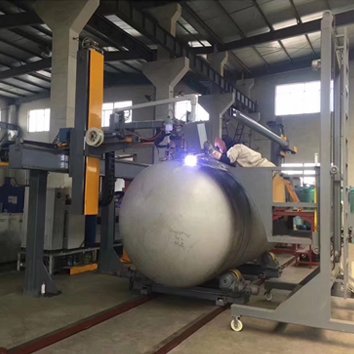 9. Buyer Checklist: Welding and Fabrication Requirements for Custom Heat Exchangers
Use the following checklist when preparing a request for quotation (RFQ).
Equipment and Application
- Heat exchanger type
- Intended industrial application
- Process fluid on each side
- Heat duty, if known
- Normal operating conditions
- Expected service life or maintenance expectations, if specified
- Installation location and destination country
Design and Operating Conditions
- Design code and edition
- Design pressure for each relevant pressure boundary
- Design temperature
- Operating pressure and temperature
- Corrosion allowance, where applicable
- Materials of construction
- Fluid compatibility requirements
- Applicable mechanical design and safety requirements
Welding and Fabrication
- Required welding processes, if specified
- Applicable welding procedure qualification framework
- Welder qualification requirements
- Required WPS and PQR documentation
- Joint design and weld details
- Tube-to-tubesheet joining requirements, where applicable
- Heat treatment requirements
- Dimensional tolerances
- Surface treatment and corrosion protection
- Internal cleaning requirements
Inspection and Testing
- Visual inspection requirements
- Required NDT methods and examination extent
- Applicable weld acceptance criteria
- Pressure testing requirements
- Leak testing requirements
- Material verification and traceability
- Dimensional inspection requirements
- Third-party inspection requirements
- Inspection and test plan
- Required inspection reports
Regulatory and Commercial Requirements
- Applicable market regulations
- Required certification scope
- Nameplate and marking requirements
- Required technical documentation
- Quantity and delivery schedule
- Packaging requirements
- Shipping destination
- Required delivery terms
- Warranty and nonconformance procedures
- Spare parts and after-sales requirements
Important: If the governing design code or regulatory framework has not yet been established, state this clearly in the RFQ. The supplier should identify the information required to confirm the appropriate compliance route before finalizing the technical proposal.
10. Frequently Asked Questions About Welding and Fabrication Standards for Custom Heat Exchangers
1. Which welding standards apply to custom heat exchangers?
The applicable welding standards depend on the governing equipment design code, material, welding process, and project specification. Common frameworks include ASME Section IX, ISO 15614, and ISO 9606, but the purchaser must confirm which standards are required for the specific equipment.
2. Is ASME Section IX sufficient to certify a complete heat exchanger?
No. ASME Section IX addresses qualification of welding, brazing, and related procedures and personnel within its scope. Complete equipment compliance may also require a governing construction code, design verification, fabrication controls, inspection, testing, and applicable certification arrangements.
3. What is the difference between ASME Section VIII and Section IX?
ASME Section VIII covers pressure-vessel construction within its scope, while Section IX covers qualification of welding, brazing, and related procedures and personnel. When applicable, the two serve complementary but different purposes.
4. Does every custom heat exchanger require welding?
No. Some heat exchangers rely on brazing, gasketed assemblies, tube expansion, mechanical joining, or other construction methods. Welding requirements depend on the design and the joining processes used.
5. What is the difference between a WPS and a PQR?
A Welding Procedure Specification describes how welding is to be performed. A Procedure Qualification Record documents the conditions and results of a procedure qualification test where required. Their exact roles and qualification rules depend on the applicable standard or code.
6. What is the difference between welder qualification and welding procedure qualification?
Welder qualification demonstrates an individual’s ability to produce acceptable welds within a defined qualification range. Welding procedure qualification demonstrates that a welding procedure meets the applicable qualification requirements under specified conditions.
7. Which NDT methods are used for heat exchanger weld inspection?
Common methods include visual testing, radiographic testing, ultrasonic testing, liquid penetrant testing, and magnetic particle testing. The correct method and examination extent depend on the weld, material, defect risks, governing code, and acceptance criteria.
8. Is hydrostatic testing enough to verify weld quality?
No. Hydrostatic testing checks pressure integrity under specified conditions but does not replace all required weld examinations. The applicable construction code or project specification may require additional nondestructive examination and documentation.
9. What standards apply to shell-and-tube heat exchanger fabrication?
Potentially relevant requirements include ASME BPVC Section VIII, TEMA standards, and API 660, depending on the equipment, industry, contractual specification, and destination market. The applicable scope and edition must be confirmed for each project.
10. What is EN 13445, and when is it relevant?
EN 13445 is a standard series for unfired pressure vessels. It may be relevant to heat exchangers designed and manufactured under that framework, subject to the equipment’s scope and the applicable regulatory and contractual requirements.
11. What is the EU Pressure Equipment Directive?
The Pressure Equipment Directive 2014/68/EU establishes requirements for pressure equipment placed on the EU market within its scope. Applicability and conformity assessment obligations depend on the equipment’s characteristics, classification, and relevant provisions.
12. What affects the cost of welding and fabrication for a custom heat exchanger?
Cost depends on the design code, materials, welding processes, qualification requirements, component complexity, NDT extent, pressure testing, heat treatment, inspection, documentation, certification, and delivery schedule. Clear specifications help suppliers provide comparable quotations.
13. Should buyers require third-party inspection?
Third-party inspection may be required by the governing code, regulatory conformity assessment, contract, purchaser specification, or project risk assessment. Buyers should define the inspector’s scope, required qualifications, witness points, hold points, and reporting requirements before fabrication begins.
14. Can a trading company supply a code-compliant custom heat exchanger?
A trading company can coordinate sourcing and export through an appropriately qualified manufacturing partner. However, code compliance and certification depend on the actual manufacturer, equipment design, applicable authorization, and project requirements. Buyers should verify the responsibilities and qualifications of each party.
15. What information should be included in an RFQ for a custom heat exchanger?
An RFQ should identify the equipment type, operating and design conditions, materials, applicable design code, welding and fabrication requirements, inspection and testing scope, documentation, certification, quantity, destination, and delivery schedule. Approved drawings and technical specifications should be included where available.